Executive Overview
In the contemporary landscape of improvised and experimental music, few artists manage to bridge the chasm between technical virtuosity and raw, unmediated emotional resonance quite like Mathieu Torres. A fixture of the French music scene for over two decades, the Toulouse-based guitarist, composer, and sonic explorer has carved out a singular trajectory that defies easy categorization. His sophomore solo album, Sanctuaire—released mere months after his critically acclaimed debut, Desconegut—stands as a masterclass in stylistic synthesis, emotional depth, and compositional fearlessness.
Torres’s musical universe is not defined by strict adherence to genre boundaries, but rather by an insatiable curiosity that treats style as a palette rather than a prison. Across a sprawling career that has traversed progressive rock, jazz-fusion, harsh punk, ambient electronics, and avant-garde experimentation, Torres has absorbed a disparate lineage of influences, channeling the idiosyncratic melodicism of Bill Frisell, the foundational swing of Django Reinhardt, the structural iconoclasm of Frank Zappa, the electric fury of Jimi Hendrix, and the conceptual elasticity of Fred Frith. Yet, Sanctuaire is remarkably free of derivative pastiche. Instead, it offers a deeply personal, almost journalistic documentation of inner landscapes—a collection of thirteen tracks that treat improvisation and harmonic exploration as a form of poetic narrative.
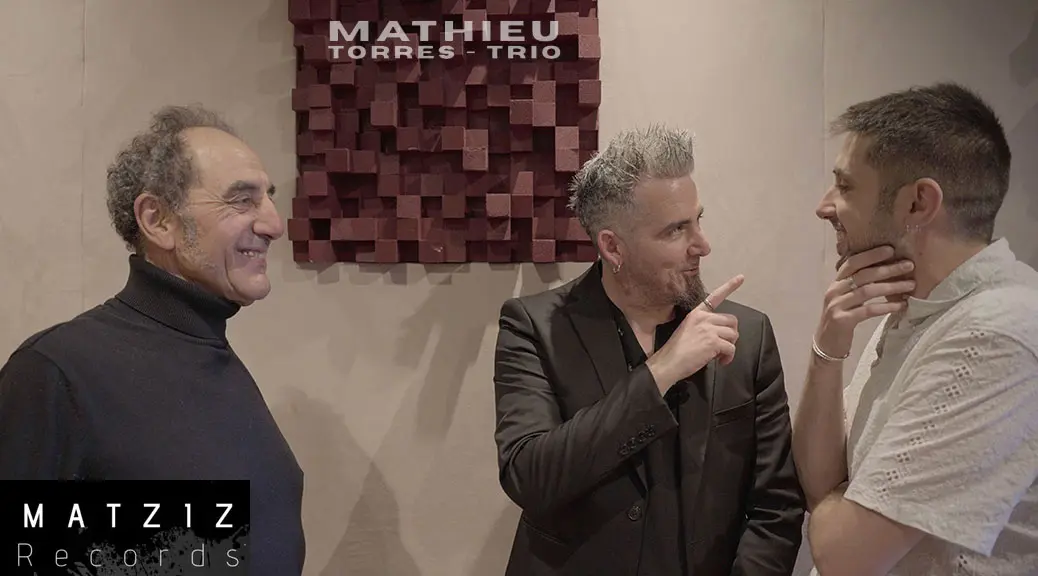
This review and in-depth analysis explores the anatomy of Sanctuaire, tracing Torres’s artistic evolution from regional collaborator to visionary bandleader. By examining the album’s textural warmth, its sophisticated trio dynamics featuring double bassist Jean Baptiste Azanza and drummer Guy Ould Yahoui, and its sprawling stylistic terrain—ranging from the world-jazz grooves of "Ténéré" to the haunting, atmospheric closure of "Hoia Baciu"—we gain a comprehensive view of an artist operating at the absolute peak of his creative powers.
Detailed Chronology: From the Underground to the Sanctuary
To fully appreciate the nuanced maturity of Sanctuaire, one must trace the winding, multifaceted career path that brought Mathieu Torres to this artistic juncture. Emerging onto the French independent and underground music circuits in 2002, Torres quickly established himself as a musical chameleon, refusing to anchor himself to any single scene or aesthetic orthodoxy.
The Formative Years and Cross-Genre Exploration
During the 2000s and 2010s, Torres became a ubiquitous presence in Toulouse and beyond, lending his distinctive guitar work and compositional insights to a staggering array of projects. His resume reads like a map of modern underground European music:
- La Théorie des Cordes: An exploration of intricate, rhythmically complex chamber rock and progressive forms.
- Mân’Z and Matziz: Projects that allowed Torres to dive deep into jazz-inflected grooves and avant-garde rock structures.
- Zhorhann: A venture into darker, more texturally dense experimental soundscapes.
- The Diogenes: A gritty, high-energy outfit that tapped into punk ethos and raw sonic power.
This restless, multi-disciplinary background is the crucible in which Torres’s musical identity was forged. While many musicians spend decades trying to unlearn the rigid constraints of formal genre training, Torres’s foundational years were spent constantly crossing borders. He developed a fluency in electronica, ambient textures, punk aggression, and acoustic lyricism long before he ever set out to record under his own name.
The Solo Threshold: Desconegut to Sanctuaire
For years, Torres operated primarily as a collaborative team player and ensemble member. However, the maturation of his internal compositional voice demanded a more focused, personal outlet. The pivot toward solo work materialized rapidly and intensely.
Following the release of his debut solo album, Desconegut, which mapped out his initial explorations of solo composition and introspective atmosphere, Torres did not rest on his laurels. Instead, he maintained an accelerated creative momentum, funneling the residual inspirations of his debut straight into the sessions for Sanctuaire. Released just a few months after Desconegut, Sanctuaire represents not merely a follow-up, but an expansion and deepening of the emotional and structural themes introduced on his first record. It is the sound of an artist who has spent twenty years gathering raw materials, finally constructing a permanent, resonant home for his craft.
Supporting Context & Metrics: The Sonic Architecture of Sanctuaire
The Tone: Organic, Rounded, and Alive
At the heart of Sanctuaire is Torres’s signature guitar tone. Eschewing the sterile, hyper-compressed digital direct-in sounds that plague much of modern contemporary guitar recordings, Torres opts for an acoustic-electric warmth that feels palpably organic. His instrument breathes. Listeners are immediately struck by the tactile nature of the recording: the slight squeak of wound strings sliding beneath fingertips, the wooden resonance of the guitar body, and the rounded, blooming sustain that recalls the golden era of jazz-fusion and ECM-era improvised music.
This tone serves the album’s overarching thematic premise. Torres has frequently described his compositions as "introspective and journalistic." In a literal sense, the guitar functions as his pen; the notes and chord voicings are diary entries detailing shifts in mood, memory, and spatial awareness.

Track-by-Track Breakdown: A Journey Across Thirteen Landscapes
Comprising thirteen distinct tracks, Sanctuaire manages the rare feat of maintaining immense stylistic variety without ever sounding disjointed or unfocused.
- "Le Parfum des glycines" (The Scent of Wisteria): Serving as the album’s opening statement, this track immediately establishes an intimate, conversational atmosphere. The melodic line does not demand attention through technical flashiness; rather, it speaks directly to the listener, unfolding with the cadence of spoken prose translated into string vibrations.
- "Pyrène" and "Blue Monday": Injecting much-needed momentum and rhythmic drive into the sequence, these tracks showcase Torres’s facility with dynamic tension. "Blue Monday," in particular, subverts expectations with its rhythmic snap and infectious undercurrent, proving that intellectual composition can still possess physical, foot-tapping gravity.
- "Khiónē" and "Des airs de répit": These pieces plunge the listener into the more spacious, reflective dimensions of Torres’s writing. Here, silence is treated as an active compositional partner. The notes are allowed to hang, decay, and dissolve into the surrounding acoustic air, creating vast vistas of sonic calm.
- "Le clochard céleste" (The Celestial Tramp): A definitive high point of the album. Supported by the sensitive, muscular rhythm section of Jean Baptiste Azanza on double bass and Guy Ould Yahoui on drums, this track exemplifies the power of true trio interplay. Rather than serving as a backing band designed merely to prop up a soloing guitar hero, Azanza and Ould Yahoui engage in a vibrant, three-way conversation. The energy is palpably live, raw, and reactive.
- "Ténéré": Stepping into groove-conscious world-jazz territory, this track borrows rhythmic and harmonic flavours from trans-global traditions, demonstrating Torres’s ability to weave diverse cultural idioms into his contemporary European framework.
- "Sneakers Station": Boasting a sharper, more contemporary urban pulse, this track hints at Torres’s background in electronic and ambient music, utilizing modern rhythmic textures.
- "Xana valse": Offering a lighter, more graceful touch, this piece introduces a dance-like lilt that showcases the sheer beauty of Torres’s melodic phrasing.
- "Hoia Baciu": Named after the notoriously eerie, fog-shrouded forest in Romania, this track provides an atmospheric, spine-tingling closing statement, leaving the listener suspended in a state of lingering mystery.
- "Impressions": Seamlessly integrated into the album’s latter half, this track feels entirely natural within the grander narrative arc, reinforcing the overarching theme of documentation and emotional snapshot-taking.
Official Statements & Artistic Philosophy
While Mathieu Torres is an artist who prefers to let his instrument do the heavy lifting, his occasional reflections on his creative process shed vital light on the ethos behind Sanctuaire.
In interviews and liner notes discussing his work, Torres has consistently emphasized the narrative and poetic potential of the electric and acoustic guitar. "Music is not merely a display of dexterity; it is an act of translation," Torres has noted when discussing his approach to composition. "When I pick up the instrument, the goal is not to impress the listener with how fast or how complexly I can play, but to articulate a state of being that words cannot quite reach. The harmonies, the open strings, the silences—they are all letters in an alphabet of feeling."
Discussing the rapid-fire release schedule between Desconegut and Sanctuaire, Torres points to a period of intense personal and creative clarity. "Once the dam broke with Desconegut, the water simply kept flowing," he explains. "The songs on Sanctuaire were written out of a desire to dive deeper into those inner landscapes. Where the first album was about mapping out the territory, the second album is about living inside it—finding the hidden rooms, the quiet corners, and the places where the light hits differently."
Collaborators Jean Baptiste Azanza and Guy Ould Yahoui have similarly echoed this philosophy of radical openness. In conversations surrounding the trio sessions for tracks like "Le clochard céleste," Azanza remarked: "Working with Mathieu requires you to listen twice as much as you play. There is no ego in the room; the music belongs to the moment. If a melody needs to breathe, we all hold our breath together. If it needs to swing, we move as one body."
Future Outlook: The Next Phase of Mathieu Torres
As Sanctuaire continues to garner critical acclaim across the European jazz, experimental, and guitar-centric music communities, the question naturally turns to what lies ahead for Mathieu Torres. For an artist whose career has been defined by perpetual motion and genre-hopping restlessness, settling into a comfortable, predictable formula is simply not an option.
Upcoming Tour Cycles and Live Adaptations
The immediate future for Torres involves translating the intricate, layered soundscapes of Sanctuaire—and its predecessor, Desconegut—into the live arena. Bringing together collaborators of the caliber of Azanza and Ould Yahoui for select European dates, Torres aims to capture the spontaneous, electric energy that made "Le clochard céleste" a standout track. Live audiences can expect a performance that blurs the lines between composed chamber jazz, free improvisation, and ambient sonic exploration.
Expanding the Sonic Palette
Looking further down the horizon, industry insiders and dedicated fans are already speculating on how Torres will build upon the foundation of his solo output. Given his extensive background in electronica, ambient noise, and avant-garde punk, there is growing anticipation that future releases may integrate even heavier electronic processing, modular synthesis, and expanded acoustic instrumentation into his core guitar-centric framework.
Furthermore, Torres’s reputation as a collaborative connector positions him ideally for cross-disciplinary ventures. Conversations have begun regarding potential scoring work for contemporary dance and independent European cinema—mediums that would naturally accommodate his atmospheric, narrative-driven compositional style.
Conclusion: A Landmark in Modern Guitar Music
Sanctuaire is ultimately much more than a collection of well-played guitar tracks. It is a testament to the power of a mature artistic vision—one forged in the fires of Toulouse’s underground music scene, refined through decades of cross-genre collaboration, and finally distilled into an intensely personal statement. Mathieu Torres has crafted an album that rewards repeated, attentive listening, offering a quiet sanctuary of sound in an increasingly loud and hurried world. As he looks toward the future, Torres stands as a vital beacon for modern European guitar music: technically brilliant, fearlessly open-minded, and profoundly human.