Executive Overview
Inside Apple Music’s state-of-the-art Dolby Atmos studio in Los Angeles, the 14 QSC loudspeakers overhead vibrate with unrelenting, driving techno. Suddenly, a hand rises. Jeff Mills signals to Cliff Norrell, Apple Music’s lead spatial audio engineer, to cut the mix.
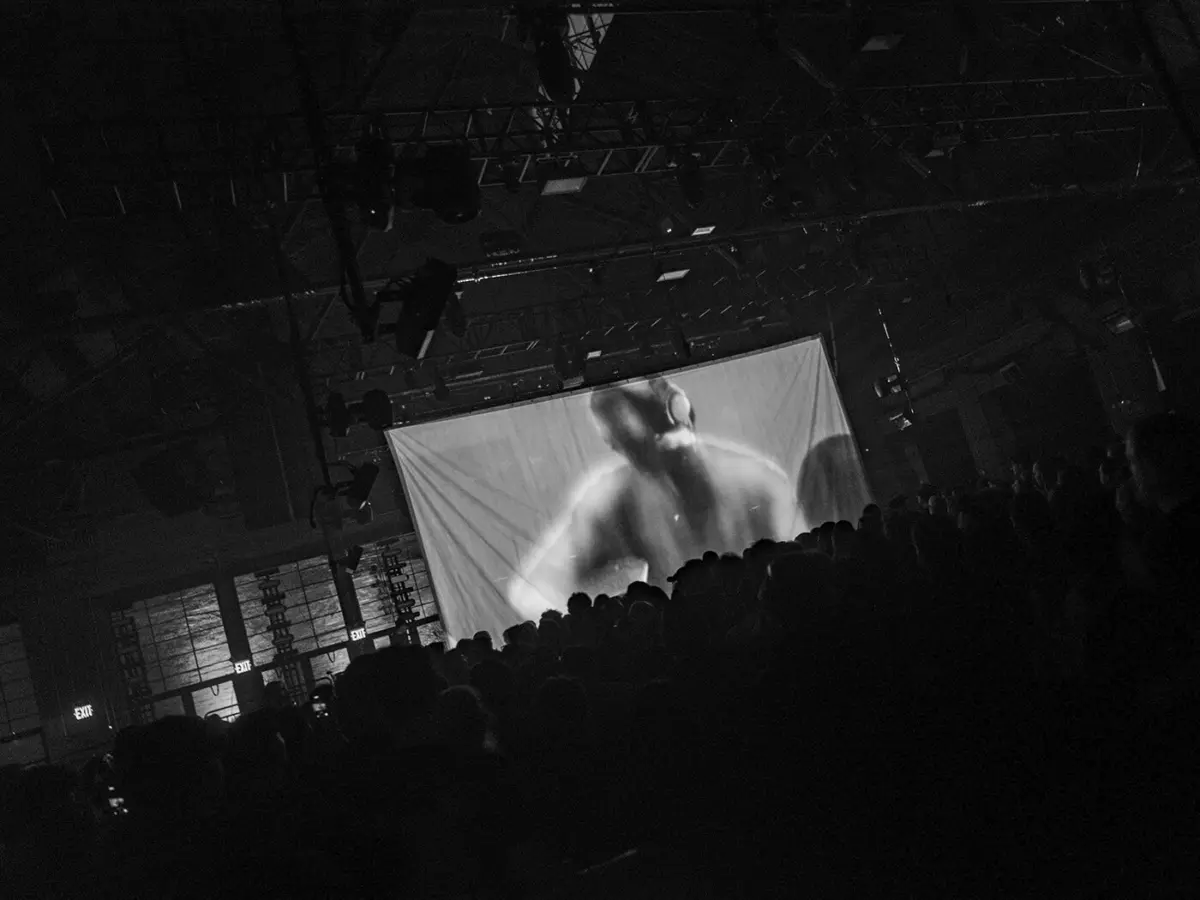
They are meticulously reviewing the multitrack recording of Mills’ electrifying performance from March at New York’s Knockdown Center—one monumental stop on a sprawling, 50-date global tour spanning five continents. The tour marks the 30th anniversary of Live at the Liquid Room – Tokyo (1996), the legendary mixtape that permanently altered the DNA of live DJ recordings. Out of all the shows on this massive anniversary run, this specific New York performance is being prepared for an exclusive Apple Music release in immersive spatial audio.
However, Mills is not halting the session to tweak an EQ curve, alter a transition, or clean up a beatmatch. Instead, he pauses the music because an ecstatic crowd member can be heard releasing a pure, unadulterated shout of dancefloor euphoria over the monolithic soundscape. For Mills, that vocal burst is not sonic clutter; it is essential data. He wants those raw human reactions woven deeply and prominently into the final spatial mix.
“It’s a live recording. It’s not just music. It’s the ambience of the room. The people. The wild animals are a part of it,” Mills says, a sharp smile crossing his face.
This moment encapsulates a career-defining philosophy: electronic music is not merely a clinical arrangement of synthesized frequencies and drum machine rhythms. It is a living, breathing ecosystem forged by the friction between artist, machine, and crowd. As dance music continues to expand into hyper-realistic, multi-dimensional formats, Mills is utilizing spatial audio not as a novelty, but as the fulfillment of a 30-year ambition to capture the true, visceral essence of club culture.
Detailed Chronology: From the Liquid Room to the Knockdown Center
To understand the weight of Mills’ current spatial audio project, one must trace the timeline back to the mid-1990s—an era when electronic music was rapidly evolving from underground warehouse culture into a global phenomenon, yet struggled to find a recorded format that did justice to its physical power.

1995: The Genesis in Tokyo
In 1995, Jeff Mills took to the decks at Tokyo’s intimate, high-energy venue, the Liquid Room. What transpired over the course of that night was nothing short of alchemy. Armed with a relentless selection of underground cuts and a blistering mixing style, Mills delivered a masterclass in tension, release, and rhythmic momentum. When the set was eventually released commercially in 1996 as Live at the Liquid Room – Tokyo, it redefined what a mix CD could be. Critics and fans alike were floored; Pitchfork would later award the recording a rare, perfect 10/10 review, cementing its status as the gold standard of live dance music recordings.
Yet, even as he achieved this milestone, Mills felt restricted by the technology of the era. He had envisioned a recording that enveloped the listener in the acoustic reality of the Tokyo venue, utilizing six to eight microphones strategically placed around the room. He took the concept to Sony Music, proposing an avant-garde idea: release the audio on a DVD-Video format, but use it exclusively for high-fidelity, multi-channel audio—long before DVD-Audio or spatial formats were commercial realities.
Sony executives balked. They doubted that consumers would accept a video disc devoid of moving images, meant solely for listening. Consequently, Mills was forced to scale back his ambitions, settling for a conventional stereo mix.
2026: The Spatial Renaissance
Fast forward three decades, and the technological landscape has completely shifted. To celebrate the 30th anniversary of the Liquid Room legacy, Mills embarked on a grueling world tour, bringing his uncompromising techno vision to fans across five continents.
For the New York iteration at the Knockdown Center—a cavernous industrial venue boasting 20,000 square feet of main hall space—Apple Music deployed an extensive, high-end recording apparatus. Rather than relying on a simple board mix, the engineering team set up a 14-microphone array designed to capture the spatial geometry and acoustic resonance of the architecture.
During the mixing sessions in Los Angeles, Norrell and Mills used a 9.4.1 spatial configuration. By isolating individual speaker channels corresponding to the physical mic placements in the venue, Norrell could zoom in on specific zones of the crowd. When evaluating the rear-right microphone channel, a distinct, joyful shout cut through the mix. Recognizing its cultural value, Norrell applied a quick, automated volume boost for the duration of the vocalization, ensuring that the listener at home feels the literal presence of a fellow raver standing just feet away.

Supporting Context & Technical Metrics
The technical execution behind the Knockdown Center recording is a masterclass in modern acoustic engineering, balancing the brutal sound pressure levels (SPL) of live techno with the delicate capture of room acoustics.
The Microphone Array Strategy
Capturing 20,000 square feet of industrial architecture filled with thousands of dancing bodies requires careful planning and specialized gear:
- Front of Main Stage: Four Shure dynamic microphones were deployed directly along the front of the primary stage. Dynamic capsules were specifically chosen to withstand extreme SPLs and prevent diaphragm clipping caused by the towering subwoofer stacks positioned near the performance area.
- Second Stage Front: Two additional Shure dynamic microphones lined the front perimeter of the secondary stage, ensuring balanced coverage across the performance zone.
- Overhead Truss: Four DPA 2017 shotgun microphones were suspended vertically from the lighting trusses directly above the crowd. These highly directional mics captured the immediate density of the audience and the vertical bounce of the soundwave.
- Perimeter Walls: Four Shure KSM137 small-diaphragm condenser microphones were positioned strategically along the venue walls to capture the natural reverb, decay, and wide-angle reflections of the Knockdown Center’s historic brick and steel structure.
The Mixing Philosophy: Direct Feed vs. Upmixing
A critical decision made during the spatial mixing phase was avoiding "upmixing"—the automated process of digitally spreading a stereo master across various Atmos height and surround channels. Instead, the team anchored the primary source audio to the direct stereo feed from Mills’ DJ mixer.
Because the physical experience of a club relies on the listener facing the DJ booth, Mills insisted that the foundational sonic weight must emanate primarily from the front spatial channels.
“The most robust sound coming from that direction, the source of the sound to the other parts of the room, the acoustics of it, is important in this live recording,” Mills notes. The surrounding 14 channels are then populated by the ambient mic array, creating a hyper-realistic acoustic bubble where the music punches forward from the stage while the crowd and room wash over the listener from the sides and rear.
Official Statements and Industry Insights
Jeff Mills’ vision extends far beyond nostalgic preservation. He views spatial audio as a legitimate artistic medium—comparable to classical composition—that allows modern producers and performers to dictate how music is experienced across generations.

"It’s important for culture in general to be able to replicate something that happened in the past as close to the original feel of it," Mills explains during the Apple Music session. Drawing a direct parallel to classical music, he adds, "Classical musicians try to replicate, as closely as they can, what the composer actually created. We are trying to enhance the art form, and the genre, and the culture of dance music by making it possible for people in the future to hear it the way that we heard it."
This perspective addresses a historical flaw in how electronic music has been consumed. For decades, commercial DJ mixes were crafted in quiet recording studios, where tracks could be quantized, edited, and mixed with clinical precision. While pleasant to the ear, those studio mixes stripped away the chaotic energy, sweat, and community spirit that define actual club culture.
By prioritizing the ambient bleed, the crowd’s vocalizations, and the physical limitations of the room, Mills is working to restore the anthropological truth of the rave.
Furthermore, Mills recognizes the psychological power of spatial audio. Humans naturally perceive their acoustic environment in three dimensions. By narrowing the gap between recorded sound and organic sensory perception, spatial audio unlocks new frontiers for conceptual songwriting and immersive production.
"We hear in 3D. The more that we hear things like this [recording], the distance will narrow between this and what we normally hear with our ears," Mills observes. "And then hopefully we will begin to really believe what we hear. When that happens, it makes it very interesting for musicians like myself to think about making music conceptually and all the things that I can put in your ears that might make you feel and think differently."
Future Outlook: Beyond the Speakers and Into the Senses
Jeff Mills has never been one to rest on past achievements. His career is punctuated by wildly ambitious live concepts: collaborating with the Montpelier Philharmonic Orchestra, performing among ancient ruins on the Greek island of Delos alongside tabla virtuoso Prabhu Edouard and keyboardist Jean-Phi Dary, and exploring deep-space conceptual themes.

As he looks toward the future, his ambitions for immersive performance are expanding into multidisciplinary domains.
The Illusion of Perceived Transportation
Mills is deeply fascinated by "perceived transportation"—the psychological phenomenon where an audio environment is so overwhelmingly convincing that the listener genuinely believes they have been physically relocated to another coordinate in space. He previously attempted a conceptual show in Paris titled Close Encounters of the Fourth Kind, which intended to secretly guide ticket-holders to an undisclosed second location. While municipal permitting issues ultimately grounded the physical execution of that specific concept, the underlying philosophy remains a driving force in his work.
A Trip To Vega and Cockpit Production
Currently, Mills is developing a live show tied to his upcoming concept album, A Trip To Vega. In this production, the stage will be transformed into a laboratory setting, framing the audience as voyagers embarking on a journey to the Vega star system. Uniquely, the performing musicians will face forward toward a massive screen—positioned precisely like crew members looking out of a spaceship cockpit. The emphasis is placed entirely on the journey and the collective experience of travel, rather than placing ego-driven focus on the artists themselves.
The Ultimate Convergence of Technology
Looking far down the road, Mills envisions a time when consumer technology will transcend mere auditory spatialization, incorporating multi-sensory data to fully reconstruct the club environment in virtual or domestic spaces.
"We’re bringing up the crowd in these recordings because they are important to any atmosphere where you have a DJ, an audience, and flashing lights. All this effort goes into making these events, so the listeners need to feel as if they’re actually in that setting," Mills concludes. "I wish we had the type of technology that rolled everything together. So not just the sound, but the smell, the lights, the humidity, being shoved by someone who just saw their friend. I can see these things coming."
Until multi-sensory neural-audio technology becomes a reality, Jeff Mills and the engineering team at Apple Music are pushing the boundaries of what is possible within the acoustic domain. By transforming a 20,000-square-foot New York warehouse into a 3D spatial time capsule, Mills is ensuring that the spirit, sweat, and heartbeat of underground techno will echo with absolute fidelity for generations to come.