Executive Overview
In the fast-evolving landscape of modern electronic music production, the intersection of portability, power, and workflow efficiency remains the ultimate proving ground for hardware manufacturers. Today, Akai Professional—a titan of the music tech industry renowned for shaping the beatmaking culture through its iconic MPC lineage—has announced the official launch of the MPK Mini Plus II.
Serving as the direct successor to the critically acclaimed 37-key MPK Mini Plus, this next-generation controller is designed to bridge the gap between pocket-sized mobility and deep studio-grade flexibility. The MPK Mini Plus II arrives not merely as a minor refresh, but as a comprehensive overhaul tailored for producers, beatmakers, songwriters, and live performers looking to elevate their creative output.
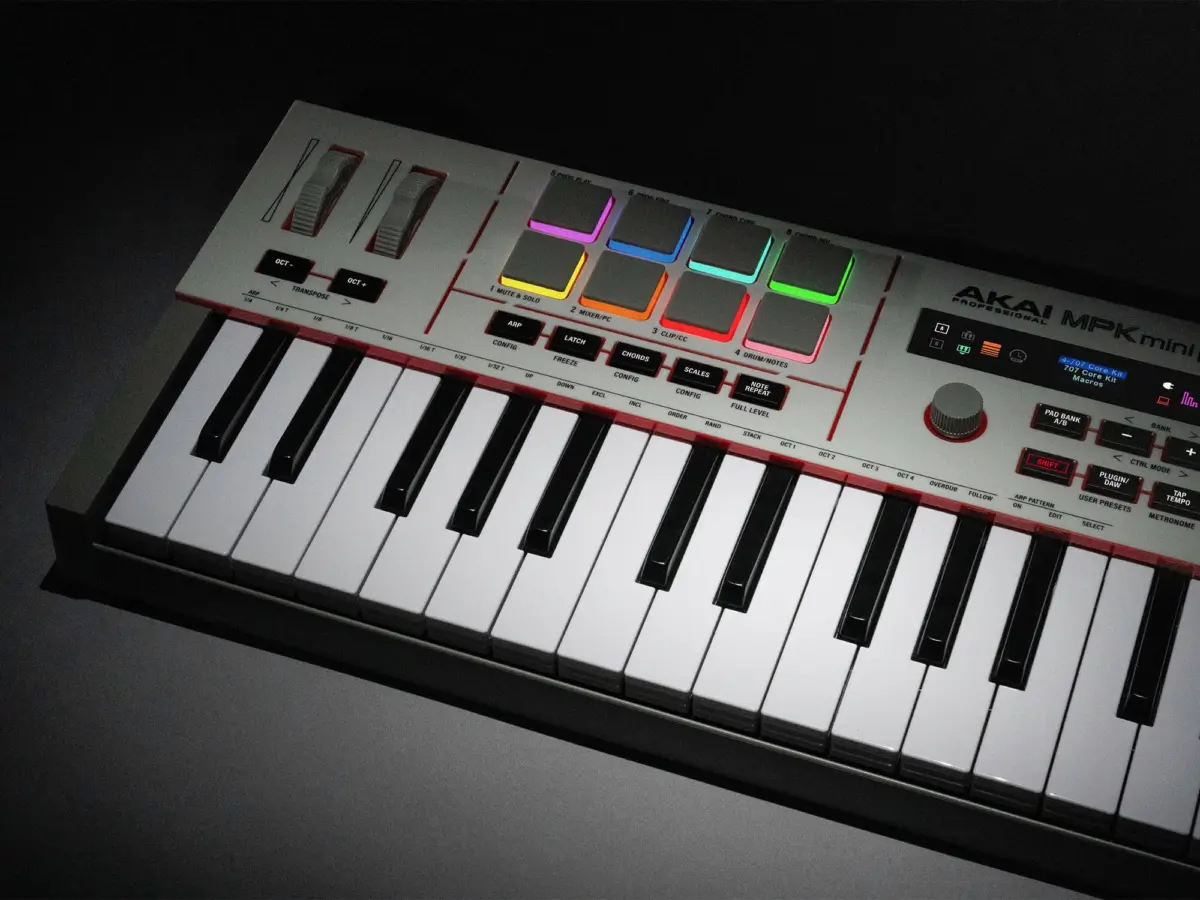
Departing from the visual and structural language of its predecessor, the MPK Mini Plus II adopts the sleek, unified design aesthetic established by Akai’s MPK Mini IV keyboards released a year prior. However, beneath its polished exterior lies an expansive suite of hardware and software innovations. Featuring a newly upgraded 37-key mini keybed, redesigned pitch and modulation wheels, eight velocity- and pressure-sensitive RGB MPC pads, and an array of cutting-edge creative tools—such as Glitch, Mutate, Strum, Freeze, and Follow—the controller is engineered to break creative bottlenecks.
Priced competitively at $169.99 / £134.99 / €159.99 and bundled with Akai’s expansive Studio Instrument Collection (featuring over 1,000 sounds from AIR Music Technology, Moog Music, and Akai Professional), the MPK Mini Plus II is available immediately. This comprehensive review and news feature explores the architectural updates, creative workflow additions, connectivity upgrades, and industry implications of Akai Professional’s latest flagship mini controller.
Detailed Chronology
The Evolution of the MPK Mini Lineage
To understand the significance of the MPK Mini Plus II, one must trace the evolutionary trajectory of Akai Professional’s compact hardware strategy over the past decade and a half.
- The 25-Key Foundation: For years, the original MPK Mini (and its subsequent iterations, including the MKII and MKIII) dominated the bedroom producer market. It established a standard format: 25 velocity-sensitive mini keys, eight backlit MPC pads, eight assignable knobs, and a thumbstick for pitch and modulation. While wildly successful for portability and quick sketch ideas, its limitations quickly became apparent for keyboardists and producers seeking two-handed performance capabilities or deeper hardware integration.
- The Shift to 37 Keys (The MPK Mini Plus): Recognizing a demand for an expanded footprint without sacrificing portability, Akai introduced the original MPK Mini Plus. By extending the keybed to 37 keys (spanning three full octaves) and introducing hardware connectivity options like 5-pin MIDI and CV/Gate outputs, Akai targeted hybrid setups that combined software plugins with vintage hardware and modular synthesizers.
- The Modern Redesign (MPK Mini IV Influence & Plus II Launch): The release of the MPK Mini IV keyboards signaled a shift in Akai’s industrial design language, prioritizing smoother ergonomics, enhanced tactile feedback, and more intuitive interfaces. The MPK Mini Plus II synthesizes this design philosophy with the advanced capabilities of the "Plus" series, marking a generational leap for producers who have outgrown standard 25-key entry-level gear.
Product Development and Architectural Refinement
The development of the MPK Mini Plus II focused heavily on user feedback regarding physical ergonomics and creative generation. Akai’s engineering team sought to resolve common pain points in compact controllers—namely, the rigidity of traditional pitch/mod wheels and the lack of standalone idea-generation features directly on the hardware.

By integrating a full-color display screen, Akai removed the guesswork from parameter adjustments, allowing users to monitor their arpeggiator settings, chord configurations, and routing options directly on the device. Simultaneously, the physical layout was streamlined to align with professional studio environments, ensuring that transitions between software environments like Ableton Live, Logic Pro, and the standalone MPC Desktop software feel entirely seamless.
Supporting Context & Metrics
Hardware Specifications and Ergonomic Upgrades
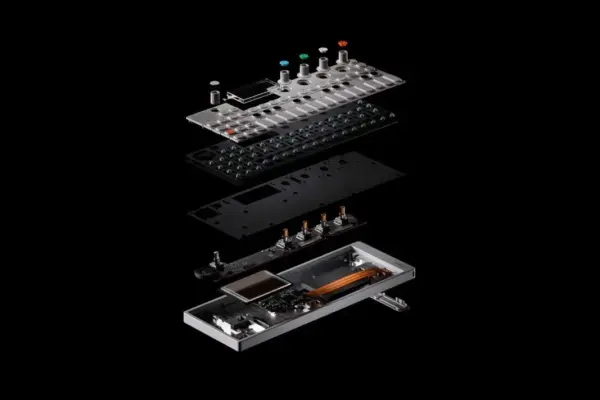
The physical architecture of the MPK Mini Plus II reflects a meticulous attention to detail. Every square inch of the front panel has been scrutinized to maximize tactile expression:
- The Keybed: An upgraded 37-key mini keybed provides a more responsive and expressive playing surface, striking a balance between velocity sensitivity and compact desktop space management.
- Performance Controls: Gone are the traditional rubberized pitch and mod sticks of the past; the MPK Mini Plus II features completely redesigned, silky-smooth pitch and modulation wheels, complemented by dedicated octave and transpose buttons for rapid range shifting.
- RGB MPC Pads: Eight velocity- and pressure-sensitive RGB pads inherit the legendary feel of Akai’s standalone MPC hardware, offering exceptional feedback for finger drumming, clip launching, and sample triggering.
- Visual Feedback: A crisp, full-color display provides real-time information, eliminating menu-diving guesswork and streamlining the creative process.
Innovative Creative Tools
What truly sets the MPK Mini Plus II apart from its predecessor and competing devices in the 37-key category is its suite of generative and transformative creative tools. Akai has embedded intelligent algorithms directly into the hardware firmware:
- Glitch: Introduces randomized, rhythmic stutter effects to audio and MIDI data, ideal for modern electronic, hyperpop, and hip-hop production styles.
- Mutate: Dynamically alters existing melodic or rhythmic patterns, generating unexpected variations to break writers’ block.
- Strum: Simulates realistic guitar or string instrument struming patterns across chords, adding organic fluidity to electronic compositions.
- Freeze: Captures and sustains ongoing arpeggiated or chordal states, creating ambient pads or rhythmic drones on the fly.
- Chords & Follow: Streamlines harmonic progression creation, allowing producers to construct complex chord structures with single-finger inputs.
- Expanded Arpeggiator & Note Repeat: Building on Akai’s classic performance utilities, these modes offer deeper timing controls, swing parameters, and rhythmic subdivisions directly accessible from the front panel.
Connectivity and Studio Integration
Modern production environments are rarely limited to a single laptop; they frequently encompass a hybrid ecosystem of software DAWs, virtual instruments, and hardware gear. The MPK Mini Plus II is engineered to anchor such setups:
- Computer & Software Integration: Features universal USB-C power and data connectivity. It offers dedicated, deep integration mapping for MPC Desktop, MPC 3, Ableton Live, Logic Pro, Cubase, and FL Studio. Furthermore, full NKS (Native Instruments Komplete Kontrol) compatibility ensures smooth navigation through virtual instrument libraries.
- Hardware & Modular Connectivity: For producers utilizing outboard gear, the rear panel houses a full-size 5-pin MIDI output and input, three CV/Gate outputs (allowing direct interfacing with analog synthesizers and Eurorack modular systems), and a 1/4-inch sustain pedal input.
Official Statements
The release of the MPK Mini Plus II has generated considerable enthusiasm within the professional audio community. Akai Professional leadership emphasized the philosophy behind the hardware update during its worldwide unveiling.
Andy Mac, Executive Manager of Content, Artist Relations and Business Development at Akai Professional, shared detailed insights regarding the target audience and design goals:

"MPK Mini has introduced a lot of creators to hands-on making music, and MPK Mini Plus II is built for the creator who’s ready for the next step. Tools like Glitch, Mutate, and Strum help turn simple ideas in new directions, while deeper MPC, DAW, MIDI and CV integration gives creators room to build a much bigger setup around one compact keyboard."
Expanding on the workflow benefits, Akai’s product development team released an official statement emphasizing autonomy and creative flow:
"Together, these tools give beatmakers, songwriters and performers more ways to move from a starting idea toward something unexpected while keeping creative decisions in their hands. You shouldn’t have to stare at a computer monitor to find inspiration; the MPK Mini Plus II keeps your eyes on your instrument and your hands on the music."
Future Outlook & Industry Implications
Where the MPK Mini Plus II Fits in the Market
The compact MIDI keyboard market is fiercely competitive, populated by offerings from brands like Novation, Arturia, and Korg. Historically, Akai’s strength has lain in its synergy with beatmaking culture and the iconic MPC workflow. With the MPK Mini Plus II, Akai is aggressively targeting hybrid producers who refuse to compromise between the mobility of a mini keyboard and the deep connectivity of a master studio controller.
By integrating CV/Gate outputs—a feature traditionally reserved for larger, more expensive master keyboards or dedicated sequencing hardware—Akai is acknowledging the massive surge in popularity surrounding modular synthesis and hardware-based live performance rigs. Producers can now use the MPK Mini Plus II as the brain of a hardware setup comprising a laptop running Ableton Live, a desktop synthesizer connected via 5-pin MIDI, and a Eurorack modular system driven by the CV/Gate outputs.
The Value Proposition of Software Bundles
Beyond the hardware itself, the inclusion of Akai’s Studio Instrument Collection—packing over 1,000 professional-grade sounds from AIR Music Technology, Moog Music, and Akai Professional—transforms the MPK Mini Plus II from a mere hardware controller into an all-in-one production starter kit. For beginner to intermediate producers upgrading from basic 25-key setups, this immediate access to world-class synthesis engines and acoustic modeling presets significantly lowers the barrier to entry for professional-sounding productions.

Conclusion: A New Standard for Portable Production
The Akai Professional MPK Mini Plus II successfully redefines what creators should expect from a compact 37-key controller. By merging the polished design language of the modern MPK lineup with advanced generative tools (Glitch, Mutate, Strum), deep DAW and MPC 3 integration, and robust analog connectivity (MIDI and CV/Gate), Akai has crafted a versatile instrument capable of anchoring both mobile songwriting sessions and complex hybrid studio setups.
As electronic music production continues to decentralize—moving fluidly between software plugins, hardware synths, and modular rigs—controllers like the MPK Mini Plus II serve as the ultimate navigational tools for modern artists. Available now for $169.99 / £134.99 / €159.99, the MPK Mini Plus II is poised to become a staple on studio desks and stages worldwide.
For further technical specifications, software compatibility lists, and purchase information, visit the official Akai Professional Website.