Executive Overview
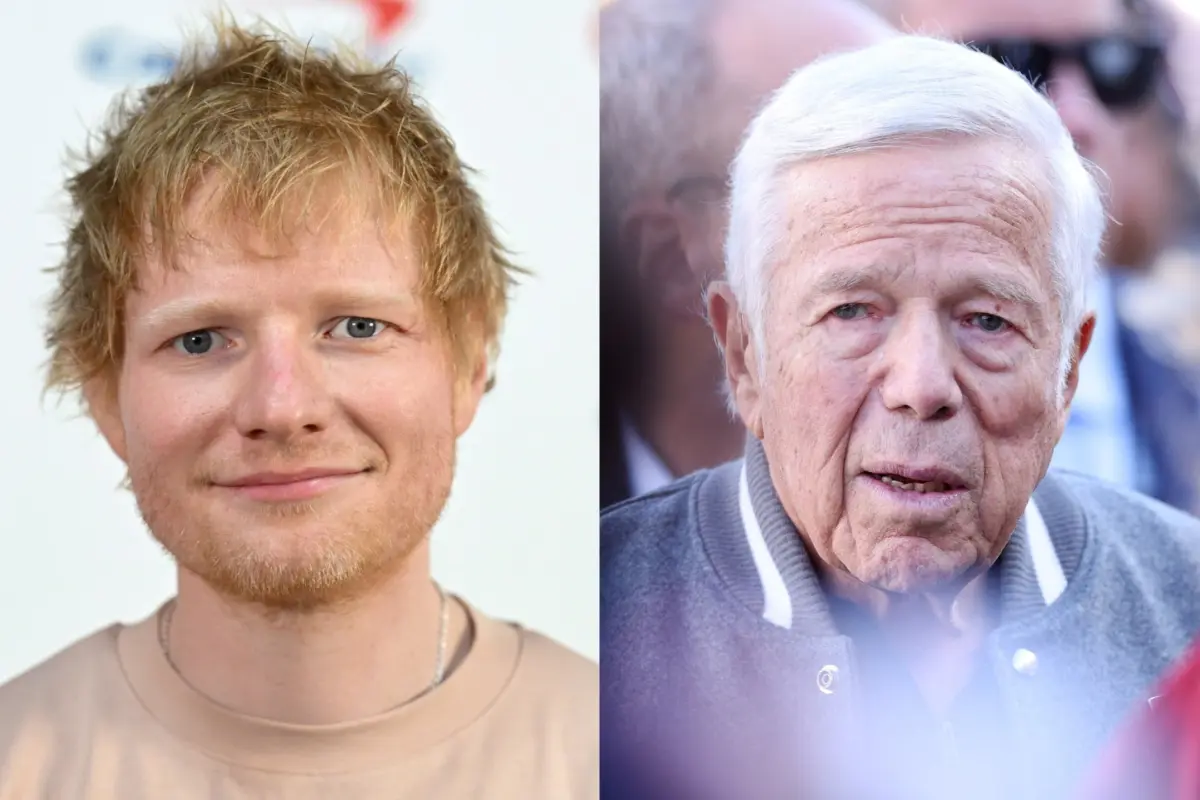
The intersection of mainstream pop music, geopolitics, and high-stakes corporate power has rarely collided as dramatically as it did during Ed Sheeran’s recent United States tour. What began as a routine concert series quickly devolved into an international firestorm following the sudden removal of rapper Macklemore over his public statements regarding the humanitarian crisis in Gaza. The fallout—characterized by artist boycotts, fierce debates over free speech, and allegations of systemic censorship—has laid bare the fragile relationship between mega-artists, stadium conglomerates, and corporate financiers.
At the center of this cultural flashpoint is Aaron Rowe, an Irish singer-songwriter and one of several supporting acts who voluntarily withdrew from the tour in solidarity with Macklemore. In a candid and widely shared video statement, Rowe urged the public to recalibrate their focus, arguing that misdirected anger toward Ed Sheeran obscures the true architects of censorship: corporate stakeholders and political lobbies intent on silencing pro-Palestinian advocacy.
This in-depth report examines the cascading events that led to the tour’s unraveling, the geopolitical pressures exerted by high-profile venue owners, the nuanced defense of Ed Sheeran offered by his peers, and the broader implications of censorship within the live entertainment industry.
Detailed Chronology: How a Concert Tour Became a Geopolitical Battleground
The Catalyst: Macklemore’s Onstage Declaration
The controversy originated during a live performance when Seattle-born rapper Macklemore addressed the ongoing conflict in Gaza, using his platform to explicitly call for a "free Palestine." The rapper, known for his socially conscious lyricism and outspoken activism, intended the remark as a humanitarian plea amid the devastating escalation of violence and military operations in the region. However, the statement immediately triggered a chain reaction across the entertainment and sports industries, demonstrating how tightly guarded corporate-backed performance spaces have become regarding foreign policy controversies.
The Venue Owner’s Ultimatum and Macklemore’s Ouster
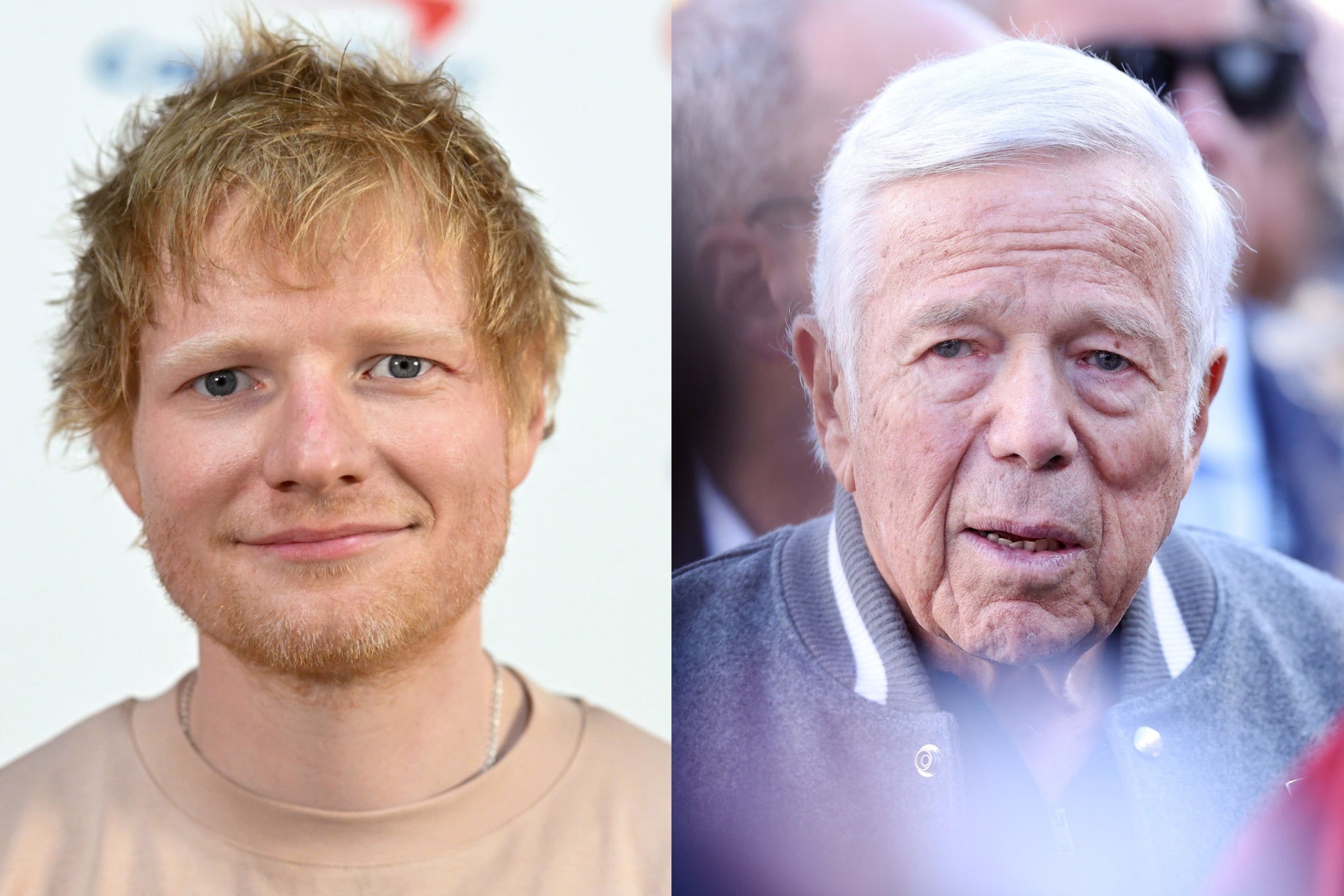
Because major stadium tours rely heavily on multi-million-dollar venue partnerships, external pressures swiftly materialized. Chief among them was New England Patriots owner Robert Kraft, whose prominent venue serves as a major hub for high-capacity events. Reports emerged that Kraft made it explicitly clear that Macklemore was no longer welcome to perform at his stadium following the rapper’s pro-Palestinian remarks.
Faced with a logistical and financial impasse—and operating under immense pressure from stakeholders—the tour’s management and decision-makers abruptly removed Macklemore from the lineup. The decision was executed swiftly, catching both fans and fellow artists off guard and setting off an immediate wave of criticism across social media channels.
Ed Sheeran’s Response and the Artists’ Exodus
As public outcry mounted, attention turned to headliner Ed Sheeran. Critics demanded to know why a globally renowned artist would allow a fellow performer to be ousted over political expression. Sheeran released an initial statement asserting that he was "not complicit" in the decision to silence Macklemore and maintaining that he was not the sole authority behind the removal.
However, the damage to the tour’s internal solidarity was already done. Rather than weathering the storm, a collective of supporting acts took a principled stand. Aaron Rowe, alongside fellow Irish traditional-pop group Beoga, Danish pop band Lukas Graham, and Grammy-winning artist Finneas, announced they were withdrawing from the U.S. leg of the tour in protest. The mass exodus turned what might have been a localized PR misstep into a profound crisis for the tour’s organizers.
Supporting Context & Metrics: The Mechanics of Tour Boycotts and Corporate Influence
Understanding the Economic Anatomy of a Stadium Tour
To fully comprehend the gravity of the walkout, one must examine the complex financial machinery driving modern stadium tours. A venture of Ed Sheeran’s magnitude involves millions of dollars in ticket sales, merchandise, local permits, broadcasting rights, and insurance policies. Stadium owners hold immense leverage; a single venue ban from an influential owner like Robert Kraft can jeopardize an entire regional leg, forcing promoters to choose between commercial viability and artistic freedom.
When supporting acts like Aaron Rowe, Beoga, Lukas Graham, and Finneas walked away, the financial and reputational cost to the tour organizers compounded exponentially. While headliners absorb the primary shock, the withdrawal of diverse supporting talent signals a profound shift: modern artists are increasingly willing to sacrifice career milestones and lucrative promotional opportunities to preserve their ideological integrity.
The Role of Advocacy Lobbies and Public Pressure
Aaron Rowe’s critique went beyond stadium logistics, pointing directly at what he termed "Zionist lobbies" and corporate power players attempting to stifle anti-genocide advocacy. The entertainment industry has long served as a cultural mirror for global politics, yet the boundaries of acceptable discourse have tightened significantly.
Industry analysts note that artists advocating for Palestinian rights frequently face professional hurdles, ranging from cancelled performances to intense digital harassment campaigns. Conversely, venue owners and corporate sponsors defend their actions by citing safety concerns, community relations, and the protection of neutral brand identities. This ideological tug-of-war has transformed concert stages into high-stakes battlegrounds for global free speech.
Official Statements and Perspectives
Aaron Rowe’s Viral Defense and Critique
In his widely circulated social media address, Aaron Rowe attempted to shift the narrative away from a simplistic feud between pop stars.
"I’m gonna be honest, I think youse are all focusing on the wrong person here," Rowe stated. "All I keep hearing is Ed Sheeran this, Ed Sheeran that, when youse really should be focusing on the likes of Robert Kraft… You should really be focusing on the Zionist lobbies that are trying to silence the voices of people who are shouting about genocide."
Rowe acknowledged that Sheeran’s initial public statement could have been handled with greater clarity and admitted that Macklemore’s removal was unjust. However, he defended the British pop star’s character, attributing the sudden ouster to panic within the management camp rather than malice on Sheeran’s part.
*"I fully believe it was panic stations over there and they rushed the decision because they didn’t know what to fing do because they were getting it from all angles," Rowe explained. He further emphasized that Sheeran’s initial curation of the tour—which intentionally featured diverse, socially conscious acts like Macklemore, Beoga, and BIIRD—disproves any suggestion that the headliner harbored animosity toward pro-Palestinian stances. "All he has inside of him is kindness. That is who Ed Sheeran is. And yes, like every other human being he makes fing mistakes."*
Urging protesters to direct their energy effectively, Rowe concluded: "You should be using this opportunity to plaster Robert Kraft’s face everywhere. Someone who tried to shut down free speech, someone who tried to silence the voices of people who are shouting about genocide."
The Silence of the Promoters and Venue Stakeholders
In stark contrast to the outspoken commentary from independent artists, corporate entities and representatives for Robert Kraft have largely maintained a measured silence or issued brief statements emphasizing logistical necessity and venue policies. Public relations experts note that corporate stakeholders typically avoid engaging in protracted public debates over geopolitical conflicts, preferring to let legal and contractual frameworks dictate the resolution of such disputes.
Future Outlook: What the Ed Sheeran Boycott Means for Live Entertainment
The fallout from the Ed Sheeran tour boycott serves as a watershed moment for the live music industry. As global conflicts continue to polarize public opinion, artists, promoters, and venue owners face an increasingly complex landscape where neutrality is difficult to maintain and artistic expression carries immediate, tangible consequences.
1. Re-Evaluating Venue Contracts and Rider Clauses
In the wake of this controversy, legal experts anticipate that artist management teams will begin scrutinizing venue contracts more closely. Clauses protecting freedom of expression, clarifying the limits of venue owner interference, and establishing protocols for handling political discourse on stage may become standard negotiation points for touring musicians.
2. The Rise of Politically Conscious Artist Collectives
The coordinated withdrawal of Rowe, Beoga, Lukas Graham, and Finneas demonstrates the growing solidarity among contemporary musicians. Rather than operating as isolated commercial entities, artists are increasingly forming ideological coalitions. This solidarity empowers smaller acts to challenge industry heavyweights without fearing professional isolation, knowing they are part of a broader community of values-driven performers.
3. A Permanent Shift in Fan Activism
Audiences are no longer passive consumers of pop culture; they demand ideological alignment from the artists they support. As fans increasingly scrutinize the political affiliations, corporate sponsorships, and ethical stances of performers and venue owners alike, the live entertainment sector must adapt to a hyper-aware, politically engaged consumer base.
Ultimately, whether the industry learns from the mistakes of the Sheeran tour will depend on how future disputes between artistic expression and corporate interests are managed. For now, the events surrounding the canceled U.S. dates have permanently altered the discourse around music, power, and the cost of speaking out on the global stage.