Executive Overview
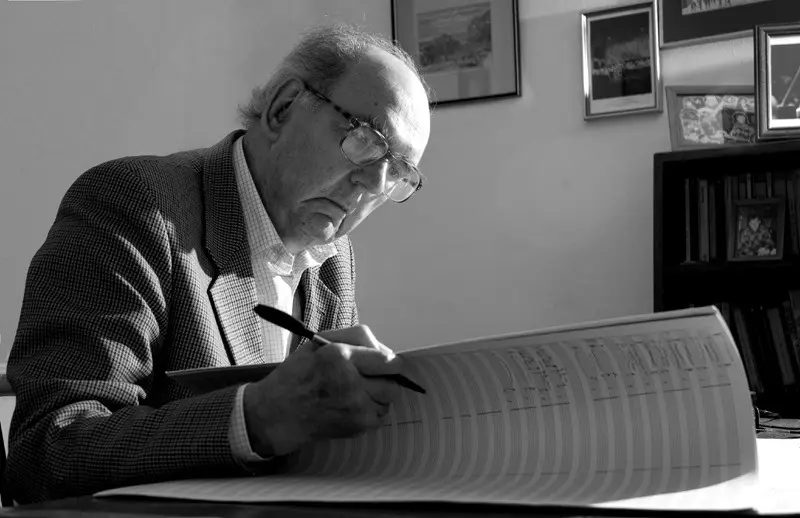
As the classical music world steadily looks ahead to the cultural milestones of the coming years, the city of Birmingham is gearing up for a major landmark celebration. Next year marks the centenary of the birth of John Joubert (1927–2019), a composer whose profound artistic footprint shaped the musical identity of the British Midlands and resonated far beyond its borders. Born under the warm skies of South Africa before finding his spiritual and creative home in the historic Birmingham suburb of Moseley, Joubert crafted a remarkable legacy comprising over 180 distinct works. His sprawling catalogue ranges from grand, sweeping operas and intricate orchestral suites to deeply spiritual choral masterpieces and accessible, universally beloved festive carols.
To whet the appetite of audiences ahead of the official centenary festivities, a special preview concert has been announced. On October 29, 2026, renowned conductor Jeffrey Skidmore—founder of the celebrated early music and choral ensemble Ex Cathedra—will take the podium at The Bradshaw Hall within the Royal Birmingham Conservatoire. Skidmore will lead the exceptional voices of the RBC Chamber Choir in a thoughtfully curated program. This musical evening is designed not only to showcase Joubert’s unique compositional voice but also to place it in direct dialogue with the works of historical masters who heavily influenced his artistic development, including William Byrd, Charles Hubert Hastings Parry, and Sergei Rachmaninoff.
This preview event serves as a crucial bellwether for the wider centenary year, signaling a concerted effort by Birmingham’s cultural institutions to reintroduce, celebrate, and re-evaluate Joubert’s substantial contribution to the classical canon. From his academic tenure at the University of Birmingham to the recent staging of his final opera, Jane Eyre, Joubert remains a figure of immense regional pride and international significance. This comprehensive report explores the life, influences, creative milestones, and upcoming celebratory events surrounding one of Britain’s most distinguished adopted musical sons.
Detailed Chronology: The Life and Times of John Joubert
Formative Years and South African Roots (1927–1950)
John Pierre Joubert was born on March 20, 1927, in Cape Town, South Africa. Growing up in a multicultural environment marked by complex sociopolitical landscapes, Joubert displayed an early and insatiable appetite for music. During his formative education at school in South Africa, he was introduced to the bedrock of Western choral and orchestral traditions. It was here that he first encountered the soaring vocal polyphony of William Byrd, the stately English romanticism of Sir Hubert Parry, and the lush, emotionally charged harmonies of Sergei Rachmaninoff. These foundational encounters left an indelible mark on his developing musical psyche, instilling in him a deep reverence for vocal counterpoint and expressive lyricism.
Recognizing his immense raw talent, Joubert pursued formal training, eventually traveling to the United Kingdom to study at the prestigious Royal Academy of Music in London under figures such as Howard Ferguson. These London years exposed him to the vibrant, post-war British musical establishment, allowing him to refine his technique and establish a distinct compositional voice that synthesized European traditionalism with a uniquely personal, contemporary emotional depth.
Relocation to Birmingham and Academic Career (1950–1980s)
In the early 1950s, Joubert made a move that would define the rest of his personal and professional life: he relocated to Birmingham. For over five decades, he made his home in the leafy, character-rich suburb of Moseley. Rather than retreating into an ivory tower of solitary composition, Joubert deeply embedded himself in the cultural fabric of the city.
In 1962, he joined the academic staff at the University of Birmingham, where he served as a much-loved teacher, lecturer, and conductor. Over a distinguished tenure that spanned more than two decades, Joubert mentored generations of young musicians, instilling in them a rigorous dedication to craft, historical awareness, and artistic integrity. Despite the demanding nature of academic life, his creative output continued unabated. He balanced teaching with relentless composing, producing major choral works, instrumental pieces, and stage works that caught the attention of prominent performers and commissioners across the United Kingdom.
Late Career, Major Masterpieces, and Continued Relevance (1990s–2019)
As Joubert transitioned into his later decades, his status shifted from that of a prominent regional composer to a revered elder statesman of British music. While many contemporary composers abandoned tonal and modal frameworks during the late 20th century, Joubert remained remarkably comfortable working within an expanded tonal language. He utilized dissonance and harmonic tension to serve emotional and dramatic narratives rather than chasing fleeting avant-garde trends.
His catalogue expanded to include ambitious large-scale operas, such as Under Western Eyes (based on the novel by Joseph Conrad) and Jane Eyre (adapted from Charlotte Brontë’s literary masterpiece). Joubert continued composing well into his advanced years, demonstrating a remarkable clarity of vision and compositional vigor. He passed away on January 7, 2019, leaving behind an astonishingly rich artistic legacy that continues to command the attention of serious musicians, scholars, and performers worldwide.
Supporting Context & Metrics: The Scale of Joubert’s Legacy
To truly understand the weight of the upcoming centenary celebrations, one must examine the metrics and cultural context of John Joubert’s life’s work. His oeuvre spans nearly a century of turbulent history, bridging the gap between mid-century British modernism and the contemporary classical landscape.
A Statistical Overview of the Catalogue
- Total Works Composed: Over 180 distinct compositions cataloged across various genres.
- Operatic Productions: Major theatrical works, including Antigone, Under Western Eyes, and Jane Eyre.
- Choral Masterpieces: Dozens of sacred and secular choral works, many of which have transcended the concert hall to become permanent fixtures of the modern cathedral and church choir repertoires.
- Tenure in Birmingham: Over 50 years of continuous residence and creative production in the city of Moseley.
- Academic Impact: Decades of dedicated service at the University of Birmingham, shaping the minds of countless composers, performers, and educators.
Defining Modern-Day Classics
While Joubert wrote extensively for orchestra and chamber ensembles, his greatest and most enduring impact lies within the choral realm. Works such as There is no rose, O Lorde the maker of al thing, and Torches have achieved the rare status of modern-day classics. Performed annually by cathedral choirs, school ensembles, and professional vocal groups around the globe, these carols and anthems are celebrated for their seamless blend of accessible melodic beauty and sophisticated harmonic structures.

Furthermore, his major sacred and secular cantatas demonstrate a profound engagement with theological, philosophical, and historical texts. His Magnificat, written specifically for the cathedral in Cape Town, bridges his South African origins with his adopted British choral traditions, creating a soaring, architectural monument in sound.
Official Statements and Artistic Vision for the Preview Concert
The upcoming October 29, 2026, preview concert at the Royal Birmingham Conservatoire’s Bradshaw Hall is more than just a routine musical gathering; it is an intentionally curated tribute designed to unpack the DNA of Joubert’s artistic influences.
Jeffrey Skidmore on the Roots of Joubert’s Inspiration
Jeffrey Skidmore, the visionary founder of Ex Cathedra and the conductor for the upcoming RBC Chamber Choir performance, offers critical insight into the genesis of the program. Reflecting on the conceptual framework of the evening, Skidmore notes:
"The idea for the programme came from a 50th anniversary concert that Ex Cathedra gave in Joubert’s honour in 1987. Joubert wrote in the programme about the inspiration of his school in South Africa where he was introduced to works by Byrd, Parry, and Rachmaninoff. His own compositions, There is no rose, O Lorde the maker of al thing, and Torches, are now modern-day classics. We’ll also include the Magnificat he wrote for the cathedral in Cape Town, and that links to the concluding piece—South of the Line—which I consider to be his masterpiece—a setting of five of Thomas Hardy’s powerful anti-Boer War poems."
This carefully constructed program establishes a direct genealogical line between the Renaissance polyphony of William Byrd, the late-Romantic majesty of Parry and Rachmaninoff, and the distinct mid-to-late 20th-century synthesis achieved by Joubert. By juxtaposing these historical pillars with Joubert’s own choral benchmarks, the concert invites listeners to experience the composer not as an isolated figure, but as a vital link in an unbroken chain of choral excellence.
Highlighting South_of_the_Line
Skidmore’s designation of South of the Line as Joubert’s ultimate masterpiece warrants deep critical attention. Setting Thomas Hardy’s scathing, poignant anti-Boer War poetry to music, the piece allows Joubert to confront his native land’s complex historical traumas through the lens of one of England’s greatest literary figures. The work requires immense emotional intelligence, vocal stamina, and interpretative depth from the choir, making its inclusion in the RBC Chamber Choir program a major highlight for connoisseurs of choral art.
Future Outlook: The Centenary Horizon
As the cultural sector looks toward the full unfolding of John Joubert’s centenary year in 2027, the October 2026 concert at the Royal Birmingham Conservatoire functions as an essential opening salvo. Musicologists, performers, and arts administrators are currently collaborating to plan a robust slate of events designed to bring Joubert’s music back to the forefront of the international consciousness.
Recent Momentum and Stage Revivals
The renewed interest in Joubert is not merely retrospective; it is actively theatrical. Last year witnessed a major milestone in the composer’s post-humous reception when his final opera, Jane Eyre, received its long-awaited stage premiere at the Grimeborn Festival. Critics praised the work for its dramatic pacing, vocal lyricism, and faithful yet imaginative translation of Brontë’s gothic romance into the operatic medium. This successful staging proved that Joubert’s theatrical instincts remained razor-sharp late into his life, sparking renewed calls for opera houses across the United Kingdom and internationally to explore his wider stage catalogue.
The Role of Institutions in Preserving Musical Heritage
The Royal Birmingham Conservatoire, alongside the University of Birmingham and local ensembles like Ex Cathedra, bears a special responsibility in stewarding Joubert’s legacy. By utilizing student bodies such as the RBC Chamber Choir for high-profile centenary preview events, these institutions ensure that the next generation of professional musicians are not only performing Joubert’s music, but internalizing its technical demands and expressive weight.
As details continue to emerge regarding further centenary events, broadcasts, recordings, and academic symposia, the classical music community is poised for a profound reassessment of a composer who quietly, diligently, and brilliantly enriched the global repertoire. Full ticketing, venue, and programmatic details for the October 29, 2026, concert can be accessed directly through the official Royal Birmingham Conservatoire Events Calendar.