Executive Overview
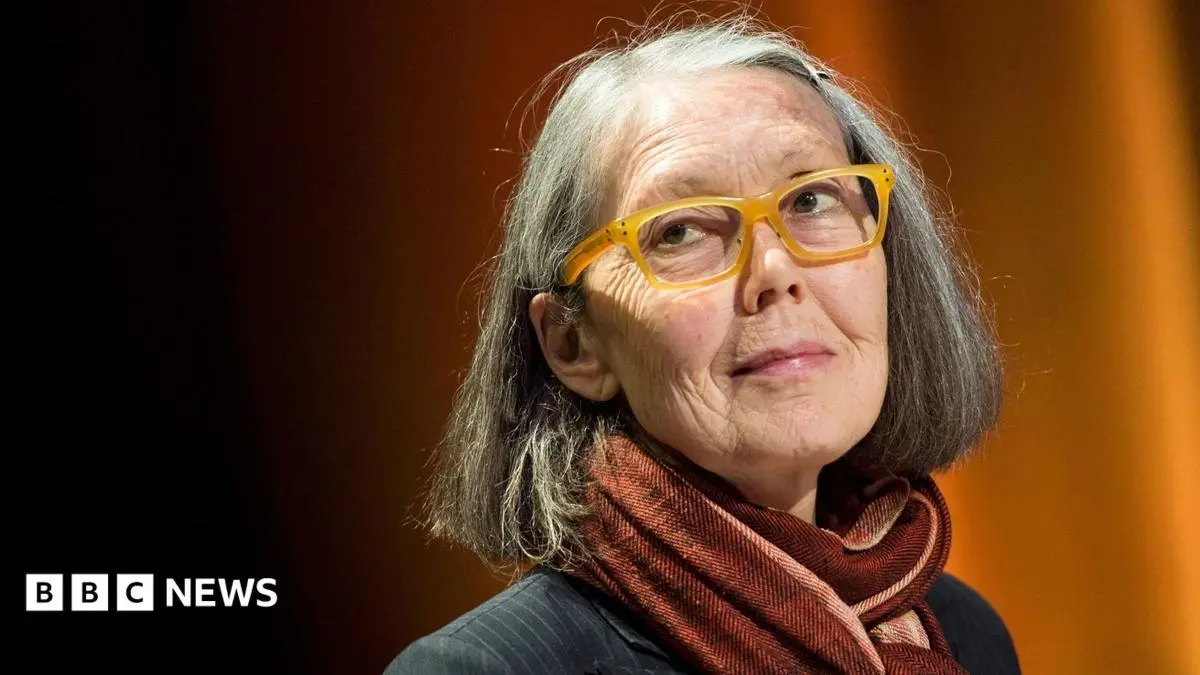
In a landmark decision that celebrates the intersection of classical scholarship and avant-garde literature, the Swedish Academy has awarded the Nobel Prize in Literature to the distinguished Canadian poet, essayist, and translator Anne Carson. At 76 years of age, Carson has built an internationally revered oeuvre that continuously defies conventional categorization, effortlessly sliding across the boundaries separating poetry, prose, fiction, and rigorous academic research.
According to the official citation released by the Nobel Committee, Carson was selected “for her bold and inventive oeuvre that, in playful dialogue with the classical tradition, has created new forms for contemporary literature.” This recognition places her among the pantheon of global literary giants, cementing her status as one of the most innovative and fearless voices writing in the English language today.
Carson’s reaction to the news matched the idiosyncratic wit and unpretentious brilliance that characterize her writing. Speaking to Iceland’s public broadcaster RÚV from her current retreat in the North Atlantic island nation, Carson lightheartedly remarked that the judges must be “crazy” for honoring her. Despite her characteristic modesty, the international literary community has greeted the announcement with overwhelming acclaim, viewing the award as a long-overdue validation of a writer who has fundamentally expanded the linguistic and structural possibilities of modern letters.
The Nobel Prize in Literature, widely regarded as the most prestigious and influential literary accolade in the world, comes with a cash award of 12 million Swedish kronor (approximately £900,000 or $1.2 million USD). Unlike prizes given for a single publication, the Nobel honors an entire lifetime of creative output. In Carson’s case, this encompasses four decades of breathtakingly original work that challenges readers to rethink how stories are told, how ancient myths reverberate in the modern psyche, and how poetry can function as an intellectual vehicle for profound emotional truths.
Detailed Chronology: From Classicist to Nobel Laureate
To understand the magnitude of Anne Carson’s Nobel Prize, one must trace a career that has consistently subverted academic norms and literary expectations. Born in Toronto in 1950, Carson’s early life was deeply intertwined with the ancient world. She pursued classical studies with monastic dedication, earning her BA, MA, and PhD from the University of Toronto, alongside a degree in Greek literature from the University of St Andrews in Scotland.
Throughout the 1980s and 1990s, Carson balanced her life as a professor of classics—teaching at institutions such as McGill University, the University of Michigan, and Princeton—with her vocation as a writer. This dual existence proved foundational. Rather than treating antiquity as a dead archive, Carson approached classical Greece as a living, breathing laboratory of human experience.
The Breakthrough: Eros the Bittersweet (1986)
Carson burst onto the international literary scene with her first book, Eros the Bittersweet (1986). Part philosophical treatise, part lyrical essay, the book explored the nature of romantic desire in ancient Greece, focusing on the Greek word glykypikron (sweetbitter). The work immediately established her unique critical voice: erudite yet vulnerable, analytical yet deeply poetic. It was named by the Modern Library as one of the 100 best nonfiction books of the twentieth century, signaling that a major new literary force had arrived.
Autobiography of Red (1998)
A seismic shift occurred in 1998 with the publication of Autobiography of Red: A Novel in Verse. Based loosely on the surviving fragments of a lost lyric poem by the ancient Greek poet Stesichoros, Carson’s book reimagined the myth of the monster Geryon and his defeat by the hero Herakles. Set in a contemporary, mundane landscape featuring volcanoes, photography, and broken romance, the work was a critical masterpiece. It shattered the barrier between high myth and contemporary domesticity, instantly widening the readership for verse novels and earning Carson global renown.
Continuing Innovation in the 21st Century
As the new millennium unfolded, Carson’s output accelerated in both volume and stylistic daring. She translated the works of Euripides, Sophocles, and Sappho, bringing a searing, modern immediacy to ancient tragedies. Her translations are prized not for their academic literalism, but for their ability to capture the violent, raw emotional core of the original texts.
Notable works from this mature period include:
- Nox (2010): An elegiac, accordion-fold book created as a memorial to her estranged brother, Michael. Combining photographs, dictionary entries, letters, and handwritten reflections, Nox is a masterclass in material literature, demonstrating how the physical book can embody the fragmented nature of grief.
- Float (2016): A collection of 22 separate chapbooks packaged in a clear plastic bag, which readers could read in any order they chose, defying the linear structure of traditional poetry collections.
- Norma Jeane Baker of Troy (2019): A hybrid performance piece starring Ben Whishaw and Renée Fleming that juxtaposed the myth of Helen of Troy with the life of Marilyn Monroe.
Supporting Context & Metrics: The Mechanics of the Nobel Prize
The Nobel Prize in Literature is governed by the will of Alfred Nobel, signed in 1895, which stipulates that the prize should be given to "the person who shall have produced in the field of literature the most outstanding work in an ideal direction." Over the decades, the prize has evolved to reflect an increasingly globalized literary canon, though it remains a lightning rod for cultural debate.
The Selection Process
The mechanics of the Nobel Prize are notoriously secretive.
- Nominations: Each year, the Swedish Academy invites hundreds of qualified individuals—including university professors of literature and linguistics, members of literary academies, previous Nobel laureates, and presidents of writers’ organizations—to submit nominations. The nomination deadline closes on January 31.
- The Longlist and Shortlist: Over the spring and summer, the 18-member Nobel Committee filters through hundreds of candidates, narrowing the field to a longlist of roughly 15 to 20 writers, and finally to a shortlist of five finalists by early autumn.
- The Announcement: The winner is chosen via a vote by the full Swedish Academy in October.
Financial and Cultural Impact
The award carries immense financial weight. The 2025 prize of 12 million Swedish kronor reflects recent upward adjustments by the Nobel Foundation to protect the capital of the prize against inflation. Beyond the monetary reward, the Nobel Prize acts as an instantaneous catalyst for global readership. Winning authors routinely see their back catalogs translated into dozens of new languages, massive reprint orders, and heightened academic scrutiny.
Anne Carson within the Nobel Landscape
Carson’s victory is particularly notable for her hybrid genre-defying output. The Swedish Academy has occasionally favored poets (such as Louise Glück in 2020 or Tomas Tranströmer in 2011) and novelists, but rarely has it honored a writer whose entire bibliography explicitly dissolves the boundaries between poetry, classical scholarship, essay, and visual art. By choosing Carson, the Academy has signaled a modernizing definition of what constitutes "literature" in the twenty-first century.
Official Statements and Reactions
The announcement sent immediate ripples through the global literary community, capturing headlines from Toronto to Stockholm, and finding the reclusive author in one of her favored environments: the windswept expanses of Iceland.
Ingrid Carlberg and the Swedish Academy
Ingrid Carlberg, the permanent secretary of the Swedish Academy, recounted the dramatic moments leading up to the public reveal. Speaking to press after the announcement, Carlberg detailed her phone call with Carson just minutes before the world was told.
"She had time to tell me that she is, for the moment, in Iceland, where she is listening to the wind," Carlberg shared with reporters, smiling at the poetic aptness of the author’s location. "She was taken by surprise but very happy. I could hear that in her voice."
Carlberg elaborated on the committee’s rationale, emphasizing Carson’s unique ability to converse with antiquity while remaining startlingly fresh and contemporary. "Anne Carson takes the ancient texts and strips away the dust of centuries," Carlberg noted. "She makes us realize that human passions, jealousies, griefs, and desires have not changed at all across three millennia."
Anne Carson’s Response
True to form, Carson’s public response was devoid of academic pomposity or scripted political gratitude. Interviewed by Iceland’s public broadcaster RÚV from her temporary residence, Carson offered a deadpan assessment of the Swedish Academy’s choice:
"I think they’re all crazy… Well, you know, it’s crazy."
Friends, publishers, and fellow writers were quick to offer more enthusiastic assessments. Canadian novelist Margaret Atwood took to social media to celebrate her compatriot, writing: "Anne Carson has expanded the very architecture of what poetry can hold. This is a glorious, thoroughly deserved victory for Canadian literature and world letters."
Publishers across North America and Europe reported immediate spikes in web traffic and orders for her key works, particularly Autobiography of Red and Eros the Bittersweet, as bookstores rushed to create display tables honoring the newest Nobel laureate.
Future Outlook: The Legacy of a Maverick Writer
As the dust settles on the 2025 Nobel announcement, literary critics and scholars are already beginning to assess what Anne Carson’s win means for the future of contemporary writing.
For decades, the literary marketplace has been rigidly segmented into fiction, nonfiction, poetry, and academic publishing. Bookstores rely on these categorical bins to market titles to consumers; university departments rely on them to determine tenure and curriculum. Carson’s entire career has been a sustained, brilliant insurrection against these commercial and institutional boundaries.
By honoring her, the Swedish Academy has validated the hybrid essay-poem-memoir-translation as a premier literary vehicle of our time. In an era dominated by short-form digital media, algorithmic content, and fragmented attention spans, Carson’s work proves that readers retain a deep appetite for dense, intellectually demanding, and emotionally searing art that demands active participation.
Furthermore, Carson’s triumph is a victory for classicism. In a cultural climate that frequently questions the relevance of the humanities, ancient history, and dead languages, Carson’s oeuvre stands as living proof that the past is an indispensable tool for deciphering the modern condition. Through her eyes, Sappho, Herakles, and Euripides are not dusty museum pieces, but urgent interlocutors speaking directly to the anxieties of the twenty-first century.
What Lies Ahead?
While Carson is notoriously private and maintains a quiet, nomadic lifestyle between North America and Europe, the Nobel Prize will inevitably thrust her further into the global spotlight. Whether she uses the platform to release new translations, collaborate on avant-garde performance art, or simply retreat further into her writing desk, the literary world will be watching.
The Nobel Prize in Literature does not merely crown a career; it cements an immortality. With this award, Anne Carson’s voice—wry, devastating, erudite, and fiercely original—is permanently secured in the global canon, ensuring that generations to come will continue to listen to the wind alongside her.