Executive Overview
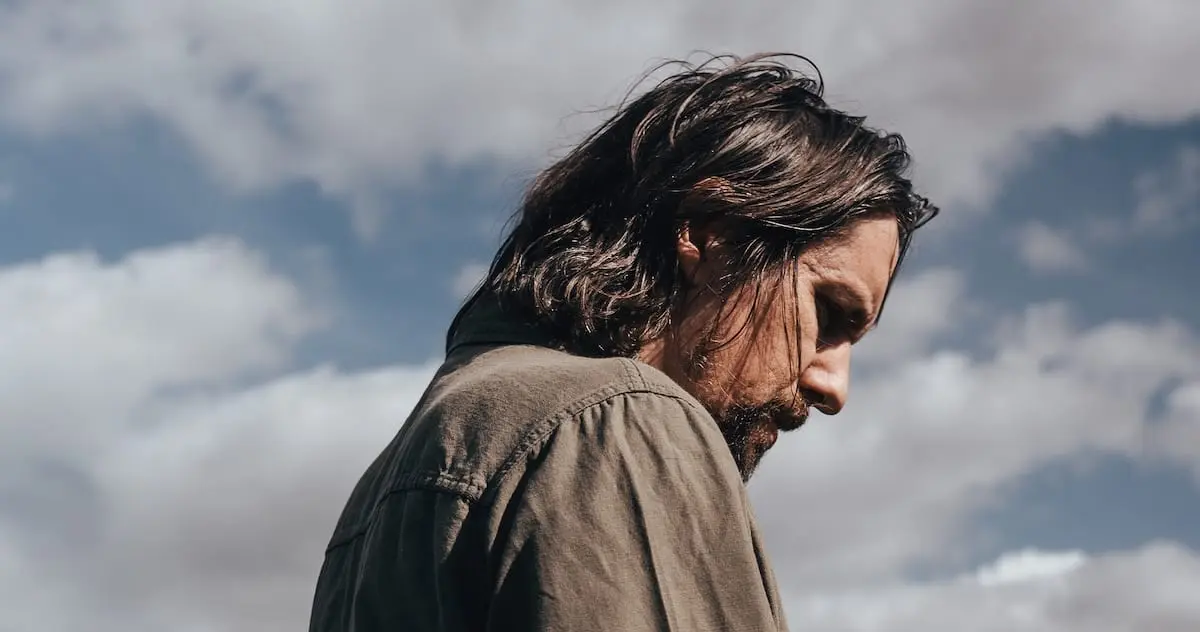
In the contemporary landscape of instrumental acoustic and electric guitar music, few figures command the quiet reverence and restless curiosity of Derbyshire-based guitarist Nick Jonah Davis. Over the course of a distinguished career that has gracefully bridged traditional folk, American primitive styling, avant-garde minimalism, and cinematic soundscapes, Davis has consistently refined his vocabulary. Now, with the announcement of his forthcoming full-length album, Rose Delta Rising—slated for release on September 4, 2026, via Eiderdown Records (US) and Cardinal Fuzz (UK)—Davis has delivered what can only be described as a defining career statement.
Recorded at the remote Black Bay Studio in the windswept Outer Hebrides, Rose Delta Rising is an album shaped by its geography. Surrounded by a stark landscape of rugged hills and vast, open bodies of water, Davis captures a rare kind of magical, otherworldly isolation. Eschewing the tactile acoustic artifacts of string buzzes, fret noise, and the warm wooden resonance of guitar bodies in favor of a clean, crystalline electric tone, Davis allows his music to exist in a state of absolute purity.
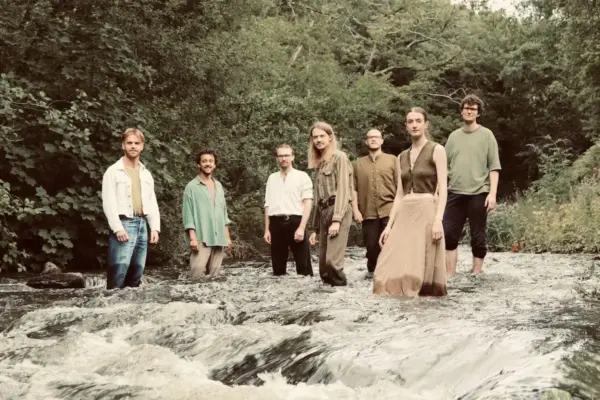
Yet, this is not a solitary endeavor. Davis is joined by an elite ensemble of sympathetic collaborators—including bassist Neal Heppleston, drummer Joe Danks, and string arranger Richard Birkin—who understand the profound discipline of restraint. Together, they have crafted an album that is both deeply composed and wildly adventurous. Rose Delta Rising stands as an impeccably recorded, elegantly performed masterclass in spatial dynamics, proving that in the hands of a master craftsman, the spaces between the notes carry just as much weight as the notes themselves.
Detailed Chronology: The Genesis and Evolution of Rose Delta Rising
To fully appreciate the scope of Rose Delta Rising, one must trace the evolutionary trajectory of Davis’s compositional methodology. Unlike artists who rush to capture spontaneous ideas, Davis is a meticulous caretaker of his tunes, allowing them to gestate, mature, and transform over years, sometimes decades, across different releases and live iterations.
The Hebridean Backdrop
The genesis of Rose Delta Rising began long before the first chord was struck at Black Bay Studio. Situated on the edge of the Atlantic Ocean in the Outer Hebrides, Black Bay provided an aesthetic blueprint for the album. The studio’s location—defined by driving winds, slate-gray waters, and an ancient, immutable landscape—mirrors the emotional resonance of Davis’s compositions. The starkness of the geography seeped into the tracking process, guiding Davis toward a cleaner, more exposed sonic palette. By utilizing a clean electric guitar setup stripped of natural acoustic anomalies, Davis magnified every nuance of his picking technique, ensuring that the environment’s crisp, biting air seemed to circulate through the very tracks.
Reimagining the Catalog: Past Meets Present
A fascinating aspect of Rose Delta Rising is Davis’s willingness to revisit and recontextualize material from his past catalog. Tracks that long-time followers might recognize take on entirely new lives under the production and arrangement choices of this latest recording era.
- "Poa Kichizi": Originally introduced on Split Electric, Davis’s 2016 split album with C Joynes, "Poa Kichizi" was a furtive, spiky, and jagged piece of electric guitar work. On Rose Delta Rising, those sharp edges are gracefully smoothed out by the silky, rhythmic foundation provided by Heppleston’s bass and Danks’s drums. The result is a fully realized, "finished" song that retains the DNA of the original while offering a sophisticated, modern counterpoint.
- "Whistle on the Woolf": Tracing its lineage back to the 2022 album When the Sun Came, "Whistle on the Woolf" was originally an atmospheric piece featuring a Weissenborn guitar wrapped in humid field recordings of birdsong and natural ambient noise. On the new record, the track undergoes a dramatic metamorphosis. Infused with a palpable dose of melancholy, earnest string arrangements give way to minimal percussion and sparse bass notes. The slower tempo and broader dynamic range elevate the song into something monumental and elegiac—evoking the haunting grandeur of a deserted medieval castle.
Experimental Horizons: The Title Track and "Peter and the Lark"
Davis has never shied away from the experimental fringes of music, as evidenced by pieces like "All Them Symbols" from When the Sun Came. On Rose Delta Rising, this adventurous spirit reaches new peaks, notably on the title track and the sprawling, eight-minute epic "Peter and the Lark."
The title track, "Rose Delta Rising," emerged organically from an additional string contribution by Richard Birkin. Birkin’s bowed, resonant notes wrap intimately around Davis’s searching, intricate guitar picking, creating a symbiotic dialogue between strings and frets. Meanwhile, "Peter and the Lark" functions as a masterclass in minimalist world-building. Over the course of eight minutes, the track slowly constructs a vast sonic landscape where beams of slide guitar wail out into the ether, anchored only by spare, deliberate picked notes. The overall effect vividly evokes the image of a solitary lighthouse beam cutting through a pitch-black, churning sea.
Supporting Context & Metrics: The Anatomy of a Modern Masterpiece
To understand the artistic weight of Rose Delta Rising, it is essential to examine the collaborative ecosystem and the specific sonic choices that set this record apart from contemporary instrumental releases.
The Art of Negative Space
In modern music production, the prevailing impulse is often to fill every available frequency with sound, compression, and wall-to-wall instrumentation. Davis and his ensemble take the radical opposite approach. By employing a clean electric guitar signal, Davis exposes the structural skeleton of his compositions.
This philosophy is brilliantly demonstrated on the track "Spoonbill" (released as a lead single and video premiere). The song is anchored by a precise, haunting slide guitar refrain that relies entirely on the interplay between instruments. Neal Heppleston contributes spare, resonant bass notes; Joe Danks maintains a quiet, unobtrusive drum pattern; and Richard Birkin weaves a subtle, unobtrusive string arrangement around the core melody. Rather than cluttering the mix, these auxiliary instruments frame Davis’s guitar work while intentionally enhancing the musical pauses—allowing whole beats of absolute silence to resonate as vital components of the sound design.
Personnel and Collaborative Synergy
The success of Rose Delta Rising hinges on the telepathic chemistry of a backing band specifically chosen for their restraint and maturity.
- Neal Heppleston: Known for his deep exploratory work in contemporary folk and drone (including notable releases on KLOF Mag and beyond), Heppleston provides a warm, foundational gravity that grounds Davis’s soaring fretboard acrobatics.
- Joe Danks: A percussionist celebrated for his atmospheric sensibilities (Seaspeak), Danks avoids bombast, utilizing texture, dynamic brushwork, and minimalist patterns to propel the music without ever overpowering it.
- Richard Birkin: As a composer and arranger, Birkin adds cinematic depth, utilizing strings not as a sweetening agent, but as an active compositional voice that converses directly with the lead guitar.
Official Statements & Artistic Vision
Reflecting on the overarching themes of Rose Delta Rising, industry observers and early reviewers have noted that the album represents a rare convergence of technical mastery and emotional maturity.
In promotional materials accompanying the release, the collaborative ethos of the project is underscored by the deliberate choice of studio environment. Black Bay Studio, isolated on the edge of the Atlantic, forced the musicians into a state of deep listening. As critics have observed, the album sounds unmistakably like "a musician very much in control of his craft and clear on his objective."
Davis himself has long championed the evolution of traditional motifs into modern instrumental storytelling. By allowing tunes to gestate over years of live performance and iterative recording, he treats compositions not as static artifacts, but as living organisms capable of shedding old skins. The transition of tracks like "Poa Kichizi" from jagged acoustic/electric experiments to lush, full-band arrangements demonstrates an artist willing to look backward only to propel his work decisively forward.
Future Outlook: A New Benchmark for Instrumental Music
As the music community anticipates the official release of Rose Delta Rising on September 4, 2026, through Eiderdown Records and Cardinal Fuzz, the implications for the broader genre of contemporary guitar music are significant.
In an era dominated by rapid consumption and algorithmic playlisting, Nick Jonah Davis continues to champion patience, deep listening, and uncompromising artistic integrity. Rose Delta Rising is not merely a collection of songs; it is an immersive listening experience that rewards close attention, high-fidelity playback, and repeated rotations.
For followers of British folk, American primitive guitar, and ambient minimalism, this album will undoubtedly stand as a high-water mark for the decade. By distilling years of stylistic exploration into an elegant, impeccably executed suite of songs, Davis has cemented his status as one of the UK’s most vital and visionary guitarists. Rose Delta Rising is available for pre-order now via Bandcamp through Eiderdown Records (US) and Cardinal Fuzz (UK), marking an essential acquisition for any serious collector of modern instrumental music.