Executive Overview
Literary landscapes are rarely shaken by protagonists who refuse to be liked, yet author Bianca Bellová has carved out a distinct space for narratives that reject easy assimilation. Her latest novel, translated brilliantly into English by Alex Zucker and published by World Editions, is The Long Version. The book captures a volatile window in the life of Sylvie, a middle-aged writer grappling with the dizzying aftermath of launching a best-selling feminist text that has deeply divided critics and readers alike.
Far from presenting an idealized or easily digestible model of contemporary womanhood, The Long Version plunges headfirst into the messy, uncomfortable intersections of aging, historical trauma, and shifting feminist paradigms. Sylvie is a narrator defined by her defiance. Whether she is contemplating pouring a pint of beer over the head of a defaulting publisher, furiously berating her children for invading her domestic boundaries, or giving a blistering dressing-down to male panel attendees who balk at her brand of radicalism, she refuses the polite scripts written for women of a certain age.
At its core, the novel acts as a high-stakes domestic and cultural battleground. Caught between an older generation that views modern gender fluidity with outright horror and a younger, Instagram-fluent demographic that demands immediate historical accountability, Sylvie finds herself stranded. The narrative builds to a sharp crescendo when her daughter, Judita, unearths Sylvie’s adolescent diaries. What follows is a painful unearthing of past grooming and abuse by older literary elites, forcing a generational reckoning that refuses simple resolutions. Through meticulous prose and sharp psychological insight, Bellová and Zucker deliver a masterclass in contemporary European fiction, holding up a mirror to the fractures within modern feminist discourse.
Detailed Chronology: The Anatomy of a Book Launch and Internal Upheaval
Introduction to Sylvie’s World
The Long Version opens in medias res, pulling the reader directly into the slipstream of Sylvie’s consciousness. The narrative voice is conspiratorial, urgent, and intensely physical. The opening sentence sets the thematic tone, dropping us into a sleazy club where past romances, lingering resentments, and middle-aged compromises collide. We find Sylvie at her book launch event—a moment that should represent professional triumph, but instead serves as the ignition point for a series of personal and political collisions.
Her book, a feminist text that has fractured the critical establishment, brings her into immediate conflict with her public. While some readers praise her uncompromising vision, others launch fierce critiques, accusing her of maintaining a rigid, binary approach to gender or acting as an inadvertent handmaiden to patriarchal structures. Sylvie’s reactions are rarely diplomatic. She is a woman forged in a specific crucible of Eastern European underground culture, and her instinctual response to institutional hypocrisy or personal disrespect is fire, not finesse.
The Intergenerational Clash: Mother, Daughter, and Author
As the narrative unfolds, Bellová maps out the impossible geography Sylvie must navigate between her aging mother and her young-adult daughter, Judita.
- The Older Generation: Sylvie’s mother represents a traditional worldview where gender roles were rigid, systemic, and unalterable. To her, contemporary conversations regarding gender as a matter of individual free choice are not merely confusing; they are genuinely appalling.
- The Younger Generation: At the opposite pole sits Judita, an environmentalist whose digital savvy is matched only by her domestic blind spots—such as an inability to recycle a simple juice box. Judita represents a modern wave of feminism that demands theoretical purity and uncompromising accountability.
Caught between these opposing forces, Sylvie cannot fully align with either world. She looks back at the radical underground companions of her youth—once daring publishers of clandestine literature who risked state persecution—only to see them transformed into "long-haired pensioners from the second-tier underground" who coast entirely on the fading fumes of past glories.
The Catalyst: The Unearthing of the Past
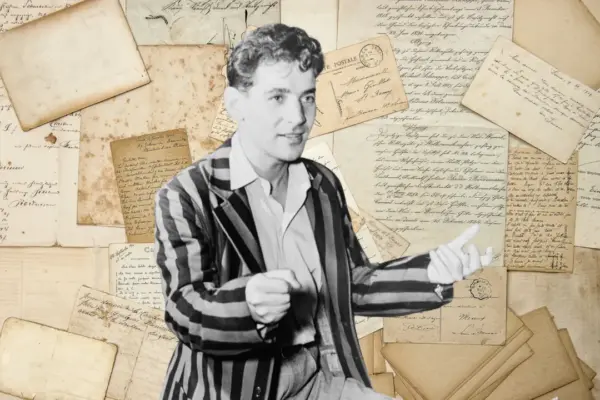
The central structural tension of The Long Version ignites when Judita discovers her mother’s teenage diaries. Within their pages lies the documented reality of Sylvie’s adolescent relationship with the much-older, celebrated author Jan Sýra—an exploitative dynamic that left deep, unhealed emotional scars.
This discovery forces Sylvie to confront memories she has long compartmentalized. She recalls episodes of casual, predatory entitlement from the literary men of her youth, including a prominent poet who casually shoved a hand up her skirt while asking Sýra to "borrow" her for the evening.
Yet, this moment of vulnerability does not produce a neat, cathartic reconciliation between mother and daughter. Sylvie reacts with intense fury, believing Judita has weaponized a sanitized, modern lens to judge a life she cannot possibly comprehend. Sylvie argues that her daughter is attempting to hold her accountable for an era that is irretrievably gone, a time whose survival mechanisms are entirely invisible to contemporary youth.
Supporting Context & Metrics: Translation, Themes, and Literary Lineage
The Triumph of Translation
The linguistic success of The Long Version is inextricably bound to the skill of translator Alex Zucker. Capturing Sylvie’s unique rhythm requires a delicate balance of syntactic complexity, conversational intimacy, and emotional whiplash.
Zucker successfully navigates sentences that threaten to sprawl into confusion, transforming them instead into masterclasses of narrative voice. The transitions in the novel—where everyday mundane actions abruptly shatter into blinding, visceral emotion—are rendered with surgical precision. For readers of translated fiction, Zucker’s work ensures that the Czech cultural and historical subtext resonates with global immediacy without losing its specific local flavor.
The Realities of Aging and Isolation
Beyond its political and generational themes, The Long Version is an unflinching look at the physical and emotional realities of aging as a woman. Sylvie observes with dry cynicism: "Success only increases your sex appeal if you’re a man."
Her romantic and sexual landscape is defined by compromise and quiet desperation:
- She is divorced, navigating a functional yet emotionally limited long-term sexual arrangement with her married publisher.
- She steals moments of physical release in the ten-minute breaks between academic seminars.
- She faces humiliating rejection from a younger poet whose professional interest she misinterprets as romantic attraction.
- She remains locked in the role of the devoted best friend to an emotionally narcissistic figure who represents the true, unrequited love of her life.
Bellová’s Literary Trajectory
The Long Version does not mark Bellová’s first foray into exploring the fault lines of gender and power. Her previous works—including the riotous Three Plastic Rooms and the dystopian The Movement, both also translated by Zucker—have established her as a vital voice in contemporary European letters. While each book explores different narrative territory, they share a unified mission: dismantling everyday sexism and exposing deep-seated cultural misogyny through fiercely original storytelling.
Official Statements and Critical Reception
Literary critics and cultural commentators have increasingly focused on how contemporary fiction handles the shifting definitions of feminism across generations. While The Long Version has elicited diverse responses from the literary press, consensus points to its rare willingness to avoid moral simplification.
Publishers and literary analysts note that Bellová’s work bridges a vital gap between Central European historical experiences and Western feminist discourse. In interviews and promotional materials surrounding World Editions releases, critics have highlighted the book’s ability to complicate the narrative of victimhood and agency.
"Success only increases your sex appeal if you’re a man," Sylvie observes within the novel, encapsulating the pervasive institutional inequality that underpins her professional frustrations.
Furthermore, commentary surrounding the book’s release has emphasized the meta-fictional elements embedded in Sylvie’s worldview. Bellová uses Sylvie to articulate the universal anxieties of the writing life: the perennial exhaustion of being asked gender-specific interview questions, the tactile connection between author and reader (envisioned memorably as someone reading in a warm bathtub), and the precarious economics of literature. Sylvie’s sharp observation that "without support from the state, there would be no Czech books published abroad" serves as a vital reminder of the infrastructure required to sustain global literary circulation.
Future Outlook: The Legacy of Sylvie and Intergenerational Dialogue
As The Long Version finds its audience in the Anglosphere, its reverberations within contemporary literary criticism are likely to be profound. The novel poses difficult, necessary questions about how modern social movements account for historical context.
By refusing to paint Sylvie as either a martyr of the patriarchy or an out-of-touch relic, Bellová opens a much-needed dialogue between older feminists—who fought institutional battles in closed, clandestine societies—and younger activists who demand systemic accountability through digital frameworks. The unresolved friction between Sylvie and Judita is not a narrative flaw, but rather its greatest strength. It mirrors the real-world friction of a society still negotiating what it means to honor the past while radically transforming the future.
Ultimately, The Long Version stands out as a triumph of character-driven fiction. It reminds us that literature’s highest calling is not to provide comforting moral resolutions, but to map the complex, contradictory terrain of human experience. As Sylvie continues to resonate with readers worldwide, Bianca Bellová cements her status as an indispensable chronicler of the modern human condition.