Executive Overview
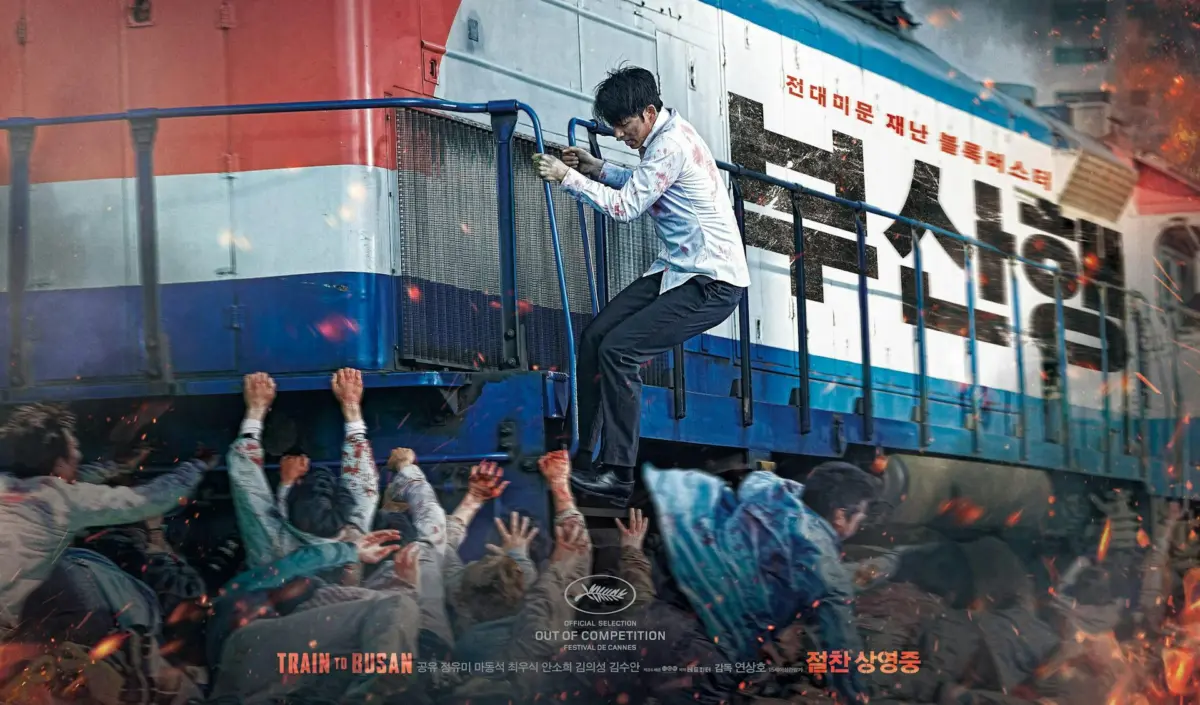
Ten years ago, a divorced fund manager and his young daughter boarded an express KTX train from Seoul to Busan, unaware that their journey would intersect with the collapse of civil society. Before the locomotive could cross into safety, a rapidly mutating viral outbreak had overrun the South Korean peninsula, turning the narrow aisles of a high-speed train into a microcosm of human panic, systemic failure, and moral reckoning.
Director Yeon Sang-ho’s Train to Busan, which premiered at the 2016 Cannes Film Festival, went on to shatter box-office records across Asia, drawing more than 11.5 million viewers domestically and redefining what a commercial horror film could achieve.
As the film returns to global cinemas in a newly minted 4K restoration for its tenth-anniversary milestone, its cultural footprint looks vastly different than it did upon release. In 2016, Train to Busan was widely viewed as an exciting anomaly—a high-concept genre piece punching well above its weight.
Today, it is recognized as a critical tectonic plate in the seismic global rise of South Korean entertainment. Arriving in a cinematic landscape forever altered by Bong Joon-ho’s Best Picture winner Parasite (2020) and Hwang Dong-hyuk’s global phenomenon Squid Game, the 4K re-release invites both critics and audiences to reexamine Train to Busan not merely as a masterclass in white-knuckle suspense, but as an indispensable architectural bridge. It was the film that proved South Korean commercial storytelling could effortlessly synthesize local socio-political trauma with universally resonant, high-octane blockbusting.
Detailed Chronology: From Underground Animation to Global Blockbuster
To understand the triumph of Train to Busan, one must trace the trajectory of its creator, Yeon Sang-ho. Long before he commanded multi-million-dollar live-action budgets, Yeon was an enfant terrible of South Korean independent animation. Working in the shadows of commercial cinema, his dark, uncompromising animated features—such as The King of Pigs (2011) and The Fake (2013)—earned critical acclaim on the festival circuit for their unsparing explorations of systemic bullying, domestic abuse, religious hypocrisy, and grinding poverty. These early works established Yeon’s signature worldview: institutions are inherently corrupt, society preys upon the vulnerable, and salvation is rarely found through collective rescue, but rather through harrowing individual awakenings.
In 2016, Yeon made the audacious leap into live-action filmmaking. Commissioning an animated prequel titled Seoul Station to establish the lore of the outbreak, he simultaneously shot Train to Busan. The premise was deceptively simple: trap a cross-section of modern South Korean society inside a confined, hurtling metallic tube and strip away the veneer of civilization as the landscape outside burns.
Following its midnight screening at Cannes, international distributors scrambled for rights. The film defied expectations by performing remarkably well in Western markets while completely dominating Asian box offices. It established that a zombie film—a genre heavily saturated by decades of Hollywood iterations—could be revitalized not through excessive gore or complex mythologies, but through hyper-focused spatial dynamics and ferocious emotional stakes.
The train itself became an active participant in the drama. Its sliding automatic doors, narrow luggage racks, and cramped vestibules forced characters into immediate, tactical proximity with the infected. Every movement between carriages became a breathless puzzle-box challenge, heightening the claustrophobia and keeping audiences pinned to the edge of their seats.
Supporting Context & Metrics: Societal Tectonic Plates and Box Office Realities
While the cinematic mechanics of Train to Busan are undeniably pristine, its deep resonance stems from its unflinching engagement with national trauma. The film’s narrative mirrors a collective psychological wound that was still raw and festering in South Korean society when the movie hit theaters: the tragic sinking of the MV Sewol on April 16, 2014.
The Shadow of the Sewol Ferry Disaster
On that fateful spring morning, the Sewol ferry capsized, claiming the lives of 304 people—250 of whom were high school students hailing from Danwon High School. Subsequent investigations revealed a catastrophic cascade of systemic failures: incompetent regulatory oversight, a corporate culture of criminal negligence, cowardly instructions given by the crew ("stay put"), and a sluggish, opaque government response led by then-President Park Geun-hye’s administration.
The national trauma was profound and enduring. Citizens watched in horror as institutional protectors failed citizens at every turn. When Train to Busan depicts government broadcasts lazily dismissing the zombie outbreak as mere "violent unrest," or portrays a supposedly secure military quarantine zone at Daejeon Station as already overrun and compromised, the parallels to the Sewol disaster were glaringly transparent to domestic audiences.
The film serves as an aggressive critique of institutional apathy. Throughout the journey, passengers receive conflicting, useless updates from official channels, forcing them to fend for themselves. This profound skepticism toward authority directly mirrored the public mood of late 2016, when millions of South Koreans took to the streets in historic candlelight protests calling for President Park’s impeachment over a massive corruption scandal.
Train to Busan captured this exact moment of national awakening. It reflected a populace that no longer trusted the safety nets promised by corporate executives and political elites, recognizing instead that survival depended on mutual human solidarity.
Metrics of Success
- Domestic Attendance: Surpassed 11.5 million admissions in South Korea, cementing it as one of the country’s most-watched domestic films.
- International Box Office: Broke all-time local film opening and gross records across multiple Asian territories, including Hong Kong, Singapore, Thailand, and Malaysia.
- Critical Acclaim: Secured a 94% approval rating on Rotten Tomatoes, with critics praising its seamless blend of social commentary and breakneck kinetic action.
Official Statements and Industry Perspectives
In retrospective analyses and press statements surrounding the 4K re-release, industry veterans and cultural theorists have increasingly emphasized the pivotal role Train to Busan played in softening global resistance to non-English language cinema.
Director Yeon Sang-ho, reflecting on the evolution of South Korea’s media landscape over the past decade, has consistently pointed out that the global explosion of K-dramas and K-cinemas was not an overnight miracle, but a systematic, multi-year construction of trust between creators and international audiences. In past interviews addressing his subsequent projects—such as the Netflix supernatural thriller series Hellbound—Yeon noted:
"International success does not happen by accident. It is built piece by piece, as creators push the boundaries of what local genres can say about universal human fears. Train to Busan was an experiment in whether a distinctly Korean critique of social selfishness could wear the clothes of a global blockbuster without losing its soul."
Film historians and cultural critics note that prior to 2016, international appreciation for South Korean cinema was largely confined to art-house aficionados and festival circuits, championed by visionary auteurs like Bong Joon-hop (Memories of Murder, The Host) and Park Chan-wook (Oldboy). These films were revered as masterpieces, yet they often occupied a niche space in Western distribution markets.
Train to Busan changed the equation. By utilizing the universally understood grammar of the zombie thriller, it successfully breached mainstream multiplexes across the globe. It acted as an introductory gateway, conditioning Western audiences to embrace subtitles and unfamiliar cultural nuances within high-concept entertainment.
When Bong Joon-hk’s Parasite swept the Academy Awards four years later, making history by winning Best Picture, and when Squid Game subsequently paralyzed global internet traffic as Netflix’s most-watched series ever, they walked down a path that Train to Busan had aggressively paved. Both Parasite and Squid Game relied on the exact same formula pioneered by Yeon and his contemporaries: wrapping biting, hyper-local critiques of late-stage capitalism, class warfare, and systemic failure inside wildly entertaining, genre-bending narratives.
Future Outlook: The Enduring Legacy and the Next Decade of Korean Cinema
As Train to Busan returns to silver screens in crisp 4K resolution a full decade after its initial theatrical run, its thematic urgency remains undiminished. In an era marked by compounding global crises—ranging from institutional decay and economic inequality to public health anxieties—the moral dilemmas faced by the passengers on that doomed train feel as pressing today as they did in 2016.
The film’s ultimate emotional core rests not on the ferocity of its undead antagonists, but on the profound moral choices of its characters. Seok-woo, the emotionally detached fund manager, begins his journey willing to sacrifice anyone outside his immediate bloodline to ensure his daughter’s safety. Yet, through the quiet, stubborn empathy of his young daughter, Su-an—who continually offers her seat to the elderly, shares her water with the desperate, and reaches out a hand to a terrified homeless man—Seok-woo undergoes a radical spiritual transformation. He learns that hyper-individualism is a death sentence, and that true preservation is a collective enterprise.
Looking forward into the late 2020s, the landscape of South Korean screen culture continues to expand with astonishing velocity. Major streaming conglomerates invest billions in Seoul-based production studios, and Korean actors, directors, and technicians are now foundational pillars of global Hollywood.
Yet, amidst this era of unprecedented commercial consolidation and international co-productions, the tenth anniversary of Train to Busan serves as a vital reminder of where the modern wave found its ferocious momentum. It stands as a monument to a specific moment when bold artistic vision met uncompromised social critique—proving that when a story is deeply rooted in the authentic struggles of its people, language and borders dissolve entirely, leaving behind a cinematic experience that can terrify, move, and unite the entire world.