Executive Overview
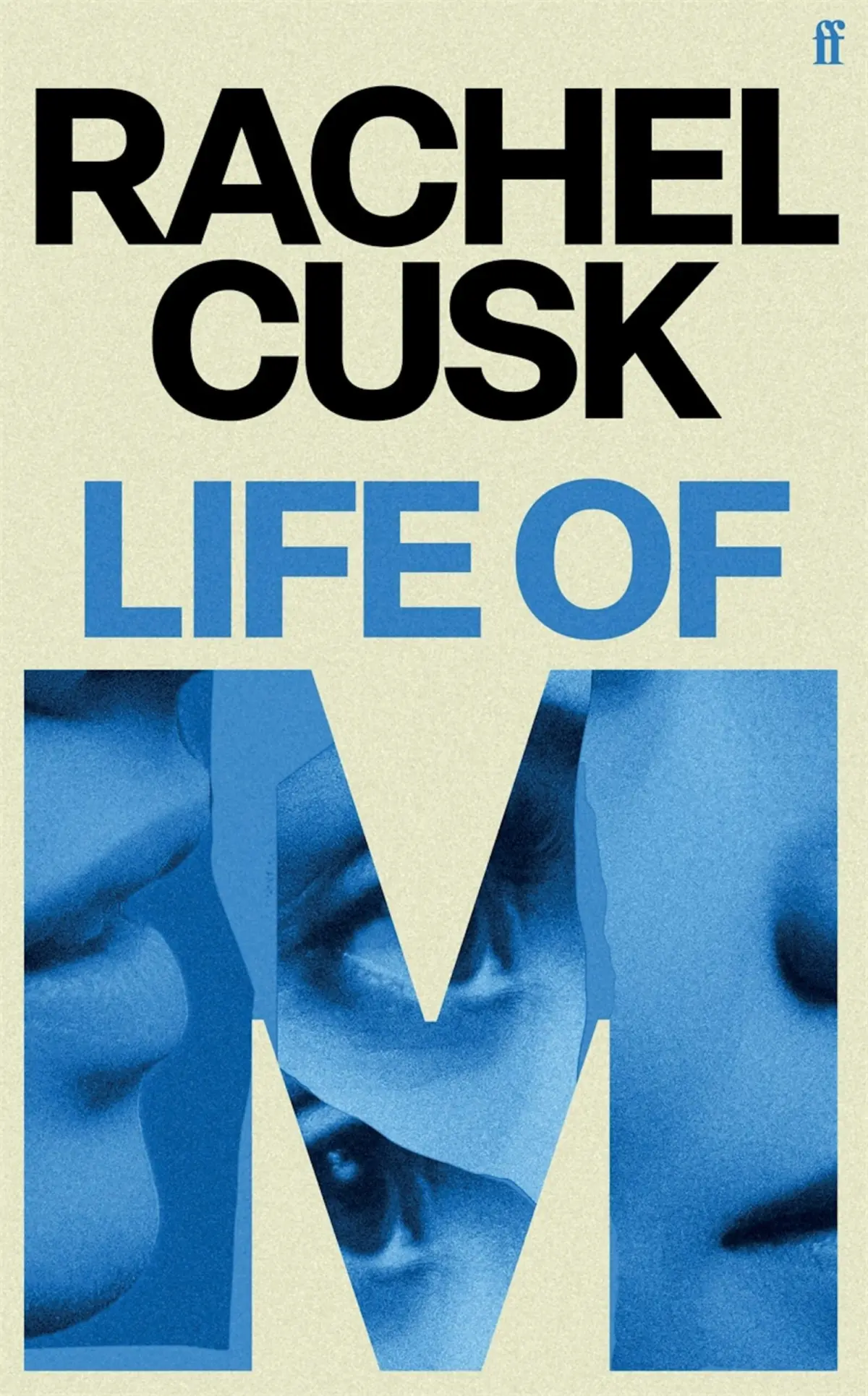
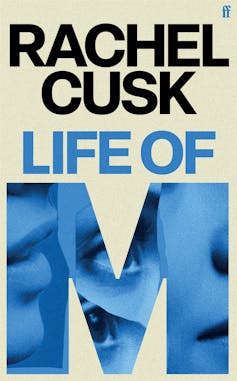
In the contemporary literary landscape, few releases ignite public discourse quite like Rachel Cusk’s latest novel, Life of M. Dubbed a prime example of "biogossip"—a biography-adjacent fiction piece supposedly grounded in the real-life trials of actress Natalie Portman—Cusk’s book has catalyzed heated online debates regarding fame, power, privacy, and truth. Yet, while the internet obsesses over mapping real-world celebrities onto fictional archetypes, it risks missing the forest for the trees. Cusk’s work is not merely a high-society roman à clef; it is the latest chapter in a centuries-old literary tradition that weaponizes rumor, scandal, and informal communication to decode human psychology.
Far from being a modern symptom of declining attention spans or a desperate bid to rescue contemporary reading habits, gossip has always formed the beating heart of narrative fiction. From 17th-century French salons satirizing absolute monarchs under the guise of ancient Persian nobility to Jane Austen’s drawing rooms and William Shakespeare’s trickster comedies, gossip functions as an essential social engine. By analyzing how authors utilize gossip—and how readers process it—we discover that reading like a gossip is not an act of intellectual surrender. Instead, it is a sophisticated cognitive tool that mirrors how we navigate social networks, decode human behavior, and unlock the enduring complexities of classic and contemporary texts alike.
Detailed Chronology: The Evolution of "Biogossip" and the Roman à Clef
To understand the current fervor surrounding Life of M, one must examine the historical trajectory of fiction that flirts with real-world biography. The phenomenon of embedding thinly veiled public figures within narrative fiction is far from a 21st-century invention born of internet culture; its roots stretch back over four centuries.
The 17th Century: The Birth of the Roman à Clef
The structural blueprint for modern "biogossip" was established in the 1600s, most notably by French writer Madeleine de Scudéry. Credited with pioneering the roman à clef (literally translated from French as "novel with a key"), Scudéry utilized fiction as a sophisticated evasion tactic against absolute censorship and potential charges of libel.
In her monumental ten-volume epic Artamène ou le Grand Cyrus (co-written with her brother Georges), Scudéry engaged in biting political commentary regarding The Fronde (1648–1653)—a series of civil uprisings directed against the regency government of Queen Anne of Austria and her chief minister, Cardinal Mazarin. By transposing the turbulent court dynamics of 17th-century France into an exotic, ancient Persian setting, Scudéry and her contemporaries could safely dissect power struggles, clandestine affairs, and political corruption. The "key" allowed discerning readers to unlock the identities of real historical personages, transforming literature into an interactive public forum of shared, insider knowledge.
The 19th Century: Austen and the Weaponization of the Parlor
As the novel evolved into its modern form, 19th-century literature harnessed gossip not merely for political subterfuge, but as an intimate domestic engine. Jane Austen’s works, for instance, operated almost entirely on the currency of small-town and aristocratic rumor. In Pride and Prejudice, the opening salvo is fired through the medium of neighborhood gossip: Mrs. Bennet learns from Mrs. Long that Netherfield Park has been leased by a wealthy, eligible bachelor.
This exchange is not idle chatter; it is an immediate diagnostic tool that maps the marital anxieties of the Bennet household against the stoic, detached cynicism of Mr. Bennet. Austen weaponized gossip to expose the rigid socio-economic pressures governing courtship, establishing a literary precedent where character motivations are laid bare through informal, whispered channels.
The 20th and 21st Centuries: From Cinematic Subtext to "Biogossip"
In the digital age, the mechanisms of the roman à clef have accelerated into what critics now term "biogossip." Rachel Cusk’s Life of M exemplifies this evolution. As detailed by journalist Elle Hunt in The Guardian, the novel invites readers to map its narrative arcs onto the cinematic and personal biography of Natalie Portman. References to foundational films such as Léon: The Professional (1994) and Black Swan (2010) serve as breadcrumbs for readers familiar with Portman’s public profile.
While purists occasionally decry this trend as a superficial distraction from thematic analysis, the biogossip phenomenon demonstrates how contemporary fiction leverages public mythology to interrogate the cost of celebrity, the fragmentation of identity, and the ownership of personal truth in the 21st century.
Supporting Context & Metrics: The Sociology of the Rumor Mill
To dismiss gossip as a trivial byproduct of cultural consumption is to ignore its foundational role in human evolution and social bonding. Sociological and psychological research indicates that gossiping is a complex, highly structured cognitive process rather than a mindless waste of time.
The Cognitive Mechanics of Gossip
When two individuals engage in a detailed discussion regarding the actions, missteps, or relationships of a mutual acquaintance, several intricate social processes occur simultaneously:
- Information Pooling: Participants must possess and share a working knowledge of an interconnected social network.
- Moral Alignment: Offering an opinion on behavior is not value-neutral; it serves as a public demonstration of the speaker’s own moral framework, ethical boundaries, and psychological biases.
- Reflective Insight: Post-conversation analysis frequently leaves participants with a heightened awareness of their own emotional triggers, behavioral tolerances, and social boundaries.
According to classic studies in sociological journals, gossip acts as social glue, enforcing community norms and establishing trust hierarchies. When applied to literature, these exact psychological mechanisms are activated. The reader steps into the role of the confidant, processing character interactions through the lens of human socialization.
Comparative Engagement Metrics in Modern Reading
| Literary Era / Genre | Primary Method of Delivering Subtext | Reader Cognitive Demand | Modern Cultural Equivalent |
|---|---|---|---|
| 17th-Century Roman à Clef | Political allegory & coded court rumor | High (requires historical "key") | Whistleblower memoirs & political satire |
| 19th-Century Domestic Novel | Parlor gossip & epistolary revelation | Moderate-High (social decoding) | Small-town rumor mills & community forums |
| 20th-Century Modernism | Internal monologue & stream of consciousness | High (psychological excavation) | Deep-dive psychological profiles |
| 21st-Century "Biogossip" | Real-world subtext & multimedia allusions | Accessible-High (intertextual mapping) | Celebrity culture commentary & viral analysis |
As illustrated above, the shift toward "biogossip" in contemporary works like Cusk’s Life of M is not a degradation of literary standards, but a continuation of the oldest trick in the authorial playbook: using recognizable human drama as a Trojan horse for deeper philosophical inquiry.
Official Perspectives and Critical Discourse
The debate surrounding Life of M and the broader inclusion of gossip in literature has sharply divided literary critics, cultural commentators, and academics.
The Pro-Gossip Argument: Lowering Barriers to Entry
Proponents of the "biogossip" wave argue that anchoring fiction in recognizable real-world drama serves as a vital access point for modern readers. In an era marked by competing digital stimuli and documented declines in deep reading habits, recognizable cultural allusions act as an open invitation.
Journalist Elle Hunt posits that leaning into our innate appetite for gossip might revitalize public engagement with serious literature. By transforming the reading experience into something participatory—where audiences hunt for clues, decode subtexts, and connect fictional dilemmas to real-world headlines—literature regains its cultural immediacy. It transforms the solitary act of reading into a dynamic, communal conversation.
The Formalist Counter-Perspective: Protecting the Textual Autonomy
Conversely, traditional literary critics caution against reducing sophisticated artistic creations to mere guessing games. The risk of the biogossip framework, purists argue, is that it flattens complex psychological novels into sensationalist puzzles.
When a masterpiece is consumed solely through the lens of "who is this character really based on?", the artistic architecture—the prose style, thematic resonance, structural pacing, and philosophical inquiry—is obscured. From this perspective, excessive focus on real-world gossip treats literature as a secondary byproduct of celebrity culture rather than an autonomous work of art capable of standing on its own merits.
Future Outlook: The Intersection of Celebrity Culture and Literary Form
As we look toward the future of publishing, the tension between biographical speculation and narrative fiction is unlikely to dissipate. Instead, authors and publishers are finding innovative ways to leverage our hyper-connected, celebrity-obsessed culture to foster deeper literary engagement.
The Democratization of Literary Decoding
The rise of digital book clubs, literary influencers on social media, and online reading communities means that the "keys" to contemporary romans à clef are shared and decoded collaboratively in real time. What once required specialized knowledge of 17th-century French court politics or 19th-century aristocratic etiquette is now crowdsourced across global digital platforms within hours of a book’s release.
This collective decoding process transforms reading into a participatory sport. Far from diluting the value of literature, this collaborative gossip creates an expansive, inclusive ecosystem where readers feel empowered to analyze texts with the same rigor and passion they apply to their own social circles.
Reading as a Form of Empathy Training
Ultimately, whether we examine the strategic gossip of Austen’s drawing rooms, the encoded court intrigues of Madeleine de Scudéry, or the modern celebrity allusions in Rachel Cusk’s work, the core utility of reading remains unchanged. By practicing the art of the gossip—learning to read between the lines, identify behavioral patterns, and evaluate moral motivations—readers sharpen their capacity for empathy and social intelligence.
The enduring survival of gossip in literature signals something profound about the human condition: our problems, our social awkwardness, our ambitions, and our heartbreaks have remained remarkably consistent across the centuries. When we pick up a book and look for the gossip, we are not running away from serious art; we are running directly toward our shared humanity, discovering that in the messy theater of life, we are never truly alone in our experiences.