Executive Overview
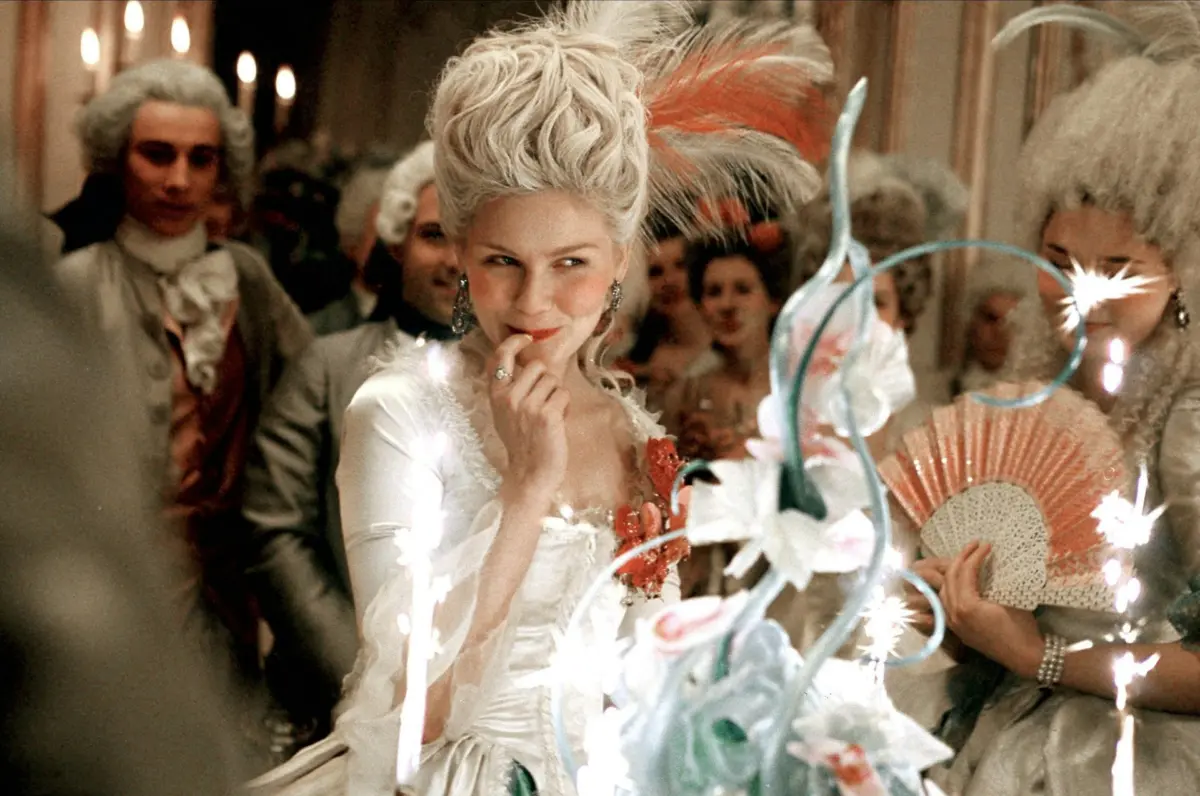
Two decades after suffering a notoriously chilly reception at the 2006 Cannes Film Festival, Sofia Coppola’s pastel-drenched, postmodern biographical drama Marie Antoinette is finally receiving its historical and cultural vindication. To mark its 20th anniversary, the opulent Château de Versailles has taken the unprecedented step of dedicating a landmark, full-scale immersive exhibition to the film. Tucked away within the formal flowerbeds of the sprawling estate, the Petit Trianon has been transformed into a living shrine where bold pink floral arrangements clash delightfully with the post-punk sounds of New Order—a deliberate homage to the cinematic world Coppola conjured twenty years ago.
This retrospective represents a watershed moment for both the film and the historic institution. While more than 200 films have utilized the grounds of Versailles over the decades, this is the first time the estate has curated an exhibition dedicated entirely to a single motion picture. Developed in close collaboration between Coppola and Versailles curators Laurent Salomé and Hélène Delalex, the exhibition merges historical preservation with cinematic fantasy. Visitors walk through the very rooms once inhabited by the teenage queen, encountering authentic Sèvres dinner services placed directly alongside elaborate, confectionary film props crafted by art director Anne Seibel and Michelin-starred chef Marc Meneau.
Yet, the journey from its box-office misfire in 2006—where it barely broke even on a $40 million budget and earned jeers from critics—to its current status as a prescient masterpiece is a study in cultural timing. When it premiered, Coppola’s stylized, girl-centric pop-art lens was dismissed by many as superficial or anachronistic. Today, viewed through the dual prisms of the post-#MeToo era, widespread economic precarity, and the saturation of digital self-curation, Marie Antoinette is recognized as a pioneering work. It anticipated the irreverent, revisionist historical dramas of the 2020s—such as Bridgerton, The Great, and The Favourite—while offering a profound, melancholic meditation on girlhood, systemic opulence, and the suffocating weight of performative femininity.
Detailed Chronology: From Production to Vindication
2006–2010: The Cannes Backlash and Commercial Struggle
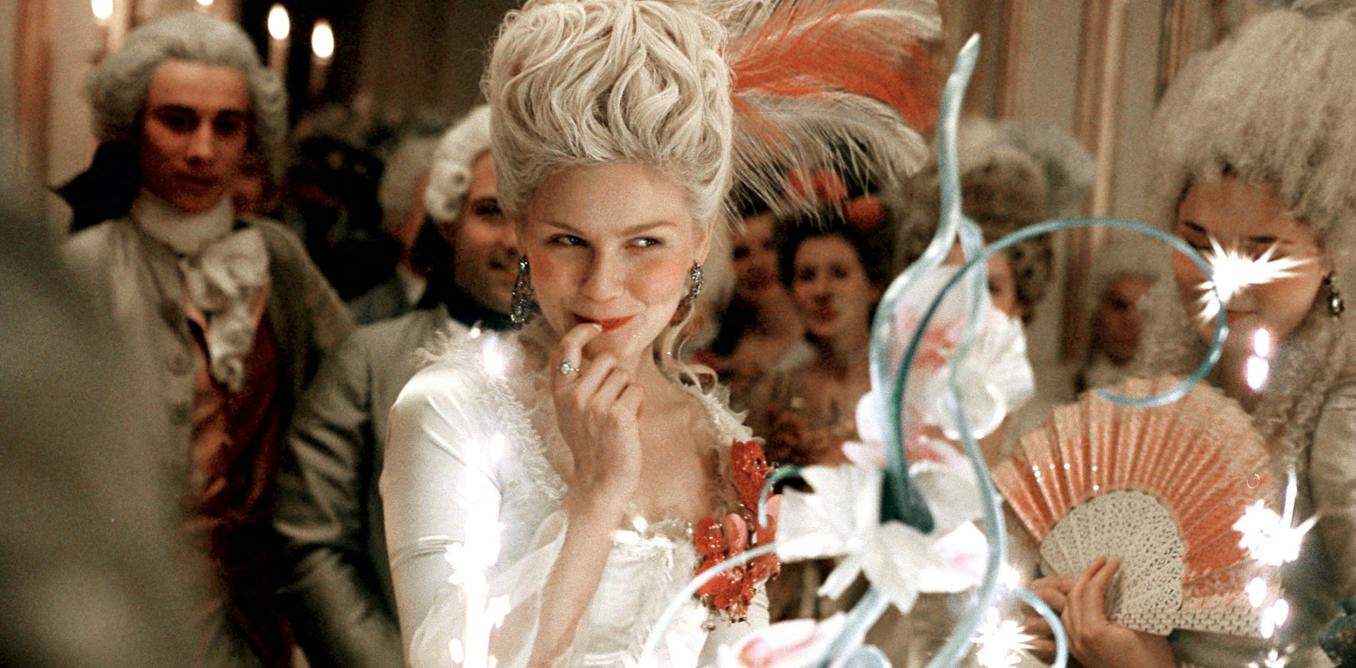
In May 2006, anticipation was high when Sofia Coppola brought Marie Antoinette to the competition at the Cannes Film Festival. Fresh off her Academy Award win for Lost in Translation (2003), Coppola was a darling of independent cinema. However, the screening was met with a chorus of boos from a traditionalist press corps baffled by her anachronistic choices. Critics could not reconcile the juxtaposition of 18th-century court life with Converse sneakers, electric guitar riffs by Bow Wow Wow, and a bubblegum-pink color palette.
Commercially, the film struggled. Distributed by Sony Pictures Releasing, it grossed roughly $60 million globally against a $40 million production budget—a performance that, once marketing and distribution costs were factored in, left the studio in the red. The critical and financial rebuke stung; Coppola did not direct another feature film for four years, returning in 2010 with Somewhere. For a long time, Marie Antoinette was unfairly relegated to the cinematic footnotes as an expensive, indulgent misfire.
2010–2020: Cult Reappraisal in the Age of Digital Self-Fashioning
As social media platforms like Instagram and Tumblr took over digital culture in the early 2010s, a new generation of film fans began to champion the aesthetic brilliance of Coppola’s work. The meticulous set design, the pastel confections, and the emotional resonance of a young woman navigating a gilded cage found an enthusiastic audience online.
Simultaneously, film scholars began to re-evaluate the movie’s thematic depth. Far from being a shallow exercise in style over substance, critics recognized that Coppola was using pop-art conventions to explore serious themes: institutionalized isolation, patriarchal control, and the commodification of female identity. The film’s portrayal of the queen—not as a callous monster, but as an isolated teenager using fashion, sugar, and shopping to cope with an arranged marriage and a stifling court—gained new emotional traction in an era increasingly attuned to the mental health struggles of young women in the public eye.
2020–Present: The Shift to Mainstream Historical Irreverence
By the arrival of the 2020s, the cultural landscape had finally caught up to Coppola’s vision. The immense popularity of Netflix’s Bridgerton (2020), Hulu’s The Great (2020), and Yorgos Lanthimos’s The Favourite (2018) proved that audiences hungered for playful, revisionist history that traded dusty academic rigor for vibrant emotional truth and stylistic audacity. Coppola had pioneered this sub-genre fourteen years too early.
The culmination of this long-overdue appreciation arrived in late 2026. The Criterion Collection released a definitive 4K digital restoration of Marie Antoinette, packed with insightful commentaries, deleted scenes, and critical essays. Concurrently, Mubi announced the release of The Making of Marie-Antoinette, a documentary directed by Sofia’s mother, the late Eleanor Coppola, offering an intimate look behind the scenes. Finally, the Château de Versailles opened its gates for the anniversary exhibition, cementing the film’s status not just as a cult favorite, but as a recognized piece of cultural heritage sitting side-by-side with the history it dramatized.
Supporting Context & Metrics
To fully understand the magnitude of the 20th-anniversary exhibition and the film’s critical turnaround, it is helpful to examine the financial, logistical, and cultural metrics surrounding the project:
| Metric Category | Data Point / Detail |
|---|---|
| Production Budget (2006) | US $40 million (£21.7 million) |
| Global Box Office | Approximately US $60 million |
| Cannes Premiere Date | May 24, 2006 (met with boos and mixed reviews) |
| Versailles Milestone | 1st exhibition in the estate’s history dedicated to a single film |
| Exhibition Venue | The Petit Trianon, Château de Versailles |
| Archival Collaborations | Real Sèvres porcelain paired with Anne Seibel & Marc Meneau food props |
| Restoration Format | 4K Digital Restoration via The Criterion Collection |
The physical exhibition within the Petit Trianon leverages these metrics to create an uncanny dialogue between reality and cinematic artifice. Visitors are confronted with the dualities of the space: real portraits of Marie Antoinette painted by Élisabeth Vigée Le Brun hang adjacent to mannequins styled precisely like Kirsten Dunst in her silk corsets and feathered headdresses. This blurring of lines underscores Coppola’s core thesis—that the historical queen and the cinematic queen were both prisoners of an image-obsessed culture.
Official Statements and Curatorial Insights
The collaboration between Hollywood authorship and French state heritage administration represents a unique bridging of worlds. Curators and creators have shared profound insights regarding the genesis and impact of this anniversary tribute.
Sofia Coppola, reflecting on the historical parallels during the Versailles press launch, noted:
"When we shot here twenty years ago, it felt like stepping into another world—one that was intensely heavy yet achingly delicate. Coming back now, seeing how the film has lived on through generations of viewers who understood its emotional core, is deeply moving. We weren’t trying to make a dry history textbook; we wanted to capture what it felt like to be a young, powerless person trapped inside a glittering machine."
Laurent Salomé, co-curator of the Versailles exhibition, emphasized the pedagogical value of blending film artifice with royal history:
"More than two hundred films have used Versailles as a backdrop, but none have engaged with our spaces quite like this. Coppola did not just use the Château as a pretty location; she re-animated it. By bringing the film’s props, costumes, and sensory details back into the Petit Trianon, we are inviting the public to see our history through a fresh, intensely human lens. It challenges the visitor to consider how historical figures construct their identities under the relentless gaze of power."
Claire Healy, girlhood scholar and contributor to the Criterion Collection release, contextualized the film’s enduring sociological weight:
"Coppola’s film was a manifesto for the autonomy of girlhood. At a time when ‘girl power’ was largely co-opted by commercial interests to sell lifestyle products, Marie Antoinette had the audacity to show the tragic limits of that power. It reminds us that even at the absolute pinnacle of material wealth, female agency within a patriarchal system remains fragile, precarious, and ultimately vulnerable to systemic collapse."
Future Outlook
As Marie Antoinette enters its third decade, its legacy is securely cemented as a foundational text of 21st-century cinema. The success of the Versailles exhibition signals a broader shift in how historic institutions interact with popular culture. Rather than guarding their collections behind austere, unapproachable academic walls, cultural landmarks like Versailles are increasingly recognizing that cinematic interpretations—even irreverent, pop-inflected ones—can serve as vital entry points for new audiences to engage with history.
Furthermore, the film’s prescience regarding modern digital culture continues to grow. Long before the era of TikTok, curated Instagram grids, and hyper-stylized influencer lifestyles, Coppola’s Marie Antoinette was an influencer avant la lettre—trading in aesthetics, luxury, and performative consumption while ignoring the gathering political and economic storms outside palace walls. In our current socio-political climate, defined by stark wealth inequality, geopolitical instability, and post-austerity anxieties, the image of a ruling class dancing blindly while society teeters on the brink feels less like an 18th-century period piece and more like a mirror of our own contemporary reality.
Ultimately, the bitter pill swallowed at Cannes in 2006 has transformed into a sweet victory. By refusing to compromise her vision of centering a young woman’s interior emotional life amidst the monumental machinery of history, Sofia Coppola created a timeless work of art. Two hundred years after the fall of the monarchy, and twenty years after its rocky cinematic birth, Marie Antoinette has finally claimed its rightful throne.