Executive Overview
The intersection of global politics and the commercial live music industry has reached a volatile flashpoint. As the global touring ecosystem navigates an increasingly polarized sociopolitical landscape, artists are finding it nearly impossible to remain comfortably detached from international conflicts.
This tension crystallized on a Saturday evening at the Lincoln Financial Field in Philadelphia, where pop superstar Ed Sheeran took to the stage amid a storm of controversy for his ongoing U.S. "Loop" tour. Facing an industry-wide backlash, deserted support acts, and an alienated inner circle, Sheeran’s appearance underscored a stark reality for the music business in 2026: silence is no longer an option, yet taking a stand—or failing to take one—carries career-altering consequences.
The crisis surrounding Sheeran is not an isolated incident. Across the globe, artists from various genres are grappling with the heavy burdens of conscience, commerce, and censorship. From Zara Larsson abruptly pulling out of a lucrative high-profile performance at the Abu Dhabi Grand Prix over human rights concerns in Sudan, to indie duo Sylvan Esso reluctantly ending their principled boycott of Spotify due to economic survival, the modern musician is subjected to unprecedented scrutiny.
This comprehensive report examines the anatomy of the current crisis, tracing the timeline of events that led to Sheeran’s tense Philadelphia address, evaluating the broader systemic issues of venue censorship, and analyzing the growing pressure on artists to navigate a minefield where geopolitics and business inextricably collide.
Detailed Chronology: The Anatomy of a Tour in Crisis
The Macklemore Exclusion and the Domino Effect
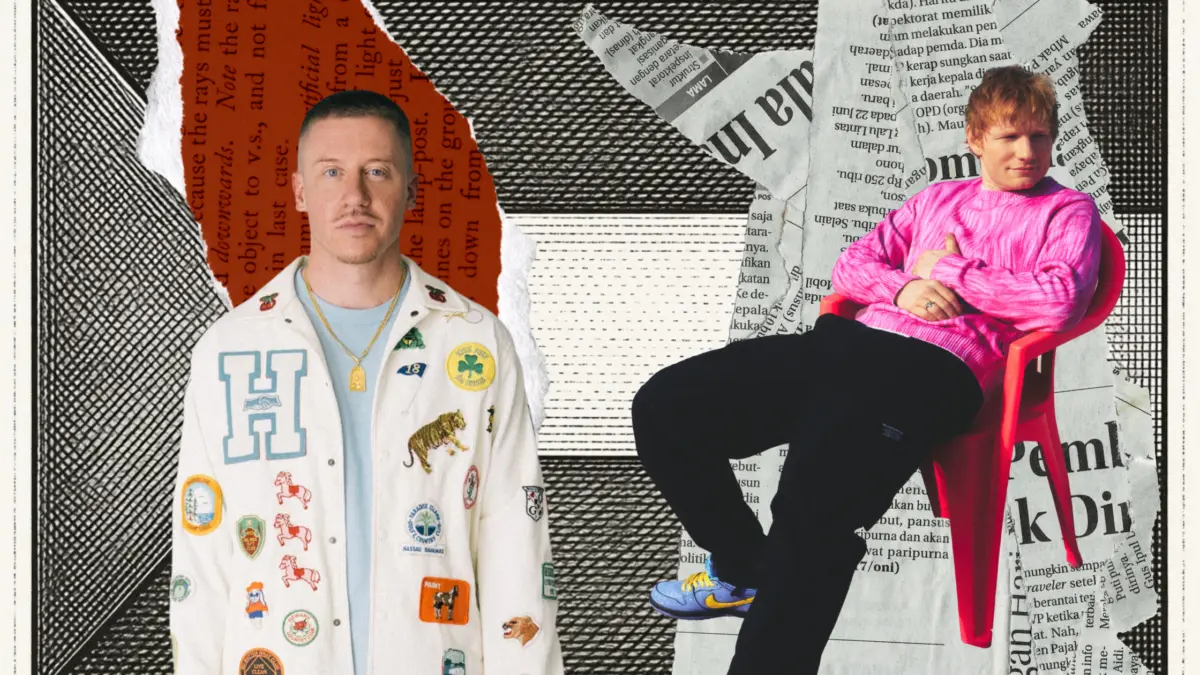
The roots of the current crisis trace back to earlier legs of Sheeran’s U.S. tour, which featured rapper Macklemore as a primary supporting act. Macklemore, known for vocal and unreserved advocacy for Palestinian rights, utilized his platform during the tour to voice opposition to Israel’s military actions in Gaza.
Those onstage remarks drew swift and aggressive pushback from powerful stakeholders within the American stadium infrastructure. Led by billionaire venue owner and New England Patriots owner Robert Kraft—a prominent and vocal supporter of Israel—a coalition of stadium operators demanded Macklemore’s immediate removal from the tour bill. Faced with the threat of having upcoming stadium dates cancelled entirely, tour organizers capitulated and axed the rapper.
The decision to drop Macklemore ignited a massive firestorm within the artistic community. Rather than accepting the status quo, every single support act slated for the "Loop" tour pulled out in solidarity with Macklemore. Among those who abandoned the bill were Aaron Rowe and Sheeran’s long-standing traditional Irish backing band, Beoga, leaving the headliner entirely isolated just days before a major stadium show.
Saturday Night in Philadelphia: Sheeran’s Scripted Address
Stepping onto the stage at Philadelphia’s Lincoln Financial Field after a delayed start, Sheeran delivered a carefully scripted and deeply personal speech addressing the turmoil of the preceding week.
"I’ve had to take and make difficult decisions in the last week, and I am making mistakes," Sheeran told the thousands in attendance. Acknowledging that he has "never wanted to be an activist musician," the singer admitted that recent events had thrust him directly into the center of a passionate global debate concerning freedom of speech and the most complex geopolitical conflict on earth.
On the issue of free speech, Sheeran expressed deep concern over the precedent set by venue owners vetting and pre-approving content for performers. While noting that such heavy-handed oversight occurs globally, he asserted that it "should never happen in the free world." However, he stopped short of explicitly condemning Robert Kraft or his fellow venue owners by name.
Turning to the core geopolitical conflict, Sheeran attempted to strike a delicate, neutral balance. He acknowledged the atrocities of October 7, stating that "what happened in Israel and at the Nova music festival was horrific and compounded centuries of Jewish pain." Immediately pivoting, he addressed the humanitarian crisis in Gaza: "What is happening in Gaza is catastrophic and unjustifiable and disproportionate. My heart has been broken by the scale of devastation and loss of civilians’ lives, of children’s lives, and the systemic injustice we’re seeing unfold in the West Bank cannot be overlooked."
Despite this carefully parsed statement, the aftermath of the speech highlighted deep fractures. Later in the set, speaking more informally, Sheeran revealed that numerous friends and associates of many years had quietly backed away from him, and that "so many people" had advised him to cancel the tour outright. Forced to adapt on the fly, Sheeran introduced a hastily assembled pickup band, which included violinist Alicia Enstrom. He noted that these musicians had only three days to learn his entire setlist, performing "with the knowledge that the world may hate them too for standing on stage with me."
Supporting Context & Metrics: The Broader Landscape of Artist Activism
While the Ed Sheeran controversy has dominated headlines, the broader music industry is experiencing a seismic shift in how artists interact with global politics and corporate structures. Two parallel developments highlight the immense financial and personal pressures facing contemporary musicians.
Zara Larsson and the Abu Dhabi Grand Prix Cancellation
Pop star Zara Larsson found herself at the center of international scrutiny following her booking at the upcoming Abu Dhabi Grand Prix. Fans mobilized online, urging the singer to cancel her performance due to the United Arab Emirates’ alleged role and support of the Rapid Support Force (RSF)—a paramilitary group accused of widespread atrocities, mass killings, and city sieges in the ongoing Sudanese civil war.
The pressure intensified in the wake of the Sheeran tour fallout, which reminded the public of Macklemore’s principled decision in 2024 to cancel a concert in Dubai over similar concerns regarding the UAE’s regional policies.
Initially responding directly to a fan on social media with the unequivocal declaration, "I will not be going to Abu Dhabi," Larsson later released a more nuanced statement. Explaining her decision, she emphasized that while she believes "no single person is their government" and remains committed to bringing joy through music globally, her decision to pull out ultimately aligned best with her personal convictions "beyond politics."
Sylvan Esso’s Reluctant Return to Spotify
While live touring remains heavily impacted by geopolitics, the recorded music sector faces its own ethical battlegrounds. Amelia Meath, one half of the indie electronic duo Sylvan Esso, delivered a frank and frustrated update to fans regarding the duo’s decision to return their catalog to Spotify.
Sylvan Esso had previously joined a wave of prominent artists who pulled their music from the streaming giant in protest of investments made by Spotify co-founder and Executive Chairman Daniel Ek into Helsing, a German artificial intelligence and military technology defense firm.
After a year-long boycott, Meath confessed that maintaining the boycott had become economically unsustainable. While not having their music on the platform "felt really, really good" from an ethical standpoint, the sheer market dominance of Spotify—accounting for roughly 82% of all music streaming—forced their hand.
"It has become more and more apparent that if we are going to continue to employ everyone that we employ, it is unsustainable for us to not be on that platform," Meath explained. Stressing that the duo’s anti-war political views remain entirely unchanged, she added: "I don’t fucking like it. I don’t like it, and I’m really frustrated by this reality. But the financial reality is the reality right now."
Official Statements and Industry Reactions
The fallout from the Sheeran tour has provoked fierce debate among artists, tour personnel, and industry insiders regarding where accountability truly lies.
Aaron Rowe Defends Sheeran, Blames Corporate Gatekeepers
Ahead of the Philadelphia concert, Aaron Rowe—one of the support acts who walked away from the "Loop" tour in solidarity with Macklemore—spoke out via social media. In a candid video statement, Rowe argued that public anger was being misdirected entirely at Sheeran rather than the corporate and political forces orchestrating censorship.
"I think you are all focusing on the wrong person here," Rowe stated bluntly. "All I keep hearing is Ed Sheeran this, Ed Sheeran that. When you really should be focusing on the likes of Robert Kraft… You really should be focusing on the Zionist lobbies that are trying to silence the voices of people who are shouting about genocide, the genocide that is happening in Palestine right now by Israel."
Rowe urged fans and activists to redirect their energy toward holding accountable those in power who attempt to curtail free expression within major American entertainment venues:
"Someone who tried to shut down free speech. Someone who tried to silence the voices of people who are shouting about genocide. That’s what you should be using your energy on, not fucking Ed Sheeran, for fuck’s sake."
Industry Polarization and the Myth of the "Apolitical" Artist
Music business analysts note that the events of 2026 have effectively dismantled the traditional playbook for mainstream pop stars. For decades, mega-artists routinely pursued a strategy of strict neutrality to maximize commercial appeal across diverse global demographics.
However, as social media activism, consumer consciousness, and billionaire-backed venue conglomerates clash, that middle ground has evaporated. As Macklemore asserted in his statement following his removal from the tour, "there is no neutral position between the oppressor and the oppressed." This sentiment has resonated deeply with a new generation of concertgoers and artists who view commercial neutrality as a form of moral complicity.
Future Outlook: Navigating the New Normal in Live Entertainment
As Ed Sheeran presses forward with the remaining dates of his U.S. tour—bolstered by a temporary band and a largely receptive local audience in Philadelphia—the long-term implications for the live entertainment industry are profound.
- Venue Censorship and Rider Clauses: Legal and artist advocacy groups are increasingly scrutinizing the contractual power held by stadium owners. The practice of pre-approving or restricting an artist’s on-stage political discourse threatens to spark legal challenges concerning First Amendment rights in privately-owned public assembly spaces.
- The Fragmentation of Support Acts: Headliners may find it increasingly difficult to curate touring lineups. As ideological lines harden, support acts are prioritizing solidarity and political alignment over lucrative opening slots, forcing headliners to rely on pickup bands or risk touring entirely solo.
- Economic Pressures vs. Moral Integrity: The struggles faced by acts like Sylvan Esso and Zara Larsson illustrate that while artists are eager to make ethical stances, the monopolistic economic structures of the modern music economy—spanning streaming platforms to international festival circuits—make sustained boycotts extraordinarily difficult to maintain without courting financial ruin.
Ultimately, the events surrounding Ed Sheeran’s "Loop" tour serve as a watershed moment for the entertainment industry. The illusion that music can exist in a vacuum, entirely divorced from the geopolitical realities of the world stage, has been permanently shattered. As artists, promoters, and venue owners step into an uncertain future, the demand for transparency, accountability, and moral courage will continue to reshape the global soundscape.