To the modern observer, the European rabbit (Oryctolagus cuniculus) is an unremarkable, if ubiquitous, fixture of the British countryside. Scampering across fields, darting through hedgerows, and frequently earning the ire of farmers and conservationists alike, the rabbit is deeply woven into the pastoral identity of the British Isles. Yet, this familiarity belies a disruptive historical reality: rabbits are not native to Britain. More than that, their introduction, domestication, and subsequent proliferation trace a fascinating, turbulent trajectory through the social, economic, and cultural fabric of medieval England.
Long before they became one of the UK’s most ecologically destructive and economically costly invasive species—estimates suggest invasive non-native species cost the UK economy billions annually—rabbits were treated with the utmost exclusivity. Initially imported as ultra-luxury commodities by the Norman aristocracy and the monarchy, live rabbits were traded as diplomatic gifts, guarded by armed sentinels in fortified warrens, and consumed at a cost multiple times higher than standard poultry.
However, the catastrophic demographic shock of the Black Death (1346–1353) shattered the rigid feudal structures of medieval England. As labor shortages elevated the living standards of the surviving peasantry, consumption habits shifted. The lower classes began adopting the trappings of nobility, including the eating of rabbit meat and the wearing of rabbit fur. This democratization of a once-exclusive luxury sparked profound anxiety among the ruling classes, triggering a wave of sumptuary laws and severe anti-poaching legislation designed to preserve social hierarchies.
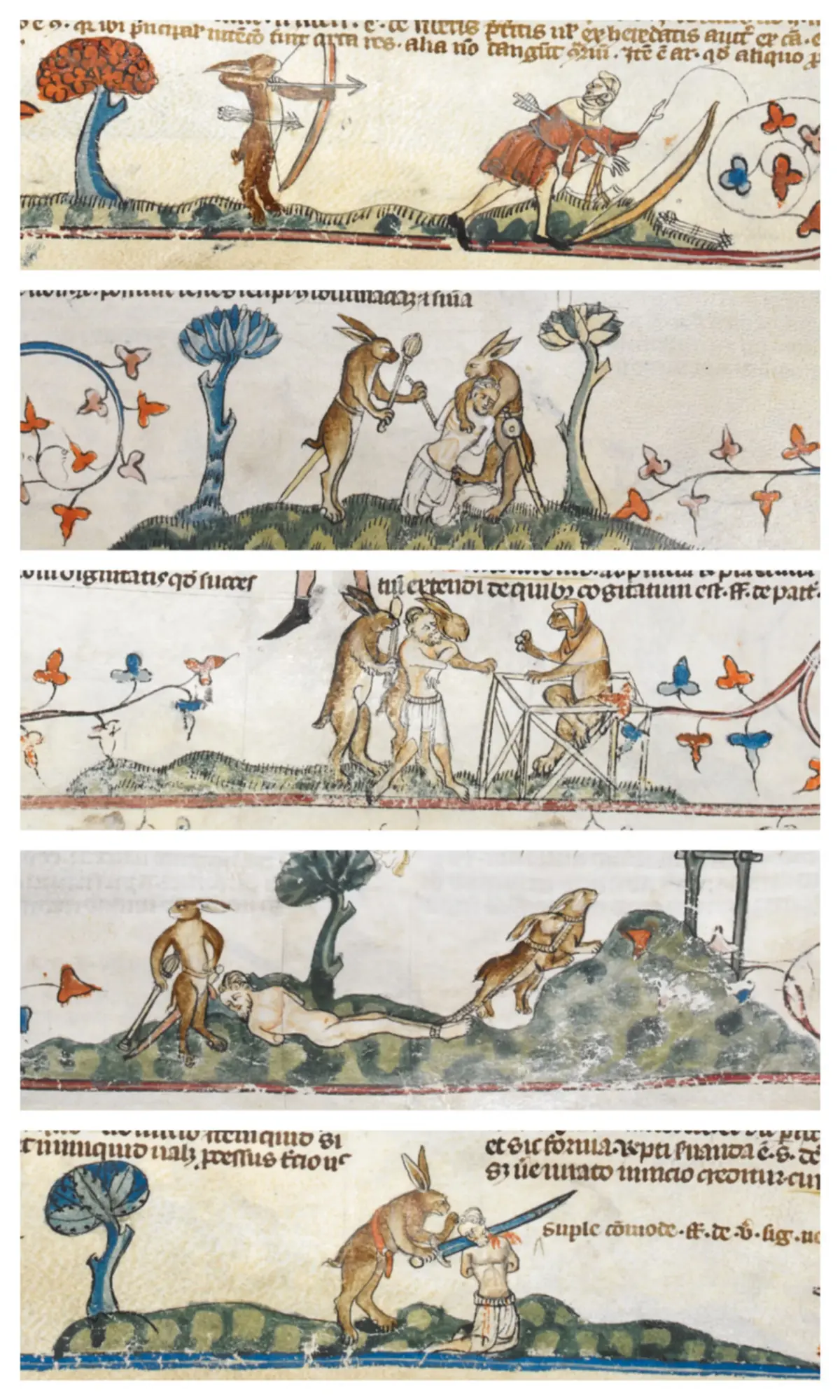
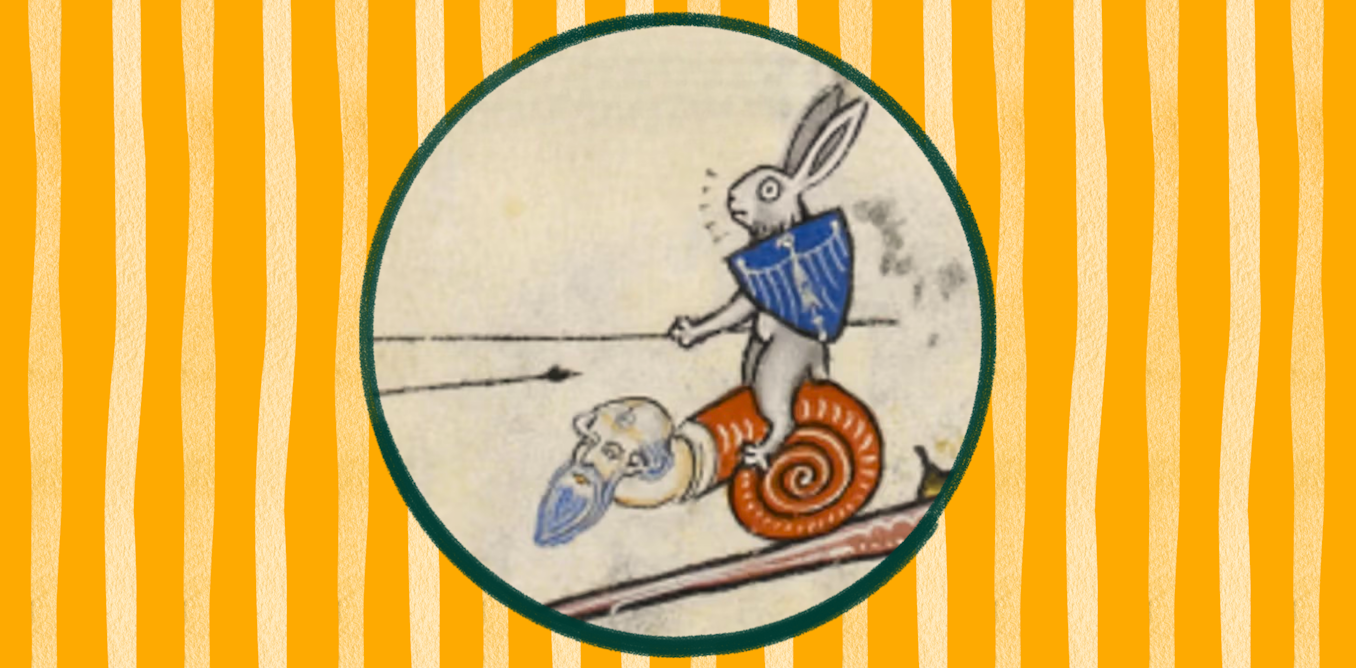
Simultaneously, the cultural footprint of the rabbit expanded in ways that continue to resonate today. In the margins of illuminated manuscripts, medieval scribes and artists subverted the natural order, depicting rabbits as martial victors: jousting on snails, executing human hunters, and standing trial over captured hounds. These whimsical, bloodthirsty illustrations formed part of a rich tradition of medieval social inversion, laying the historical groundwork for modern pop-culture tropes like Monty Python’s legendary "Killer Rabbit of Caerbannog." This article explores the comprehensive history of the rabbit in Britain, charting its evolution from a royal status symbol to a societal flashpoint and a canvas for medieval dark humor.
Detailed Chronology: From Roman Curio to Elizabethan Abundance
Antiquity and the Norman Arrival
While popular historical consensus long attributed the introduction of the rabbit entirely to the Norman Conquest of 1066, archaeological investigations have complicated this neat narrative. Recent discoveries, such as a rabbit bone unearthed at the Roman palace site at Fishbourne, indicate that sporadic imports may have occurred during the Roman occupation of Britain. These early arrivals, however, failed to establish self-sustaining wild populations, remaining rare culinary curiosities rather than ecological fixtures.
It was not until the post-Conquest Norman period that documentary and physical evidence confirms the deliberate establishment of rabbit colonies—known as warrens—in the British Isles. One of the earliest written records surfaces in the Scilly Isles in 1176. Landholder Richard de Wyka found himself in a dispute with the church after withholding tithes (a mandatory tenth of all agricultural produce) on his rabbits. De Wyka argued that "tithes were not payable on things of this kind," reflecting widespread administrative and cultural confusion regarding how to classify these semi-domesticated burrowers.
The Royal Monopoly of the Thirteenth Century
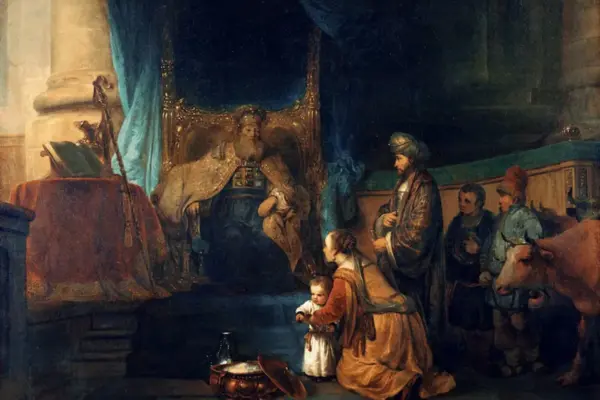
Throughout the 1200s, rabbits remained sufficiently rare and valuable to command the direct attention of the English crown. Henry III’s close rolls provide detailed administrative evidence of the monarch managing his rabbit stocks as if they were crown jewels. In 1235, Henry III gifted ten live rabbits from his royal park at Guildford to Geoffrey Despenser, a prominent English landowner and Lord of Martley in Worcestershire.
A few years later, royal foresters were dispatched to harvest 30 to 40 rabbits from the same Guildford warren, though with explicit instructions that they were only to be taken if the colony remained robustly stocked. This caution underscores the fragility and high value of early medieval rabbit populations.
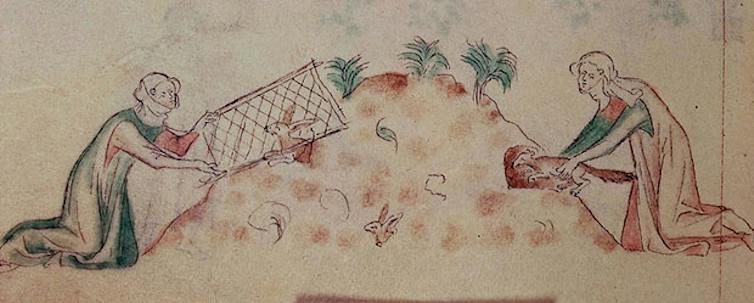
While Henry III routinely requisitioned venison, wild boars, freshwater fish, swans, peacocks, hens, eggs, and hares for his lavish court feasts, rabbits were so exclusive that they did not appear on his Christmas feast requisition list until 1240. At the time, rabbits were kept primarily for two commodities: meat and fur. Because a single rabbit cost four to five times as much as a chicken, landowners spared no expense in protecting their warrens. Poaching and predation were punished severely, and owners routinely constructed watchtowers, stone lodges, and specialized earthen enclosures (pillow mounds) to deter thieves and natural predators.
The Post-Black Death Social Revolution
The trajectory of the European rabbit in Britain changed forever in the mid-14th century. The Black Death swept across Europe between 1346 and 1353, obliterating between one-third and two-thirds of the population. While this epidemiological disaster was an unmitigated human tragedy, it triggered profound economic shifts for the survivors.
With labor scarce, surviving agricultural laborers and artisans found themselves in a position of unprecedented economic leverage. Wages rose, and land became cheaper and more accessible. For the first time, ordinary peasants could afford goods and lifestyles previously restricted to the gentry. This social mobility manifested in consumption: rabbit meat began appearing on the tables of wealthy peasants, while aspiring craftsmen adorned themselves with rabbit pelts for warmth and status.
The ruling class reacted to this upward creep with legislative alarm. In 1363, Parliament introduced strict sumptuary laws to curb what it termed "the excess of dress of people beyond their estate, to the very great destruction and impoverishment of the land." These laws attempted to legally bind individuals to specific styles of dress based strictly on their birth and social rank.
Despite these legislative roadblocks, rabbit populations continued to swell through managed breeding. By the reigns of the Tudors, rabbits had transitioned from ultra-luxury delicacies to widely available commodities. King Henry VII famously had his nightwear tailored with black rabbit fur, while continuing to maintain massive commercial warrens. By 1555, the eminent Swiss naturalist Conrad Gesner observed with astonishment that while rabbits bred in many parts of Europe, "the most plenty of all is in England."
Supporting Context & Metrics
The Economics of Medieval Warrens
To fully grasp the socio-economic impact of the rabbit in medieval England, one must understand the mechanics of the medieval warren. Unlike the open pastures where sheep and cattle grazed, warrens were highly engineered, capital-intensive agricultural enterprises.
Construction Costs: Establishing a warren required constructing artificial mounds of earth—known as pillow mounds—to encourage rabbits to burrow, surrounded by stone walls, deep ditches, or palisades to prevent escape and entry by vermin like stoats and foxes.
Price Disparity: Market records from the 13th and 14th centuries indicate that a standard chicken could be purchased for a modest sum, whereas a single rabbit (coney) frequently commanded a price equivalent to several days’ wages for a common laborer.
Byproducts: Beyond culinary uses, rabbit fur (coney-skin) was graded by color and quality. While standard grey pelts provided affordable winter linings, specialized mutation strains—such as silver-grey and deep black rabbits—were bred specifically to supply luxury garments for nobility and wealthy merchants.
The Threat of Subversion: Poaching Legislation
As rabbits became more numerous, they became both a source of peasant subsistence and a catalyst for agrarian conflict. Manorial court rolls from the 14th century are filled with grievances lodged by lords regarding rabbits escaping warrens to ravage neighboring peasant crops—yet peasants were strictly forbidden from killing the animals on sight.
Furthermore, hunting rabbits became deeply intertwined with political dissent. Following the Peasants’ Revolt of 1381, the English Parliament grew paranoid that lower-class gatherings for hunting and trapping game were mere fronts for insurrection. In January 1390, Parliament passed sweeping anti-poaching statutes. King Richard II consented to legislation making it illegal for any artisan or laborer without substantial property qualifications to keep "hounds and ferrets, hays, nets, hair-pipes, cords and all other devices" capable of taking forest beasts, hares, or rabbits. The state feared that under the innocuous guise of rural sport, the peasantry was practicing asymmetric warfare and plotting the overthrow of the feudal order.
Official Statements & Historical Chronicles
The historical record left behind by medieval chroniclers, kings, and legal bodies provides a vivid window into how contemporaries viewed the rabbit—not merely as an animal, but as a cultural flashpoint.
In the Scilly Isles legal dispute of 1176, landowner Richard de Wyka’s defense—that he genuinely believed "tithes were not payable on things of this kind"—highlights the initial regulatory vacuum surrounding the species. Because rabbits did not fit neatly into traditional agricultural categories like cattle, sheep, or pigs, they occupied a legal grey area that landowners eagerly exploited to avoid ecclesiastical taxation.
Decades later, the administrative directives issued from the court of Henry III emphasized the strict containment and careful rationing of the animals. Close Rolls from the 1230s and 1240s explicitly command royal foresters:
"To send men to catch 30 or 40 rabbits in his Guildford park… provided that the warren is well stocked, so that the colony is not depleted."
This language demonstrates that early rabbit populations were treated as fragile, highly prized biological assets akin to exotic zoo animals today rather than pests.
Conversely, the parliamentary roll of October 1363 captures the ruling elite’s panicked response to post-Black Death egalitarianism, justifying sumptuary restrictions due to:
"The excess of dress of people beyond their estate, to the very great destruction and impoverishment of the land."
By framing the working class’s adoption of fine clothing and luxury foods—such as rabbit fur and meat—as an existential threat to the economic stability of the realm, the crown attempted to legislate away the social shifts brought on by demographic collapse.
Future Outlook: From Medieval Luxury to Modern Ecological Challenge
The historical journey of the European rabbit offers a profound lesson in unintended ecological and cultural consequences. What began in the 12th century as a fragile, heavily guarded aristocratic status symbol—flown across the Channel in crates as royal gifts and protected within stone-walled fortresses—ultimately broke free of human containment.
By the dawn of the early modern era, rabbits had successfully transitioned from the king’s dining table to the peasant’s stewpot and the artisan’s winter coat. In doing so, they served as a living barometer of medieval social mobility, charting the turbulent shift from rigid feudalism to a more fluid, post-plague economy.
Culturally, the rabbit’s legacy proved equally enduring. The satirical tradition of the medieval margin—where timid prey animals turned the tables on their armed oppressors—survives in our modern consciousness. From the illuminated pages of The Smithfield Decretals (c. 1340), where armored rabbits try, convict, and execute their human and canine hunters, to Monty Python’s legendary Killer Rabbit of Caerbannog, the cultural archetype of the martial, vengeful bunny remains remarkably potent.
Today, the European rabbit in Britain occupies a vastly different ecological and administrative sphere. No longer viewed as a rare luxury or a whimsical marginal doodle, it is managed as a formidable invasive species, responsible for millions of pounds in agricultural damage and habitat disruption. Yet, beneath its modern reputation as an ecological nuisance lies a rich, centuries-old history—a tale of medieval class warfare, royal indulgence, sumptuary anxiety, and the enduring power of dark humor.