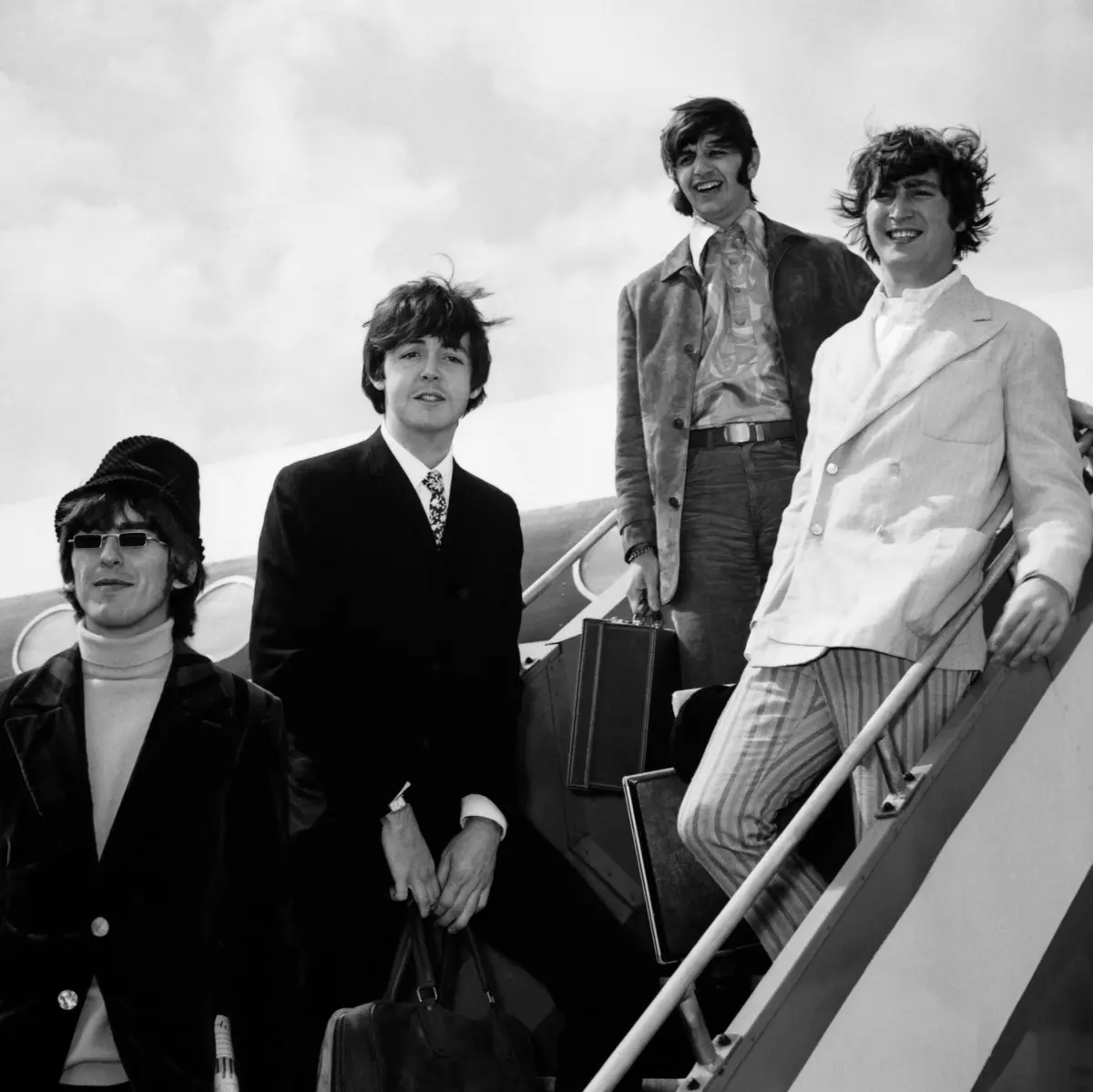
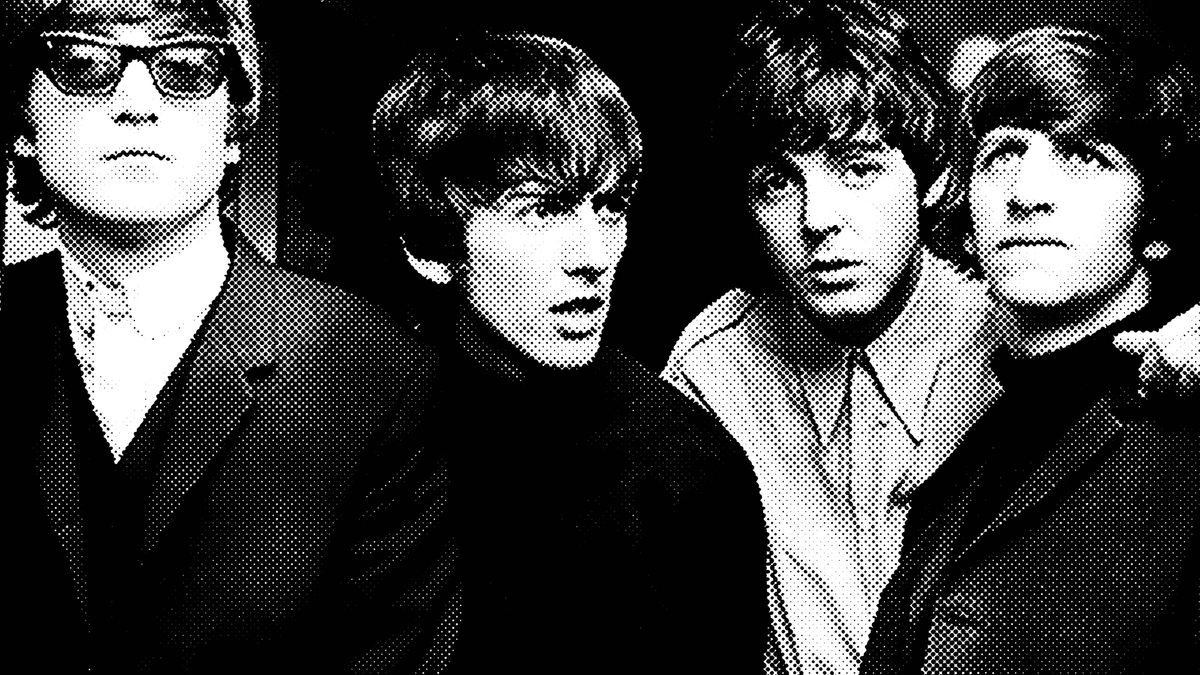
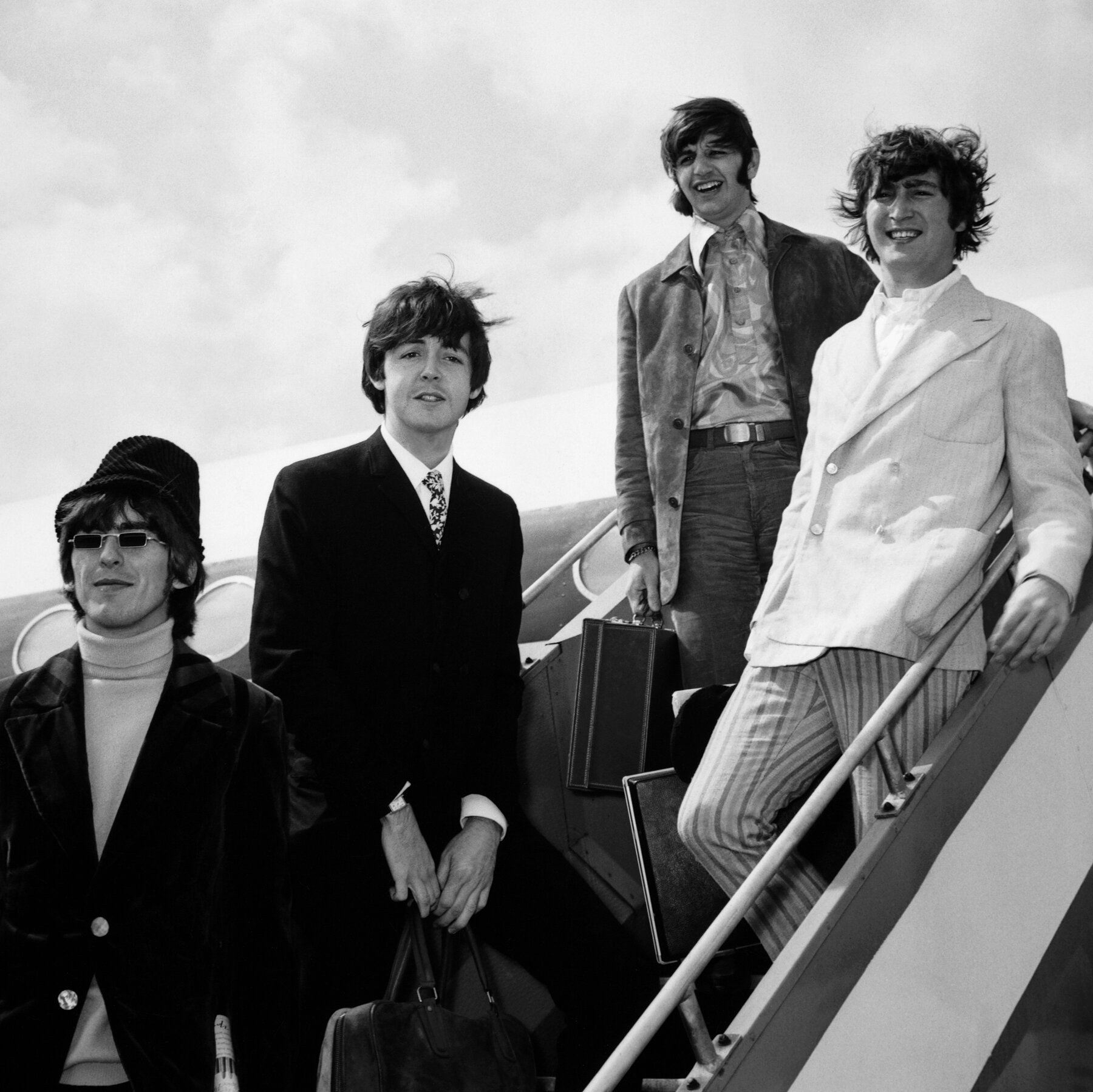
Few cultural phenomena command the universal reverence, exhaustive academic scrutiny, and visceral emotional resonance of The Beatles. Comprising John Lennon, Paul McCartney, George Harrison, and Ringo Starr, the Liverpool-born quartet permanently reconfigured the outer limits of pop music, transforming it from transient teenage entertainment into a sophisticated, high-art medium.
More than half a century after their acrimonious split in 1970, their cultural footprint remains as vivid, fiercely contested, and inescapable as ever. Whether discovered through retro pop culture touchstones, vinyl reissues, or generational hand-me-downs, the band’s catalog serves as the foundational text of modern popular music.
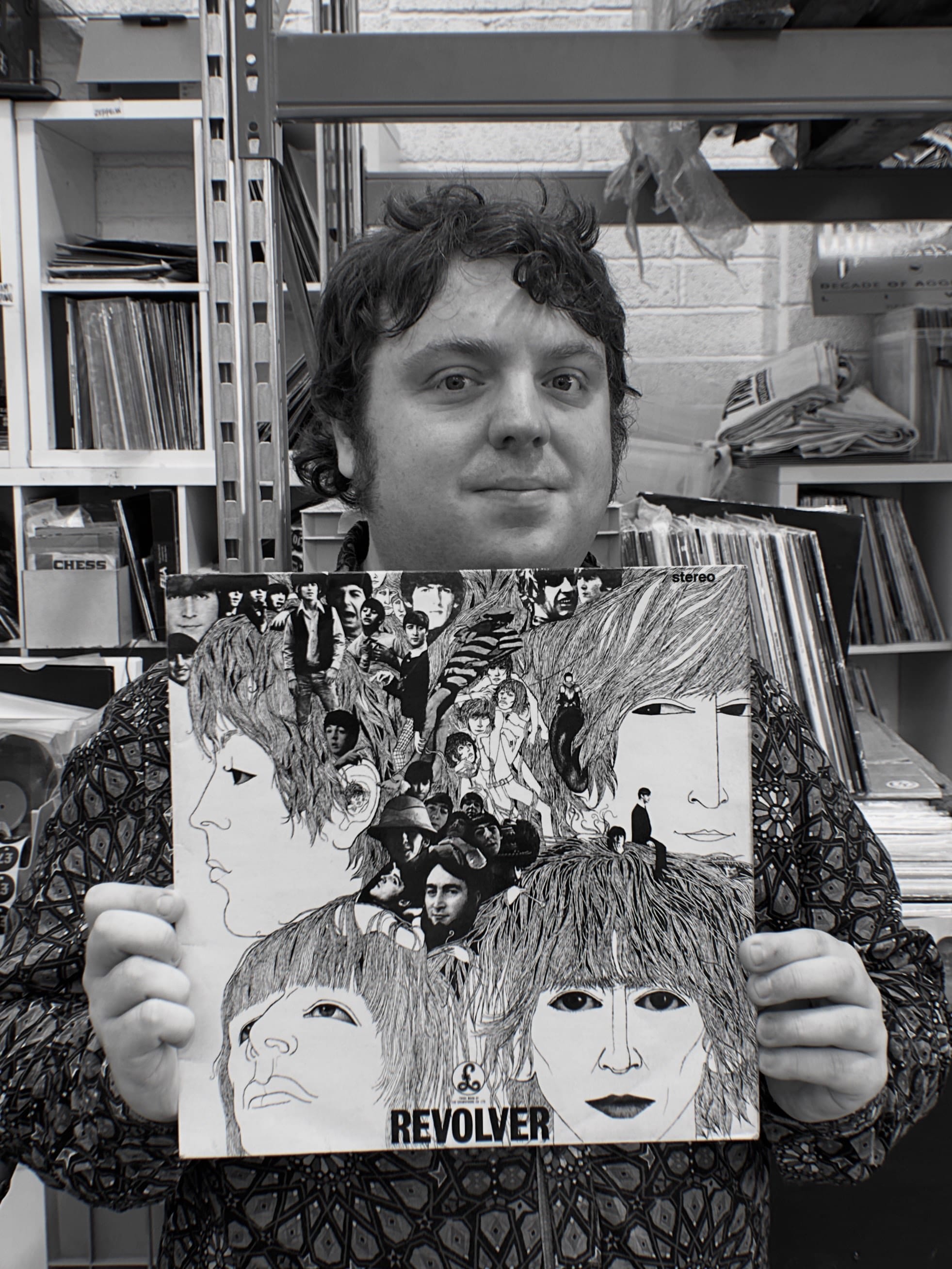
To mark the 60th anniversary of their groundbreaking 1966 masterwork Revolver, Rough Trade Used Vinyl Assistant and resident Beatlemaniac Huw Thomas undertakes the ultimate critical exercise: ranking the top ten studio albums of the Fab Four’s imperial era. Moving seamlessly from raw, high-energy Merseybeat pop to unmapped psychedelic horizons, this definitive ranking cuts through the hagiography to reexamine the records that defined the 20th century.
(And a fair warning to Sir Paul: if you’re reading this and take issue with the sequencing, drop by the Rough Trade warehouse—we can work it out.)
Detailed Chronology: The Top Ten Studio Albums Ranked
10. With the Beatles (1963)
Key Track:Not a Second Time
Released mere months after their meteoric debut, The Beatles’ second studio album is a testament to the raw, untamed verve of a group already conquering Great Britain. A carefully curated hybrid of blistering R&B covers and burgeoning originals, With the Beatles captures the band at their most combative and direct.
Smokey Robinson’s influence bleeds brilliantly into All I’ve Got to Do, while Lennon delivers arguably his greatest early vocal performance on a blistering rendition of Money (That’s What I Want). The record functions almost as an interactive love letter to their obsessive fan base—they ring you up on the phone, drop correspondence in the mail (All My Loving, Please Mr. Postman), or politely tell you to buzz off (Don’t Bother Me).
So why anchor it at number ten? Something has to occupy the base of the pyramid. While historically vital, the album suffers from a slight structural sag in the middle, burdened by original compositions like Little Child and I Wanna Be Your Man that rank among Lennon and McCartney’s least inspired work. Better things were unmistakably waiting just around the corner.
9. Let It Be (1970)
Key Track:Two of Us
How is this for light criticism? Let It Be commits the ultimate artistic sin for a Beatles record: it fails to transcend the heavy pull of reality. Conceived as the soundtrack to Michael Lindsay-Hogg’s fly-on-the-wall documentary, the album sounds precisely like what it is—sonic snapshots captured during a famously aimless, tense month of rehearsals.
Undeniably, there are glittering gems scattered across the tracklist, from the transcendent pastoral grace of Across the Universe and Two of Us to the bittersweet contemplation of I Me Mine. The proceedings are dynamically supercharged by the inclusion of keyboard wizard Billy Preston, whose soulful contributions inject necessary warmth into the chilly studio atmosphere.
Yet, Let It Be remains the weakest link in their pristine canon. With only one "new" Lennon-led track anchoring the original vinyl (the legendary Don’t Let Me Down was infamously exiled until 2003’s Let It Be… Naked), the project suffers from a distinct lack of editorial rigor. While Richard Hewson’s controversial, heavily criticized 1970 orchestral overdubs succeeded in making the record sound cinematically grand, they ultimately distanced the work from the raw, rootsy rock band that birthed it.
8. Help! (1965)
Key Track:I’ve Just Seen a Face
Just as Richard Lester’s chaotic, cinematic romp of the same name presented The Beatles at their most heightened and cartoonish, Help! captures a band shedding their matching suits and stepping into a wider, more eccentric world. Its direct predecessor, Beatles for Sale, had leaned heavily on weary, folky originals and uncharacteristically phoned-in cover versions. Help!, conversely, finds the lads loosening their collars with palpable relief.
The album boasts notable milestones: George Harrison steps up with two stellar songwriting contributions; organs and acoustic guitars dominate the landscape; and Paul McCartney single-handedly rewrites the history of modern songwriting with Yesterday, backed by a haunting, minimalist string quartet. Though some of their early Merseybeat vitality was inevitably sacrificed in the transition, the sheer melodic strength of tracks like I Need You, You’ve Got to Hide Your Love Away, and the criminally underrated It’s Only Love silences all doubters. The only narrative speedbump is a perfunctory, high-velocity cover of Larry Williams’ Dizzy Miss Lizzy—a fun inclusion live, but an odd thematic anchor for the album’s closing moments.
7. Please Please Me (1963)
Key Track:There’s a Place
"Sexual intercourse began in nineteen sixty-three… between the end of the Chatterley ban and The Beatles’ first LP." — Philip Larkin
The literary grump Philip Larkin may have been onto something. While it is historically lazy to frame The Beatles as year-zero for all of British pop—brilliant records certainly preceded them—dropping the needle on Please Please Me after digesting your Adam Faith and Cliff Richard singles is nothing short of a religious experience.
Recorded almost entirely in a single, breathless marathon session at EMI Studio 2, the album acts as the group’s own red-brick Brill Building. The stylistic range, compositional color, and ferocious, iron-clad quality control displayed across its grooves were entirely unprecedented for a British beat group. From Ringo counting off the opening track with a defiant "One, two, three, FAW!" to the gorgeous harmonies of There’s a Place, it is a foundational masterwork that rewards endless, obsessive revisitation.
6. A Hard Day’s Night (1964)
Key Track:And I Love Her
"Though A Hard Day’s Night is not their greatest album, it may be their most perfect."
In 1964, The Beatles were culturally indomitable—musical Daleks for whom musical resistance was entirely futile. A Hard Day’s Night stands as their most dominant, uncompromising sonic onslaught from the height of Beatlemania, proudly holding the distinction of being the first Beatles album written entirely by the Lennon-McCartney partnership.
Every single track is an absolute triumph. Subtle, sophisticated dips into Latin music (And I Love Her) and American country (I’ll Cry Instead) brilliantly foreshadowed the genre-blending maximalism of their later career. While contemporary fans routinely undervalue their early output in favor of their kaleidoscopic late-period experiments, A Hard Day’s Night demands to be recognized as an immaculate pop achievement.
Supporting Context & Metrics: The Mid-Era Pivot
5. Rubber Soul (1965)
Key Track:Girl
Rubber Soul represents the grand seismic shift in The Beatles’ trajectory—the moment the pop boy band gracefully evolved into forward-thinking, autonomous artists. Heavily inspired by the rhythmic syncopation of Motown (Drive My Car, You Won’t See Me), the lyrical introspection of Bob Dylan (Norwegian Wood), and early proto-hippie philosophies (Think for Yourself, The Word), the album canvas is remarkably focused.
The concentration of undisputed classics is staggering. If fate had intervened and the band had permanently disbanded at the close of 1966, Rubber Soul would rightfully be remembered as the singular catalyst that ignited the psychedelic revolution across both sides of the Atlantic.
4. Abbey Road (1969)
Key Track:I Want You (She’s So Heavy)
There is a deeply telling vignette captured in The Beatles Anthology documentary series where producer George Martin recalls his terms for returning to helm Abbey Road: he would produce it "only if you let me produce it the way we used to."
Shaped heavily by the soaring ambitions of McCartney and Martin, this final recorded suite acts as a spiritual sequel to Sgt. Pepper, functioning as a glorious dry run for the blockbuster concept albums of the 1970s. Its glossily arranged, brilliantly executed side-two medley serves as an astonishing victory lap.
Disparate compositions—including two instant masterclasses by George Harrison, a surreal octopus-themed country romp by Ringo Starr, an eight-minute, doom-metal precursor penned by Lennon, and McCartney’s darkly comic ditty about a murderous hammer-wielding student—mesh into a cohesive, breathtaking whole. Released while Let It Be languished in post-production purgatory, Abbey Road proved that even as their interpersonal bonds frayed, The Beatles could still pull off the impossible and go out with an earth-shattering bang.
3. Revolver (1966)
Key Track:Eleanor Rigby
"Frankly, this could be my number one, but its indie credentials dictate that it can’t be too high in the charts."
Revolver has long worn the crown as the ultimate "cool" Beatles record—the critical darling whose avant-garde sonic textures most closely mirror modern alternative rock. The subsequent Britpop generation modeled entire careers on its DNA (Noel Gallagher and The Chemical Brothers have essentially built empires adapting the innovations of Tomorrow Never Knows).
Yet, it wasn’t always universally adored. Upon release in the summer of 1966, the record drew considerable critical flak: The Kinks’ Ray Davies openly bemoaned "the newer electronic stuff" in Disc and Music Echo, while MOR vocal group The Overlanders dismissed the record as "absolutely useless." History has rendered such contemporary critiques laughably obsolete. Revolver remains an unassailable high-water mark of 20th-century audio engineering and songwriting craft.
Official Statements & Cultural Impact: Celebrating 60 Years of Revolver
To celebrate the diamond anniversary of Revolver—originally released on August 5, 1966—Rough Trade is hosting exclusive listening parties and high-stakes, Beatles-themed trivia events this August at Rough Trade Nottingham, Rough Trade Bristol (hosted by Huw Thomas himself), and Rough Trade Liverpool.
Speaking on the enduring cultural legacy of the record, Thomas notes: "Derek Taylor was spot on when he wrote that the ‘radioactive, cigar-smoking’ children of ‘AD 2000’ would derive just as much pleasure from The Beatles as people did in the ’60s. Taking a metaphorical drag and glowing luminescent as I write this, ranking these albums is less about objective truth and more about mapping how deeply these songs embed themselves into our collective DNA."
Future Outlook & The Podium
2. Sgt. Pepper’s Lonely Hearts Club Band (1967)
Key Track:Within You Without You
Once universally coronated as the greatest and most culturally seismic album ever recorded, Sgt. Pepper has seen its critical star dim ever so slightly in modern retrospectives—largely due to a quiet cultural backlash.
While its status as an instantaneous game-changer was immediately championed by broadcasters like Kenny Everett, Pepper accomplished a feat that underground purists rarely like to broadcast: it brought the parents in. The Edwardian pastiche, the complex East-meets-West orchestrations, and the Lewis Carroll-inspired whimsy exerted an undeniable gravitational pull on a middle-aged demographic previously entirely detached from rock and roll.
This very crossover appeal cemented its place in high culture while simultaneously setting it up for modern revisionist fatigue among younger generations. Yet, stripped of generational baggage, Sgt. Pepper remains a peerless 20th-century artifact—post-war Britain’s creative arts boom neatly encapsulated in 39 breathless minutes. It truly remains rock music’s Festival of Britain.
1. The White Album (1968)
Key Track:Martha My Dear
Everybody has their personal favorite, and The White Album stands unrivaled at the summit. It is the definitive Beatles masterwork where John, Paul, and George hit their absolute, unadulterated peaks as songwriters concurrently.
Spanning an expansive double-LP format, it displays the complete spectrum of their collective capabilities, functioning as a sprawling, mysterious sonic monolith dropped into the middle of pop history like the obsidian obelisk in 2001: A Space Odyssey.
The album grows progressively darker, stranger, and more haunting with every listen. What linguistic nonsense underpins I’m So Tired? Why does the harrowing fade-out of Long, Long, Long evoke such existential dread? Don’t listen to the critical naysayers who argue it should have been edited down into a single disc—no streamlined tracklist could ever match this level of thrilling, untamed brilliance. And yes, Revolution 9 is genuinely one of the most daring, brilliant things they ever committed to tape. It is The White Album—shut up and listen.
Honorary Mentions & Archival Treasures
Naturally, every piece of music officially released by The Beatles between 1962 and 1970 is mandatory listening. Ranking their catalog often feels like organizing a row of precision rulers by length; the structural baseline is simply that high. Aside from the aforementioned Beatles for Sale (1964), every core studio album is accounted for here.
Major archival omissions include Magical Mystery Tour—originally issued in the UK as a pioneering six-track double EP—which was padded out in North America with unrelated 1967 stray singles to create a full-length LP. Similarly, Yellow Submarine functions primarily as a soundtrack artifact, despite housing two of the band’s most blistering, heavy-psych masterpieces in Hey Bulldog and It’s All Too Much. For fans seeking the definitive collection of non-album singles, B-sides, and stray EP cuts, the indispensable Past Masters compilation remains a mandatory companion piece.
Ultimately, whether diving into the definitive 27-track career summation of 1, exploring the expansive 50th-anniversary Red and Blue reissues, or losing yourself in the dazzling sonic collage of George and Giles Martin’s Love soundtrack, The Beatles’ universe continues to expand outward.
As Sir Paul himself might attest, sixty years on, we are still only beginning to figure it all out.