Executive Overview
Embroidery—the art of embellishing textiles by stitching patterns and images using a needle and thread—occupies a fascinating intersection of fine art, utilitarian craft, and global socioeconomic history. Far from being a static domestic pastime, embroidery has evolved across millennia into a myriad of distinct, highly sophisticated forms shaped by shifting trade routes, royal courts, gender politics, and industrialization.
Today, as modern populations seek respite from hyper-digital lifestyles and constant screen-time, hand embroidery is enjoying a profound cultural renaissance. Often featured as a key component of the growing "slow craft" movement, stitching offers proven benefits for mental focus, wellbeing, and stress reduction. Yet, for the uninitiated, diving into the textile arts can feel intimidating. With hundreds of historical styles, regional variations, and material combinations, choosing where to begin requires a roadmap.
This comprehensive guide explores the rich, often surprising history of needlework across medieval Europe, Byzantium, and Africa, examines four foundational embroidery techniques ideal for contemporary beginners, and provides expert-backed recommendations on how to start your own stitching journey safely and effectively.
Detailed Chronology: The Evolution of Embroidery Across Eras
The historical timeline of embroidery is expansive, charting a course from ancient antiquity through to the modern era, and revealing how cultural attitudes toward the needle have continuously transformed.
Antiquity to the Early Medieval Period
The earliest surviving examples of embroidery date back to ancient times, discovered in various forms across early civilizations in China, Egypt, and the Near East. By the time of early medieval Europe, embroidery had evolved into an occupation predominantly practiced by women. Within feudal society, needlework was widely regarded as a supreme feminine virtue—an indicator of patience, piety, and domestic compliance.
However, gender norms were far from universal. Contemporaneously, in the ancient Greek city of Byzantium, professional workshops (ergasteria) employed both male and female embroiderers. These artisans produced breathtaking liturgical vestments and imperial garments that dazzled foreign diplomats and cemented the political power of the Byzantine state.
The Guild Era and the Rise of Male Dominance (12th Century Onward)
By the 12th century, urban organization in Western Europe underwent a radical shift with the rise of trade guilds. In major cities such as London, specialized guilds known as "livery companies" (such as the Worshipful Company of Broderers) began exerting strict regulatory control over who could train, practice, and trade as an embroiderer within city limits.
Because guild membership and formal apprenticeships were largely restricted to men, male artisans began to play a much more dominant role in the professional embroidery industry. During this period, professional workshops catered almost exclusively to wealthy elites and the Catholic Church, producing monumental church vestments, heraldic banners, and tapestries. Men dominated this high-status, lucrative commercial sector well into the Renaissance.
The Domestic Shift and the 17th–18th Centuries
As societal structures shifted and domestic production evolved, embroidery gradually retreated from male-dominated guild workshops back into the domestic sphere during the 17th and 18th centuries. Once again, it became culturally codified as a quintessential female art form—though men, particularly tailors and military uniform makers, continued to stitch professionally. It was during this era that many of the free-form and counted techniques still practiced today, such as crewel work and early blackwork, were refined and popularized within European households.
A Global Perspective: Diverse Traditions in Africa and Asia
While European history heavily emphasizes the gender dichotomies of guilds and domesticity, embroidery practices in other parts of the world followed entirely different socio-cultural trajectories. Across many regions of Africa, for instance, traditional embroidery was historically practiced predominantly by men—often tied to specialized weaving and tailoring castes. It is only in recent decades that women have increasingly entered these traditional professional spaces, transforming contemporary African textile arts. Similarly, in Asia, monumental traditions such as silk shading in China and Aari chain-stitch embroidery in India developed distinct techniques, philosophies, and practitioner demographics that defied Western historical templates.
Supporting Context & Metrics: The Modern Craft Renaissance
The contemporary resurgence of embroidery is part of a broader sociological trend: the reclamation of analog hobbies in an increasingly fast-paced, screen-dominated world. According to recent lifestyle and wellness studies, engaging in tactile, repetitive crafts like stitching, knitting, and horticulture yields measurable psychological benefits.
- Cognitive Focus & Flow State: The repetitive motor actions required in techniques like canvas work or blackwork induce a psychological "flow state," lowering cortisol levels and mitigating symptoms of anxiety.
- The Rise of "The Hobby Starter Kit": Cultural initiatives—such as The Hobby Starter Kit series—have emerged to help individuals transition away from passive digital consumption ("doomscrolling") toward active, productive analog hobbies.
- Market Challenges and Counterfeiting: As hand embroidery surges in popularity via platforms like Instagram and TikTok, the market has seen a corresponding surge in commercial challenges. Industry watchdogs report a growing threat from counterfeiters selling cheap, stolen design kits with inferior materials, necessitating a renewed focus on supporting independent designers and legitimate retailers.
Official Statements & Expert Perspectives
Textile historians, master embroiderers, and wellness experts emphasize that while embroidery is deeply rooted in heritage, its modern iteration is defined by accessibility and individual expression.

"Hobbies can bring joy, wellbeing and focus to our busy lives, but so many of us don’t have one. If you’re ready to replace scrolling with stitching, or hustle with horticulture, taking up a foundational needle craft offers an immediate anchor to the physical world."
— Quarter Life Craft Initiative
Experts note that beginners frequently stumble not because of a lack of manual dexterity, but due to poor material selection and unstructured learning paths. Master instructors recommend starting with established, traditional techniques that offer clear structural frameworks before attempting complex freehand designs.
Beginner’s Guide: Four Foundational Embroidery Techniques
With myriad historical techniques available, knowing where to begin can feel daunting. Below are four traditional embroidery styles recommended by experts as ideal entry points for beginners. Each can be executed using classic methods or given a modern, contemporary twist.
1. Canvas Work (Needlepoint)
- The Method: Canvas work is stitched on a stiff, open-weave fabric using counted stitches. The stitcher brings the thread to the front of the canvas, counts a set number of holes, and takes the yarn back in a predetermined sequence.
- Aesthetics & Materials: This technique creates distinctive geometric patterns and rich textures. Practitioners can utilize stranded cottons, wools, and metallic yarns in palettes ranging from minimalist monochrome to vibrant polychromes, producing both flat pieces and 3D objects.
- Historical Example: Berlin wool work, which gained massive popularity in the 19th century, utilizes colored wool threads sewn onto open-weave canvas in tent stitch, following patterns printed on paper grids.
2. Crewel Work
- The Method: Originating prominently in the 17th century, crewel work is a "free" embroidery style, meaning the stitches are not counted against a strict grid. The design is transferred directly onto the fabric, and stitches are worked organically over the motifs.
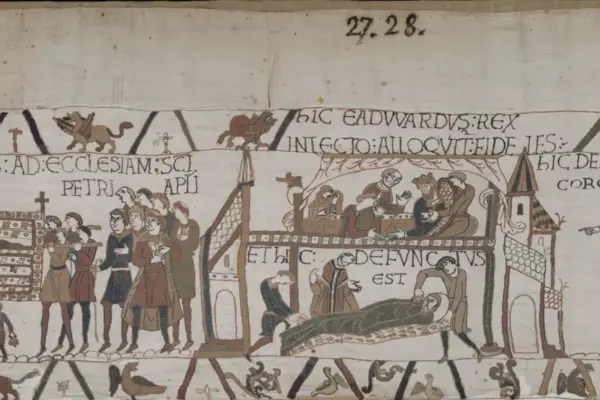
- Aesthetics & Materials: Traditionally used for heavy furnishings, crewel work today adorns cushions, decorative wall art, and bags. It employs a variety of textured filling stitches—such as satin stitch, stem stitch, and laid-and-couched work (echoing the historic Bayeux Tapestry)—stitched onto sturdy linen twill using specialized two-ply wool yarn (crewel yarn).
3. Blackwork
- The Method: A counted thread technique worked on evenweave linen using black thread. Patterns range from simple repeating geometric diapers to complex, multi-tonal masterpieces.
- Aesthetics & Materials: Historically stitched in a uniform thickness of black thread, modern blackwork incorporates "blended" thread thicknesses within single stitches to create realistic shading and depth. (Contemporary blackwork is also frequently executed in colored threads).
- Historical Heritage: Mentioned in Geoffrey Chaucer’s The Miller’s Tale (c. 1380s–1390s), blackwork exploded in popularity in Tudor England after Catherine of Aragon brought exquisite Spanish blackwork garments with her upon marrying King Henry VIII.
4. Silk Shading ("Painting with a Needle")
- The Method: Developed in China between the 10th and 13th centuries, silk shading utilizes fine threads (traditionally silk on silk fabric, though modern stitchers frequently use stranded cottons on cotton or linen) to create lifelike, painterly representations of flora and fauna.
- Aesthetics & Materials: This technique relies primarily on just two stitches: stem stitch to outline the design, followed by long and short stitch. By layering staggered rows of colored stitches, the artist achieves a seamless gradient or blended shading effect. It is the ultimate technique for those wishing to create realistic textile artwork.
Other Notable Techniques Worth Exploring
Beyond the foundational four, the world of embroidery offers boundless avenues for exploration:
- Whitework: Employs white thread on white fabric, frequently incorporating drawn-thread or cut-work techniques where threads of the ground fabric are pulled or clipped away to create delicate lace-like apertures.
- Coronation Goldwork: An opulent, highly specialized three-dimensional metal embroidery technique historically reserved for the coronation robes and regalia of British monarchs.
- Aari Embroidery: Originating in India, this intricate technique utilizes a specialized fine hooked needle (the aari) to rapidly produce continuous chains of looped stitches.
Future Outlook: How to Begin Your Stitching Journey Safely
As the hand embroidery community continues to expand into the future, prospective stitchers have more educational resources at their disposal than ever before—alongside unique pitfalls to navigate.
- Structured Print Guides: For those who prefer learning via books, literature such as the RSN Essential Stitch Guides (published by Search Press) offer authoritative, specialist-written manuals complete with equipment lists and step-by-step photographic instructions.
- Verified Digital Tutorials: YouTube and online streaming platforms host thousands of video demonstrations. Beginners should ensure that video instructors possess verified formal training or institutional credentials (such as from the Royal School of Needlework).
- Sourcing Ethical Kits: If purchasing pre-packaged starter kits, buyers must exercise caution against the rising tide of intellectual property theft. Counterfeit sellers frequently market low-quality materials paired with stolen designs and garbled instructions. Always purchase directly from independent, legitimate designers and reputable craft retailers.
- Community Classes: Local adult education centers, independent guild chapters, and online academies offer structured beginners’ classes that combine community connection with expert oversight.
Whether you pick up a canvas work needle, master the fluid strokes of crewel work, or dive into the historic elegance of blackwork, embarking on an embroidery journey offers a rewarding, meditative connection to a timeless global craft.