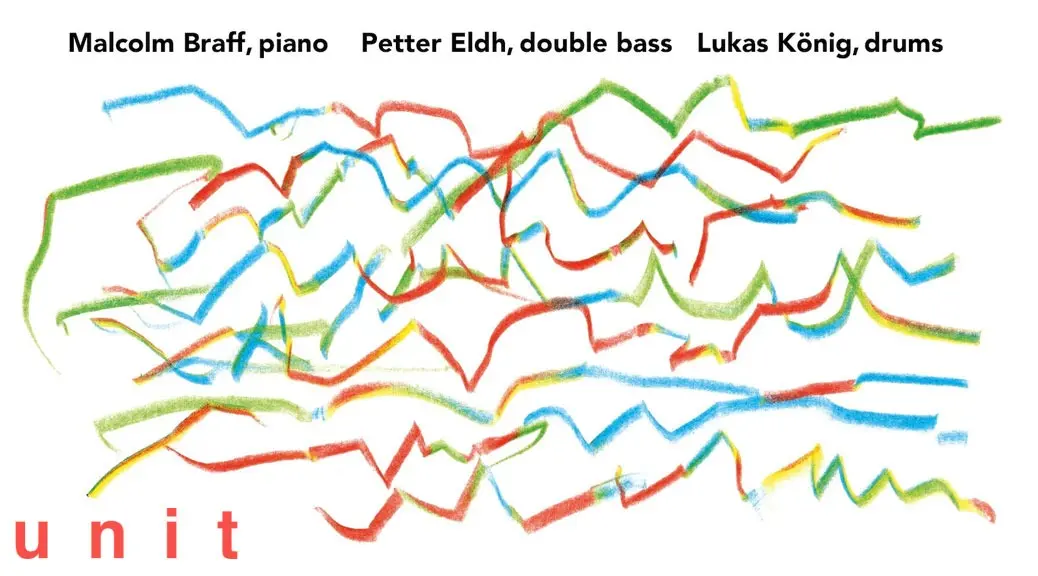
In the contemporary landscape of improvised music, few figures operate with the rigorous philosophy and restless curiosity of pianist Malcolm Braff. Blurring the lines between cerebral music theory, kinetic physical action, and a truly global upbringing, Braff has carved out a singular niche in modern jazz. His latest release, the bracingly inventive and delightfully disorientating album Outside—recorded alongside Swedish bassist Petter Eldh and Austrian drummer Lukas König—serves as both an artistic statement and a practical demonstration of a lifetime’s worth of rhythmic research.
At once experimental and deeply listenable, Outside challenges conventional perceptions of time, form, and ensemble dynamics. Rather than treating the piano trio as a collection of individual soloists backed by a rhythm section, Braff views the collective unit as a single, breathing organism. This release is not merely another entry in a crowded contemporary jazz catalog; it is the culmination of more than two decades of academic inquiry into the mechanics of swing, filtered through a kaleidoscopic life history that spans Rio de Janeiro, West Africa, and the Swiss highlands. This review and deep-dive investigate the philosophy, methodology, and musical triumph behind Outside.
Detailed Chronology and Artistic Evolution
From a Nomadic Childhood to the Swiss Highlands
Malcolm Braff’s unique worldview is inextricably linked to a childhood defined by cultural displacement and geographical fluidity. Born in Rio de Janeiro, Brazil, to a missionary father, Braff spent his formative years absorbing the vibrant sonic textures of Cape Verde and Senegal before his family ultimately settled in Switzerland. While Braff resists the label of a conventional "citizen of the world," preferring to see himself simply as someone shaped by happenstance, his music tells a different story. It breathes with the polyrhythmic resilience of West Africa and the harmonic sophistication of European jazz.
A pivotal turning point in his musical development was his decade-long collaboration with Burkinabé percussionist Yaya Ouattara. Braff has frequently described Ouattara as "more than a brother," and the percussionist’s influence left an indelible mark on Braff’s approach to groove. Most notably, Ouattara’s djembe took the place of a traditional drum kit in Braff’s early trios, a dynamic captured brilliantly on the 2006 live album Yele (Unit Records). This foundational partnership trained Braff to hear percussion not as a time-keeping device, but as a primary melodic and conversational partner—a philosophy that continues to inform his work with modern rhythm sections.
The Mechanics of Swing and the Basel Professorship
Parallel to his career as an active performer, Braff has spent over twenty years obsessively researching the "mechanics of swing." This isn’t merely an academic exercise; it is an attempt to decode the psychological and physiological triggers that make groove compelling to the human ear.
His research ultimately culminated in the creation of his "Generalized Theory of Swing," a witty yet deeply ambitious framework that he now teaches at Jazzcampus Basel. The theory investigates the "distortion of time as perceived by the listener," exploring how microscopic manipulations of tempo, anticipation, and release can warp human chronometry. When listeners experience Outside, they are not just hearing jazz harmony; they are experiencing applied musicology. Braff’s music actively bends expectations, playing with the listener’s internal clock in a manner that is as intellectually stimulating as it is visceral.
Supporting Context & Metrics: Inside the Trio and the Album Outside
The Ensemble: Eldh, König, and Braff
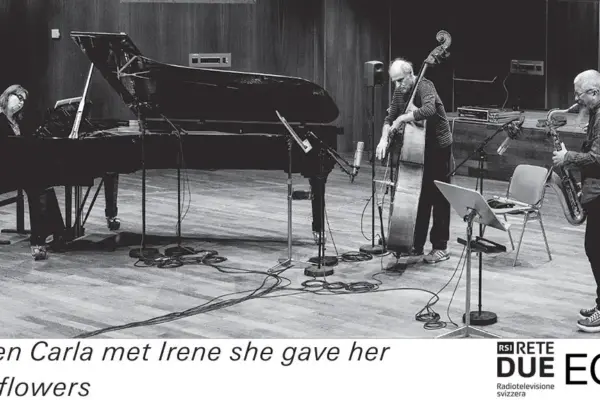
To execute a musical vision rooted in time-distortion and kinetic risk-taking, Braff requires collaborators who possess both virtuosic technical command and fearless exploratory instincts. On Outside, he has found the ideal partners in Swedish bassist Petter Eldh and Austrian drummer Lukas König.
- Petter Eldh: Renowned for his relentless curiosity, elastic tone, and driving momentum, Eldh anchors the trio while constantly probing its edges. His bass lines provide a thrumming vibration that acts simultaneously as a safety net and a springboard for harmonic deconstruction.
- Lukas König: Boasting a "whiplash styling," König treats the drum kit with an expressionistic fury. His percussive accents, frenetic rim clicks, and explosive dynamic shifts provide a restless energy that keeps the ensemble permanently on its toes.
- Malcolm Braff: Operating at the center of this storm, Braff approaches the piano not as a monument to be worshipped, but as a tool for action. "This is not what I am, just something I enjoy doing," Braff notes regarding his role as a pianist. By focusing entirely on the physical action of playing and the impact of his notes on his bandmates rather than listening to himself, he achieves a rare state of flow.
Breakdown of the Record
Clocking in at a length that brushes closer to an EP than a traditional LP, Outside nonetheless packs an immense amount of density into its runtime. As Braff might argue, time is relative; consequently, there is little need to quarell over the physical duration of the record when its psychic weight is so profound.
The album opens with the arresting, provocatively titled track "Viennese Gröt à la Berlinaise"—a sonic culinary porridge that immediately grabs the listener’s attention. On this track, König’s sharp percussiveness cuts through the warm, viscous gloopiness of Eldh’s bass tone, while Braff’s characteristic bounce serves as the structural glue holding the chaotic elements together.
The second track, "3TOES," showcases Braff’s Generalized Theory of Swing in full effect. Here, conventional swing is systematically dismantled, turned inside out, and reassembled. All three musicians are granted equal weight within the mix; König’s frantic rim clicks and Eldh’s deep-vibration basslines are given ample breathing room to engage in sharp, telepathic dialogue, punctuated by Braff’s exuberant and unpredictable harmonic intervals.

Official Statements and Philosophical Insights
To fully appreciate the artistry behind Outside, one must examine Malcolm Braff’s unique philosophy regarding performance, self-awareness, and the collective musical consciousness.
In interviews and artistic reflections, Braff has repeatedly emphasized the importance of self-forgetfulness in high-level improvisation:
"What power am I having on the music?"
This is the foundational question Braff asks himself while performing. Rather than retreating inward to critique his own technical execution, his awareness is entirely externalized toward his fellow musicians. He listens exclusively to the impact his playing registers on Eldh and König, adjusting his output in real time to shape the collective energy.
Furthermore, Braff’s view of the ensemble subverts standard jazz hierarchy:
"I see the trio as a single instrument rather than three separate individuals."
This systemic perspective explains why Outside sounds so remarkably cohesive despite its experimental and disorientating nature. The trio does not sound like a pianist accompanied by a bassist and a drummer; it sounds like a three-headed hydra navigating a shifting labyrinth of time signatures and tonal centers. Braff’s admission that he has never actively searched for a "personal voice"—believing instead that the sheer, unadulterated act of playing in the moment is enough in itself—illuminates the radical humility at the heart of his virtuosity.
Future Outlook
As Outside makes its way into the ears of critics, jazz aficionados, and contemporary music scholars, it signals a fascinating trajectory for Malcolm Braff, Petter Eldh, and Lukas König.
The album proves that jazz can remain deeply cerebral without sacrificing emotional immediacy. By bridging the gap between avant-garde structural experimentation and visceral, danceable groove, Braff has charted a course that bypasses academic sterility. Listeners no longer need to choose between music that makes them think and music that makes them feel; Outside accomplishes both simultaneously, defying expectations at every turn.
Looking forward, the integration of Braff’s "Generalized Theory of Swing" into active performance settings bodes well for the continued evolution of European improvised music. As Braff continues to teach at Jazzcampus Basel while taking his trio to international stages, the ripples of his rhythmic research will undoubtedly influence a new generation of musicians. For now, Outside stands as an essential milestone—a disorientating, exhilarating, and deeply rewarding ride that reminds us just how elastic time can be when placed in the hands of masters.