Executive Overview
Vocal samples have long been the secret weapon of modern electronic music production. Whether it is a soaring acapella hook, a fractured vocal stem, or a gritty snippet of retro movie dialogue lifted from the public domain, a well-placed human voice injects instant depth, narrative weight, and emotional resonance into an otherwise sterile arrangement. However, the pursuit of pristine audio is fraught with obstacles. Producers foraging for inspiration across the digital expanse often find themselves hamstrung by the reality of low-fidelity sources. From muddy YouTube rips plagued by compression artifacts to crackling, hissing vintage vinyl records drowning in analog noise, acquiring usable vocal elements has historically required tedious, surgical processing within a Digital Audio Workstation (DAW).

Enter the era of next-generation machine learning audio restoration. LALAL.AI, a titan in the realm of AI-powered stem separation, has introduced its most advanced vocal isolation neural network to date: Lynx (v7 Lynx). Developed over a rigorous, year-long training cycle, Lynx is engineered to identify, isolate, and eradicate what developers call "sonic dirt"—extraneous noise, hums, clicks, and environmental artifacts—while preserving the natural timber and nuance of the human voice.

This deep-dive investigation explores the underlying architecture of LALAL.AI Lynx, walks through its operational workflow, and puts the algorithm through a series of grueling real-world tests. By processing three distinct, compromised audio sources—vintage public domain horror movie dialogue, a deliberately degraded classic house acapella, and an overdub-heavy live rock performance—we will examine how modern producers can seamlessly integrate cleaned vocal rips into professional-grade tracks spanning speed garage, UK garage, and acid house.

Detailed Chronology & Technological Evolution
To truly appreciate the leap forward represented by the Lynx algorithm, one must contextualize the historical hurdles of audio sampling. For decades, dance music producers operated like audio archaeologists. In the foundational eras of house and techno, sampling an acapella meant hunting down bootleg vinyl compilations at specialized DJ record stores. These records were often third-generation or fourth-generation transfers—audio pressed from one worn piece of vinyl onto another—inheriting an unholy trinity of surface noise: persistent pops, rhythmic clicks, and a low-frequency rumble born from turntable motor vibrations and worn-out phono cartridges.

As the digital revolution took hold in the late 1990s and 2000s, producers graduated to ripping audio from low-bitrate internet streams and early video-sharing platforms. While this democratized access to rare speeches, film clips, and obscure vocal lines, it introduced a new class of sonic degradation. Low-pass filtering, lossy MP4/AAC compression artifacts, and digital quantization distortion became the enemy of the modern beatmaker. Standard restoration tools—such as traditional expansion, multiband gating, and static EQ notch-filtering—often proved too blunt, sucking the life, air, and harmonic richness out of the vocal in an attempt to suppress the background noise.

The paradigm shifted dramatically with the advent of deep learning neural networks capable of source separation. Instead of merely attenuating frequencies, machine learning models were taught to understand the acoustic profile of the human vocal tract versus mechanical noise. LALAL.AI established itself early as a market leader in stem separation, allowing users to cleanly extract vocals from fully mixed commercial tracks.

However, standard stem separation algorithms are primarily optimized for carving out vocals from instrumental mixes rather than rescuing severely damaged, standalone archival voice recordings. Recognizing this gap, LALAL.AI’s engineering team dedicated a full year to developing Lynx. Launched as a specialized neural network explicitly trained on recognizing and stripping out microscopic sonic anomalies from isolated voice tracks, Lynx bridges the gap between raw, damaged archival audio and radio-ready production material.

Supporting Context & Workflow: Harnessing Lynx in the Studio
LALAL.AI Lynx is engineered for flexibility, accessible via web browsers, dedicated desktop applications, iOS applications for iPhones and iPads, and as a native DAW plugin (exclusive to the Pro tier). For the purposes of this workflow analysis, we examine the desktop application environment.

[Raw Audio Source (YouTube / Vinyl / Live)]
       │
       ▼
[LALAL.AI Desktop App / Plugin]
       │
       ├─► Mode: Voice & Noise (Lynx v7)
       │     ├─► Noise Canceling Level (Mild / Normal / Aggressive)
       │     └─► De-echo Toggle (Room Reverb Suppression)
       │
       ├─► Mode: Vocal & Instrumental (Stem Separation)
       │
       ▼
[Preview Generation (Risk-Free Testing)]
       │
       ▼
[Full Render: Isolated Vocal + Subtracted Noise File]
       │
       ▼
[DAW Integration: Time-Stretching, EQ, Compression, Saturation]
Step-by-Step Operational Workflow
- Ingestion: Launch the software and drop your target audio file—whether it is an MP3, WAV, FLAC, or video rip—directly into the application window.
- Mode Selection: Choose between Vocal & Instrumental (ideal for pulling vocals out of a mixed song) or Voice & Noise (the designated workspace housing the Lynx algorithm for cleanup and restoration).
- Neural Network and Parameter Tuning:
- Ensure v7 Lynx is selected under the neural network dropdown.
- Choose your preferred Noise Canceling Level: Mild, Normal, or Aggressive. Real-world testing reveals that Normal strikes the optimal equilibrium between aggressive artifact reduction and the preservation of high-frequency vocal air.
- Toggle De-echo if the original source was captured in a highly reflective acoustic environment or features baked-in room reverberation.
- Preview and Render: Always execute a Create preview render first to audit the algorithm’s performance without expending your account credits. Once satisfied, click the Full button to generate the complete isolated vocal file alongside a companion file containing all the extracted noise.
Real-World Stress Tests: Putting Lynx Through Its Paces
To evaluate the true capabilities of the Lynx algorithm, we subjected it to three distinct scenarios representing the most common challenges faced by contemporary sample-based producers.

1. Movie Dialog Cleanup: Resurrecting Public Domain Horror
Cinematic speech samples provide an effortless injection of narrative drama into electronic music. Public domain films—particularly horror movies produced during the first half of the 20th century, which are readily available in abundance on YouTube—are a goldmine for dark, atmospheric voice bites. However, these recordings invariably suffer from severe high-frequency hiss, tape degradation, and erratic frequency responses.

We sourced a dramatic, scratchy dialogue fragment from a 1930s vampire-themed cinematic feature. The raw audio file was uncomfortably gritty, overshadowed by a pervasive mechanical fuzz that threatened to overpower any modern mix.

- The Process: The file was loaded into LALAL.AI with the Lynx neural network engaged at the Normal noise-canceling threshold.
- The Result: The algorithm cleanly stripped away the decades-old analog hiss without turning the speaker’s voice into a phase-y, robotic artifact.
- In the Mix: After minor time-stretching to fit a precise grid, surgical EQ trimming, and parallel compression, the vocal snippet was dropped into an energetic speed garage production built on top-tier loops sourced from Splice. The resulting track successfully melded vintage cinematic dread with rolling, contemporary low-end momentum.
2. Acapella Vinyl Restoration: Overcoming Bootleg Degeneration
Sampling acapellas is a time-honored tradition in dance music production, but it has historically been plagued by the physical limitations of vinyl media. Before modern stem separation, producers relied on bootleg acapella pressings purchased from specialist DJ shops. These records were frequently mastered from low-quality digital transfers pressed onto sub-par wax, resulting in excessive surface noise, pops, clicks, and electrical hums.

To simulate this worst-case scenario, we extracted a low-resolution (240p) YouTube rip of the vocal-only version of Fingers Inc. and the legendary Chuck Roberts’ immortal house music manifesto, "My House." We then imported the file into Ableton Live and intentionally brutalized it using iZotope’s freeware Vinyl plugin, baking in simulated dust, heavy scratches, and low-frequency electrostatic noise.

- The Process: The heavily degraded file was fed into LALAL.AI. Given the extreme density of the artificial surface noise, we initially tested the Aggressive noise-canceling setting. While it decimated the noise floor, it introduced slight spectral smearing on Roberts’ powerful transients, prompting us to dial the setting back to Normal. Additionally, because the original recording featured a distinct slapback echo, we engaged the De-echo processing option.
- The Result: Lynx not only delivered a remarkably clarified vocal take but also generated a secondary file containing the exact noise profile it had subtracted. This allows producers to audit what the AI removed, ensuring no organic vocal harmonics were accidentally stripped away.
- In the Mix: The restored vocal was integrated into a driving UK garage arrangement. Enhanced with subtle tape saturation, precise EQ carving, and modern spatial effects (reverb and delay), the iconic spoken-word intro sat effortlessly atop the mix without sounding artificially sanitized.
3. Remixing Live Performance Stems: Taming Crowd Noise and Overdubs
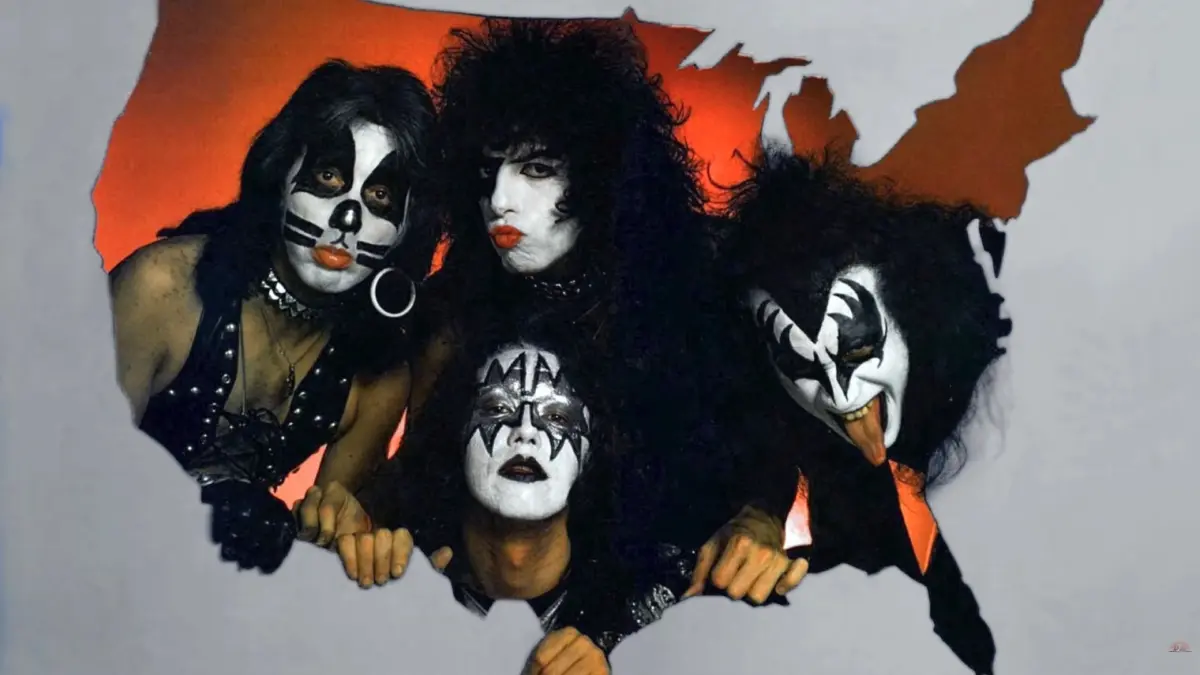
For our final test, we pushed the software to its absolute limit by tackling a live concert recording—a notoriously difficult environment for vocal isolation due to overlapping instrumentation, audience applause, and room acoustics. We selected a snippet from the 1970s rock monolith Kiss and their live archival release, Kiss Destroys Anaheim 76, specifically targeting the track "Do You Love Me?"

- The Process: We first ran the raw live audio snippet through the Vocal & Instrumental stem separation algorithm to extract the raw vocal track from the backing band. Because the resulting stem still contained residual audience cheering, clapping, and ambient bleed, we chained the process by feeding that extracted stem back into the software, switching over to the Voice & Noise (Lynx) workspace with Normal cancellation and De-echo enabled.
- The Result: The multi-stage processing successfully stripped away the obnoxious overdubbed crowd cheers, yielding a remarkably dry, isolated lead vocal stem from a 50-year-old live arena recording.
- In the Mix: The isolated rock vocal was dropped into a heavy, hypnotic acid house track featuring 303-style bassline sequences and Splice percussion loops. Augmented by distortion, compression, and filtering, the vintage rock acapella found a second life inside an underground club ecosystem.
Future Outlook & Industry Implications
The introduction of LALAL.AI Lynx marks a significant milestone in the ongoing convergence of artificial intelligence and professional audio engineering. As neural networks become more sophisticated, the boundary between archival restoration and modern sound design continues to dissolve.

What once required an arsenal of expensive, hardware-emulating plugins and hours of painstaking spectral editing can now be accomplished in minutes. This democratization of audio restoration empowers bedroom producers and commercial studios alike to unearth obscure sonic treasures from degraded sources, transforming what was once discarded noise into chart-ready material.

For producers looking to incorporate Lynx into their daily workflows, LALAL.AI offers tiered pricing structures tailored to varying production demands. Options range from a free starter tier to the Lite plan at $7.50 per month, the Pro tier at $15 per month (unlocking DAW plugin integration), and flexible one-time credit top-ups for occasional users. As machine learning models continue to evolve, the future of sampling is no longer dictated by the fidelity of the past—it is limited only by the imagination of the producer.