Executive Overview
Tanzanian music and visual arts continue to experience a dynamic cross-pollination of regional influences, driven by multidisciplinary artists who refuse to remain confined to a single creative discipline. Among the most compelling figures in this contemporary renaissance is Director Shaibu—a filmmaker, producer, and audio architect whose artistic journey bridges the inland shores of Lake Victoria with the culturally rich, spice-scented coastline of Zanzibar.
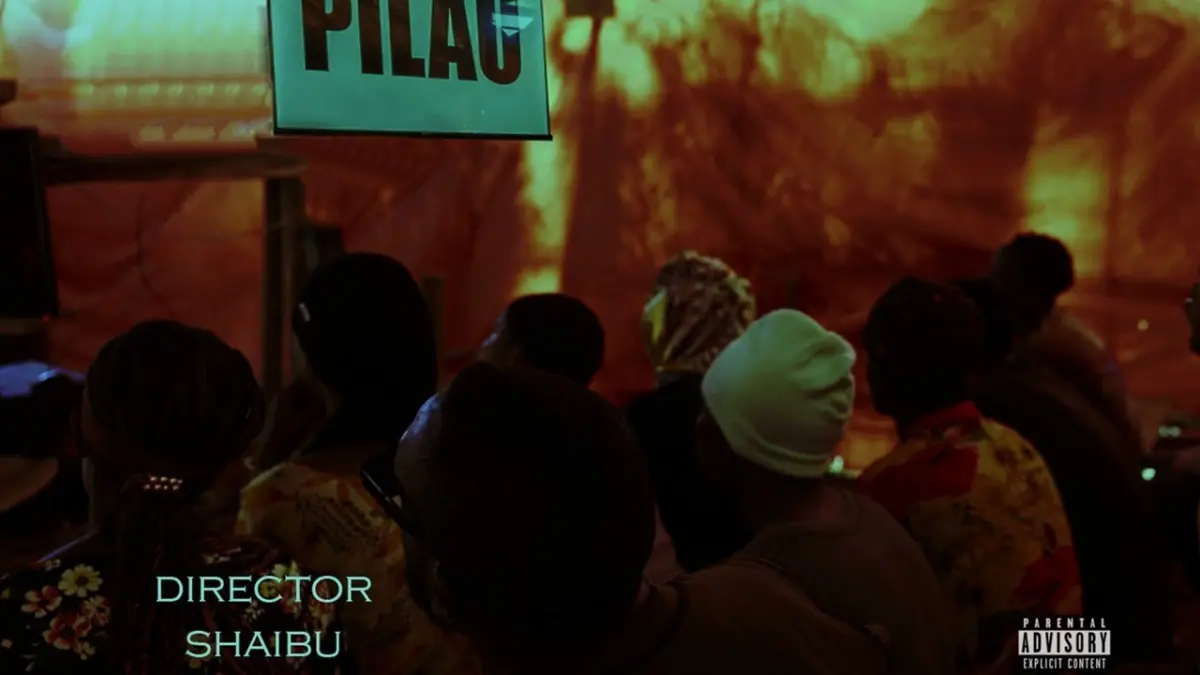
Shaibu’s latest musical offering, the infectious Afro-pop and Bongo Flava single "Wanga," serves as a masterclass in modern East African sonic storytelling. Extracted from his sprawling, eleven-track sophomore album Pilau—released earlier this year—"Wanga" encapsulates the vibrant pulse of Swahili-language pop that has dominated Tanzanian airwaves since the late 1990s, while simultaneously injecting fresh coastal perspectives into the genre.
This release follows a string of significant creative milestones for Shaibu, including the August 2024 debut of his Zanzibar EP and the establishment of his state-of-the-art production hub, M-Studio, nestled in the coastal village of Jambiani. To understand "Wanga" is to understand the trajectory of an artist who transitioned from regional cinematic productions to becoming a formidable force in East African music. This report provides a comprehensive examination of Shaibu’s artistic evolution, the cultural geography that informs his sound, the technical anatomy of Pilau, and the broader implications of his work for the future of the Tanzanian creative economy.
Detailed Chronology: From Mwanza’s Shores to the Indian Ocean Coast
The Formative Years: Lake Victoria and Cinematic Foundations
Director Shaibu’s creative DNA was forged far from the cosmopolitan energy of Dar es Salaam or the tourist-frequented alleys of Stone Town. Born and raised inland in Mwanza, a major port city on the southern shores of Lake Victoria, Shaibu grew up surrounded by the rhythmic trade, bustling fish markets, and diverse ethnic sounds of Tanzania’s lake region. Mwanza provided a fertile ground for observation, imbuing the young creator with a deep appreciation for communal narratives and regional folklore.
However, the pursuit of a professional creative career required a transition to the nation’s cultural capital of education and performance arts. Shaibu relocated to Bagamoyo—the historic coastal town renowned for its rich heritage and artistic resistance—to undergo rigorous professional training at the prestigious TaSUBa (Taasisi ya Sanaa na Utamaduni Bagamoyo / Bagamoyo Institute of Arts and Culture).
At TaSUBa, Shaibu honed his technical competencies in visual storytelling, stagecraft, and media production. This formal education laid the groundwork for his entry into the burgeoning Tanzanian film industry, commonly known as Bongo Movie. Over the following years, Shaibu established himself as a reliable and visionary behind-the-scenes talent, earning critical credits as a director and production manager on prominent local feature films, including Giza la Mchana and Ndoto za Kitaa. These projects required him to navigate tight budgets, manage multidisciplinary crews, and translate complex urban social realities into compelling visual media—skills that would later prove invaluable when he transitioned into music production.
The Coastal Pivot: Relocation to Zanzibar and the Birth of M-Studio
Despite a successful foothold in the Tanzanian film sector, Shaibu’s creative compass pointed toward a new horizon: music, and specifically, the alluring cultural ecosystem of Zanzibar. The move to the semi-autonomous archipelago marked a pivotal turning point in his career.
Zanzibar, with its centuries-old history as a melting pot of African, Arabic, Persian, and Indian influences, offered a sensory overload of rhythms, instrumentation, and atmospheric inspirations. Recognizing the need for a dedicated creative sanctuary, Shaibu established M-Studio in Jambiani, a serene fishing village on the island’s picturesque east coast.
M-Studio quickly evolved from a personal passion project into a thriving creative incubator. Away from the frantic pace of mainland metropolises, the studio became a physical manifestation of Shaibu’s artistic ethos: patient, textural, and deeply connected to its environment. It was within the walls of M-Studio that Shaibu began to synthesize his visual background with audio engineering, culminating in the conceptualization and recording of his foundational musical releases.
The Release Trajectory: From the Zanzibar EP to Pilau
Shaibu’s formal entry into the competitive landscape of Tanzanian recorded music accelerated in late 2024:
- August 2024: Shaibu released his debut musical project, the Zanzibar EP, entirely self-produced and recorded out of M-Studio in Jambiani. The EP served as an acoustic postcard of his relocation, blending traditional coastal rhythms with contemporary electronic production.
- Early 2025: Building upon the underground momentum of the Zanzibar EP, Shaibu expanded his sonic palette into a full-length artistic statement, culminating in the release of his eleven-track sophomore album, Pilau.
- The Present: "Wanga" has officially been selected as the lead promotional single from the Pilau album, accompanied by an official audio release and digital streaming campaigns designed to capture both domestic and international audiences.
Supporting Context & Metrics: The Anatomy of "Wanga" and the Pilau Ecosystem
Musical Classification: Afro-Pop Meets Bongo Flava Heritage
To contextualize the release of "Wanga," one must examine the lineage of Bongo Flava—Tanzania’s dominant musical export. Emerging in the late 1990s as an amalgamation of American hip-hop, R&B, dancehall, and traditional Tanzanian taarab and dansi music, Bongo Flava became the voice of urban East African youth. Over the decades, the genre has evolved, absorbing global Afrobeats production trends while retaining its distinct Swahili lyrical poetry.
"Wanga" sits comfortably at the intersection of contemporary Afro-pop and classic Bongo Flava. The track utilizes:
- Lyrical Dexterity: Sung entirely in Swahili, "Wanga" features intricate cadence structures that highlight Shaibu’s narrative prowess, reflecting themes of human resilience, relationships, and urban-rural transitions.
- Production Polish: Unlike raw demo recordings, the track boasts crisp mixing and mastering, balancing warm sub-bass frequencies with crisp percussion loops characteristic of modern East African club music.
- Atmospheric Textures: Subtle coastal sonic signatures—reminiscent of acoustic guitar plucking and ambient ocean breezes recorded at Jambiani—infuse the track with a distinct geographical identity that separates it from standard Dar es Salaam club bangers.
The Pilau Album Concept
Naming a full-length musical project after Pilau—the iconic, heavily spiced rice dish central to celebrations, weddings, and communal gatherings across Swahili-speaking East Africa—is a deliberate artistic statement by Director Shaibu. Just as authentic coastal pilau requires a precise blend of cardamom, cloves, cinnamon, cumin, and tender meat simmered to perfection, the eleven tracks of the Pilau album represent a carefully curated blend of disparate musical spices.
The album functions as a culinary and sonic feast, bringing together diverse tempos, emotional registers, and featured collaborations. While "Wanga" serves as the high-energy focal point designed for radio rotation and streaming playlists, the surrounding album tracks explore deeper ambient soundscapes, mid-tempo groove experiments, and acoustic reflections on island life.
Official Statements and Artistic Philosophy
While operating independently through M-Studio, Director Shaibu has frequently articulated his creative vision through his artistic choices and media engagements. Industry observers, fellow filmmakers, and musicians have increasingly looked to Shaibu as a model for multidisciplinary success in East Africa.
Reflecting on his transition from visual directing to music production, Shaibu’s body of work speaks volumes about his philosophy of total artistic autonomy. In previous statements regarding his creative process, associates note that Shaibu views filmmaking and music production as two sides of the same coin: both are fundamentally about pacing, framing emotion, and orchestrating human attention.
"When you direct a film like Giza la Mchana or Ndoto za Kitaa, you are essentially building a world out of light, dialogue, and space," notes one Dar es Salaam-based cultural critic. "When Shaibu moved to Jambiani and built M-Studio, he simply traded the camera lens for the microphone diaphragm. ‘Wanga’ proves that he applies the exact same rigorous spatial awareness to his song arrangements as he does to his cinematic framing."
Furthermore, Shaibu’s decision to base his operations in Jambiani rather than relocating permanently to the saturated markets of Nairobi or Dar es Salaam underscores a growing movement among East African creators: decentralizing production. By anchoring M-Studio on the east coast of Zanzibar, Shaibu taps directly into the natural environment, utilizing the acoustic tranquility of the Indian Ocean as a counterweight to the hyper-commercialized sounds of mainstream urban radio.
Future Outlook: The Road Ahead for Director Shaibu
As "Wanga" gains traction across digital streaming platforms and community radio stations throughout East Africa, the trajectory for Director Shaibu points toward sustained multi-channel growth. The release of the Pilau album has firmly established him not merely as a multi-talented filmmaker who dabbles in music, but as a serious recording artist with a distinct sonic signature.
1. Expanding Digital Footprint and International Markets
While Bongo Flava and Afro-pop have made historic strides onto global charts via major-label pushes from artists in Nigeria, South Africa, and mainstream Tanzania, independent creators like Shaibu are paving a parallel path. Through direct-to-fan distribution links—such as his active SoundCloud presence (directorshaibu1/wanga) and comprehensive album hubs (too.fm/pilau)—Shaibu is bypassing traditional gatekeepers. The future outlook involves targeted digital marketing campaigns aimed at the global African diaspora, world music enthusiasts, and European festival curators seeking authentic coastal East African sounds.
2. Multimedia Convergence: Film Meets Audio
Given his extensive background in directing and production management, industry insiders anticipate that Shaibu will soon bridge his two worlds definitively. The natural evolution of the Pilau era is the creation of cinematic visual accompaniments—music videos and short-form visual narratives shot on location in Zanzibar and Mwanza. By leveraging his directorial pedigree, Shaibu is uniquely positioned to release self-directed visual art that mirrors the atmospheric depth of tracks like "Wanga."
3. M-Studio as a Regional Hub
As M-Studio continues to operate out of Jambiani, it stands to become a magnet for underground and avant-garde musicians looking to escape the commercial pressures of mainland recording factories. Shaibu’s commitment to fostering raw talent could see M-Studio evolving into a collaborative residency space, spawning future collaborative EPs, cross-genre fusions, and community arts initiatives along the Swahili coast.
Conclusion
Director Shaibu’s "Wanga" is much more than a catchy Afro-pop single; it is a cultural artifact that maps the journey of an artist traversing Tanzania’s vast geographic and creative landscapes. From the bustling lake port of Mwanza and the cinematic classrooms of Bagamoyo to the coastal serenity of Jambiani’s M-Studio, Shaibu has successfully married the visual with the auditory.
With the full release of the Pilau album and the viral momentum of "Wanga," Shaibu has solidified his standing as a modern Renaissance man of East African culture. As fans stream "Wanga" and explore the eleven-track culinary-sonic journey of Pilau, they are participating in a vibrant ongoing dialogue about the evolution of Swahili pop—one that honors the roots of Bongo Flava while fearlessly charting new coastal horizons.
To experience the music firsthand, stream "Wanga" directly via SoundCloud and explore the full eleven-track album Pilau through Too.fm. Stay connected with Director Shaibu’s visual and musical updates via his official Instagram profile.