Executive Overview
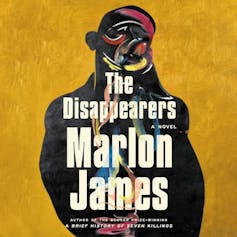
Literary landscapes are rarely altered overnight, yet the arrival of Marlon James’s 2026 novel, The Disappearers, has been hailed by The New York Times as a watershed moment—arguably the "novel of the century." Equal parts magnificent and explosive, the book forces a global readership to stare unflinchingly into the darkest recesses of modern Caribbean history. Set against the sun-bleached, volatile backdrop of Jamaica between 1988 and 2005, The Disappearers operates as an artistic reckoning with a silenced archive.
At its core, the novel examines the lived experiences of men who love, desire, and have sex with men within a virulently homophobic society. James captures a time and place where the toxic cocktail of dancehall lyricism, the unfolding AIDS epidemic, and fiery evangelical sermons forged a crucible of loathing that legitimized institutionalized and vigilante violence. Far from a comfortable literary exercise, The Disappearers is an enraged, deeply personal act of narrative restitution. It shatters the enforced flatness of slurs and stereotypes, humanizing at scale a community systematically erased from public memory. In doing so, James has crafted not only a virtuoso performance of polyphony and intertextuality, but a defiant literary gesture of survival, kinship, and radical visibility.
Detailed Chronology: From Rehearsal Room to Erasure
The architecture of The Disappearers spans nearly two decades, yet its narrative catalyst unfolds in a single, claustrophobic rehearsal room.
The Spark: 1988 and Fortune and Men’s Eyes
The action is initially chronicled through the intimate, unsparing diary entries of Eddy Porteous. Eight men gather in secret to rehearse John Herbert’s provocative, unsettling 1967 US prison play, Fortune and Men’s Eyes, a raw exploration of homosexuality and sexual power dynamics behind bars. As the director, Havelock Titus, poignantly declares to the troupe:
“The love that dares not speak its name, shouts all sorts o’ ways in prison. Even in a Jamaican prison.”
For these men, the rehearsal room functions as a rare, fleeting sanctuary. It is a space where they can momentarily live their truth and participate in what one character describes as "something that tells Jamaica to go fuck herself."
The Descent: The Mob Attack
This fragile sanctuary is shattered when a homophobic mob storms the hideout, bent on slaughtering everyone inside. James narrates this brutal assault episodically through the unfiltered voices of the perpetrators. The prose thrums with the righteous hatred and adrenaline-fueled exhilaration of abhorrence that drives their violence.
By the end of the evening, the carnage is absolute: one man is murdered, another permanently blinded, and all survivors carry physical and psychological injuries that defy healing. In the immediate aftermath, two of the men—Matt Chin and Orrin Turner—vanish without a trace.
The Aftermath: Six Years Later
The narrative abruptly resumes six years later, tracing the labyrinthine search for the disappeared through multiple perspectives. The novel makes a harrowing central thesis clear: gay men in Jamaica disappear long before anyone outside their immediate circle notices they are gone. Capturing the absurd, tragic paradox of queer erasure, one of the survivors contemplates a fictional intervention:
“…a Day Without the Gay, one morning where none of us show up for work […] Can you imagine? Battyman and lesbian cleaning their house, cooking their food, teaching their kids, curing their sickness, and literally saving their lives every fucking day. You think they would see us then? […] The only way for them to see us is for us to disappear.”
Yet, as the narrative reveals, visibility carries a lethal price tag. Survival often necessitates complete invisibility and the exhausting art of "passing," operating under the grim reality that, in the eyes of society, a queer Jamaican wears a sign on their back reading, "Kill us any which way then move on."
Supporting Context & Metrics: The Queer Caribbean Crucible
To fully comprehend the seismic impact of The Disappearers, one must examine the socio-political ecosystem that birthed it. For decades, literary criticism and sociological studies have pointed to the Caribbean as a deeply contradictory space—simultaneously constitutively queer and aggressively homophobic.
The Anatomy of Hypermasculinity
Marlon James is no stranger to this treacherous terrain. His acclaimed 2014 masterpiece, A Brief History of Seven Killings, memorably probed the snarled, performative nature of Jamaican hypermasculinity. In that novel, characters like Weeper—a West Kingston gang enforcer who covertly writes letters to a man he loved in prison—demonstrated the uneasy coexistence of violent gang culture and suppressed queer desire.
However, what remained a fleeting, albeit compelling, subplot in A Brief History becomes the lifeblood of The Disappearers. James unpacks the diverse, intimate realities of gay men across varying classes, ethnicities, levels of social privilege, and emotional intelligence. By populating the novel with complex individuals rather than tragic tropes, James mounts a direct assault on the reductionist violence of homophobic slurs.
The Rejection of Respectability
Crucially, The Disappearers refuses to offer the reader a comfortable or redemptive resolution. It stands at maximum distance from the sanitized respectability prized by the Jamaican middle class. This rejection is starkly embodied in scenes such as Jordan—one of the novel’s central figures—forcing his homophobic father, who has been incapacitated by a stroke, to witness him engaging in sex. James’s stylistic fingerprints are unmistakable throughout: intensely visceral scenes, multi-vocal narratives, polyphony, intertextuality, and a rhythmic, almost musical prose style that flirts with the edges of cultural extravaganza.
Official Statements and Authorial Reflections
The cultural resonance of The Disappearers has prompted widespread critical acclaim and deep introspection from the literary community, notably regarding the personal stakes of the narrative for James himself.
In interviews surrounding the novel’s 2026 launch, Marlon James has been remarkably candid about his own proximity to the violence depicted on the page. The author has acknowledged that he could easily have fallen victim to a similar fate had his life trajectory taken a different turn—had he not initially sought refuge in the church (which ultimately closeted him) before eventually emigrating to the United States. That geographic and psychological distance afforded him the critical perspective required to write with the excruciating, breathtaking proximity that defines his latest masterwork.
Literary critics have echoed this sentiment, emphasizing that the novel functions as an urgent act of political and cultural preservation. Jordan Brown, a protagonist within the novel who champions a journalist’s efforts to document the brutal mob attacks, neatly summarizes the manifesto driving the book:
“Jamaica don’t get to beat us, kill us, then vanish us. And we don’t get to stop paying attention. This is important.”
This refusal to look away transforms The Disappearers from a mere work of fiction into a monumental act of solidarity. As Jordan reflects elsewhere in the text, the novel offers “a touch that says ‘There you are, I know you, I see you.’”
Future Outlook: A Catalyst for Transformation
As The Disappearers dominates global bestseller lists and sparks intense academic and cultural debates, its long-term legacy extends far beyond literary prizes. By dragging a heavily censored, violently suppressed history into the glaring light of international scrutiny, James has permanently altered the conversation surrounding human rights, queer visibility, and cultural identity in the Caribbean.
The novel acts as a literary prime mover—priming the collective imagination for future justice and institutional transformation. While Jamaica’s sexual politics remain a complex battleground of deeply entrenched religious and social orthodoxies, works of art with the magnitude of The Disappearers make absolute erasure impossible. They ensure that those who vanished into the shadows of silence are forever reclaimed by history, bearing witness to a resilience that no amount of violence can extinguish.
Disclaimer: This article features references to contemporary literature. Links to purchasing platforms may result in a small commission supporting independent literary journalism and cultural archiving initiatives.