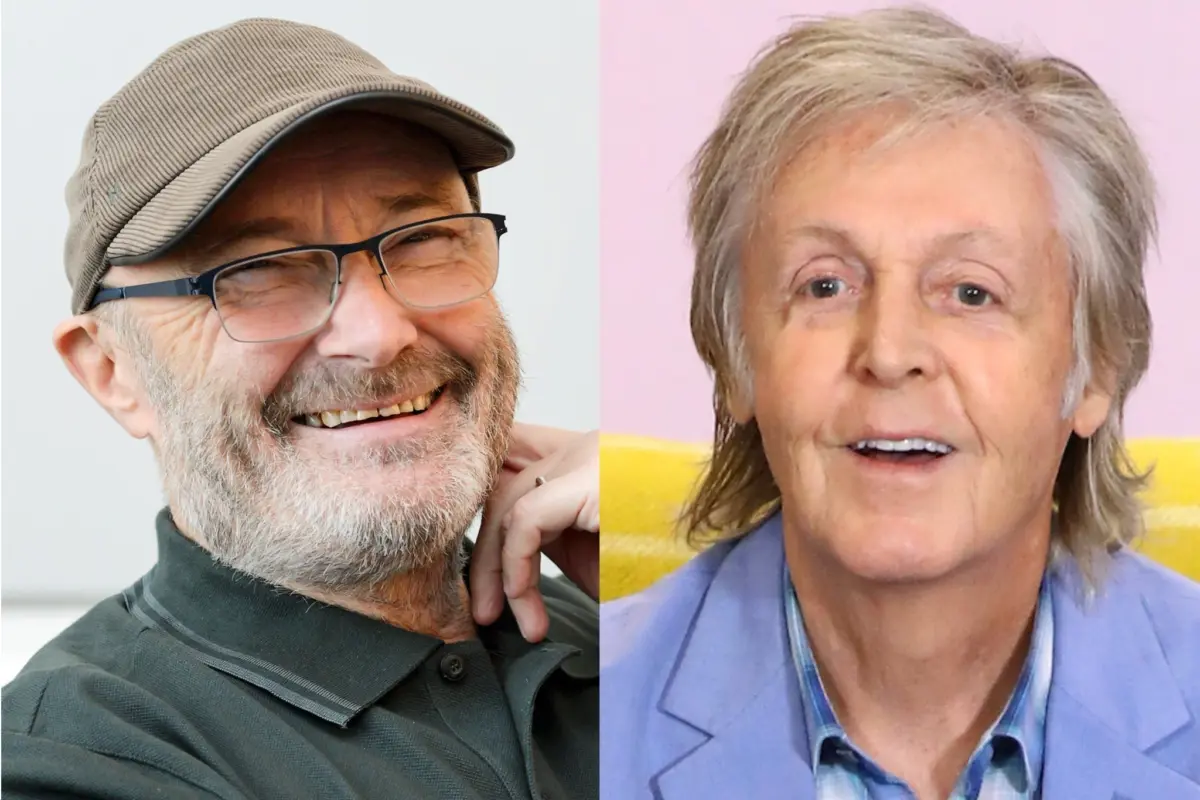
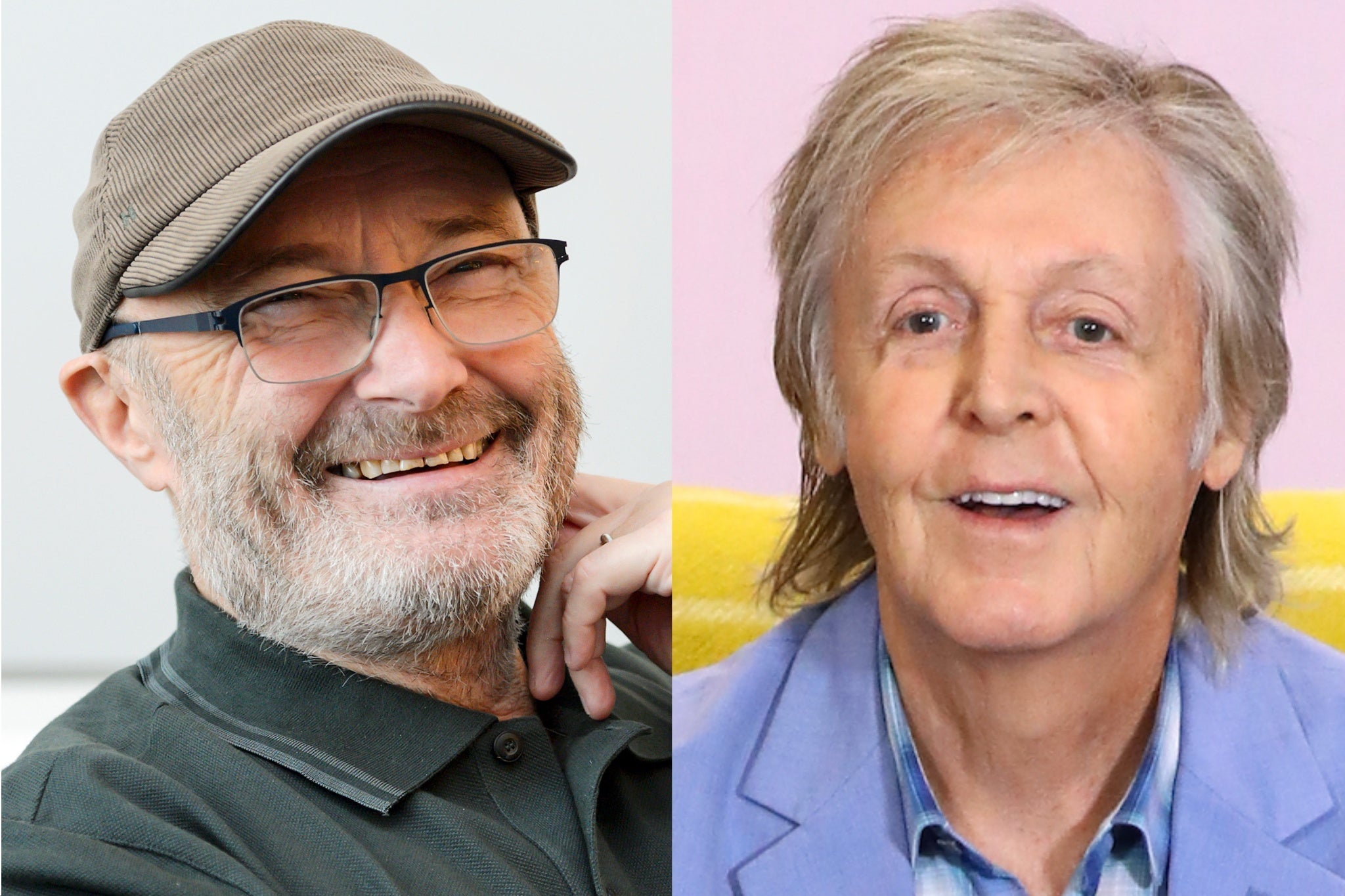
For over twenty years, a quiet friction has lingered between two of British rock and pop music’s most towering figures: Phil Collins and Sir Paul McCartney. What began as a seemingly innocuous interaction backstage at Buckingham Palace during the 2002 Queen’s Jubilee celebrations spiraled into a decades-long cold war, fueled by bruised egos, public commentary, and a mutual misunderstanding that spanned generations of chart-topping success.
The feud, which originated when McCartney made a condescending off-hand remark about Collins being a "little Phil" and a "big Beatle fan," was later cemented in print when Collins detailed the stinging encounter in his 2016 memoir, Not Dead Yet. For years, the two music legends maintained a guarded distance, punctuated by brief, tense exchanges and a lingering sense of grievance.
However, recent developments signal a profound shift in their relationship. Appearing on a recent episode of the Piers Morgan Uncensored podcast, Collins provided a candid, retrospective update on the status of his relationship with the former Beatle. Revealing that McCartney recently initiated contact over the phone—initially sparked by charity memorabilia coordination for the King’s Trust—Collins admitted that he finally cleared the air, expressing direct remorse for dragging the incident into the public eye.
This comprehensive report examines the anatomy of the 2002 Buckingham Palace encounter, the escalation of the feud through memoirs and media interviews, the psychology of two perfectionist icons striving for universal approval, and what this recent reconciliation means for the twilight years of two extraordinary musical legacies.
Detailed Chronology
2002: The Buckingham Palace Incident
The roots of the discord trace back to June 2002, amid preparations for the Queen’s Golden Jubilee Concert at Buckingham Palace—a historic national event that brought together the absolute royalty of the British music industry. Phil Collins, a massive fan of music history, arrived at the royal rehearsals armed with a prized possession: a rare, first-edition book authored by Hunter Davies on The Beatles.
Hoping to secure an autograph from one of his childhood idols, Collins approached McCartney, who was accompanied by his then-wife, Heather Mills. As Collins recounted to Piers Morgan, the interaction immediately went awry.
"We had a rehearsal at Buckingham Palace and I had a first edition Hunter Davies book [on The Beatles], which was very quite rare. I took it to the rehearsal so Paul could sign it… Paul came up behind with Heather Mills… and I said, ‘Paul, could you sign this?’"
According to Collins, McCartney’s response crossed the line from good-natured banter into condescension. McCartney allegedly turned to those around him and remarked:
"He’s a big Beatle fan, is our little Phil."
The comment hit a raw nerve. Despite being a superstar in his own right—having fronted Genesis, conquered global charts as a solo artist, and amassed a resume that included playing on McCartney’s own solo records and performing alongside him at Prince’s Trust events—Collins felt infantilized. "And I thought, ‘You asshole.’ I couldn’t help it. That’s just what I thought," Collins admitted. He was deeply stung, noting that because they possessed an existing professional relationship, he expected a baseline of mutual respect rather than patronizing punchlines.
2016: Airing Grievances in Print
For over a decade, the incident remained a private grievance, but the tension boiled over into the public domain with the publication of Collins’s 2016 autobiography, Not Dead Yet. In the memoir, Collins publicly aired the Buckingham Palace slight, ensuring that millions of readers and pop-culture historians were made aware of McCartney’s perceived arrogance.
The release of the book prompted an immediate reaction from McCartney, who reached out to Collins via email. Rather than offering an apology, however, McCartney’s outreach reflected frustration and annoyance. In an October 2016 interview with Billboard, Collins reflected on McCartney’s reaction:
"He’s been in touch about it because he was upset. I certainly didn’t get any flowers from him; I got more of a ‘Let’s just get on with our lives.’ And I’m sorry he’s upset that I kinda said something nasty about him—well, it wasn’t really nasty. If people don’t tell people that sometimes their attitude could be a bit better then you’re not gonna get any better, y’know?"
At that juncture, reconciliation stalled. McCartney wanted to sweep the matter under the rug without addressing the underlying behavioral complaint, while Collins stood firm in his belief that calling out arrogance was a necessary corrective.
Present Day: The King’s Trust Phone Call and Reconciliation
The breakthrough in the 22-year stalemate arrived unexpectedly through philanthropic channels. While Collins was coordinating memorabilia contributions for a King’s Trust charity auction, word reached McCartney, prompting the legendary Beatle to pick up the phone.
What was supposed to be a logistical conversation quickly pivoted to personal grievances. Collins recalled the tense opening moments of the call to Piers Morgan:
"He said, ‘While we’re on the phone.’ I thought, ‘Oh, here we go.’ So he said, ‘What is all this about?’ I said, ‘I wish I’d never said it, Paul. I wish I’d never said it.’ He said, ‘I thought we were good, you know.’"
Recognizing the emotional weight of the decades-long estrangement—and acknowledging that McCartney’s sensitivity stems from a lifelong desire to be universally liked—Collins dropped his defenses. He offered an unreserved apology, telling Morgan:
"I said I was sorry, because I really didn’t wish him… I mean, obviously, this had been bugging him because he likes to be liked, as we all do! Maybe him more than some other people. But we all like to be liked. I understand that."
Supporting Context & Metrics
To fully appreciate the gravity of this feud and reconciliation, one must examine the staggering cultural and commercial footprints of both artists. The friction between Collins and McCartney represents a clash of two titans whose careers helped shape the global soundtrack of the late 20th century.
Career Milestones & Comparative Metrics
Metric / Milestone
Sir Paul McCartney
Phil Collins
Primary Era of Prominence
1960s – Present (The Beatles, Wings)
1970s – Present (Genesis, Solo Career)
Global Record Sales
Estimated 100M+ solo (500M+ with The Beatles)
Estimated 150M+ records worldwide
Grammy Awards Won
18 competitive Grammys (plus Academy Awards, Brit Awards)
8 competitive Grammys (plus an Academy Award)
Songwriting Hall of Fame
Inducted (Songwriters Hall of Fame, Rock & Roll Hall of Fame)
Inducted (Rock & Roll Hall of Fame as member of Genesis, 2010; Solo induction pending/nominated)
Key Collaborative Cross-Overs
Prince’s Trust, Live Aid, various session works
Performed on McCartney’s solo projects, Prince’s Trust concerts
The sheer weight of these metrics demonstrates why a rift between them mattered so deeply within the British music ecosystem. Both men operated at the absolute pinnacle of international fame, where interactions are rarely casual and egos are inevitably shaped by decades of adulation.
The Psychology of Aging Icons
Psychologically, the reconciliation highlights a universal theme: the desire for peace as artists enter the final chapters of their lives. Now aged 75 (Collins) and 84 (McCartney), both musicians have faced health struggles and heavy scrutiny in recent years. Collins, who has battled severe physical ailments related to spinal surgery, nerve damage, and alcohol addiction, has increasingly turned his focus toward legacy, reflection, and mending broken bridges.
Similarly, McCartney—who remains an active, touring musical force into his eighties—values the preservation of his historical narrative. The realization that a petty, two-decade-old backstage remark continued to cast a shadow over their mutual legacy provided the necessary catalyst for both men to lay down their arms.
Official Statements & Key Quotes
The narrative of this reconciliation is best understood through the direct words of Phil Collins, captured across his 2016 memoir, past press interviews, and his most recent statements on the Piers Morgan Uncensored podcast:
On the initial 2002 Buckingham Palace encounter:
"He probably didn’t mean it like it sounded, but he said, ‘He’s a big Beatle fan, is our little Phil.’ And I thought, ‘You asshole.’ I couldn’t help it. That’s just what I thought." — Phil Collins
On why the remark stung despite their existing rapport:
"I knew Paul. This wasn’t the first time I met him. I played on one of his albums. I played live with him with the Prince’s Trust. I’d given him an award at an award show in London, so I kind of knew him. So I was kind of surprised at that particular tone of reply." — Phil Collins
On McCartney’s defensive reaction to the 2016 memoir:
"He’s been in touch about it because he was upset. I certainly didn’t get any flowers from him; I got more of a ‘Let’s just get on with our lives.’" — Phil Collins, speaking to Billboard (2016)
On breaking the ice during the recent phone call for the King’s Trust:
“I said, ‘I wish I’d never said it, Paul. I wish I’d never said it.’ He said, ‘I thought we were good, you know.’ I said I was sorry, because I really didn’t wish him… obviously, this had been bugging him because he likes to be liked, as we all do!” — Phil Collins, speaking on Piers Morgan Uncensored
Future Outlook
With the air finally cleared between Phil Collins and Sir Paul McCartney, the closure of this 22-year chapter offers a satisfying resolution for fans of classic rock history. While it is unlikely that the two aging superstars will embark on a sudden musical collaboration given their respective health and retirement trajectories, the neutralization of past hostility ensures that their monumental legacies can be celebrated without the lingering asterisk of interpersonal bitterness.
Ultimately, the Collins-McCartney feud serves as a humanizing reminder that even global icons—men who have played before millions, rubbed shoulders with royalty, and left indelible marks on human culture—are susceptible to the same petty pride, wounded vanities, and long-delayed moments of grace as anyone else. By choosing to apologize and laugh away the ghosts of Buckingham Palace, both men have secured a far more harmonious coda to their legendary careers.