Executive Overview
Last year marked the 250th anniversary of Jane Austen, a literary milestone celebrated globally through exhibitions, festivals, and specialized cultural retrospectives. Austen’s undisputed status as a titan of English literature is safely entrenched within the public consciousness, buoyed by endless adaptations, scholarly analyses, and a fervent global fandom. Yet, this global fixation on a single literary luminary has inadvertently eclipsed an entire ecosystem of commercially successful, brilliantly subversive female authors who wrote alongside Austen during the Regency era and routinely commanded equal, if not superior, market share.
Among the most glaring omissions from the modern literary canon are Scottish contemporaries Susan Ferrier and Mary Brunton. Although their overall literary output was modest, their debut novels—Marriage (1818) and Self-Control (1811) respectively—were monumental publishing sensations. They captured the cultural zeitgeist of Regency-era Britain, navigating complex themes of female propriety, societal expectation, national identity, and psychological survival.
With Netflix’s Regency-era mega-hit Bridgerton generating a fresh wave of cultural curiosity toward Scotland—highlighted by its fifth season in production and sweeping Highland backdrops—the timing is ideal to unearth these forgotten literary pioneers. By examining how Ferrier and Brunton outsold, inspired, and ultimately shared bookshelf space with Austen, we reveal a far richer, more dynamic literary landscape than the traditional schoolroom canon suggests.
Detailed Chronology
Understanding the literary weight of Ferrier and Brunton requires tracing the parallel timelines of British publishing innovation, Regency social shifts, and the explosive rise of the Scottish novel.
- Spring 1811: Mary Brunton publishes her debut novel, Self-Control, anonymously. It becomes an immediate, overnight sensation across Great Britain, comfortably eclipsing the commercial launch of Jane Austen’s Sense and Sensibility later that same year.
- July 1817: Jane Austen passes away at the age of 41, leaving her final works to be posthumously curated and published, while her earlier masterpieces slowly recede from active print runs.
- 1818: Susan Ferrier publishes her debut novel, Marriage, anonymously. Reviewers immediately begin speculating on its authorship, with contemporary critics drawing direct comparisons to the stylistic brilliance of the late author of Pride and Prejudice.
- December 1818: Mary Brunton tragically passes away in Edinburgh at the young age of 40 due to postpartum complications, leaving her third novel, Emmeline, unfinished.
- 1819: Brunton’s unfinished novel, Emmeline, is published posthumously alongside a biographical sketch detailing her remarkable, albeit brief, literary career.
- 1824–1831: Ferrier expands her portfolio with the publication of The Inheritance (1824) and Destiny (1831), cementing her reputation as a sharp satirist of Anglo-Scottish cultural clashes.
- 1832–1841: London-based publisher Richard Bentley launches his highly influential Standard Novels series. In a pivotal moment for literary canonization, Bentley reprints the works of Austen alongside those of Ferrier and Brunton. Notably, Brunton’s works occupy volumes 15 and 16, serving as an early anchor for the series that would ultimately resurrect Austen’s enduring modern profile.
Supporting Context & Metrics
Regency Scotland: The Rival Metropolis
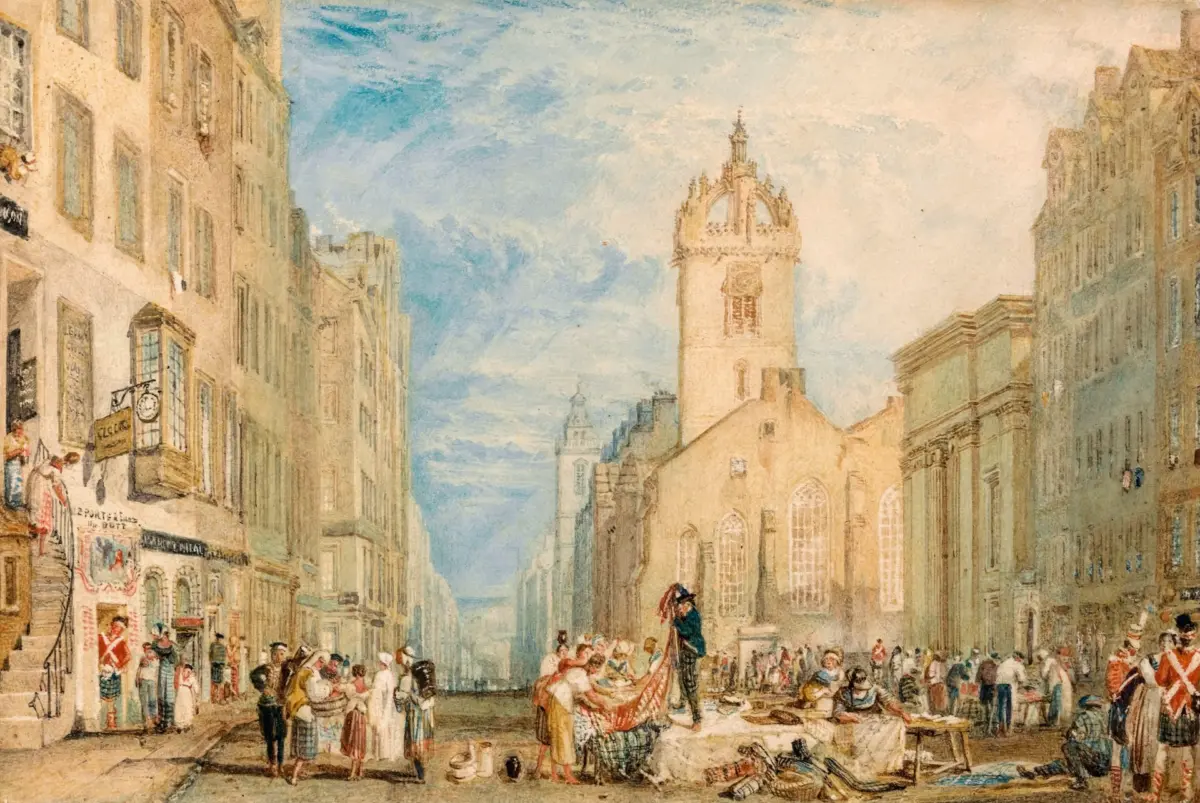
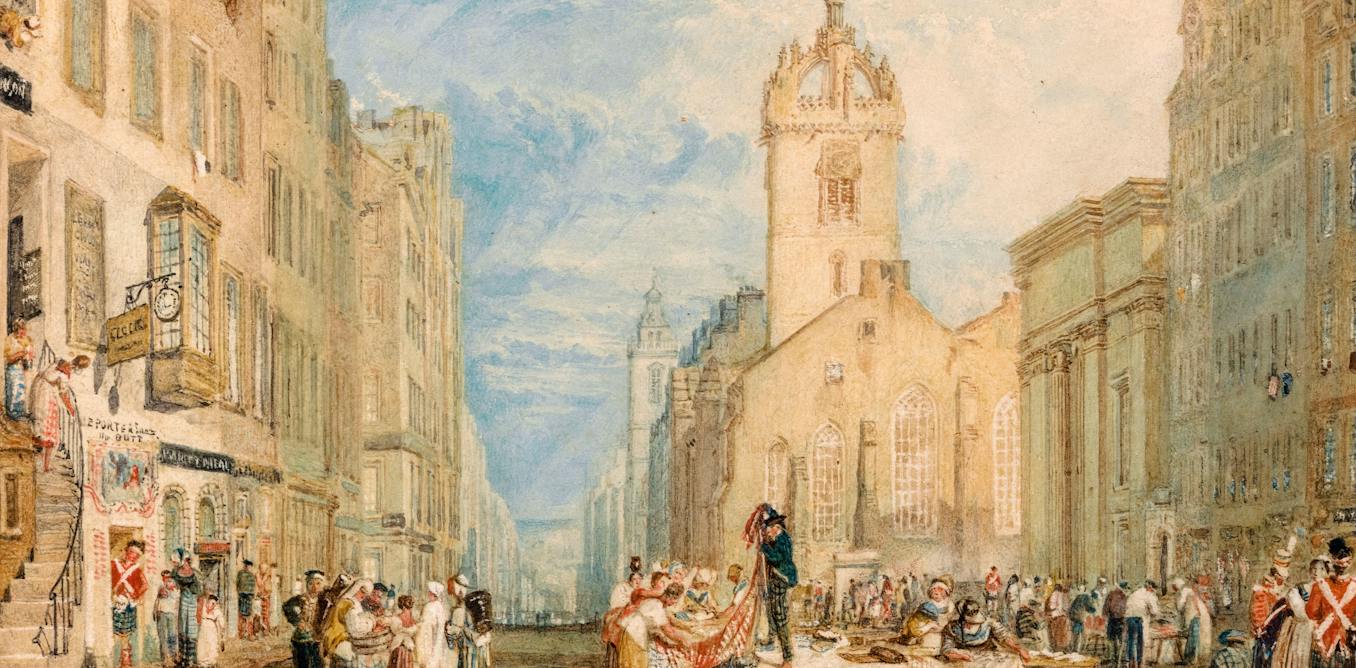
To view Regency Scotland merely as a picturesque backdrop for stray aristocrats—as occasionally framed in modern media adaptations like Bridgerton—is to misread history entirely. While television scripts characterize Scotland as a remote, beautiful wilderness far removed from the hustle and bustle of the London Ton, Enlightenment-era Edinburgh was actually the beating heart of British intellectual and literary life.
As academic Ian Duncan famously observed, Edinburgh during the Regency period functioned as "a literary metropolis to rival London." This explosive cultural dominance was catalyzed by Sir Walter Scott’s monumental, bestselling Waverley novels. Scott single-handedly transformed Scotland from a perceived political periphery into an international tourist destination, sparking an insatiable consumer appetite for Scottish-themed fiction. Ferrier and Brunton rode this massive wave of demand, leveraging their native landscapes and cultural nuances to captivate readers across the United Kingdom.
Susan Ferrier: The Satirist of Two Nations
Born in Edinburgh in 1782, Susan Edmonstone Ferrier lived a life deeply enmeshed in the city’s elite social circles. A close confidante of Sir Walter Scott—who affectionately dubbed her his literary sister and to whom she dedicated her final novel, Destiny—Ferrier possessed an acute eye for human absurdity.
Her novels (Marriage, The Inheritance, and Destiny) balanced moral instruction with lacerating wit. Ferrier specialized in dissecting the mutual misconceptions held by the English and the Scottish regarding one another. While her titles suggested adherence to traditional propriety, her pages overflowed with eccentric characters, regional dialect, and incisive social critique.
Despite nineteenth-century critics frequently hailing her as "Scotland’s Jane Austen," this comparison has proven to be a double-edged sword. While it provided an immediate shorthand for readers seeking domestic comedy and romance, it ultimately boxed Ferrier into Austen’s shadow, obscuring her unique stylistic innovations and distinct Scottish perspective.
Mary Brunton: The Sensation of 1811
Born on the remote island of Orkney in 1778 before eventually settling in Edinburgh, Mary Brunton lived a tragically truncated life. Yet, in her brief span, she achieved what few writers ever manage: capturing the total attention of the reading public.
Her debut novel, Self-Control, was an immediate publishing phenomenon in 1811. Even Jane Austen, writing privately to her sister Cassandra, displayed a complex mixture of professional envy and critical reservation. Austen famously described Self-Control as "excellently meant" and "elegantly-written," while dryly noting it was "without anything of Nature or Probability in it." The mere fact that Austen was actively re-reading the novel while penning her critiques underscores its unavoidable cultural gravity.
Crucially, Brunton’s writing did not shy away from dark, high-stakes themes. Beneath the veneer of conventional moral titles lay searing explorations of female agency, sexual harassment, psychological trauma, financial desperation, and even suicide—ground well beyond the scope of traditional domestic comedy.
Official Statements & Academic Insights
Literary historians and academic institutions have increasingly turned their attention to the structural mechanisms that build—and neglect—literary canons.
Dr. Anthony Mandal, a leading scholar in nineteenth-century print culture and British fiction, highlights the volatile nature of Regency publishing economics:
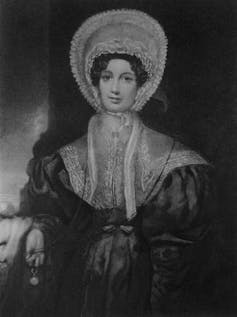
"When Self-Control appeared in the spring of 1811, six months before Austen’s Sense and Sensibility, it was Brunton’s first novel that was the sensation of the year, an overnight bestseller, and not Austen’s. The modern assumption that Austen was the undisputed queen of the bookshops from her very first publication simply does not align with historical sales data or contemporary reception."
Reflecting on the legacy of Susan Ferrier, modern literary critics emphasize her role in shaping national identity through domestic fiction. A prominent commentary from Edinburgh University Press notes:
"By alluding to multiple philosophical and regional frameworks, Ferrier achieved for Scotland what Jane Austen and Maria Edgeworth had respectively done for England and Ireland—anchoring the domestic novel in specific, localized socio-political realities rather than generalized romantic tropes."
Furthermore, cultural historians point to Richard Bentley’s pioneering Standard Novels series (1832–1841) as the pivotal turning point that rescued Austen from obscurity while simultaneously packaging her alongside her Scottish peers. The curatorial choice to print Brunton’s novels near the very front of the series demonstrates that nineteenth-century publishers viewed these three women as peers occupying the exact same tier of artistic and commercial prestige.
Future Outlook
As global entertainment franchises continue to mine the Regency era for cinematic inspiration—exemplified by Netflix’s ongoing Bridgerton expansions, which increasingly incorporate Scottish settings and character arcs—the appetite for this historical epoch is expanding rather than contracting.
Literary anniversaries, such as Austen’s recent 250th milestone, serve an essential purpose in generating shared cultural heritage. However, they also present a vital responsibility: looking beyond the established canon to recover the brilliant voices that shaped the literary ecosystem of their time.
Susan Ferrier and Mary Brunton outsold Austen, pushed the boundaries of narrative subject matter, and helped define the golden age of the domestic novel. As contemporary readers seek out deeper, more diverse historical contexts to enrich their enjoyment of modern Regency dramas, rediscovering these forgotten Scottish literary stars offers an intellectually rewarding path forward. By stepping outside the narrow confines of the traditional canon, modern audiences can finally appreciate the true breadth of Regency literature—where Scottish wit, moral complexity, and fierce female independence stood shoulder-to-shoulder with the finest writing of the age.