Executive Overview
Today marks the birth anniversary of one of the twentieth century’s most electrifying, tempestuous, and enduring literary figures: Dylan Marlais Thomas. Born on October 27, 1914, in the maritime, industrial-yet-picturesque city of Swansea, South Wales, Thomas entered the world as the son of a seamstress mother (Florence Hannah Williams) and a rigorous schoolteacher father (David John Thomas). From these unassuming domestic roots emerged a voice that would permanently alter the landscape of English-language poetry and broadcast drama. Thomas’s lyrical cadence, theatricality, and visceral connection to the Welsh landscape continue to captivate scholars, artists, and casual admirers alike.
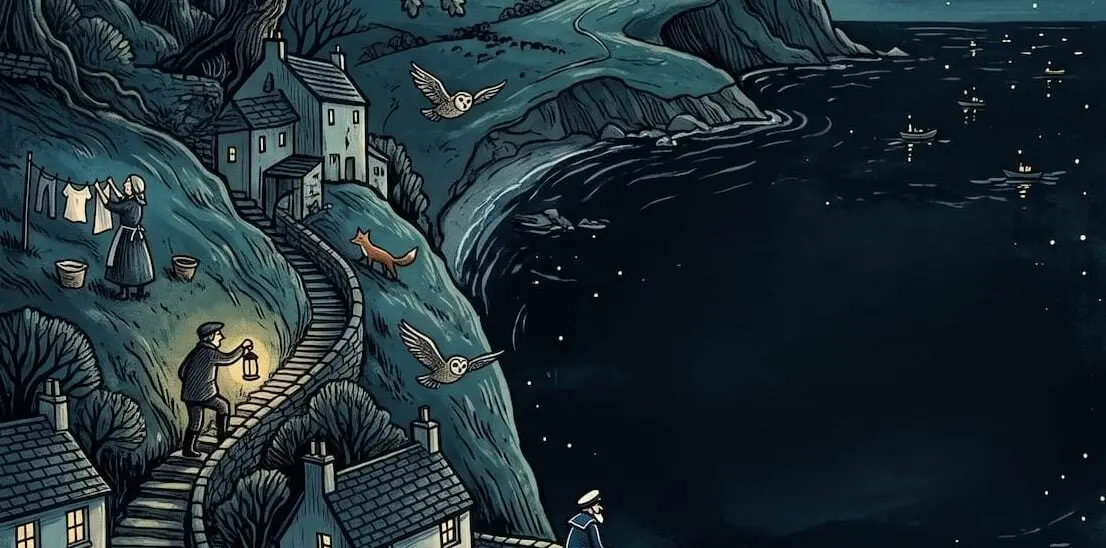
To commemorate his birth, cultural programmers and folk music historians are once again inviting audiences to step into the misty, idiosyncratic morning of Llareggub—the fictional, delightfully backwards Welsh seaside village that serves as the crucible for Thomas’s masterwork, the radio play Under Milk Wood. This celebratory journey manifests as a deeply curated, evocative musical mixtape that bridges the historical weight of mid-century British literature with the ethereal, haunting strains of contemporary Welsh folk, acoustic revivalism, and melancholic singer-songwriter traditions.
Anchored by the inimitable, resonant voice of fellow Welsh titan Richard Burton reading the timeless opening lines of Under Milk Wood, the audio landscape weaves seamlessly between spoken-word theatre and acoustic mastery. Listeners are treated to deep cuts and transcendent tracks from icons such as Nick Drake, modern luminaries like Cate Le Bon and Georgia Ruth, and rare archival treasures—including a poignant live recording of fingerstyle guitar legends John Renbourn & Wizz Jones captured shortly before Renbourn’s passing in March 2015.
This article provides an exhaustive, multi-dimensional exploration of this cultural artifact. We will examine the intersections of Dylan Thomas’s biography, the creation of Under Milk Wood, the significance of Richard Burton’s vocal stewardship, and an in-depth track-by-track breakdown of the featured musical journey that honors both the writer’s birth and the living heritage of Celtic folk expression.
Detailed Chronology: From Swansea to Llareggub and Beyond
To fully appreciate the scope of the tribute mixtape and its literary foundations, one must retrace the chronological milestones that defined Dylan Thomas’s meteoric life, brief career, and posthumous cultural ascension.
1914–1933: Formative Years in South Wales
- October 27, 1914: Dylan Marlais Thomas is born at 5 Cwmdonkin Drive in the Uplands district of Swansea. His middle name honors his uncle, a Welsh cleric and poet, while his upbringing is steeped in both English literature (courtesy of his father, an English master at Swansea Grammar School) and the oral traditions of Wales.
- 1931: At age sixteen, Thomas leaves school to work as a junior reporter for the South Wales Daily Post. Though his journalistic stint is brief, the acute observational skills honed in newsrooms heavily influence his descriptive prose.
- 1933: Thomas moves to London, determined to make his mark as a poet. Operating in bohemian circles, he publishes poems that immediately draw the literary establishment’s attention for their dense, surreal imagery, biblical cadences, and obsession with themes of mortality, sex, and time.
1934–1950: Literary Stardom and Wartime Broadcasting
- 1934: Publication of his debut poetry collection, 18 Poems, which establishes him as an avant-garde prodigy.
- 1937: Thomas marries Caitlin Macnamara, beginning a tumultuous, passionate, and financially precarious partnership that produces three children: Llewelyn, Aeronwy, and Colm.
- 1939: The publication of The Map of Love cements his reputation. During World War II, classified as unfit for active military service due to health issues and chronic respiratory problems, Thomas contributes extensively to the BBC as a scriptwriter, reader, and cultural commentator, finding his natural home in the medium of radio.
- 1946: Release of Deaths and Entrances, featuring some of his most famous poems, including "Fern Hill" and "A Refusal to Mourn the Death, by Fire, of a Child in London."
1951–1953: The Genesis and Premiere of Under Milk Wood
- 1951–1952: Thomas works intensively on commissions for the BBC and American lecture tours, developing the concept for a "Play for Voices" set in a small Welsh fishing village. Originally titled Llareggub Hill (notoriously "bugger all" spelled backwards), the project evolves into Under Milk Wood.
- May 1953: Thomas travels to New York to participate in a staged reading of the incomplete play at the Poetry Center of the YM-YWHA, starring an American cast.
- November 9, 1953: Following a catastrophic collapse in New York—exacerbated by a punishing schedule, heavy drinking, and underlying health complications—Dylan Thomas dies at St. Vincent’s Hospital at the age of thirty-nine.
- January 1954: The BBC broadcasts the definitive radio production of Under Milk Wood, starring Richard Burton as the First Voice. It becomes an instant cultural touchstone, transforming Thomas from a celebrated literary figure into a national myth.
Supporting Context & Metrics: The Anatomy of a Folk-Literary Mixtape
The mixtape celebrating Thomas’s birth is not merely a random collection of atmospheric tunes; it is a meticulously structured acoustic journey designed to mirror the cyclical, dreamlike, and deeply rooted geography of Welsh storytelling.
The Metrics of Welsh Folk Revival
In recent decades, Welsh-language and Celtic folk music have undergone a massive renaissance. Independent labels, grassroots festivals, and digital distribution platforms like Mixcloud have allowed artists working in regional dialects—often bridging the gap between traditional penillion singing and contemporary indie-folk experimentation—to reach global audiences.
| Track / Artist | Musical Genre | Cultural Origin / Significance |
|---|---|---|
| Nick Drake – Black Eyed Dog | British Folk / Singer-Songwriter | Represents the melancholic interiority often found in Thomas’s darker late poetry. |
| Huw M – Si hwi hwi | Contemporary Welsh Folk / Pop | Showcases modern adaptations of traditional Welsh lullabies and domestic folklore. |
| Plu – Llun ar y Setl | Indie-Folk / Acoustic Harmony | Highlights family vocal harmonies deeply entrenched in the Welsh language scene. |
| John Renbourn & Wizz Jones | British Folk-Baroque / Blues | Exemplifies the masterclass fingerstyle guitar tradition, captured live near the end of an era. |
| Cate Le Bon – No God | Avant-Pop / Experimental Folk | Demonstrates the surreal, jagged lyricism characteristic of contemporary Welsh alternative art. |
The mixtape leverages these diverse sonic textures to construct a modern sonic equivalent to Thomas’s vision of Llareggub: a place where the mundane and the miraculous coexist, where gossips trade secrets over tea, and where the sea constantly beats against the cliffs of memory.
Track-by-Track Breakdown: Into the Village of Llareggub
To fully experience the curated audio landscape, one must trace the sequence of performances that unfold across the broadcast.
Part I: Awakening and the Shadow of Mortality
- Excerpt from Under Milk Wood (Richard Burton): The mixtape opens with the velvet, thunderous authority of Richard Burton. His voice drops into the listener’s ear like fog rolling over the Welsh headlands: "To begin at the beginning: It is spring, moonless night in the small town, starless and bible-black, the cobblestreets silent…" The atmosphere is instantly established—intimate, theatrical, and heavy with poetic import.
- Nick Drake – Black Eyed Dog: Transitioning from Burton’s narration, Drake’s stark, late-period masterpiece enters with haunting guitar strums and a pleading, spectral vocal delivery. It channels the same nocturnal isolation that permeates Thomas’s descriptions of the sleeping village.
- Joan Mills & Michael Raven – Death And The Lady: A classic ballad tradition that addresses the universal human confrontation with mortality, aligning directly with Thomas’s famous injunction, "Do not go gentle into that good night."
- Julie Murphy – Train (Going West): Murphy brings a contemporary folk-blues edge to the journey, capturing the restless motion of travel, escape, and the magnetic pull of the western Welsh coast.
- Georgia Ruth – Madryn: The acclaimed Welsh harpist and singer offers a piece shimmering with regional identity, evoking the misty, salt-sprayed landscapes of the Llyn Peninsula.
- Huw M – Si hwi hwi & Plu – Llun ar y Setl: These tracks ground the mixtape in the Welsh language itself, contrasting lullaby rhythms with contemporary acoustic arrangements that sound simultaneously ancient and fresh.
- James McArthur & the Head Gardeners (Bluest Stone) & The Gentle Good (A Man Made of Moss): These offerings dive deep into pastoral melancholy, utilizing fingerpicked acoustic guitars and gentle string arrangements to evoke the quiet, moss-covered stone walls of rural Wales.
Part II: The Village Awakens and Deepens
- Excerpt from Under Milk Wood (Richard Burton): Burton returns, marking a structural shift in the audio journey as the town begins to stir: "The town is a-buzz with the old ghosts of the dead, the young dreams of the living…"
- Little Arrow – People of the Volcano: Injecting a dose of psychedelic folk surrealism, Little Arrow matches the eccentric, larger-than-life character sketches found in Thomas’s radio play (such as Captain Cat, Organ Morgan, and Polly Garter).
- Lleuwen – Lle Wyt Ti Heno Iesu Grist?: A deeply spiritual and arresting vocal performance that taps into the chapel-going, hymn-singing heritage of nineteenth- and twentieth-century Wales, which Thomas both satirized and deeply romanticized.
- Cate Le Bon – No God: One of Wales’s most inventive contemporary exports, Le Bon brings a jagged, minimalist art-rock sensibility that echoes the avant-garde structural experiments Thomas performed with language.
Part III: Final Reveries and Archival Mastery
- Excerpt from Under Milk Wood (Richard Burton): The final spoken-word bridge wraps the listener in Burton’s comforting, rolling baritone, preparing the ground for the final musical movements.
- Gold Valley Bench – Raining on Avon: A soothing, atmospheric instrumental interlude that evokes the gentle rain falling across British river valleys.
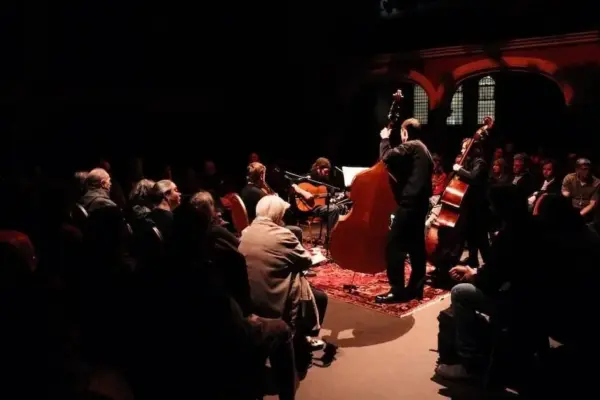
- John Renbourn & Wizz Jones – Buckets of Rain: A high-water mark of the mixtape. Recorded live shortly before Renbourn’s death in March 2015, this acoustic tour-de-force pairs two giants of the British folk-baroque movement. Their interplay is effortless, joyous, and elegiac, serving as a fitting bridge between past legends and living traditions.
- Michael Chapman – No Song To Sing: Chapman’s gravelly, world-weary voice and exceptional blues-folk guitar work embody the spirit of the wandering troubadour—a role Dylan Thomas inhabited in his tumultuous final years on lecture tours across America.
- Y Tebot Piws – Godro’r Fuwch: The mixtape closes with a touch of Welsh folk-pop whimsy from Y Tebot Piws, ensuring that the journey ends with a smile, mirroring the humor and light that forever balanced the dark, existential depths of Dylan Thomas’s imagination.
Future Outlook: Preserving and Reinterpreting Welsh Literary Heritage
As cultural institutions face the challenges of digitization, shifting attention spans, and the homogenization of global media, projects like The Village of Llareggub Awakens mixtape serve a vital custodial function. They prove that literary and musical heritage is not a static artifact locked behind glass in a museum, but a living, breathing ecosystem capable of continuous reinvention.
1. Digital Curation and Global Accessibility
Platforms like Mixcloud and Bandcamp have democratized access to specialized regional culture. Listeners in Tokyo, New York, or Buenos Aires can now experience the specific acoustic texture of a Welsh folk song or the theatrical genius of Richard Burton’s delivery with a single click. This borderless accessibility ensures that Dylan Thomas’s centenary milestones and ongoing anniversaries generate new generations of international scholars and fans.
2. The Evolution of Bilingual and Regional Arts
The integration of Welsh-language artists (such as Plu, Huw M, Lleuwen, and Y Tebot Piws) alongside English-language folk icons highlights the thriving bilingual reality of modern Wales. Far from being a relic of the past, the Welsh language is treated as a vibrant medium for contemporary song-writing, experimental folk, and avant-garde performance art.
3. Sustaining the Oral Tradition
In an era dominated by screens and automated text generation, Dylan Thomas’s insistence that poetry is something meant to be read aloud—to be shouted, whispered, sung, and tasted on the tongue—remains radical. The mixtape honors this philosophy by treating music and spoken-word poetry as equal partners in narrative construction.
As we look toward the future, the ghost of Dylan Thomas continues to walk the streets of Swansea, Laugharne, and the imaginary alleyways of Llareggub. Through the enduring power of Richard Burton’s recorded voice, the ever-refreshing streams of Welsh folk music, and the collective memory of listeners worldwide, the spring night remains starless and bible-black, yet eternally illuminated by the brilliance of his words.