Executive Overview
For decades, Avid’s Pro Tools has reigned supreme as the industry-standard digital audio workstation (DAW) for high-end post-production, film scoring, and professional music mixing. Yet, despite its unmatched prowess in timeline editing, surround mixing, and digital signal processing (DSP) routing, Pro Tools has long faced a persistent critique from its user base: its native sample-triggering and quick-loading instrument workflows have often felt cumbersome compared to competitors like Ableton Live, Logic Pro, or Steinberg Cubase.
Enter indie developer Coretone and its inaugural flagship product, the Core Sampler.
Marketed boldly as the sampler “Pro Tools should already have,” Core Sampler is a dedicated AAX plugin meticulously engineered to eliminate the tedious friction of modern music production. Developed by accomplished film composer, producer, and software engineer Nico Borromeo, the plugin addresses a very specific, universal frustration among audio professionals: the arduous process of turning a momentary musical spark into a structured, playable instrument.
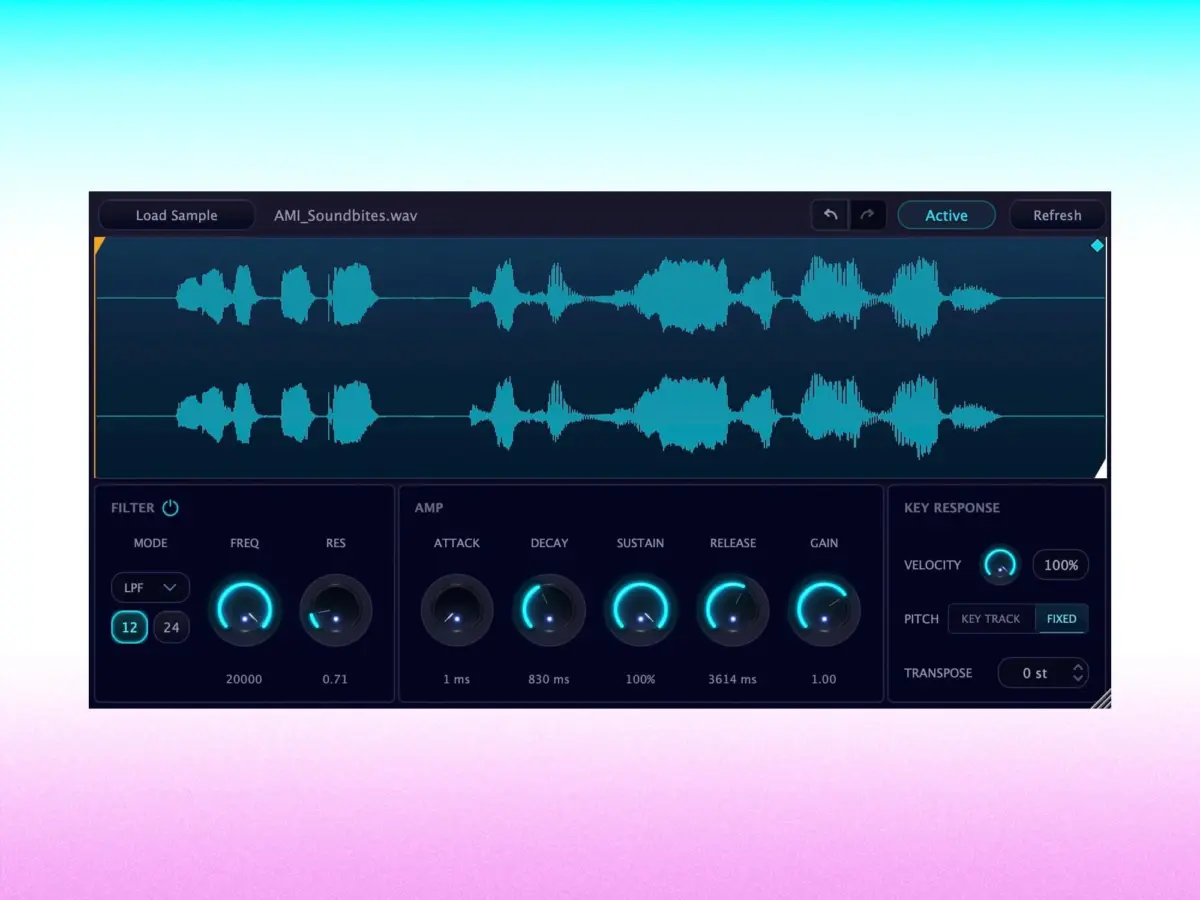
Rather than forcing producers to drag audio files onto the main arrangement timeline, chop them up, crossfade them, and map them out manually across multiple tracks, Core Sampler provides an immediate, streamlined sandbox. Users can drag and drop any recorded sound or one-shot sample directly into the interface, manipulate the waveform on the fly, sculpt it with dedicated envelopes and filters, and map it across a MIDI controller in mere seconds.
Available as a straightforward, one-time purchase free from the dreaded trap of recurring subscription models, Core Sampler arrives at a fascinating inflection point for Avid’s ecosystem—coinciding with major modern Pro Tools iterations like version 2026.4. This extensive report explores the genesis of Core Sampler, examines its technical mechanics, highlights the background of its creator, and analyzes what this release means for the broader landscape of professional DAW workflows.
Detailed Chronology: From Film Scoring Frustrations to AAX Reality
The journey to Core Sampler’s release is rooted in the high-pressure environment of professional film and television scoring. To understand why the plugin was born, one must trace the career path and workflow demands of its creator, Nico Borromeo.
The Scoring Trench
Over the past twenty years, Borromeo has carved out a formidable reputation in the media composition space. His credits span critically acclaimed documentaries and prestige television, including features showcased at the Sundance, Tribeca, and Slamdance film festivals. Notable projects include The Fight, Hulu’s anthology horror series Monsterland, the documentary God & Country, and multiple seasons of CBS’s procedural juggernaut NCIS. Beyond his work in visual media, Borromeo has enjoyed success as an electronic music artist, accumulating millions of Spotify streams, major-label record deals, and high-profile performances, including a headline slot at the globally renowned Ultra Music Festival.
Despite operating at the upper echelons of the music and television industries, Borromeo found himself consistently stymied by a fundamental workflow bottleneck within his primary DAW of choice: Pro Tools.
The Breaking Point
In fast-paced scoring environments, inspiration is ephemeral. A composer might record a quick acoustic pluck with a handheld mic, capture the resonant clank of a radiator, or isolate a transient snap from an existing mix. In traditional Pro Tools workflows, transforming that raw audio into a playable, pitch-tracked instrument required a multi-step chore:
- Importing the audio file into the clip list.
- Dragging it onto the timeline.
- Trimming, fading, and bouncing it down or routing it through a multi-output sampler instrument (many of which require tedious key-mapping menus).
- Creating auxiliary tracks or configuring MIDI triggers just to audition the sound across a musical scale.
“After two decades in Pro Tools as a producer and film composer, I still felt there was no go-to sampler built around the core features I needed,” Borromeo explains. “I was tired of turning musical ideas into timeline and audio-clip work. I built Core Sampler to keep creativity moving.”

Iterative Development and Early Access
Recognizing that his frustrations were shared by countless other Pro Tools engineers, sound designers, and mixers, Borromeo transitioned from frustrated user to software developer. Founding Coretone as an independent vehicle for specialized audio tools, he spent months refining the concept through rigorous beta testing and early user feedback cycles.
Rather than rushing out a bloated virtual instrument laden with gigabytes of factory sample libraries, Coretone focused purely on utility, speed, and deep integration with the AAX architecture. The result was version 1.1.1—a lean, hyper-responsive plugin designed to do one thing exceptionally well: turn raw audio into an immediate performance tool.
Supporting Context & Technical Mechanics: How Core Sampler Works
To appreciate the impact of Core Sampler, one must examine its technical feature set and how it integrates into the Pro Tools environment.
The Core Workflow
At its heart, Core Sampler is designed around friction reduction. The operational loop can be broken down into four distinct phases:
- Ingestion: Users can instantly drag and drop any audio file—whether a one-shot drum hit, a vocal snippet, an ambient field recording, or a synth stab—directly into the plugin’s graphical user interface (GUI).
- Waveform Editing: Once loaded, the sample is immediately displayed as a clean, high-resolution waveform. Users can perform direct, non-destructive edits on the visual waveform without ever touching the Pro Tools timeline.
- Sound Shaping: The plugin provides a robust suite of onboard sound-design parameters. Producers can shape the sample using amplitude envelopes (Attack, Decay, Sustain, Release), precise gain staging, smoothing fades, resonant filters, pitch manipulation, and velocity-sensitive modulation controls.
- MIDI Execution: Once sculpted, the sound is instantly mapped across the user’s MIDI controller. Producers can play melodies, rhythm patterns, or sound effects chromatically or polyphonically straight from a keyboard, pad controller, or sequencer track.
The Business Model: Perpetual Licensing vs. Subscriptions
In an era where modern software plugins are increasingly locked behind restrictive, recurring monthly or annual cloud subscription models, Coretone has made a deliberate and consumer-friendly stand. Core Sampler is offered entirely via a transparent, one-time perpetual purchase.
During its initial introductory launch window, the plugin was priced at an accessible $24 USD, transitioning to its standard full retail price of $39 USD on October 31. This pricing strategy positions the utility tool as an impulse buy for working professionals who want maximum value without committing to another software-as-a-service (SaaS) overhead expense.
The Pro Tools Ecosystem in 2026
The launch of Core Sampler also arrives at a dynamic moment for Avid’s flagship DAW. Earlier in the year, Avid rolled out Pro Tools 2026.4, a major software update loaded with immersive audio enhancements, streamlined cloud collaboration tools, and advanced session management features—most notably the introduction of Track Pin, designed to help engineers maintain visual and operational focus during massive, multi-track film scoring and mixing sessions.
While Avid continues to modernize Pro Tools’ core infrastructure, third-party developers like Coretone are stepping in to fill the granular, micro-workflow gaps that major corporate updates sometimes overlook. By providing a dedicated AAX sampler that respects the native habits of Pro Tools power users, Coretone has effectively delivered a missing puzzle piece for the platform.
Official Statements and Industry Reception
The industry response to Coretone’s debut release has been overwhelmingly positive, particularly among engineers and composers who split their time between Pro Tools and alternative DAWs known for superior native sampling capabilities.
In a press release shared with industry publication MusicTech, Coretone positioned the launch with uncharacteristic bluntness: Core Sampler is the tool “Pro Tools should already have.” This sentiment resonated deeply with a community of audio professionals who have long envied the drag-and-drop simplicity found in competitors like Ableton Live’s Simpler or Logic Pro’s Quick Sampler.

Nico Borromeo elaborates on the philosophy driving the software:
"When you are working on a tight film cue deadline, every second spent routing audio or managing auxiliary tracks pulls you out of the creative zone. We didn’t want to reinvent the wheel; we just wanted to make the wheel spin without friction. Core Sampler is built by a composer, for composers and producers who value momentum above all else."
Early reviews from beta testers and industry peers highlight the plugin’s remarkably low CPU footprint, lightning-fast load times, and intuitive layout. By stripping away unnecessary bloat and focusing entirely on immediate audio-to-MIDI translation, Coretone has successfully avoided the trap of over-engineering—a common pitfall for first-time software developers.
Future Outlook: What’s Next for Coretone and Pro Tools Workflows?
As the digital audio landscape continues to evolve, the demand for specialized, workflow-accelerating plugins is at an all-time high. Modern producers are constantly inundated with massive virtual instrument suites that require extensive setup times, shifting the creative paradigm away from spontaneous experimentation and toward heavy technical management.
Coretone’s successful deployment of Core Sampler proves that there is a massive, underserved appetite for focused, micro-utility plugins that solve singular problems elegantly.
Potential Trajectories
While Coretone has not yet announced a formal product roadmap following the release of Core Sampler version 1.1.1, industry analysts and early adopters are already speculating on future developments:
- Expanded Modulation and Effects: Future updates could introduce advanced modulation matrices, built-in saturation, or multi-sample zone mapping for more complex instrument building.
- Cross-Platform Compatibility: While firmly established as an AAX powerhouse for Pro Tools users, the underlying philosophy of Core Sampler could easily translate to VST3 and Audio Units (AU) formats for users of Ableton, Logic, and Cubase.
- Ecosystem Growth: With Borromeo’s background in both software engineering and high-end media composition, Coretone is uniquely positioned to become a go-to boutique developer for professional scoring tools.
Conclusion
Core Sampler is more than just a convenient plugin; it is a direct response to decades of workflow friction within the industry-standard Pro Tools environment. By acknowledging the psychological and creative toll of technical tedium, Nico Borromeo and the team at Coretone have crafted a solution that respects the most valuable asset any creator possesses: time.
For Pro Tools users tired of wrestling with timeline clips just to play a single sound from a MIDI keyboard, Core Sampler isn’t just a welcome addition to the plugin folder—it’s an essential companion that restores the joy of spontaneous creation.
Core Sampler is available now via the official Coretone website.