For half a century, the historic cobbled streets of the Scottish capital have served as the unofficial epicenter of the global television and entertainment industries every August. Blending the chaotic creative experimentation of the world-renowned Edinburgh Festival Fringe with high-level corporate networking, talent scouting, and fiery political debate, the Edinburgh TV Festival became an indispensable fixture on the international cultural calendar.
However, a tectonic shift is underway. Following a competitive bidding process driven by rising concerns over affordability, accessibility, and sustainability, the long-standing Edinburgh TV Festival will permanently relocate to Manchester starting in 2027.
Rather than accepting the loss of a foundational pillar of the city’s creative economy, Scottish cultural authorities, government figures, and festival organizers have mobilized with striking swiftness. Led by Screen Scotland, the Scottish Government, and the Fringe Society, plans have officially been launched for a brand-new, homegrown Scottish screen event. Slated for a pilot launch in August 2027, this new initiative aims to fill the vacuum left by the departing institution while fundamentally reimagining the relationship between content creators and consumers.
This article provides an exhaustive, authoritative examination of the Edinburgh TV Festival’s relocation, the historical legacy it leaves behind, the impassioned defense of the city’s artistic ecosystem articulated by industry icons like Richard Gadd, and the forward-looking strategy designed to secure Scotland’s preeminent place in the global screen industries for the next fifty years.
Detailed Chronology: From 1976 Origins to the Manchester Relocation
To understand the magnitude of the upcoming transition, one must retrace the origins of the Edinburgh television gathering and how it evolved into a powerhouse of international media discourse.
The Genesis: 1976 and the Vision of Linda Myles and Gus MacDonald
The festival originated in 1976 as the Edinburgh Television Drama Festival, born out of a perceived need for a distinct, critical space to debate the rapidly changing broadcasting landscape. Spearheaded by Linda Myles—then director of the Edinburgh International Film Festival and the first woman to direct a major film festival—alongside former Granada TV executive Gus MacDonald, the event was designed as a bold spin-off.
Myles and MacDonald envisioned an environment where television practitioners, writers, and executives could engage in unvarnished, rigorous debate about the cultural and political impact of the medium. Crucially, the organizers anchored the event in the final week of August, deliberately overlapping with the culmination of the Edinburgh Festival Fringe. This timing allowed delegates to double as cultural consumers, seamlessly transitioning from corporate networking sessions to scouting the city’s countless venues for raw, unconventional talent.
Evolution into an Independent Foundation (2001–Present)
For decades, the event matured alongside the British broadcasting ecosystem, weathering the transition from a purely public-service duopoly (BBC and ITV) into a multichannel, multi-platform digital universe. In 2001, governance shifted to an independent foundation based in London, which steadily grew the event to attract more than 2,000 delegates annually.
Despite corporate modernization, core traditions remained intact. The prestigious MacTaggart Lecture—named after the pioneering drama producer James MacTaggart, who passed away two years prior to its inception—became the defining platform for industry soul-searching. Over the decades, the lecture podium has hosted luminaries ranging from media titans like Rupert Murdoch and Ted Turner to legendary broadcasters like David Attenborough.
The Catalyst for Change: Why the Festival is Moving to Manchester
As the media landscape fragmented further and global streaming giants dominated production pipelines, the institutional ecosystem surrounding the Edinburgh TV Festival faced mounting operational challenges. Concerns regarding sky-high accommodation costs during August, carbon footprint sustainability, and broader accessibility for underrepresented regions prompted the festival’s governing foundation to invite alternative UK cities to bid for hosting rights.
While Edinburgh submitted a robust counter-bid to retain its fifty-year-old anchor event, it was ultimately outmaneuvered by Manchester. Promoted as a dynamic, highly accessible northern hub for media production—bolstered by MediaCityUK in Salford—Manchester successfully secured the rights to host the festival starting in 2027. Crucially, because the event is no longer tied to the final weeks of the Edinburgh festival calendar, organizers in Manchester retain full flexibility over future dates and programming structures.
Supporting Context & Metrics: The Cradle of Modern Screen Hits
The emotional and economic resistance to the festival’s departure is rooted in a simple, immutable truth: Edinburgh is not merely a scenic backdrop for television conferences; it is the primordial soup from which modern global television hits are hatched.
The Fringe-to-Screen Pipeline
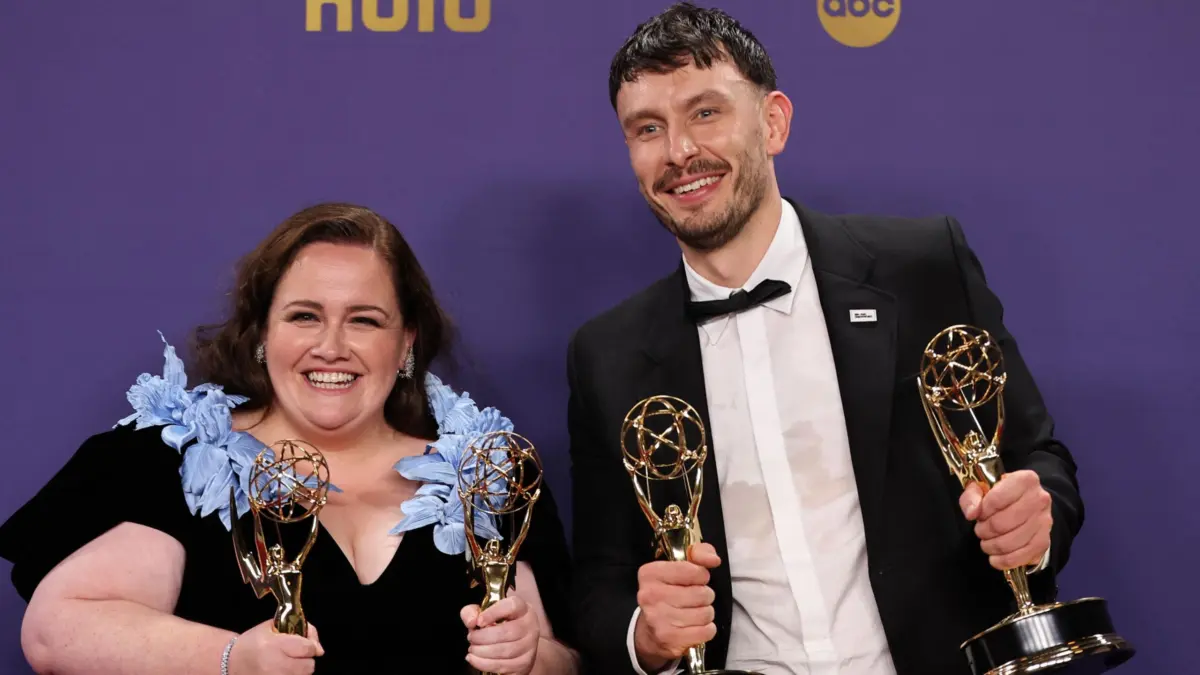
The symbiotic relationship between the Edinburgh Festival Fringe and the television industry has yielded some of the most culturally significant and commercially lucrative screen properties of the 21st century. Nowhere is this better exemplified than in the trajectory of writer and performer Richard Gadd.
Speaking at the launch event for the new initiative, Gadd laid bare his profound personal and professional debt to the Scottish festival ecosystem. Reflecting on his formative years, Gadd recalled his first trip to the Fringe as a schoolboy to witness a production of Black Watch in 2006. Four years later, he made his own debut with the solo show 6 And Half A 7, performed in the cramped confines of a local bar where audiences were sometimes so sparse he had to buy solitary attendees a drink just to keep them engaged.
Persistence paid off. His 2016 show, Monkey See, Monkey Do, earned him the prestigious Edinburgh Comedy Award, setting the stage for his 2019 theatrical staging of Baby Reindeer. That performance caught the attention of television executives from Netflix, the BBC, Channel 4, and HBO, ultimately transforming into the globally viral, multi-Emmy-winning television phenomenon.
"Everything I have in my life, I owe to this festival," Gadd declared during the launch. "Not just the chance to meet agents and producer writers, but going full-time as a writer… A chance to experiment and take risks—to fail spectacularly and come back the next night to start again."
A Legacy of Cult Classics and Global Hits
Gadd’s story is far from an isolated anomaly. The Edinburgh Fringe ecosystem has consistently served as the primary incubator for British comedic and dramatic writing talent. The roster of globally celebrated television projects that originated as low-budget live performances in Edinburgh reads like a masterclass in creative development:
Fleabag: Phoebe Waller-Bridge’s groundbreaking tragicomedy began as a one-woman fringe show before being commissioned by the BBC and subsequently conquering the globe via Amazon Prime Video.
Nanette: Hannah Gadsby’s revolutionary 2017 stand-up masterpiece was refined at the Fringe before Netflix transformed it into a global cultural touchstone.
Other Notable Incubations: Taskmaster, Six the Musical, Flight of the Conchords, The League of Gentlemen, Alan Partridge, Mr. Bean, Stomp, Operation Mincemeat, and The Mighty Boosh all traced their origins back to Edinburgh’s stages.
The MacTaggart Legacy of Controversy and Debate
Beyond talent scouting, the Edinburgh gathering earned global renown for serving as a pressure cooker of political and regulatory accountability. The MacTaggart Lecture, in particular, has frequently punctured the complacency of media establishments.
1993: Playwright Dennis Potter used his address to deliver a blistering critique of BBC Director-General John Birt and Chairman Marmaduke Hussey, famously dubbing them "croak-voiced Daleks" for introducing a cold, management-consultant-driven culture to public service broadcasting.
Recent History: Broadcaster Amol Rajan used his "Alternative MacTaggart" address to demand that the UK government "stop dithering" over the existential questions surrounding the BBC’s future funding structure. Meanwhile, YouTube Vice President Pedro Pina delivered the flagship 2026 lecture, charting the seismic evolution of the medium from linear appointment-to-view broadcasting to decentralized algorithmic streaming.
Official Statements and Stakeholder Perspectives
The coordinated response from Scottish cultural institutions signals a unified determination to transform a perceived loss into an unprecedented structural evolution.
Mìre McAllan: Culture Secretary on "Collective Disappointment" and Resilience
Scottish Culture Secretary Mìri McAllan revealed that the future of Edinburgh’s screen presence was her very first order of business upon assuming office following the elections in May.
"When I was first appointed culture secretary, one of the first meetings I had was about the Edinburgh TV Festival," McAllan noted. "There was a collective disappointment about its departure, but almost as soon as I was briefed on its departure, I was told: ‘Don’t worry minister, we’re already on it. We will work together and move on.’"
McAllan emphasized that the new initiative is designed to harness the unique cultural dynamism of the capital, ensuring that Scotland remains a magnet for international creative innovation.
Linda Myles and The Linda Myles Debate
In a poignant nod to the festival’s roots, Screen Scotland announced the creation of The Linda Myles Debate. Named in honor of the co-creator of the original 1976 television festival, the permanent forum will safeguard her lifelong conviction that Edinburgh must remain the intellectual capital for rigorous discourse surrounding screen media.
"I’m deeply touched and honoured to have the debate named after me," Myles said. "It’s exciting to see the importance of ideas and discussion being recognised in the plans for the new event, especially as this was the initial intention of the creation of the Edinburgh Television Festival in 1976."
Future Outlook: The 2027 Scottish Screen Festival Strategy
What can the global creative community expect from Scotland’s new August fixture, scheduled for a pilot run in August 2027?
Bridging the Creator-Consumer Divide: Unlike traditional, strictly B2B industry jamborees, the new festival is being engineered to tear down the artificial walls between industry insiders and general audiences. By actively incorporating content consumers into the programming mix, the event aims to democratize the discourse around media consumption.
Expanding Beyond Traditional Boundaries: While traditional television and film will remain core pillars, the steering committee—led by former TV festival creative director Rowan Woods and supported by Screen Scotland and the Fringe Society—intends to widen the aperture to embrace the totality of the global content industries. This reflects Scotland’s booming modern production footprint, which has recently accommodated massive international hits like Sony/Starz’s Outlander and Netflix’s Dept Q.
Preserving Artistic Risk: The overarching philosophical mandate of the 2027 pilot is economic and creative protectionism for emerging artists. Richard Gadd captured the urgency of this mission during his launch address:
"This is so much more than a festival. It’s the cultural backbone of the whole country, the world even, and we must protect it at all costs so everyone who dares to step out their front door and call themselves an artist can be given the same opportunity that I was."
As Manchester prepares to welcome the heritage brand of the Edinburgh TV Festival in 2027, Edinburgh itself is refusing to rest on its laurels. By fusing fifty years of institutional memory with a bold, community-integrated, and forward-looking new festival model, the Scottish capital is sending an unmistakable message to the global entertainment industry: the crucible where television history is forged is burning brighter than ever.