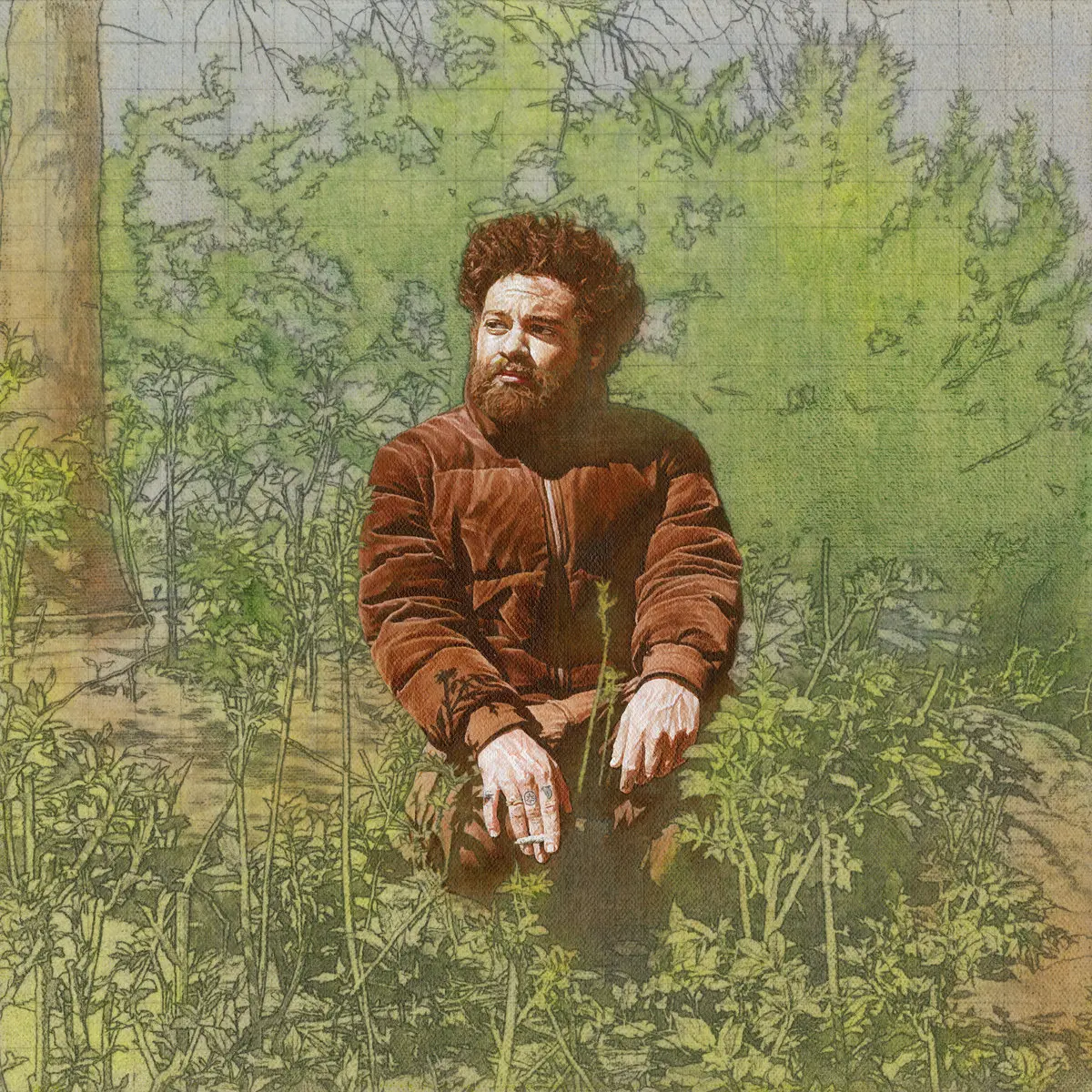
In the grand tapestry of New York City’s independent hip-hop lineage, few figures embody the paradoxical archetype of the quintessential local fixture quite like Patrick Morales—better known to the underground circuit as Wiki. Over the course of a career that spans more than a decade, the 32-year-old rapper has navigated the dizzying highs of teenage blog-era buzz, the abrupt dissolution of his foundational group Ratking, and the gritty, self-sufficient grind of an independent career run largely on his own Wikset Enterprise label.
While pop-culture ubiquity has largely eluded him—manifesting recently in a blink-and-you’ll-miss-it, single-line background appearance in Josh Safdie’s feature film Marty Supreme—Wiki has cultivated something far more enduring: a hard-won, unvarnished artistic perspective. His latest full-length project, Ancient History, serves as a masterclass in this specific brand of New York resilience. Rather than lamenting a career that didn’t scale the global heights once prophesied by youthful hype, Wiki leans into his status as a tri-state, bicoastal, localized poetry staple.
Featuring atmospheric, reverb-drenched production from a murderer’s row of underground heavyweights—including Navy Blue, Tony Seltzer, Nick Hakim, Lil Ugly Mane, and The Alchemist—Ancient History is an inward-looking yet expansively textured examination of personal memory, urban decay, and the chaotic beauty of the five boroughs. This review-driven report explores the thematic weight of Wiki’s latest opus, contextualizing it within the broader history of New York underground rap and examining what it means to age gracefully in a culture obsessed with viral youth.
Detailed Chronology
From Ratking to Solitude: The Making of a New York Survivor
To understand the emotional gravity of Ancient History, one must retrace the arc of Wiki’s arrival in the public consciousness. As a teenager, Morales emerged as the kinetic, punky frontman of Ratking alongside Sporting Life and Hak. Their early output radiated a proudly abrasive underground swagger, capturing the frenetic energy of a rapidly gentrifying Manhattan. For a fleeting moment in the early 2010s, Ratking felt like the harbingers of a new generational wave, inspiring peers like Show Me The Body and captivating a legion of downtown tastemakers.
However, the trajectory of indie-rap stardom is rarely linear. Following a pair of critically acclaimed releases, Ratking dissolved, thrusting Wiki into a sprawling solo career. Despite collaborative nods and shared tracks with established critical darlings like Run The Jewels, Earl Sweatshirt, and Denzel Curry, mainstream commercial success remained out of reach. Solo tours yielded mixed results—ranging from packed rooms to painfully sparse club nights where the reality of independent touring starkly contrasted with the grandeur of internet-era hype.
The Marty Supreme Parallel and Cinematic Realism
This tension between grand ambition and localized reality bridges directly into Wiki’s unexpected cinematic detour. Cast as an extra with a solitary line in Josh Safdie’s Lower Manhattan-set Marty Supreme, Wiki blended seamlessly into the background. Safdie, a filmmaker renowned for populating his cinematic universe with authentic, lived-in New York faces (such as underground rap fixture Necro in previous projects), instinctively captured what makes Wiki’s presence so compelling.
Much like Safdie’s protagonist—a Lower Manhattan striver convinced an eccentric niche skill will bring him fame, weathering the city’s chaotic baseline without losing his self-confidence—Wiki embodies the quintessential New York character. He takes the city’s unpredictable blows in stride, a narrative thread that forms the psychological backbone of Ancient History.
Ancient History: Track-by-Track Evolution
The album sets its thematic coordinates immediately on the opening track, "GTFOH." Over Lord Unknown’s hazy, psychedelic production, Wiki directly addresses his station in the cultural hierarchy: "Some would call him a tragic poet / Coulda been globally known if only he had more exposure / Only known by locals." Rather than reading as bitter or defensive, the delivery is clinical and grounded.
As the record unfolds, the production acts as a lush, drifting sonic landscape:
- "IHNY" and "All In The Lining": Produced by Navy Blue, these tracks oscillate between prismatic R&B reveries and warped spaghetti-western heroism, featuring a sharp back-and-forth with Your Old Droog.
- "Old Gods": A Tony Seltzer and Carlos Truly collaboration that wraps the listener in warm, textural analog comfort.
- "7 Deadly Sins": Indie-soul auteur Nick Hakim crafts a blizzed-out, half-jazz groove that sounds unearthed from a forgotten 1970s vault.
- "Something New": A breezy, conversational pickup-line duet featuring Brooklyn newcomer Salimata, accented by dj blackpower (MIKE) with vintage, organ-laced boom-bap drums.
The album hits a definitive creative peak halfway through with "Bloom," featuring a masterclass beat from reclusive underground architect Lil Ugly Mane. Layered with astral piano chords, celestial bell-tingles, and disorienting DJ scratches, the track features ethereal, whispered vocals from Queens artist duendita, anchoring a meditation on the grueling search for housing and peace of mind in a hyper-expensive metropolis.
Closing with the title track—a free-floating sample symphony engineered by The Alchemist—the album drifts into a dreamlike state, punctuated unexpectedly by uncredited background vocals from Lourdes Leon (Madonna’s daughter). It is a quintessential New York moment: moving in eccentric circles, trusting your instincts, and watching disparate cultural threads weave together organically.
Supporting Context & Metrics
To contextualize the release of Ancient History, it is necessary to examine the current landscape of independent hip-hop distribution and the saturated release cycles of modern streaming platforms.
- Label Mechanics: The album is self-released via Wikset Enterprise on June 12, illustrating a growing economic model where legacy underground artists bypass major-label infrastructure to retain 100% master ownership and direct-to-consumer engagement.
- Streaming Ecosystem & Release Saturation: Dropping during one of the most densely packed release weeks of the year—competing for attention against heavyweights and genre-blenders such as Olivia Rodrigo, YHWH Nailgun, Horse Lords, Big K.R.I.T., and Jazmine Sullivan—Ancient History relies heavily on organic word-of-mouth, niche critical acclaim, and vinyl collector markets rather than algorithmic playlisting strategies.
- Collaborative Economy: The album’s production credits reflect a tight-knit ecosystem of contemporary underground royalty. By leaning into long-standing creative partnerships (The Alchemist, Lil Ugly Mane, Navy Blue), Wiki mitigates the financial risks of studio overhead while maximizing aesthetic cohesion.
Official Statements & Artistic Manifestos
While traditional press releases for independent rap records are often sparse, Wiki’s own lyricism functions as the primary official statement regarding the thesis of Ancient History.
In interviews surrounding his recent singles, including the park-centric ode "Park," Wiki has emphasized the importance of physical geography in shaping creative identity. The track—which reels off local green spaces and highlights surreal urban vignettes like "badminton with the Buddhist monks"—serves as a poetic defense of slow, unhurried observation in a city racing toward hyper-gentrification.
On the track "Right Away," Wiki channels a legendary New York stream-of-consciousness ethos:
"I ain’t write this song, I just got on the mic one day / When I light this bong, feel like I’m not my age."
This sentiment encapsulates the artistic manifesto of Ancient History: an unforced, deeply personal reflection from an artist who has spent nearly half his life in the public eye, finally shedding the anxiety of unmet expectations to focus entirely on the craft of capturing the moment.
Future Outlook
As Ancient History makes its rounds through independent record stores, specialty vinyl distributors, and critical year-end roundtables, its long-term impact on Wiki’s career appears secure. Rather than chasing the elusive crossover hit that defined his late-teens ambitions, Wiki has successfully transitioned into the elder-statesman tier of New York’s underground infrastructure.
The outlook for Wikset Enterprise and artists operating in this hyper-localized, high-art ecosystem points toward sustainable, community-driven longevity. By accepting his status as a "local legend" rather than a global pop commodity, Wiki has freed himself to make music that is richer, stranger, and profoundly more resonant. Ancient History proves that in a cultural landscape obsessed with fleeting viral moments, the most enduring art often belongs to those who stay rooted in the asphalt, observing the city change while refusing to lose their voice.