Executive Overview
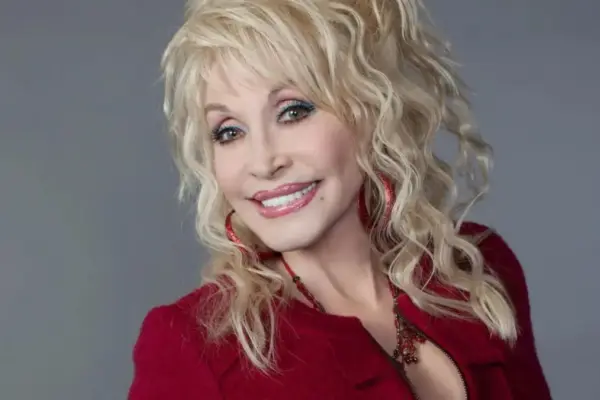
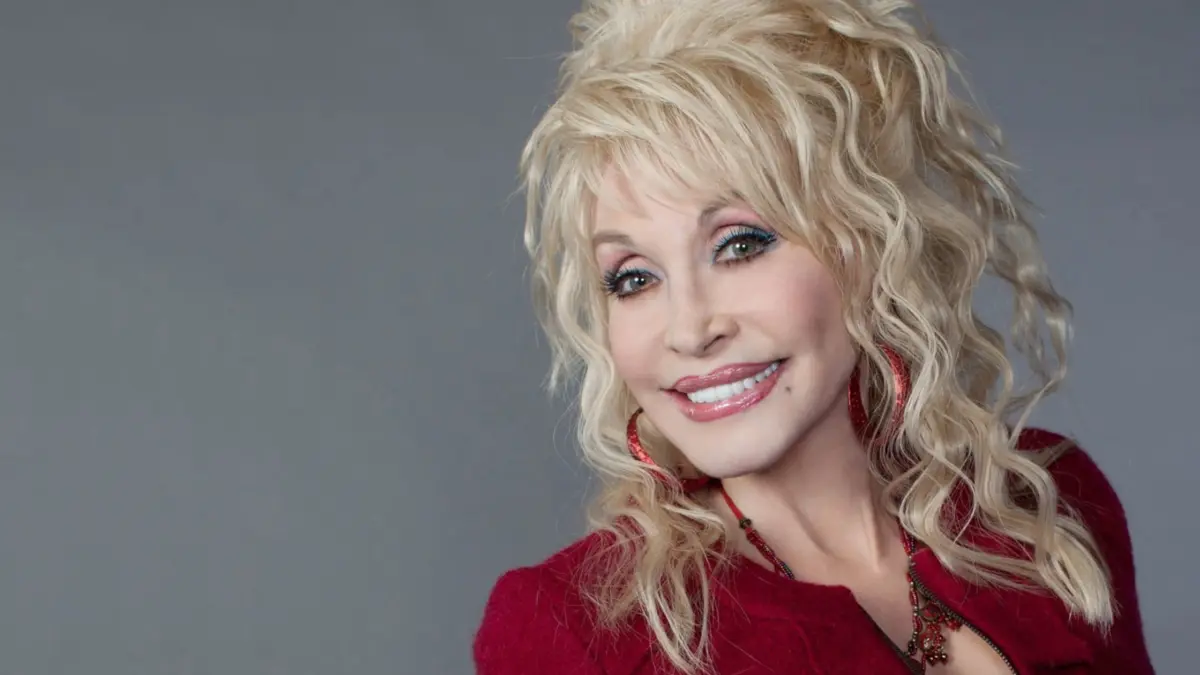
The global music community, cultural institutions, and millions of fans worldwide are in deep mourning following the passing of Dolly Parton, who died peacefully yesterday in Nashville, Tennessee, at the age of 80. Recognized universally as a transcendent singer, prolific songwriter, pioneering actress, astute playwright, celebrated author, and indefatigable philanthropist, Parton leaves behind a colossal seven-decade legacy that fundamentally reshaped the landscape of country music and popular culture at large.
Her passing was confirmed via an official statement on her website, which encapsulated the breadth of her monumental life: "Global icon and humanitarian Dolly Parton, known to the world as a beloved singer, songwriter, philanthropist, actress, playwright and author, died peacefully today in Nashville, Tennessee." The announcement underscored a career defined by unprecedented longevity, stating that over seventy years in the public eye, Parton "inspired multiple generations of artists and fans with her music and an unwavering commitment to making the world a better place."
As tributes continue to pour in from across the globe, industry executives, long-term business partners, publishing giants, and labor organizations have come forward to honor not only her staggering musical output—which included timeless anthems that bridged deep generational and genre divides—but also her profound dedication to social welfare, literacy, and the rights of working musicians. From her foundational years recording with RCA Victor to her multi-faceted partnerships with Sony Music, UTA, and the Country Music Association, Parton’s career was a masterclass in artistic independence, business acumen, and relentless grace.
Detailed Chronology: A Seven-Decade Musical Odyssey
To understand the magnitude of Dolly Parton’s cultural footprint is to examine a musical evolution that spanned the better part of a century. Emerging from the rugged, impoverished hills of Sevier County, Tennessee, as the fourth of twelve children, Parton’s early life was deeply imbued with the mountain gospel and traditional bluegrass sounds of Appalachia. By her early teens, she was already performing on local radio and television stations in East Tennessee, signaling the arrival of a prodigious talent driven by an ironclad work ethic.
Upon graduating high school in 1964, Parton made the decisive move to Nashville, the beating heart of the country music industry. Initially finding success as a songwriter—penning hits for established artists alongside her uncle Bill Owens—she soon caught the attention of Monument Records, where her early singles showcased a crystalline, emotionally piercing vocal delivery.
However, her career truly entered its stratosphere in 1967 when she was recruited by country music royalty Porter Wagoner to join his widely syndicated television program. For seven years, the Parton-Wagoner partnership dominated country charts through a string of resonant duet hits. Yet, Parton’s ambitions could not be permanently contained within a collaborative umbrella. In 1974, signaling a pivotal career turning point, she penned and recorded "I Will Always Love You"—a poignant farewell to Wagoner that would eventually become one of the most successful and enduring compositions in modern music history.
From Major Labels to Independent Mastery
Parton’s recorded output was historically anchored by major institutional entities. For decades, she maintained a prolific, mutually beneficial relationship with RCA Victor, followed by a subsequent tenure at Columbia Records—both of which eventually consolidated under the banner of Sony Music. During these decades, Parton became a ubiquitous crossover artist, dominating country radio before engineering a deliberate pivot toward pop, adult contemporary, and bluegrass idioms.
In the 1990s, demonstrating remarkable foresight regarding the shifting economics of the music business, Parton launched her own independent record label, Dolly Records. Operating with characteristic strategic flexibility, her independent label frequently structured joint-venture and distribution partnerships with major players, including subsequent projects that reunited her with RCA and Sony. This hybrid model allowed her to retain strict ownership of her master recordings while leveraging the global infrastructure of major conglomerates.
Her relationship with the corporate publishing apparatus deepened significantly in 2019, when Sony Music Publishing successfully brokered a landmark administration deal covering a vast majority of her legendary songwriting catalog. This agreement ensured that her thousands of compositions—ranging from the working-class rallying cry "9 to 5" to the haunting introspection of "Coat of Many Colors"—would be expertly managed and protected for future generations.
Supporting Context & Metrics: The Scale of an Unmatched Legacy
To quantify Dolly Parton’s impact requires looking far beyond standard chart metrics, though her commercial achievements remain staggering. Across her seven-decade tenure, she amassed 25 number-one singles on the Billboard Hot Country Songs chart (a record for a female artist that stood for decades) and sold over 100 million records worldwide as a solo artist. She earned 11 Grammy Awards from 50 nominations, alongside an Academy Award nomination, two Emmy nominations, and a Tony Award nomination, placing her within the hyper-exclusive circle of artists who have been nominated for the grand slam of American entertainment awards (EGOT adjacencies).
Philanthropy and the Imagination Library
Yet, any assessment of Parton’s metrics that omits her philanthropic endeavors is fundamentally incomplete. Her most enduring institutional legacy outside of music is undoubtedly the Dollywood Foundation’s Imagination Library, which she founded in 1995. Inspired by her father’s inability to read and write, the program began as a localized initiative in her native Sevier County, mailing one free book per month to children from birth until they entered school.
Over the subsequent thirty years, the Imagination Library scaled into an international phenomenon, expanding across the United States, Canada, the United Kingdom, Australia, and the Republic of Ireland. By the time of her passing, the program had gifted well over 200 million books to young children, effectively revolutionizing early childhood literacy and transforming generational educational outcomes on a global scale.
Furthermore, Parton’s philanthropic footprint was characterized by rapid, compassionate responsiveness. Through her My People Fund, she provided sustained financial relief to families displaced by devastating wildfires in East Tennessee in 2016. In 2020, she famously donated $1 million to Vanderbilt University Medical Center, directly funding critical foundational research that helped accelerate the development of the Moderna COVID-19 vaccine—a contribution that typically drew praise from scientists and global health organizations alike.
Official Statements and Industry Tributes
The global music industry responded to Parton’s passing with an unprecedented wave of grief, reverence, and profound admiration. Business partners, booking agents, labor unions, and trade organizations released comprehensive statements reflecting on her multifaceted career and her legendary personal character.
Sony Music Nashville
Representing her long-standing corporate home, Sony Music Nashville issued a sweeping tribute that captured the sheer magnitude of her cultural footprint:
"Every superlative you could apply to her would be accurate, because Dolly was a monumental talent and trailblazer whose extraordinary artistry touched millions around the globe. She made songs that became part of our shared vocabulary and crossed genres and generations. Her generosity was as extraordinary as her talent. Dolly showed that an artist’s legacy is measured not only in songs, but in lives changed."
Live Entertainment and Agency Leadership
On the live performance side, Parton’s touring legacy was intricately tied to elite talent representation. Neil Warnock, Co-Head of UTA in the UK and Parton’s long-term booking agent, offered a deeply personal reflection on her professional relentless drive:
"Dolly was just Dolly. She started with a vision and never took her foot off the gas. I was fortunate to be part of her life and to witness, alongside her manager Danny Nozell, the energy and ambition she brought to every chapter of her extraordinary career. It was a privilege to know her and to play a part in her journey."
Warnock’s reference to long-time manager Danny Nozell highlights the tight-knit, fiercely loyal inner circle that managed Parton’s business empire. For decades, this operational stability allowed Parton to maintain complete creative autonomy while executing massive, multi-continent tours, theatrical releases, and high-profile television specials well into her seventies.
Trade Organizations and Labor Champions
Institutional bodies within the music ecosystem also stepped forward to acknowledge her foundational contributions to the profession of music-making. Sarah Trahern, CEO of the US Country Music Association (CMA), emphasized her peerless stature within the genre:
"At the end of the day, few artists define country music better than the one-word, Dolly. Over her decades-long career, I worked with her on a number of programmes. She was always the most professional in every setting, often walking off the bus in heels and hair and make-up ready to go, before expected and before the cast and crew."
Beyond commercial associations, labor representation stepped forward to highlight a lesser-known aspect of Parton’s career: her steadfast advocacy for the working class musicians who brought her arrangements to life. The American Federation of Musicians (AFM) released a poignant statement underscoring her solidarity with studio and touring instrumentalists:
"While the world knows her as a global superstar and philanthropist, we knew her as a steadfast champion for working musicians. Dolly was always very generous with her time and her money."
AFM International President Tino Gagliardi elaborated on this sentiment, emphasizing her deep roots in the realities of the profession:
"Before she was an icon, Dolly was a working musician. Dolly never forgot the musicians who helped bring her music to life. By standing firm for solidarity and treating every player with dignity, she elevated our entire profession."
Future Outlook: Preserving a Timeless Legacy
As Nashville and the international entertainment community process the profound void left by Dolly Parton’s passing, attention inevitably turns toward the preservation and stewardship of her monumental empire. With her publishing catalog safely administered by Sony Music Publishing and her vast recorded works managed through her independent structural frameworks, her musical assets are exceptionally well-positioned for long-term institutional protection.
Yet, the true future of Dolly Parton’s legacy lies not merely in copyright portfolios or corporate balance sheets, but in the living, breathing institutions she established. The Dollywood Foundation and the Imagination Library are structurally endowed to continue their mission of global childhood literacy indefinitely, ensuring that her humanitarian footprint will expand long after her physical absence.
Furthermore, her influence on contemporary artists—spanning modern country superstars like Kacey Musgraves and Chris Stapleton, pop icons like Miley Cyrus (her goddaughter), and indie-rock innovators—ensures that her artistic DNA will continue to inform the cutting edge of popular music.
Dolly Parton famously remarked throughout her life that she wanted to be remembered as much for her heart as for her art. As the global tributes confirm, she achieved both in absolute measure. She leaves behind a world measurably kinder, more literate, and infinitely richer in melody than the one she entered in Sevier County eighty years ago.