Executive Overview
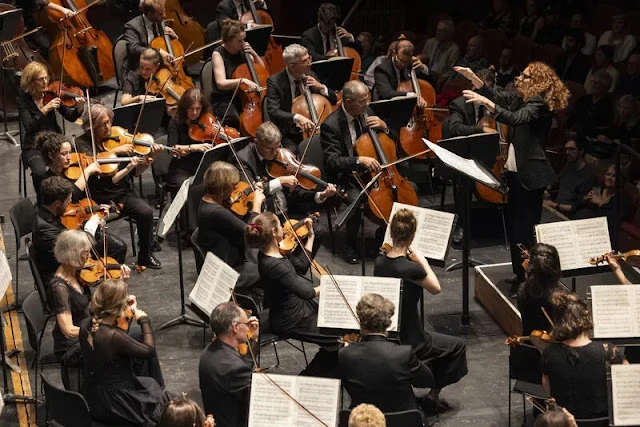
The cultural landscape of the United South Coast of England has undergone a monumental shift as the Brighton Philharmonic Orchestra (BPO) officially embarks on its 2026/27 season. In a landmark announcement that cements nearly a century of shared history, the BPO has been formally named the Resident Orchestra at the Brighton Dome.
This designation formalizes an artistic partnership that dates back to the Roaring Twenties, transforming a long-standing collaborative relationship into a permanent institutional anchor. Under the visionary leadership of Music Director and CEO Joanna MacGregor, the orchestra kicked off its new era over the weekend with a characteristically eclectic and daring programme. The opening concert—a vibrant sonic tapestry weaving together the sweeping romanticism of Sergei Rachmaninoff, the jazzy exuberance of George Gershwin, the sultry pulse of Astor Piazzolla, and the dramatic intensity of Leoš Janáček—set a high-water mark for what audiences can expect from this refreshed residency.
For Brighton Dome, one of the UK’s most historically significant multi-arts venues, housing a resident orchestra of this caliber introduces a new chapter of stability, creative ambition, and community engagement. For the BPO, the residency provides a permanent home base from which to launch world-class programming, commission bold new works, and deepen its educational and outreach footprint across Sussex and beyond. As the classical music world faces mounting economic and operational pressures, this structural union serves as a beacon of forward-thinking cultural administration, proving that historical institutions can successfully reinvent themselves for contemporary audiences.
Detailed Chronology: A Century-Long Symphony
To fully understand the magnitude of the 2026/27 residency agreement, one must look back at the rich, winding historical tapestry that binds the Brighton Philharmonic Orchestra to the Brighton Dome Concert Hall.
The Foundational Years (1925–1929)
The Brighton Philharmonic Orchestra was founded in 1925 during an era of profound post-war cultural revitalization in Great Britain. Born out of a desire to bring high-art orchestral music directly to regional communities outside of London, the orchestra quickly established a reputation for adventurous programming and exceptional musicianship. Just three years after its inception, in 1928, the BPO made its historic debut on the stage of the Brighton Dome’s grand Concert Hall. That initial performance marked the beginning of an enduring love affair between the ensemble and the magnificent, Regency-era architectural marvel that is the Dome.
The Golden Age of Presidential Patronage (1930s–1950s)
Throughout the mid-20th century, the BPO solidified its status as a cornerstone of British musical life, attracting legendary figures of the classical canon to its fold. In 1932, the illustrious conductor Sir Thomas Beecham accepted the position of the orchestra’s first President. Beecham’s association lent the ensemble immediate national and international prestige.
As the decades progressed, the presidential mantle was passed to towering giants of English composition:
- Ralph Vaughan Williams, whose pastoral lyricism and deep commitment to British musical identity deeply influenced the region’s cultural ethos.
- Benjamin Britten, one of the 20th century’s most prolific and celebrated opera and orchestral composers.
This era was also defined by historic collaborations. In 1946, immediately following the conclusion of the Second World War, the legendary French composer and pianist Francis Poulenc took to the Brighton Dome stage to perform his own piano concerto alongside the orchestra. This performance set a precedent for the BPO: it was not merely an ensemble that looked backward to preserve the European masterworks, but a living, breathing laboratory for contemporary musical expression.
The Centenary and Beyond (2025–Present)
The orchestra celebrated its monumental centenary year in 2025, reflecting on a hundred years of uninterrupted music-making, overcoming the challenges of the Great Depression, the Blitz, and the changing financial landscapes of the late 20th and early 21st centuries. The celebrations of the centenary laid the groundwork for deeper institutional introspection. Recognizing the need to secure a sustainable, high-profile future, leadership from both the BPO and Brighton Dome began negotiations to transition their historical working relationship into a formal, permanent residency.
The culmination of these talks at the start of the 2026/27 season marks not an endpoint, but a springboard for the next century of artistic innovation.
Supporting Context & Metrics: The Anatomy of a Modern Residency
The announcement of the residency is underpinned by a series of strategic artistic choices, logistical integrations, and demographic goals designed to maximize the cultural return on investment for the city of Brighton and Hove.
Programming Philosophy Under Joanna MacGregor
Since taking the helm as Music Director and CEO, acclaimed pianist and composer Joanna MacGregor has injected a fierce intellectual curiosity and stylistic fluidity into the BPO’s DNA. The 2026/27 season opener—featuring Rachmaninoff, Gershwin, Piazzolla, and Janáček—is emblematic of MacGregor’s curatorial philosophy: breaking down rigid genre boundaries while honoring the monumental pillars of classical repertoire.
[Opening Programme: 2026/27 Season]
 ├── Sergei Rachmaninoff  (Late-Romantic Grandeur)
 ├── George Gershwin      (American Jazz-Age Syncretism)
 ├── Astor Piazzolla      (Argentine Tango Nuevo)
 └── Leoš Janáček         (Modernist Czech Intensity)
This eclectic approach is designed to appeal to both traditional classical subscribers and younger, culturally omnivorous audiences who frequent Brighton’s vibrant independent music and arts scenes. By programming works that speak across stylistic divides, the BPO is actively expanding the demographic footprint of orchestral concertgoers.

The Economic and Cultural Impact on Brighton Dome
Brighton Dome—comprising the Concert Hall, Corn Exchange, and Studio Theatre—is a vital cultural hub that hosts over 600 events and welcomes upwards of half a million visitors annually.
- Artistic Anchor: By securing the BPO as its Resident Orchestra, Brighton Dome guarantees a baseline of high-art symphonic programming that anchors its seasonal calendar.
- Production Synergy: The residency allows for streamlined technical rehearsals, deeper community outreach initiatives, and collaborative educational workshops involving local schools and youth ensembles.
- Tourism and Regional Identity: As Brighton continues to position itself as a premier creative capital outside of London, the presence of a world-class resident orchestra enhances the city’s cultural tourism profile, drawing visitors from across the Southeast and beyond.
Official Statements and Visionary Leadership
The announcement has elicited enthusiastic responses from key stakeholders across the British cultural sector, emphasizing the mutual benefits and visionary scope of the new residency.
Joanna MacGregor on the Power of Partnership
Reflecting on the milestone, Joanna MacGregor, CEO and Music Director of the Brighton Philharmonic Orchestra, shared her profound enthusiasm for the future:
"To become Brighton Dome’s Resident Orchestra is a wonderful recognition of BPO’s vibrant performances over the last century, and cements an already close partnership. We’re looking forward to developing ambitious, world-class programmes and exciting artistic collaborations for Brighton audiences."
MacGregor’s leadership has been widely praised for its fearless integration of diverse musical traditions—spanning jazz, folk, contemporary classical, and world music—ensuring that the BPO remains responsive to the cultural diversity of modern Britain.
Continuing a Legacy of Living Composers
The BPO has long maintained a commitment to championing living composers, a tradition that MacGregor and the board are intent on accelerating under the new residency banner. Over recent seasons, the orchestra has featured landmark performances of works by prominent contemporary voices such as:
- Sir James MacMillan, one of Scotland’s most performed living classical composers.
- Gwilym Simcock, the virtuosic British jazz pianist and composer.
- Eric Vloeimans, the acclaimed Dutch jazz trumpeter and composer, whose highly anticipated new work is slated for its world premiere with the BPO later this season.
This dedication ensures that the orchestra does not merely act as a museum curator of historical artifacts, but as an active participant in the creation of contemporary culture.
Future Outlook: The 2026/27 Season Roadmap
Following its dazzling opening weekend, the Brighton Philharmonic Orchestra’s 2026/27 calendar presses forward with an ambitious lineup that highlights the ensemble’s technical versatility and intellectual rigor.
The October 11 Showcase: Wind Masterworks and Mozartian Elegance
Looking immediately ahead, the orchestra’s upcoming concert on 11 October presents a masterclass in orchestral color and textural contrast. The programme juxtaposes the stark, modernist geometries of Igor Stravinsky with the sublime, classical warmth of Wolfgang Amadeus Mozart.
- Igor Stravinsky’s Symphonies of Wind Instruments: Composed in 1920 as a stern, ritualistic tribute to Claude Debussy, this piece strips the orchestra down to pure woodwinds and brass, creating a monumental, bell-like sonic architecture devoid of traditional romantic sentiment.
- Igor Stravinsky’s Concerto for Piano and Wind Instruments: A neoclassical tour de force that highlights rhythmic crispness, motoric energy, and jazz-inflected syncopation, perfectly suited to MacGregor’s formidable pianistic talents.
- Wolfgang Amadeus Mozart’s Gran Partita (Serenade No. 10 in B-flat major, K. 361/370a): Serving as a radiant counterweight to Stravinsky’s modernist bite, Mozart’s monumental work for thirteen wind instruments represents the absolute pinnacle of Classical-era wind writing. Its sublime Adagio is celebrated as one of the most transcendent moments in Western music history.
Expanding Horizons: Education, Accessibility, and Community
Beyond the mainstage concert series at the Brighton Dome, the residency agreement paves the way for expanded community engagement initiatives. Plans are currently underway for:
- Interactive Family Concerts: Designed to introduce children and young people to the mechanics of the symphony orchestra in an engaging, accessible format.
- Masterclasses and Mentorships: Collaborations with regional music hubs and conservatoires to support the next generation of orchestral players and young composers.
- Digital and Hybrid Access: Exploring broadcasting and streaming partnerships to bring the BPO’s performances to home-bound audiences and classrooms across East and West Sussex.
Conclusion
The formalization of the Brighton Philharmonic Orchestra as the Resident Orchestra at Brighton Dome marks a triumphant new dawn for classical music on the South Coast of England. By honoring a century-old relationship while boldly embracing the curatorial dynamism of Joanna MacGregor, the BPO has positioned itself at the cutting edge of regional orchestral life.
As the 2026/27 season unfolds—moving from Rachmaninoff and Gershwin to Stravinsky and Mozart—audiences can rest assured that the heartbeat of Brighton’s cultural scene is stronger, richer, and more resonant than ever before.
For full details, season schedules, and ticket information regarding the Brighton Philharmonic Orchestra’s inaugural residency season, visit the official Brighton Dome Website.