Executive Overview
The cultural landscape of the British capital is once again set to welcome one of its most intellectually stimulating and imaginative classical music traditions: Nigel Foster’s London Song Festival. Returning this autumn with an ambitious roster of nine distinct concerts running from 5 November to 11 December, the festival continues its legacy of pushing the boundaries of art song programming. Under the evocative thematic banner of "Reaching Out to…" and "Reaching Back to…," this year’s edition invites audiences to explore historical epochs, geographical frontiers, and realms of pure imagination where longing and creativity intertwine.
Far from being a conventional recital series, the London Song Festival has carved out a vital niche by constructing intellectually rigorous, highly curated thematic programs that bridge the gap between beloved masterpieces and unjustly neglected repertoire. Under the artistic direction of acclaimed pianist and curator Nigel Foster, the 2025 season promises an extraordinary juxtaposition of cultural touchstones. This year’s programming draws creative inspiration from milestones as diverse as the 150th anniversary of Alexander Graham Bell’s telephone patent, the literary centenary of A. A. Milne’s timeless children’s classic Winnie-the-Pooh, the technological dawn of the space age marked by the centenary of the first liquid-propelled rocket launch, and the sesquicentennial of Spanish master Manuel de Falla.
Beyond these unexpected historical anchors, the festival delves deep into rich, enduring thematic territory, including Ancient Greece, Fantasy & Magic, The Seven Ages of Man, and the Mystic East. Featuring an impressive roster of both rising stars and established vocal and piano talent, the festival remains deeply committed to championing vocal chamber music in all its variety. By balancing iconic settings with rare musical gems—ranging from the pioneering American voice of Florence Price to the atmospheric impressionism of Marguerite Canal and Armande de Polignac—the London Song Festival reaffirms its status as an indispensable pillar of London’s autumn cultural calendar.
Detailed Chronology & Programme Highlights
Spanning more than a month of intensive music-making across various intimate and atmospheric London venues, the nine concerts of the 2025 season have been meticulously designed to transport listeners across time and space. The chronology of the festival unfolds as a tapestry of historical anniversaries and profound philosophical themes.
Opening Horizons: November 2025
The festival opens its doors in early November, immediately establishing its trademark juxtaposition of high art and cultural history. The opening recitals set the philosophical tone of "Reaching Out" and "Reaching Back," coaxing audiences out of their contemporary comfort zones and into landscapes shaped by mythology, antiquity, and human technological ambition.
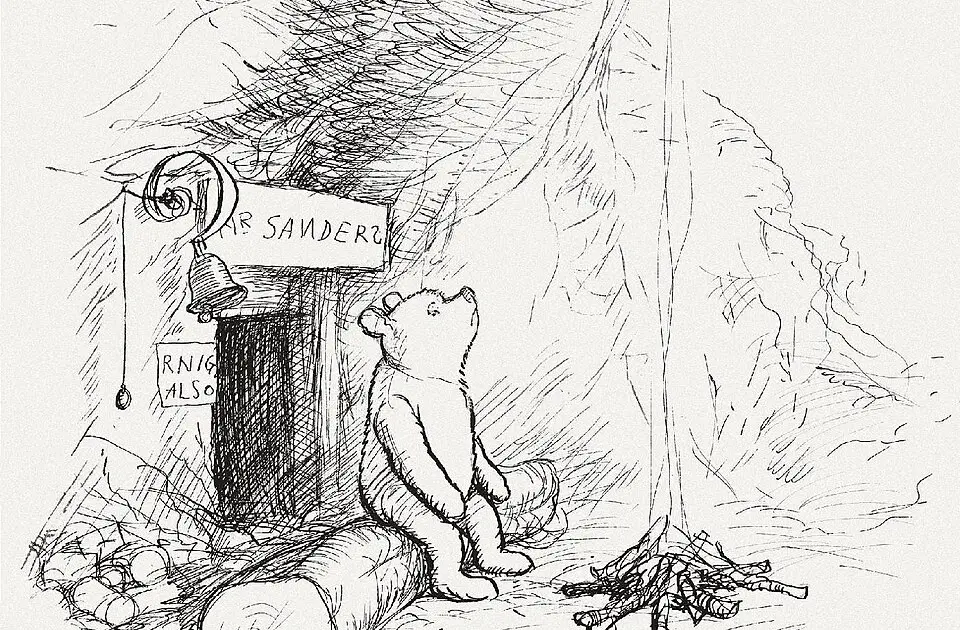
Central to the early part of the festival is an exploration of foundational human impulses: communication, wonder, and exploration. With thematic nods to the 150th anniversary of the telephone—a device that radically redefined how humanity "reaches out" across distance—and the dawn of rocketry, which literalised our urge to reach the stars, the concerts use poetry and song to reflect on these paradigm shifts. Parallel to these technological milestones, literary celebrations take center stage. The centenary of the publication of Winnie-the-Pooh (1926) offers a poignant vehicle for exploring childhood nostalgia, innocence, and the quiet magic of the Hundred Acre Wood through the sophisticated lens of art song and intimate vocal settings.
The Manuel de Falla Focus: 26 November
Undoubtedly the crown jewel of the autumn season falls on Wednesday, 26 November, with a dedicated scholarly and artistic focus on the great Spanish composer Manuel de Falla in his 150th anniversary year. Rather than simply presenting a retrospective of Falla’s authentic Spanish idioms, the festival has devised a brilliantly comparative program.
On this evening, authentic songs by Manuel de Falla will be directly paired with Spanish-inspired art songs penned by non-Spanish composers. This fascinating cross-cultural dialogue demonstrates how the passionate rhythms, modal harmonies, and sun-drenched atmosphere of the Iberian Peninsula captivated the European and transatlantic imagination. The roster of non-Spanish composers tackling the Spanish idiom on this night reads like a Who’s Who of classical music royalty: Hugo Wolf, Robert Schumann, Adolf Jensen, Maurice Ravel, Jacques Ibert, Arthur Honegger, Louis Albert, Léo Delibes, William Walton, Frederick Keel, Pyotr Ilyich Tchaikovsky, and Dmitri Shostakovich. This concert promises to be a masterclass in stylistic comparison, illustrating how diverse musical traditions interpret the romanticised "Spanish soul."
Journeying Through Myth and Mystic Horizons
As the festival progresses into late November and early December, the programming dives headfirst into metaphysical realms. Themes such as Ancient Greece, Fantasy & Magic, and The Mystic East invite audiences to contemplate antiquity, esoteric philosophies, and otherworldly landscapes. These concerts serve as a showcase for the nuanced art of song-weaving, where poetry from diverse cultures is translated into sound by composers who looked far beyond the borders of Western Europe for inspiration.
The festival concludes on 11 December, bringing its sweeping geographical and chronological journey to a resonant close. Over the course of these nine events, listeners are taken on an expansive itinerary that defies standard recital conventions, proving that the art song is an infinitely flexible medium capable of expressing the breadth of human experience.
Supporting Context & Metrics: Repertoire and Artistic Roster
The enduring strength of the London Song Festival lies in its fearless curation. While traditional recital series often rely heavily on a well-worn core canon of Schubert, Schumann, and Fauré, Nigel Foster’s festival consistently expands the boundaries of the genre by unearthing forgotten masterworks alongside contemporary creations.
A Fearless Repertoire
The 2025 season exemplifies this curatorial bravery. Alongside more familiar names, the festival program breathes new life into the works of Erich Wolff, Arthur Somervell, the pioneering African-American composer Florence Price, Harold Fraser-Simpson (famed for his Milne settings), and French modernist Nadia Boulanger. Further enriching the palette are compositions by Albert Roussel, Marguerite Canal, Armande de Polignac, the trailblazing English composer and violist Rebecca Clarke, Constant Lambert, Granville Bantock, and American impressionist Charles Griffes.
Crucially, the festival does not merely look backward. It maintains a vital connection to living creators, notably featuring the contemporary voice of composer Edward Picton-Turberville. This commitment to marrying historical rediscovery with new composition ensures the art song remains a living, breathing tradition rather than a museum piece.
A Vanguard of Exceptional Vocal and Instrumental Talent
A festival of this ambition requires interpreters of extraordinary versatility, intellectual depth, and technical polish. The 2025 artist roster is a formidable gathering of some of the finest young and established artists working in the field of vocal chamber music today.
The vocal lineup features a stellar array of sopranos, mezzo-sopranos, tenors, and baritones who are making waves on the international opera and concert stages:
- Sopranos: Rachel Munro, Harriet Burns, Lorena Paz Nieto, Erika Baikoff, Natalka Pasicznyk, and Siri Bengtsson Marklund.
- Mezzo-Sopranos: Ellen Pearson, Lotte Betts-Dean, Katie Bray, Sian Sulke, and Gabriella Noble.
- Tenors: Laurence Kilsby and Archie Inns.
- Baritones: George Robarts, Michel de Souza, and Jonathan Eyers.
Nurturing the Next Generation: Prizes and Partnerships
A cornerstone of the London Song Festival’s mission is the active cultivation and promotion of emerging talent. This year’s festival highlights vital partnerships and competitions designed to give young artists a platform at the outset of their professional lives.
Among the featured performers are the winners of the 2025 London Song Festival Schubert Song Prize: soprano Siri Bengtsson Marklund and pianist Bohdana Ravliuk. Their inclusion underscores the festival’s dedication to rewarding rigorous stylistic understanding and collaborative partnership.
Furthermore, the festival showcases the inaugural winners of the SWAP’ra Rebecca Clarke Pianist Prize—pianists Jasmin Alpress and Alfred Fardell. Demonstrating true creative agency, Alpress and Fardell have curated their own distinct program alongside the singers with whom they won the prize: mezzo-soprano Gabriella Noble and tenor Archie Inns. This initiative not only provides a high-profile platform for young instrumentalists and singers but also empowers them to take ownership of concert curation, fostering a new generation of artistic directors.
Official Statements and Artistic Vision
Artistic Director Nigel Foster has long been a passionate advocate for the art song, championing its unique capacity to combine poetry, psychological depth, and musical architecture into an intimate theatrical experience. Speaking on the conceptual framework of the 2025 season, Foster’s vision emphasizes the boundless nature of the human imagination.
"Art song has always been a vessel for human longing—a way to reach across physical, temporal, and psychological distances," Foster notes regarding the Reaching Out and Reaching Back motifs. "Whether we are looking back a century to the whimsical world of Winnie-the-Pooh, celebrating the technological leaps that shrank our world through the telephone and the rocket, or immersing ourselves in the sun-drenched Spanish soundscapes that enchanted non-Spanish masters like Ravel and Shostakovich, music gives voice to our deepest curiosities."
Cultural commentators and music critics have frequently praised the festival for its intellectual rigor. In an era where arts funding is under intense pressure and programming can sometimes succumb to conservative box-office pressures, the London Song Festival stands as a beacon of adventurous curation. By framing historical anniversaries not as dry academic exercises, but as vibrant springboards for musical exploration, Foster and his team invite audiences to view history through an artistic lens.
Furthermore, representatives from partner organisations and award bodies have lauded the festival’s commitment to young artists. Through platforms like the Schubert Song Prize and the SWAP’ra Rebecca Clarke Pianist Prize, the festival does not merely present concerts; it acts as a crucial career incubator. By granting young duos the autonomy to shape programs and perform alongside seasoned peers, the London Song Festival ensures the continuity and vitality of the art song genre for decades to come.
Future Outlook: The Enduring Legacy and Horizon of Art Song
As the London Song Festival prepares to open its doors on 5 November, the broader cultural outlook for the genre points toward an era of vital renewal. Far from being an antiquated relic of 19th-century salon culture, the art song is proving to be uniquely suited to contemporary audiences seeking intimacy, emotional authenticity, and intellectual engagement in a hyper-connected, digital world.
The festival’s deliberate pairing of disparate historical threads—such as juxtaposing the centennial of the liquid-fueled rocket with the mystic realms of Ancient Greece—highlights a sophisticated understanding of how contemporary listeners consume culture. We live in an age of rapid information flow where boundaries between eras and geographies are increasingly porous. The London Song Festival mirrors this reality by constructing fluid, borderless concert programs that encourage lateral thinking and emotional resonance.
Looking ahead, the success of initiatives like the SWAP’ra collaboration and the continued championing of marginalized or overlooked composers—such as Florence Price and Marguerite Canal—signals a progressive trajectory for the festival. By continuously widening the canon and empowering the next generation of curators, pianists, and vocalists, the London Song Festival is laying robust foundations for its future seasons.
For classical music enthusiasts, students, and curious cultural explorers alike, the upcoming nine-concert series offers an unmissable opportunity to experience world-class artistry in an intimate setting. Full details regarding venues, ticket booking, and individual concert schedules can be found by visiting the official London Song Festival website. As the autumn chill settles over the capital, Nigel Foster’s festival promises to warm the imagination, bridging centuries and cultures one song at a time.