Executive Overview
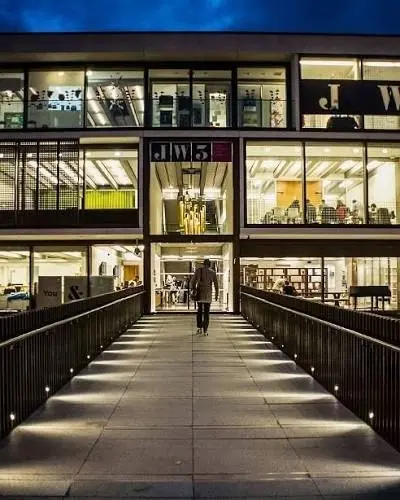
London’s vibrant cultural landscape has long been defined by its historic institutions, yet some of the most dynamic artistic programming is emerging from spaces designed with contemporary community-building at their core. Located at 341–351 Finchley Road, JW3—formally known as the Jewish Community Centre London—has firmly established itself as a premier north London hub for arts, culture, entertainment, and education since opening its doors on September 29, 2013. Taking its distinctive name as a clever wordplay on its NW3 postal district, the center proudly describes itself as "a new postcode for Jewish life."
Yet, beyond its broader social mission and diverse multidisciplinary offerings, JW3 has quietly cultivated a world-class classical music residency that is punching well above its weight. As the venue celebrates its thirteenth anniversary, its acclaimed classical concert series has officially returned for its fourth consecutive season. Launched on September 30, 2026, with a spellbinding, capacity-crowd performance by renowned Russian-Israeli pianist Boris Giltburg, the current season underscores the venue’s growing stature in the capital’s competitive classical music ecosystem.
Curated by esteemed cellist David Waterman—a founding member of the legendary Endellion Quartet—the series operates under a refreshingly singular artistic philosophy: uncompromising excellence over identity-based curation. Waterman’s curatorial brief is straightforward yet rigorous, focusing exclusively on world-class musicianship rather than emphasizing specific Jewish artists or composers.
Housed within JW3’s intimate, state-of-the-art recital hall—which seats up to 250 people and ensures an immersive, up-close audience experience—the series bridges the gap between elite international performance and warm, localized community engagement. As Waterman and his stellar roster of international artists unfold a meticulously crafted autumn and winter programme featuring Schubert, Beethoven, Saint-Saëns, and Debussy, JW3 continues to prove that intimate venues can host musical experiences as profound and exhilarating as any major concert hall in the world.
Detailed Chronology: The 2026/2027 Concert Season
The trajectory of JW3’s fourth classical music season is defined by a carefully balanced blend of monumental chamber masterworks, virtuosic display pieces, and rare gems of the repertoire. Under the artistic vision of David Waterman, the calendar has been designed to take audiences on an emotional journey ranging from profound tragedy and sublime beauty to unadulterated joy and festive exuberance.
Opening Night: Boris Giltburg Sets the Standard
The season commenced on September 30, 2026, with a tour-de-force piano recital by the internationally celebrated Russian-Israeli pianist Boris Giltburg. Performing to a packed, capacity audience in JW3’s intimate recital hall, Giltburg immediately established the high artistic stakes of the new season. Known for his deeply intellectual yet fiercely passionate interpretations, Giltburg’s opening performance demonstrated the unique acoustic and visual intimacy of the venue, where every nuance of touch and pedal is palpably felt by the audience.
October 28, 2026: Schubert’s "Trout Quintet" and Beethovenian Charm
Following the electrifying season opener, the series continues on October 28, 2026, with an ensemble performance anchored by the exceptional Russian-Vietnamese violinist Aylen Pritchin. Waterman speaks of Pritchin with profound artistic admiration, noting that the violinist possesses a rare, transcendent quality. The two musicians have previously shared prestigious stages together, including London’s Wigmore Hall and the renowned International Musicians Seminar at Prussia Cove.
While previous JW3 seasons frequently explored the darker, more introspective and tragic dimensions of Franz Schubert’s output, the upcoming October concert pivots deliberately toward the light. The programme features Schubert’s beloved Piano Quintet in A major, D. 667, universally known as the Trout Quintet. Waterman characterizes the piece as "utterly joyful and festive," offering a striking contrast to Schubert’s heavier dramatic works.
Complementing the Trout Quintet is Ludwig van Beethoven’s String Trio in G major, Op. 9, No. 1. Waterman champions this work as being equal in structural and expressive brilliance to Beethoven’s celebrated string quartets. Overflowing with charm, elegance, and irrepressible joy, the trio is, in Waterman’s view, performed far too infrequently on the modern concert stage.
The evening will conclude with a brilliant display of instrumental pyrotechnics: Camille Saint-Saëns’s Introduction and Rondo Capriccioso for violin and piano. Written as a showcase for the legendary Spanish virtuoso Pablo de Sarasate, the piece provides Aylen Pritchin with the ideal vehicle to demonstrate his virtuosic flair, ensuring that the audience leaves the hall with a collective smile.
November 17, 2026: An Evening of Trios, Duos, and Phantasiestücke
The musical momentum continues on November 17, 2026, with a collaborative chamber concert featuring three distinguished artists:
- Jonian Ilias Kadesha, the extraordinary and erudite Greek-Albanian violinist.
- Vashti Hunter, acclaimed cellist and Kadesha’s wife.
- Noam Greenberg, the London-based Israeli pianist.
This all-star trio has curated a rich, eclectic programme spanning multiple eras and aesthetic traditions. The evening opens with Bohuslav Martinů’s Duo No. 2 for Violin and Cello, a work of rhythmic drive and modernist vitality. This is followed by Claude Debussy’s Sonata for Violin and Piano, a masterpiece of impressionistic subtlety and haunting melodic invention.
The first half culminates in a brilliant variation set: Beethoven’s Twelve Variations on "Bei Männern, welche Liebe fühlen" from Mozart’s Die Zauberflöte, WoO 46, scored for cello and piano. The second half shifts toward expansive piano trios, featuring works by Joseph Haydn and Robert Schumann—specifically the deeply romantic and emotionally volatile Phantasiestücke, Op. 88.
Post-Christmas Horizon: The Aviv Quartet in January 2027
Looking ahead past the winter holidays, the classical series will resume in January 2027 with a much-anticipated appearance by the internationally acclaimed Aviv Quartet. Their programme will feature masterworks by Haydn, Mendelssohn, and Beethoven, cementing JW3’s status as a year-round destination for premier chamber music ensembles.
Supporting Context & Metrics: Architecture, Audience, and Atmosphere
Understanding the success of JW3’s classical music residency requires examining the unique convergence of physical architecture, demographic profile, and programming economics that defines the venue.
The Intimate Acoustic Ecosystem
At the heart of the series’ success is the recital hall itself. Capable of seating up to 250 people depending on the specific configuration of performers, the space was designed to eliminate the barrier between artist and spectator. In traditional large-scale concert halls, audience members in the upper tiers can feel detached from the physical exertion and emotional intensity of live performance. At JW3, the sightlines are optimized so that every seat in the house feels remarkably close to the action.

This spatial intimacy fundamentally transforms the concert experience. Performers note that the acoustic feedback loop is immediate and palpable; breathing, physical gestures, and subtle dynamic shifts resonate naturally within the room. For audiences, it offers a rare chamber music experience akin to the historic salons of the 19th century, where music was shared among friends in domestic or intimate public spaces.
Demographics and Engagement
The audience profile at JW3 is uniquely localized yet discerning. According to David Waterman, concertgoers are predominantly local residents who exhibit a rare degree of attentive listening and enthusiastic engagement. This creates a symbiotic relationship between the stage and the auditorium. Artists who are accustomed to playing massive international halls frequently express genuine delight at the warmth and concentration they encounter at Finchley Road.
Programming Economics and Curatorial Integrity
Running a successful classical music series in a multidisciplinary cultural center involves navigating complex economic and cultural realities. Waterman speaks candidly about the shifting tides of audience taste, drawing on his decades of experience touring the globe with the Endellion String Quartet.
"Things go in fashions," Waterman observes. "Sometimes Lieder or string quartets do well, and sometimes not. As a promoter, you have to believe in what you are doing and persist, though sometimes you cannot fight the trend."
This delicate balancing act requires artistic courage. Waterman acknowledges that it would be mathematically simple to curate a hyper-commercial series guaranteed to sell out instantly through predictable programming—yet doing so would alienate his own artistic standards.
"It would be easy enough to create a series that would sell out," he admits, "but which I would be totally uninterested in attending myself! And that is not the way he wants to go."
By maintaining this uncompromising standard, JW3 has cultivated a loyal core audience that trusts the curation implicitly, allowing the series to introduce unfamiliar masterpieces and daring programmatic combinations alongside beloved classical staples.
Official Statements & Artistic Philosophy
The overarching ethos of JW3’s classical music series can be distilled through the direct insights of its artistic curator, David Waterman. As one of the United Kingdom’s most respected cellists and educators, Waterman brings decades of chamber music mastery to his administrative and creative role at the north London center.
When JW3 leadership approached Waterman four years ago to establish a classical music presence, his brief was remarkably uncluttered by identity politics or targeted demographic quotas. While JW3 itself functions as a vital cultural anchor for the Jewish community, the classical music series was envisioned from day one as an inclusive, universal artistic platform.
"My brief was for a high-quality classical music series," Waterman explains. "There is no particular emphasis on Jewish artists or Jewish composers; it is the high quality that counts."
This philosophy has allowed the series to attract elite performers from across the globe—spanning Russian, Israeli, Greek, Albanian, Vietnamese, and British backgrounds—united solely by their virtuosic mastery and expressive depth.
Waterman’s hands-on approach is another hallmark of the series. Rather than operating purely as an absentee artistic director, Waterman actively participates in approximately half of the concerts each season while gracefully introducing the remainder. This active musicianship ensures that the curator’s pulse remains directly connected to the acoustics of the hall, the reactions of the audience, and the physical realities of the performers on stage.
Future Outlook: Sustaining Excellence into the Next Decade
As JW3 celebrates its thirteenth year of operation, the classical music series stands as a shining example of how contemporary community hubs can successfully integrate high art into their core programming. What began as an ambitious experiment four years ago has matured into a vital institution within London’s classical music landscape.
Looking ahead, the strategic trajectory for JW3’s classical residency centers on sustainability, deepening community ties, and continuing to attract world-class collaborative artists. By resisting the temptation to pander to lowest-common-denominator programming, Waterman and the JW3 leadership have ensured that the series retains its intellectual rigor and artistic prestige.
For local music lovers, north London no longer requires a trek to the South Bank or the Barbican to experience world-class chamber music. With upcoming performances by Aylen Pritchin, Jonian Ilias Kadesha, Vashti Hunter, Noam Greenberg, and the Aviv Quartet on the immediate horizon, JW3 has successfully cemented its status as a destination where artistic integrity, intimacy, and excellence converge.
Full details, ticket pricing, and booking information for the entire season are available directly through the official JW3 Website.