Executive Overview
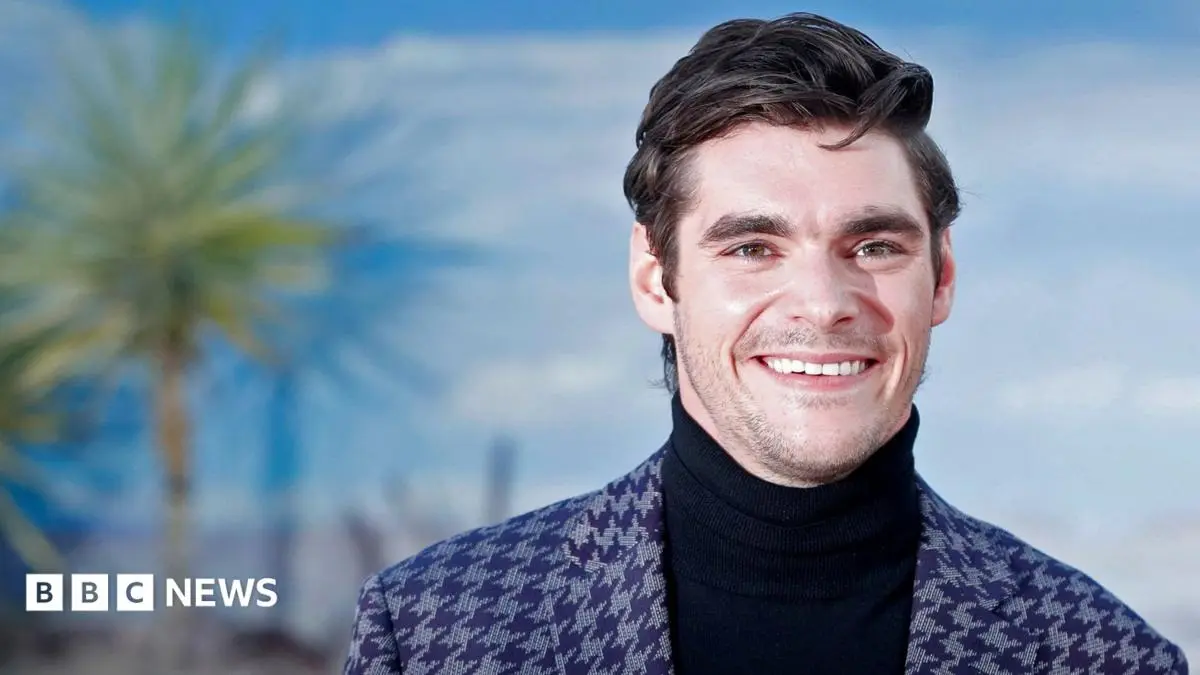
The global entertainment community is in mourning following the sudden and tragic passing of RJ Mitte, the charismatic actor and impassioned disability advocate internationally celebrated for his iconic portrayal of Walter White Jr. in AMC’s groundbreaking neo-Western crime drama, Breaking Bad. Mitte was pronounced dead on October 12 at what authorities believe to have been his residence in Brownsville, Texas. He was 31 years old.
While the precise cause and manner of death remain undetermined pending the completion of a thorough post-mortem examination, local law enforcement has confirmed that the investigation is actively ongoing. Crucially, preliminary assessments by the Brownsville Police Department indicate that no foul play is currently suspected. The news has sent shockwaves through the Hollywood ecosystem and triggered an overwhelming outpouring of grief, sorrow, and deep-felt tributes from former co-stars, crew members, and fans worldwide who watched him mature from a raw, ambitious teenager into a poised, accomplished professional and fierce socio-political advocate.
Mitte’s legacy extends far beyond the five seasons he spent sharing the screen with Emmy Award winner Bryan Cranston. Diagnosed with cerebral palsy at a young age—a condition he never allowed to define or limit his aspirations—Mitte utilized his breakout platform to permanently alter the landscape of disability representation in modern media. He transformed personal trials into institutional triumph, serving as a tireless ambassador for major philanthropic organizations such as United Cerebral Palsy and Shriners Children’s, while simultaneously launching his own philanthropic vehicle, The Mitte Foundation.
This comprehensive retrospective examines the life, career, and enduring cultural footprint of RJ Mitte. From his humble upbringing in Louisiana to the sun-drenched, high-stakes soundstages of Albuquerque, New Mexico, this article chronicles his remarkable ascent, his profound off-screen advocacy, the official details surrounding his untimely passing, and the indelible mark he leaves on the industry he fought so tirelessly to change.
Detailed Chronology: From Louisiana to Albuquerque and Beyond
Early Life and The Road to Hollywood
Born in Lafayette, Louisiana, RJ Mitte (born Roy Frank Mitte III) navigated a childhood characterized by the physical challenges of cerebral palsy. Despite medical prognoses that might have discouraged others, Mitte demonstrated an indomitable work ethic from an early age. He spent his formative years learning to adapt, utilizing physical therapy and sheer determination to build strength, coordination, and resilience.
In 2005, at the pivotal age of 13, Mitte’s life trajectory shifted dramatically. He and his family relocated to Los Angeles, California, primarily to support his younger sister’s burgeoning acting ambitions. Surrounded by the machinery of the entertainment capital, Mitte soon found himself drawn to the craft. What began as a supportive familial gesture quickly evolved into a personal calling.
Mitte’s entrée into the industry was steeped in grim irony. Reflecting on his early days in Los Angeles during an appearance on the Joe Vulpis Podcast earlier this month, the actor recalled that his very first audition in Southern California was for a state public service announcement—an anti-meth commercial. Years later, he found himself auditioning for Breaking Bad, a series whose narrative core served, in his eyes, as the ultimate cautionary tale against the devastation of the narcotics trade. "Fast forward to auditioning for Breaking Bad, which is still, in my opinion, an anti-meth thing because it doesn’t end well for anyone," Mitte remarked during the podcast interview.
The Breaking Bad Phenomenon
In February 2007, production commenced on the pilot episode of a risky, high-concept cable drama created by Vince Gilligan. The project, greenlit by AMC, centered on Walter White, an underpaid, overqualified high school chemistry teacher in Albuquerque, New Mexico, who—upon receiving a terminal lung cancer diagnosis—partners with a former student to manufacture and distribute crystal methamphetamine to secure his family’s financial future.
Central to the emotional stakes of the series was Walter White Jr., the protagonist’s teenage son who lives with cerebral palsy. The character required an actor who could authentically project the physical manifestations of the condition while maintaining the emotional depth of a typical adolescent grappling with a fractured family dynamic.
Remarkably, the character of Walter White Jr. was originally conceptualized by Gilligan based on a late friend who lived with a more severe presentation of cerebral palsy and relied on forearm crutches. Mitte, however, did not routinely require assistive devices in his personal life; yet, through intensive physical preparation, observation, and raw dramatic instinct, he captured the gait, speech patterns, and physical posture of the character with breathtaking authenticity.
When Mitte landed the role, he was just 14 years old. Thrown into the deep end of a major cable television production alongside seasoned veterans like Bryan Cranston and Anna Gunn, Mitte’s early performances were marked by a youthful, unpolished energy that gradually matured into a nuanced, deeply affecting portrayal. Over five critically acclaimed seasons spanning from 2008 to 2013, Walter White Jr. evolved from an innocent bystander into a tragic figure who eventually discovers the harrowing truth about his father’s criminal empire, culminating in a heartbreaking telephone confrontation that remains one of the high-water marks of modern television.
Post-Breaking Bad Evolution and Activism
When the spotlight on Breaking Bad dimmed in 2013, Mitte did not rest on his laurels. Instead, he recognized the immense capital his breakout role afforded him and immediately pivoted toward structural advocacy. He understood that while his visibility was a monumental victory, Hollywood still struggled with systemic tokenism and a lack of authentic casting for performers with visible and invisible disabilities.
Throughout the remainder of his career, Mitte leveraged every interview, public appearance, and casting negotiation to champion inclusivity. He made notable guest appearances and recurring roles in television hits such as Hannah Montana, Switched at Birth, and Westhampton, while continually seeking out indie film projects that challenged conventional narratives. His final cinematic venture, Talking to Strangers, premiered earlier this year to warm reception.
Beyond acting, Mitte poured his energy into institutional reform. He became a prominent public face for United Cerebral Palsy and Shriners Children’s, mentoring young patients and reassuring parents that a medical diagnosis does not impose an absolute ceiling on human potential. Furthermore, he established The Mitte Foundation, an organization explicitly dedicated to funding community initiatives, promoting educational equity, and dismantling the societal stereotypes that marginalize disabled individuals across the globe.
Supporting Context & Metrics: The Cultural Impact of Breaking Bad and Disability Representation
The Critical Legacy of Breaking Bad
To understand the magnitude of RJ Mitte’s platform, one must examine the unprecedented cultural footprint of Breaking Bad. Widely regarded by critics and scholars as one of the greatest television series in history, the AMC drama fundamentally reshaped the landscape of the "Golden Age of Television," proving that cable networks could sustain complex, serialized, morally ambiguous storytelling on par with major cinematic releases.
- Network & Run: Broadcast on AMC for five foundational seasons from 2008 to 2013.
- Emmy Dominance: The series amassed a staggering 58 Primetime Emmy Award nominations, securing 16 wins, including back-to-back victories for Outstanding Drama Series in 2013 and 2014.
- Narrative Architecture: Created by Vince Gilligan, the show’s meticulous pacing, stunning cinematography of the New Mexican desert, and masterclass performances established a new benchmark for character-driven television.
Within this titan of modern media, Walter White Jr. served as the moral anchor of the narrative. While Walter Sr. spiraled downward into the ruthless alter-ego "Heisenberg," Walt Jr. remained a symbol of innocence, loyalty, and everyday teenage struggles—demanding breakfast, defending his father against domestic strife, and eventually standing as a shield for his mother, Skyler, and infant sister, Holly. Mitte’s ability to anchor such high-stakes dramatic sequences alongside heavyweights like Cranston cemented his status as a formidable talent.
The Fight for Disability Representation in Media
Mitte’s off-screen crusade highlighted a persistent systemic failure within the entertainment industry: the historical underrepresentation and misrepresentation of individuals with disabilities. According to industry studies, while disabled individuals comprise roughly 20% to 25% of the global population, they represent a minuscule fraction of characters on television and in film—and historically, these roles have frequently been awarded to able-bodied actors via "cripping up."
Mitte consistently challenged this paradigm, advocating not merely for a seat at the table, but for systemic changes in how writers’ rooms and casting directors conceptualize disability. In a landmark 2021 interview with the BBC, Mitte articulated the frustration and cautious optimism surrounding the movement:
"Whenever awards season rolls around, we always hope to see a diverse group of projects that reflect all of us, in body and mind. Watching the awareness grow around disability representation has been great to see, but breakthroughs sometimes come in pieces and moments instead of larger change."
By refusing to let his cerebral palsy be framed as a tragedy or an inspirational trope, Mitte modeled a new archetype of disabled representation: complex, flawed, humorous, fully realized human beings whose medical conditions were merely facets of their identity rather than the totality of their narrative existence.
Official Statements and Tributes
The suddenness of RJ Mitte’s passing has elicited an extraordinary wave of grief from across the entertainment industry. Representatives, colleagues, and lifelong friends have released poignant statements reflecting on his character, professionalism, and profound human warmth.
Representation and Family Statements
Sean Reilly, Mitte’s representative, released a comprehensive and emotionally charged statement to the BBC, capturing the essence of the actor’s professional and personal mission:
"Mitte brought authenticity to the role and built a platform on disability awareness and inclusion. He created The Mitte Foundation as well, to support philanthropic efforts and community initiatives, using his platform ‘to challenge stereotypes and promote greater representation for people with disabilities.’"
Authorities in Texas have been transparent regarding the procedural steps currently underway. Cameron County Justice of the Peace Cyndi Hinojosa confirmed to the Associated Press that Mitte was declared dead on October 12 at his residence, and announced that a comprehensive post-mortem examination would be performed to establish the exact cause of death. The Brownsville Police Department reiterated in an official statement that while the investigation remains open and active, no foul play is suspected at this time.
Tributes from the Breaking Bad Family
The tight-knit ensemble cast of Breaking Bad has long maintained a reputation for familial camaraderie off-screen, a bond that has made Mitte’s loss acutely painful for his former colleagues.
Bryan Cranston (Walter White):
Cranston, who shared the majority of Mitte’s most intense emotional scenes throughout the series, took to Instagram to share a heart-wrenching tribute, expressing a state of "deep despair":
"I met him when he was only 14 years old when he was cast as Walter White Jr., a part he played with such joy and enthusiasm. That kid was pretty raw when we started shooting the pilot in February of 2007, but little by little we watched him grow into a really fine actor."
Cranston specifically highlighted Mitte’s refusal to lean on his medical condition as a crutch, noting: "He never allowed his cerebral palsy to be an excuse for anything. All that promise and potential now is such a loss. I thoroughly enjoyed being with him throughout the years on the series, and after the spotlight on Breaking Bad dimmed. I’ll miss you, son."
Aaron Paul (Jesse Pinkman):
Aaron Paul, who portrayed the tortured co-architect of the meth empire, Jesse Pinkman, shared a statement with The Hollywood Reporter expressing profound heartbreak and extending a compassionate message regarding mental health and existential support:
"RJ, I love you my friend. You will be missed. And to whoever happens to be reading this, please know you are loved, and you are not alone. Always remember that."
Dean Norris (Hank Schrader):
Dean Norris, who played DEA agent Hank Schrader—Walt’s brother-in-law and a protective paternal figure to Walt Jr. within the show’s fictional universe—shared his recollections of watching Mitte grow up on set:
"Although RJ didn’t play my TV son, I always looked out for him as a young kid on set. He was a sweetheart of a young man and will be greatly missed."
Future Outlook: Preserving Mitte’s Legacy
As the entertainment industry grapples with the loss of one of its most distinctive and principled young voices, attention naturally turns toward the future of the causes Mitte championed. The sudden departure of an advocate of his stature leaves a noticeable void in ongoing dialogues surrounding media inclusivity, accessibility, and systemic reform.
Yet, those close to the actor emphasize that his work is far from extinguished. The Mitte Foundation, alongside his partnerships with United Cerebral Palsy and Shriners Children’s, is expected to continue its programmatic efforts, funding grassroots community initiatives and providing mentorship to the next generation of disabled artists and leaders. Industry analysts predict that Mitte’s passing will serve as a catalyst for renewed institutional commitments to authentic casting, ensuring that the doors he forced open during his lifetime remain unhinged for decades to come.
Furthermore, the cinematic and television community is already discussing commemorative retrospectives and memorial scholarships designed to honor his contributions to the arts. By refusing to conform to Hollywood’s historical limitations, RJ Mitte proved that authenticity is not a niche market, but a universal human resonance.
As the official investigations in Brownsville conclude and final farewells are said by family, friends, and legions of devoted fans across the globe, RJ Mitte remains immortalized on screen—standing firm, speaking truth, and reminding us all of the profound dignity inherent in every human story.
If you or someone you know is struggling or in crisis, help is available. In the United States, you can call or text 988 or chat at 988lifeline.org to reach the Suicide & Crisis Lifeline. If you are outside the U.S., please contact your local emergency services or a mental health support hotline in your area.