Executive Overview
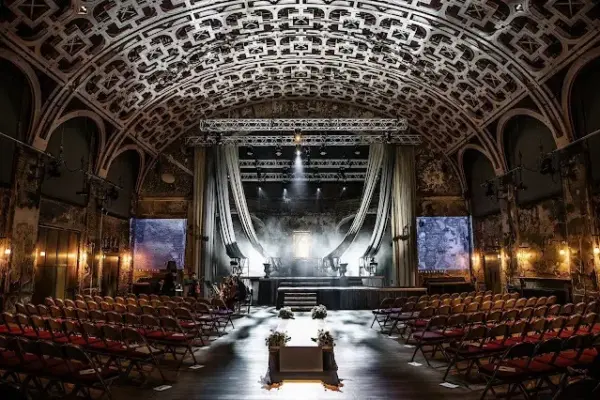
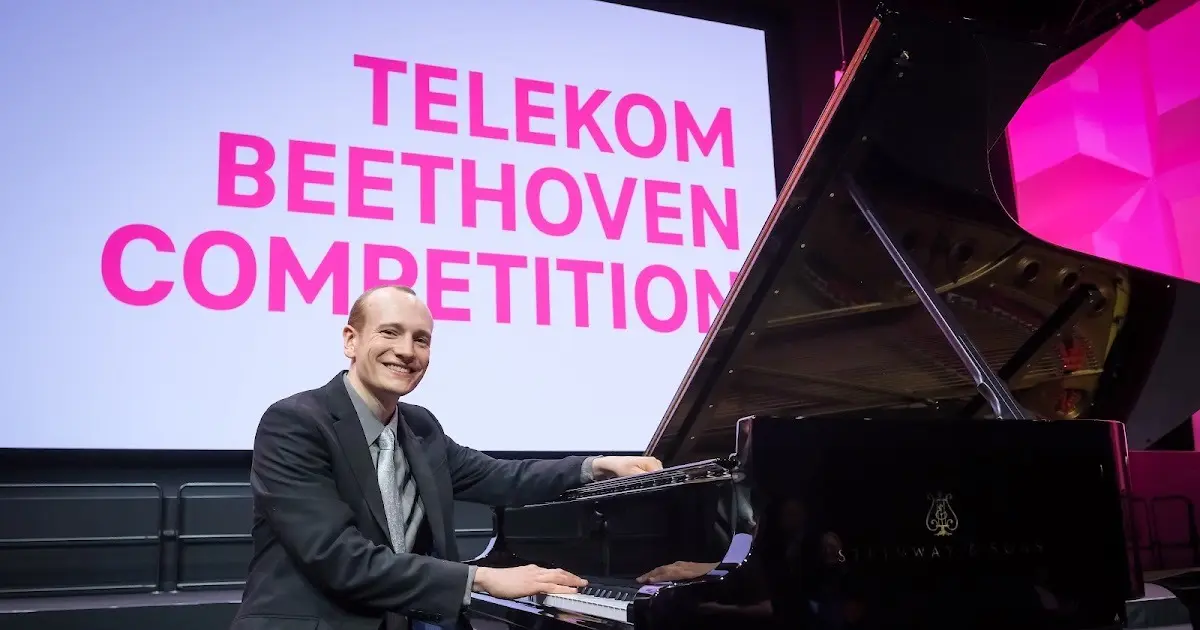
On October 9, 2026, the historic Marble Hall of Hatfield House played host to one of the most intellectually stimulating and technically demanding piano recitals of the current concert season. The second day of the prestigious Hatfield House Music Festival opened with a mesmerizing performance by American pianist Seth Schultheis. Currently based in London as an Aud Jebson Fellow at the Royal Academy of Music, Schultheis arrived at the festival carrying significant critical momentum, having recently clinched both First Prize and the Special Prize for Chamber Music at the 2025 Telekom Beethoven Competition in Bonn.
Rather than relying on the traditional, sweeping architecture of multi-movement classical and romantic sonatas, Schultheis curated a daring, unconventional programme. Spanning a little over an hour of actual performance time, his recital discarded grand structural continuity in favor of an intense psychological journey delivered entirely through miniatures. Across three distinct composers—Ludwig van Beethoven, contemporary American voice Elizabeth Ogonek, and Robert Schumann—Schultheis navigated approximately 34 short movements.
This review explores the structural integrity, emotional depth, and technical brilliance of a morning recital that proved grand statements can indeed be housed in remarkably compact forms. Schultheis demonstrated an uncanny ability to tether disparate musical eras together, bridging the gap between Vienna’s classical twilight, contemporary American harmonic abstraction, and the turbulent Romanticism of 19th-century Germany.
Detailed Chronology of the Recital
Beethoven’s 11 Bagatelles, Op. 119: Cobbler’s Patches and Quicksilver Wit
The morning commenced not with a monumental Beethoven sonata, but with the composer’s 11 Bagatelles, Op. 119. Historically dismissed by Beethoven himself with self-deprecating humor as Schusterfleck ("cobbler’s patches"—small, cobbled-together pieces), these works find the legendary composer largely unfettered by the immense formal constraints of the symphony or the grand sonata.
Schultheis opened the set with classical poise, grounding the initial minuet and trio in a traditional, balanced aesthetic. However, the music quickly pivoted, oscillating between the quirky and the characterful before briefly reverting to classical equilibrium. Schultheis adroitly handled the cycle’s abrupt tonal and emotional shifts:
- The Dance and the Fragment: The robust, rustic vigor of a folk dance would abruptly give way to intricate, fragmented rhythms and fleeting moments of idiosyncratic reflection.
- Harmonic Inquiries: In a subsequent classical vignette, Schultheis highlighted the questioning nature of the harmonies, leading seamlessly into a showy, bravura dance imbued with subtle stylistic nods to Carl Maria von Weber.
- The Headlong Finish: The set culminated in a breathless, helter-skelter dash that ultimately dissolved into a touching, remarkably still conclusion.
Rather than portraying the bagatelles as spontaneous, free-form improvisations, Schultheis interpreted them as the highly considered, distilled products of a master’s imagination. His sensitivity to Beethoven’s sudden dynamic interruptions and sly, understated endings set an intellectual tone for the entire morning.
Elizabeth Ogonek’s Preludes (2024): Intricate Textures and Modern Soundscapes
Stepping out of the classical-romantic canon, Schultheis transitioned seamlessly into the contemporary sphere with a selection of five preludes by American composer Elizabeth Ogonek. Written in 2024, these works showcase Ogonek’s distinct compositional voice—honed at Indiana University, the USC Thornton School of Music, and later under the tutelage of Julian Anderson at the Guildhall School as a Marshall Scholar.
Ogonek’s Preludes are notable for their intensely wrought, labyrinthine textures and sophisticated harmonic language:
- Prelude I: Began with a deceptively flowing surface that harbored an underlying, nervous restlessness.
- Prelude II: Inherited this unease, utilizing mobile, shifting harmonies that persistently hinted at dark, unresolved corners.
- Prelude III: Struck an uncompromising, deliberate pace, though its starkness was constantly softened by delicate, intricate elaborations in the upper registers.
- Prelude IV: Unfurled as a gossamer-thin, delicate web of sound, testing the absolute outer limits of pianistic delicacy.
- Prelude V: Concluded the set with a remarkably short, exotic statement possessing a quasi-Oriental flavor, characterized by transparent, crystalline elaborations.
Schultheis approached Ogonek’s contemporary idiom with absolute authority, proving that his technical command extends far beyond the standard repertoire into the most complex modern sonic architectures.
Schumann’s Davidsbündlertänze, Op. 6: The Dualities of Romanticism
The recital reached its emotional and structural climax with Robert Schumann’s Davidsbündlertänze, Op. 6, composed in 1837—a pivotal period of intense emotional pressure, three years before Schumann and his lifelong muse, Clara Wieck, finally achieved wedded bliss.
The work is a sprawling, free-format collection of 18 short movements. Schumann conceived them as the imaginary dances of the "Davidsbündler" (League of David)—a fictional brotherhood banded together to fight the "Philistines" of uninspired, formulaic art. True to Schumann’s famously complex psychological makeup—often clinically analyzed through his alter-egos, the fiery Florestan and the introspective Eusebius—the movements embody dramatic mood swings.

Schultheis mapped this terrain with remarkable psychological acuity:
- The Clara Motif: The cycle opened with a direct nod to Clara via a short, incisive burst of a mazurka, instantly establishing a blend of rhythmic style and raw character.
- The Pendulum of Emotion: Schultheis captured the erratic bipolarity of the writing, swinging effortlessly between aggressive, forceful vigor and fragile, tender yearning.
- Deceptive Simplicity: Passages of apparent, deceptive innocence were juxtaposed against moments of surging impetuosity and urgent momentum.
- The Resolution: As the cycle wound down, Schultheis navigated a tender, flowing movement laden with quirky harmonic turns, moving into a final, robust dance before quietly dissolving into a simple, profoundly tender cadence that faded into silence.
Supporting Context & Metrics
To fully appreciate the weight of Seth Schultheis’s Hatfield House performance, it is vital to examine the metrics and cultural context surrounding his meteoric rise in the classical music ecosystem.
Recital Architecture At-A-Glance
- Total Performance Duration: Approximately 65 minutes of uninterrupted focus.
- Total Musical Movements: ~34 distinct miniatures.
- Eras Represented: Early 19th Century (Beethoven), Early 21st Century (Ogonek), Mid-19th Century (Schumann).
- Acoustic Environment: The historic Marble Hall, Hatfield House (renowned for its striking reverberation and intimate chamber acoustic).
The Challenge of the Miniature
Playing a programme composed entirely of short forms presents unique challenges that differ fundamentally from performing multi-movement sonatas. In a sonata, a performer relies on long-arc narrative structures, traditional harmonic journeys, and familiar developmental signposts to guide the audience. Conversely, a recital built entirely of miniatures requires the artist to establish an entirely new emotional, stylistic, and acoustic world every two to three minutes.
Schultheis met this formidable challenge with surgical precision. His ability to reset the listener’s ear—shifting from Beethoven’s laconic structural wit to Ogonek’s shimmering, modern harmonic haze, and finally to Schumann’s tempestuous romanticism—testified to a rare maturity. On stage, Schultheis cuts a deceptively unassuming figure, avoiding theatricality or unnecessary physical showmanship. Yet, beneath this modest exterior lies an ironclad technique: fingers capable of formidable strength, lightning-fast reflexes, and an innate, sympathetic tenderness for the quietest, most vulnerable corners of the keyboard.
Official Statements and Critical Reception
The concert drew widespread acclaim from critics and festival organizers alike, solidifying Schultheis’s reputation as one of the most promising young artists on the international stage.
Reflecting on the overarching concept of the morning, festival commentators noted the sheer audacity of the programme:
"In something over an hour, we heard some 34 short movements—three distinct composers allowing their imaginations to flow without the safety net of monumental forms. Schultheis proved that true mastery lies not in the sheer physical scale of the notes played, but in the absolute density of the artistic intent behind every single miniature."
Industry observers have continually linked Schultheis’s interpretive depth back to his landmark victory at the 2025 Telekom Beethoven Competition in Bonn. Winning both First Prize and the Special Prize for Chamber Music signalized to the classical world that Schultheis is an artist deeply attuned to collaborative listening, structural nuance, and historical context—traits that were abundantly evident in his handling of Beethoven’s Bagatelles.
Future Outlook
As Seth Schultheis continues his tenure as an Aud Jebson Fellow at the Royal Academy of Music in London, his performance at the Hatfield House Music Festival marks a defining milestone in his early career. By eschewing conventional crowd-pleasing warhorses in favor of a demanding, intellectual, and exquisitely calibrated programme of miniatures, Schultheis has signaled his artistic ambitions to the broader musical establishment.
Looking ahead, the classical community will be watching closely to see how Schultheis translates this rigorous approach to larger international stages. With upcoming engagements slated across Europe and North America, his ability to balance historical masterworks with daring contemporary commissions—such as Elizabeth Ogonek’s preludes—positions him as a vital torchbearer for the future of piano performance. For those fortunate enough to witness his morning recital in the Marble Hall, it was abundantly clear that Seth Schultheis is an artist whose technical brilliance is matched only by his profound intellectual curiosity.