Executive Overview
In the late summer of 1976, American progressive rock group Kansas stood at a critical financial and artistic crossroads. Despite releasing three ambitious studio albums—Kansas (1974), Song for America (1975), and Masque (1975)—and earning a dedicated regional live following, the six-piece ensemble from Topeka had failed to produce a commercially viable hit single. Four previous single releases had stalled completely, failing to make any dent in the upper or even lower reaches of the Billboard charts. With record executive Don Kirshner demanding a breakthrough, the band faced immense pressure while preparing material for their fourth album, Leftoverture.
The salvation of Kansas came not through months of calculated commercial engineering, but via an eleventh-hour stroke of inspiration by primary songwriter and guitarist Kerry Livgren. Written on the absolute final night of pre-production rehearsal in Topeka, "Carry On Wayward Son" was introduced to a weary band just hours before they were scheduled to pack up equipment and travel to the recording studio.
What followed was an extraordinary transformation. Supported by an explosive opening a cappella vocal harmony, aggressive guitar riffs, and intricate progressive arrangements condensed into a radio-accessible format, "Carry On Wayward Son" rocketed into the upper tier of the charts. The single transformed Kansas overnight from a hard-touring support act into a stadium-headlining powerhouse. Decades later, the track remains a foundational staple of classic rock radio, a multi-platinum milestone, and a case study in how urgency, compositional instinct, and artistic conviction can redefine a musical career.
Detailed Chronology
========================================================================================
                               TIMELINE OF A BREAKTHROUGH
========================================================================================
 [1974–1975]  • Kansas releases three studio albums with modest sales; four singles fail
                to enter the Billboard Hot 100 charts.
----------------------------------------------------------------------------------------
 [Mid-1976]   • Band convenes in Topeka, KS to prepare material for 'Leftoverture'.
              • Lead singer/co-writer Steve Walsh experiences severe writer's block.
              • Kerry Livgren assumes full writing responsibility, composing at a feverish pace.
----------------------------------------------------------------------------------------
 [Late 1976]  • On the final night of rehearsal, Livgren writes "Carry On Wayward Son".
              • Band initially hesitates due to fatigue, then immediately recognizes its brilliance.
              • Track is recorded at Studio in the Country in Bogalusa, Louisiana.
----------------------------------------------------------------------------------------
 [Early 1977] • "Carry On Wayward Son" released as lead single; climbs to No. 11 on Billboard.
              • 'Leftoverture' achieves multi-platinum status, establishing Kansas as stadium stars.
========================================================================================
The Prelude: Mounting Pressure in Topeka (1974–1976)
Between 1974 and early 1976, Kansas established a distinctive identity by fusing British-style progressive rock complexity—reminiscent of Yes, Genesis, and Gentle Giant—with the muscular driving hard rock of American heartland bands. However, critical praise and relentless touring failed to generate mainstream radio airplay. Record label founder Don Kirshner, who had financed the group, made it clear that without a radio-friendly hit, the band’s future was in jeopardy.
Making matters worse, co-founder and lead vocalist Steve Walsh hit a creative wall during the pre-production phase for their fourth album, leaving him unable to contribute significantly to the songwriting process. The burden of generating an entire album’s worth of material fell almost exclusively onto guitarist and keyboardist Kerry Livgren.
The Midnight Composition: The Final Night
Driven by necessity, Livgren entered an unprecedented state of creative output. Returning home each night from rehearsals, he drafted new compositions in rapid succession, teaching them to the band the following morning.
On the very last night of rehearsals in Topeka, with all equipment scheduled to be packed into trucks the following day for transport to Studio in the Country in Bogalusa, Louisiana, Livgren sat down and wrote "Carry On Wayward Son."
When he presented the piece to the band on the morning of their scheduled departure, the initial response was a mixture of fatigue and reluctance. Guitarist Rich Williams recalled the band’s instinctual reaction to learning yet another piece of complex music when they were mentally prepared to record: "Oh fuck, we’ve got another song to do!"
However, once the group ran through the arrangement, the reluctance vanished. Recognizing the track’s exceptional hook-driven structure, the band immediately agreed to learn the song and insert it into the album sequence, replacing another planned track.
Studio Session and the Editing Process
Recording in Bogalusa under producer Jeff Glixman, the band focused heavily on preserving the intricate counterpoint arrangements of the song while sharpening its rock edge. The opening chorus—delivered a cappella with layered vocal harmonies—was designed as an immediate attention-grabber for program directors and listeners alike.
To maximize commercial radio potential, a shortened 3:26 single edit was prepared alongside the full 5:23 album version. The edit trimmed extended instrumental passages while preserving the track’s core structural hooks, ensuring heavy rotation on AM top-40 and FM album-oriented rock (AOR) stations.
Supporting Context & Metrics
Structural Analysis of a Hit
What distinguished "Carry On Wayward Son" from typical 1970s radio pop was its non-traditional composition. Rather than relying on a standard verse-chorus formula, Livgren crafted a piece where virtually every musical phase operated as an independent hook.
+------------------------------------------------------------------------------------+
|                         'CARRY ON WAYWARD SON' ANATOMY                             |
+------------------------------------------------------------------------------------+
|  [0:00 - 0:20]  ACAPELLA INTRO      Multi-part layered vocal harmony establishing  |
|                                     the central lyrical theme immediately.          |
+------------------------------------------------------------------------------------+
|  [0:20 - 0:50]  MAIN RIFF           Heavy, syncopated guitar/bass riff paired with |
|                                     organ stabs; establishes hard-rock foundation. |
+------------------------------------------------------------------------------------+
|  [0:50 - 1:40]  VERSE & CHORUS      Melodic vocal delivery backed by steady rhythm;|
|                                     transitions seamlessly into iconic chorus.     |
+------------------------------------------------------------------------------------+
|  [1:40 - 2:30]  INTERLUDE & SOLO    Virtuosic piano/guitar counterpoint and solo,  |
|                                     demonstrating prog-rock roots in concise frame.|
+------------------------------------------------------------------------------------+
|  [2:30 - 3:26]  RECAP & OUTRO       Restatement of chorus; explosive guitar solo   |
|                                     leading to abrupt, definitive climax.         |
+------------------------------------------------------------------------------------+
Commercial Performance & Chart Impact
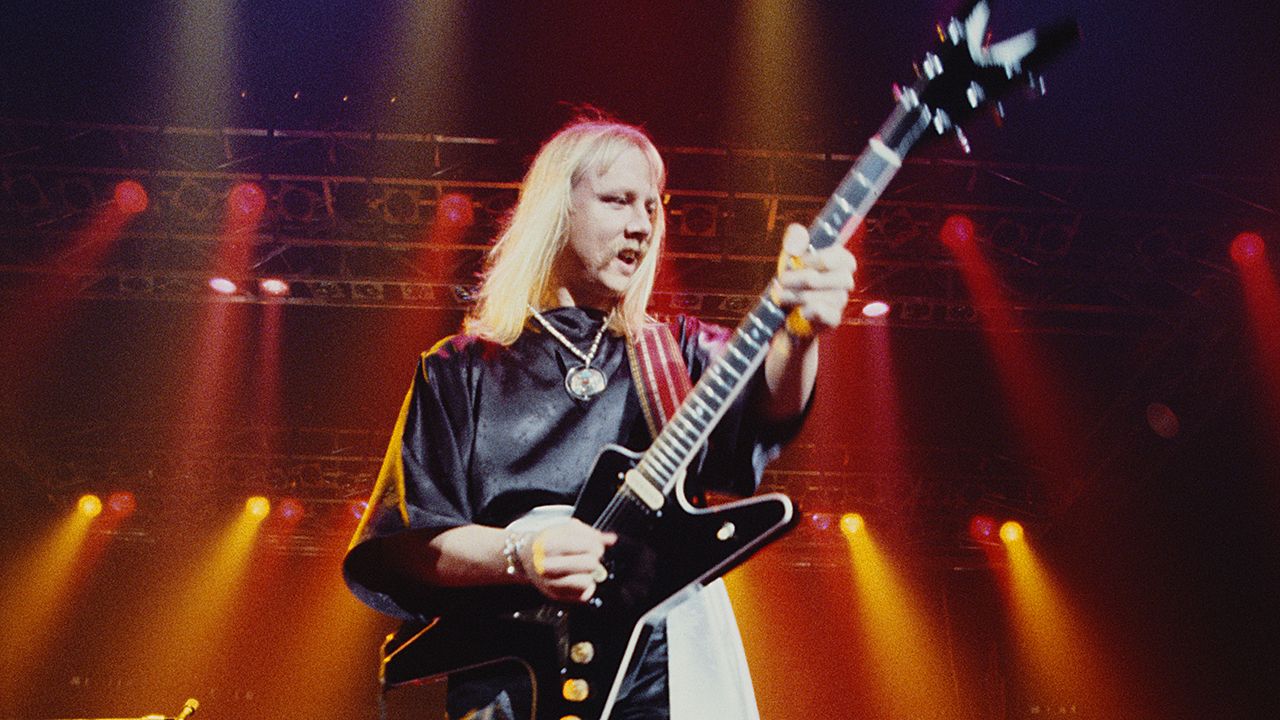
Upon its release in late 1976, "Carry On Wayward Son" broke through the barrier that had held Kansas back for four years. It became the band’s first major hit, validating their progressive-arena hybrid sound.
- Billboard Hot 100 Peak: No. 11 (1977)
- RPM Canadian Singles Chart Peak: No. 5 (1977)
- RIAA Certification: Certified Gold (1977); later certified Platinum/Multi-Platinum for digital sales and streams.
- Album Impact: Leftoverture reached No. 5 on the Billboard 200 chart and went on to be certified 5x Platinum by the RIAA, selling over 5 million copies in the United States alone.
Cultural Footprint and Media Persistence
Over four decades after its debut, "Carry On Wayward Son" maintains extraordinary cultural longevity:
- Television & Film: The track famously served as the unofficial emotional theme song for the long-running CW television series Supernatural, played during every season finale recap across 15 seasons.
- Interactive Media: Featured heavily in rhythm games such as Guitar Hero II and Rock Band, introducing the composition to a new generation of listeners.
- Radio Longevity: Consistently ranks among the top-played classic rock tracks on North American radio, alongside staples by Led Zeppelin, Queen, and Boston.
Official Statements
Reflecting on the creation and legacy of the track in interviews with Prog magazine, key members of Kansas shared direct insights into the pressures, breakthroughs, and artistic trade-offs behind "Carry On Wayward Son."
Kerry Livgren on the Writing Pressure and Creative Spark
"I have no idea [where the inspiration came from]! I was under such pressure to write the album at that point that I kinda launched myself into a gear that I had never had before. I was a writing machine. I’d come home from rehearsal having learned one song, and that night I’d write the next one. This went on for days."
"Steve Walsh wasn’t writing at that time, so it all fell to me. Carry On Wayward Son was the last one I wrote. It was the last night we were in Topeka. I came into the studio on the last day and said, ‘I think you better hear this one.’ The guys looked at each other and said, ‘We gotta do this.’"
On the Song’s Structural Construction and Commercial Blessing
"It went close to the top of the charts and stayed there for some time. It was a song where every component was a hook—the opening riff, the verse, the chorus, the middle section. Even the guitar solo was approached that way."
"We never felt like pop stars. We’d been beating the road for years and making albums. But that song opened the doors to a whole audience. It was the difference between being an opening band and playing stadiums."
"I’d say it’s a blessing. Even today, when the royalty cheques come in, it’s significant… But it was also kind of a curse in that, as a writer, it increased the pressure on me to write hits. On the Point of Know Return album, we had to be all about writing another hit. Dust In The Wind was another similar case. It’s a gentle curse, though… Living up to that expectation was the hard part."
Rich Williams on Initial Hesitation and Live Performance Philosophy
"When Kerry brought it to the table our initial reaction was: ‘Oh fuck, we’ve got another song to do!’ We were in a rehearsal hall and the next day we were packing up and leaving to start recording. But as soon as we got over the laziness of not wanting to learn any more material, we realized Wayward Son was a very cool song. We knew right away that it was going to be replacing some other track."
Addressing the tendency of some veteran musicians to tire of playing their biggest hits live, Williams offered a blunt defense of the song:
"As soon as we start playing it, there’s such a reaction from the crowd. It’s tremendous to be a part of that. I can never understand people who say, ‘I get so sick of playing the same old fucking songs.’ It’s like, ‘Wow, they’re your songs; they’re what put you on the map. They’re why people are standing in front of you—and you don’t like it? Maybe you need to try another job!’"
Future Outlook
The legacy of "Carry On Wayward Son" continues to shape the identity and economic footprint of Kansas as they navigate their fifth decade as a performing entity.
+------------------------------------------------------------------------------------+
|                         THE ENDURING IMPACT OF THE HIT                             |
+------------------------------------------------------------------------------------+
|  FINANCIAL SECURITY   | Sustained streaming royalties and sync licensing provide    |
|                       | long-term financial stability for the founding authors.    |
+-----------------------+------------------------------------------------------------+
|  LIVE SET ANCHOR      | Remains the non-negotiable concert finale, bridging old    |
|                       | fans with younger audiences discovered via modern media.   |
+-----------------------+------------------------------------------------------------+
|  GENRE BENCHMARK      | Recognized historically as a blueprint for bridging complex |
|                       | progressive rock arrangements with mainstream AOR radio.   |
+------------------------------------------------------------------------------------+
As classic rock transitions into an archived genre, "Carry On Wayward Son" stands as a masterclass in artistic resilience. Written in a state of exhaustion under extreme commercial pressure, the song proved that technical musicianship and populist melodies could coexist without compromise. For Kansas, it was not merely a breakthrough hit—it was the defining moment that preserved their career and cemented their place in American rock history.