Executive Overview
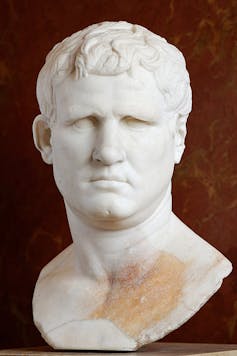
Bestselling historical fiction author Robert Harris has once again trained his literary lens on the marble-paved streets, blood-soaked battlefields, and insidious backrooms of the ancient Roman Republic and early Empire. His latest novel, Agrippa, presents a fictionalized autobiography of Marcus Vipsanius Agrippa—the indispensable right-hand man, military genius, and trusted confidant of Emperor Augustus. Purportedly written in the waning days before Agrippa’s sudden death at the age of 50 in 12 BC, the narrative adopts a familiar literary device reminiscent of Harris’s acclaimed 2021 Cicero trilogy. Through the framing of a "lost autobiography," Harris grants readers an intimate, unfiltered perspective on the rise of Octavian, later known as Augustus, from the chaos following Julius Caesar’s assassination to his absolute dominion over the Mediterranean world.
Yet, despite Harris’s undeniable mastery of narrative pacing and atmospheric world-building, Agrippa occupies a strange space in contemporary historical fiction. While it delivers a lucid and highly readable account of the tumultuous triumviral period (43–31 BC), it conspicuously sidesteps decades of groundbreaking modern historiography. Modern classical scholarship has increasingly emphasized the fluidity, political experimentation, and alternative trajectories of the late Republic and early Empire. Harris, by contrast, presents a teleological march toward absolute autocracy, where Octavian is predestined for world domination and rivals are systematically eliminated with chilling inevitability.
Furthermore, while the novel largely eschews deep political innovation or cultural introspection, it finds its true pulse in an unexpected theme: the act of creation, engineering, and physical construction. When Agrippa turns his considerable intellect toward civil engineering—restoring harbors, constructing aqueducts, and building the foundational monuments of Rome, including the original Pantheon—the book truly comes alive. Ultimately, Agrippa offers less a radical revision of Roman political history and more a poignant meditation on legacy, architecture, and the concrete physical markers we leave behind in stone.
Detailed Chronology: From the Triumvirate to the Pax Romana
To understand the weight of Robert Harris’s new novel, one must examine the sweeping arc of Marcus Vipsanius Agrippa’s life—a trajectory that mirrors the transformation of Rome itself from a fractured, blood-drenched republic into a centralized imperial monolith.
[44 BC] ──> Julius Caesar Assassinated; Octavian & Agrippa rise in politics
  │
[36 BC] ──> Battle of Naulochus; Agrippa’s naval mastery defeats Sextus Pompeius
  │
[31 BC] ──> Battle of Actium; Decisive victory secures sole rule for Octavian
  │
[12 BC] ──> Death of Agrippa at age 50; Leaves enduring architectural legacy
The Crucible of Civil War (44–31 BC)
The narrative backdrop of Agrippa is defined by chaos. Following the assassination of Julius Caesar on the Ides of March in 44 BC, the Roman world fractured. Octavian, then a young and politically unproven heir, was thrust into the epicenter of Roman politics. By his side stood Agrippa, a steadfast companion whose loyalty and military brilliance would prove foundational to Octavian’s survival.
Unlike Tiro—the enslaved secretary and narrator of Harris’s Cicero trilogy—Agrippa was a towering figure in his own right. He was a master tactician whose military acumen engineered Octavian’s most crucial victories. Most notably, Agrippa masterminded the naval defeat of Sextus Pompeius at the Battle of Naulochus in 36 BC and played the decisive role in the naval triumph at the Battle of Actium in 31 BC, which effectively eliminated Mark Antony and Cleopatra, leaving Octavian the undisputed master of Rome.
Consolidation and the Imperial Dynasty
As Octavian transitioned into Augustus, the first Roman Emperor, Agrippa transitioned smoothly from military commander to master statesman and imperial dynast. He solidified his integration into the emerging royal family by marrying Augustus’s fiercely independent daughter, Julia. Through this union, Agrippa became the patriarch of a tumultuous bloodline, anchoring a dynasty that would eventually produce emperors such as Caligula (his grandson) and Nero (his great-grandson).
Harris’s novel captures this transition, charting the decades during which the Republic was systematically dismantled and replaced by the Pax Romana. Yet, where modern historians view this era as a period of frantic political improvisation—where multiple constitutional outcomes seemed possible—Harris depicts a cleaner, more inevitable path to autocratic rule.

Supporting Context & Metrics: Challenging the Historiographical Consensus
While Robert Harris is lauded for his meticulous historical research, Agrippa arrives at a fascinating crossroads in modern classical studies. Over the past two decades, academic historians have aggressively reevaluated the triumviral period, shedding new light on its uncertainties, diverse power players, and societal transformations. Harris’s decision to bypass these currents has sparked notable debate among critics and scholars.
Recent Shifts in Classical Scholarship
Modern research emphasizes that the triumph of Augustus was far from preordained. Scholars have worked to recover the voices, motivations, and alternative visions of those crushed beneath the juggernaut of the early Empire:
- Sextus Pompeius and Mediterranean Power: Australian historian Kathryn Welch has extensively documented the immense geopolitical footprint of Sextus Pompeius, the surviving son of Pompey the Great. Sextus controlled the grain supply and much of the Mediterranean long after Julius Caesar’s death, posing a legitimate, systemic threat to the triumvirs that was difficult to neutralize.
- Mark Antony’s Governance: Professor Jeff Tatum of Victoria University of Wellington has published nuanced analyses examining how Mark Antony grappled with the structural problems of governing the eastern provinces, challenging the traditional, one-dimensional Roman propaganda portraits that painted him as decadent and un-Roman.
- The Anatomy of Conspiracy: University of Leicester historian Kathryn Tempest has meticulously detailed the socio-political contexts that birthed Brutus and Cassius’s assassination plot, framing it within a deeply debated tradition of republican liberty versus tyranny.
- Cultural Patrons and Advisors: Figures like Maecenas—another of Augustus’s inner circle—have been the subject of at least four major biographical treatments since 2014, reflecting a broader academic push to understand the cultural architects of the Augustan regime.
The Omission of Social and Cultural Trauma
Beyond high politics, contemporary historians have increasingly focused on the generational trauma inflicted by decades of civil war on Roman society. Researchers are acutely conscious of how the rise of the imperial family reshaped gender dynamics, increasing the public visibility and political agency of elite Roman women—a development personified by figures like Livia.
In Agrippa, however, these complex cultural currents largely recede into the background. Harris presents a narrative dominated by realpolitik and the relentless elimination of political rivals. The intellectual ferment of the era—the intense debates among senators, poets, and philosophers trying to conceptualize what a post-republican state should look like—is muted. Even the towering literary figures of the age, such as Horace and Virgil, are afforded little more than a single, passing, albeit entertaining paragraph.
Official Perspectives & Literary Comparisons
To fully evaluate Agrippa, critics naturally measure it against the broader landscape of historical fiction, particularly masterpieces that have defined the fictional depiction of the Julio-Claudian dynasty.
The Shadow of Robert Graves
Comparisons to Robert Graves’s seminal 1934 masterpiece, I, Claudius, are inevitable. Readers familiar with Graves’s work will instantly recognize familiar character archetypes within Harris’s pages—notably Livia, rendered here as well as in Graves’s work as a formidable, calculating schemer willing to use any means necessary to secure her son’s legacy.
However, Harris diverges significantly in his portrayal of Augustus. While Graves depicted a somewhat more eccentric, paranoid, yet multi-dimensional emperor, Harris’s Augustus is markedly chillier, more calculating, and fundamentally nastier. Conversely, Harris’s Agrippa remains entirely recognizable as the ultimate loyal subordinate—so much so that critics note Harris appears almost too protective of his protagonist. Unwilling to soil Agrippa’s reputation entirely, Harris stops short of having his narrator participate directly in the most brutal atrocities of the triumviral purges, confining Agrippa’s moral reckoning to private disquiet and internalized guilt.
The Genre Conundrum: Thriller vs. Chronicle
Harris has long been celebrated as a master of the political thriller—an author capable of injecting heart-pounding suspense into historical inevitability (as seen in Fatherland, Pompeii, and the Cicero trilogy). Yet, Agrippa tests the limits of this categorization.
Because the historical outcome is universally known, and because Harris chooses not to entertain alternative political realities, the narrative lacks traditional narrative jeopardy. Even the novel’s central "revelation" regarding Agrippa fails to generate significant plot turbulence. As a thriller, it occasionally stalls; as a historical chronicle of administrative duty, however, it finds a unique and compelling voice.
Future Outlook: Legacy Carved in Stone
Despite critiques regarding its conservative historiographical approach, Agrippa achieves moments of genuine brilliance when it narrows its focus from grand imperial design to practical execution.
A Book About Making
As the novel progresses, it transitions away from political machination and reveals itself as a profound study in creation and physical restoration. Agrippa, seeking an antidote to the blood spilled during his rise to power, channels his conscience into engineering. Harris vividly details Agrippa’s monumental civic projects:
- The sweeping reconstruction of the Roman navy and strategic harbors.
- His tenure as aedile in 34 BC, during which he aggressively cleaned, repaired, and renewed Rome’s physical infrastructure, including its public baths, sewers, and water supplies.
- The engineering and construction of major aqueducts across Campania and the capital to supply a growing populace with fresh water.
The Pantheon and the Inscription
The emotional and thematic climax of the book rests on its afterword, which directs the reader’s gaze toward Rome’s most enduring monument: the Pantheon. Agrippa originally commissioned the temple, and to this day, its surviving classical façade proudly bears the iconic Latin inscription:
M·AGRIPPA·L·F·COS·TERTIUM·FECIT
(Marcus Agrippa, son of Lucius, consul for the third time, built this)
In exploring how this single line of stone came to preserve, define, and shape Agrippa’s legacy across two millennia, Harris hits his stride. It is a brilliant meditation on how physical acts of building outlast transient political victories.
Ultimately, while Agrippa may leave revisionist historians longing for a more complex engagement with late-republican political theory, it succeeds magnificently as an ode to human ingenuity. It reminds us that long after emperors die and dynasties crumble, the aqueducts, temples, and harbors built by pragmatic visionaries continue to shape the world we inhabit.