Executive Overview
In the realm of world music, few genres carry the historical weight, spiritual resilience, and visceral urgency of maloya. Originating in the plantations of Réunion—a French island department situated in the western Indian Ocean—maloya was forged by enslaved African and Malagasy peoples as a clandestine vehicle for survival, resistance, and cultural preservation. Today, the tradition breathes with a renewed, contemporary pulse, largely thanks to groups determined to push its sonic boundaries without severing its sacred roots. Chief among these avant-garde traditionalists is the Réunionese ensemble Saodaj.
In November 2025, Parisian label Buda Musique released Lodèr la Vi, the second full-length studio album by Saodaj. Yet, behind the critical acclaim and the sweeping cinematic arrangements lies a profound narrative of loss and catharsis. In February 2024, the band suffered the tragic loss of Adrien Laxénaire, one of the foundational musicians and early creative forces behind Saodaj. Rather than letting grief silence them, the remaining members—led by co-founder Marie Lanfroy and songwriter Jonathan Itéma—channeled their collective sorrow into the album’s title track, "Lodèr la Vi" (The Scent of Life).
Sung entirely in Réunion Creole from the perspective of someone nearing the end of their earthly journey, the song is a masterclass in emotional duality. It marries the crushing weight of mortality with an exuberant, defiant celebration of existence. This comprehensive feature explores the genesis of "Lodèr la Vi," the cultural and historical mechanics of maloya, the intricate collaborative process behind Saodaj’s latest body of work, and the enduring legacy of a musician whose memory now dances on a perpetual slackline between earth and sky.
Detailed Chronology
The Genesis of a Collective: From Island Roots to Modern Stages
To understand the emotional resonance of Lodèr la Vi, one must first trace the trajectory of Saodaj. The band was conceptualized and officially formed in late 2011 by Marie Lanfroy, a native of Réunion who sought to synthesize the island’s traditional sonic identity with modern alternative rock, folk poetry, and global acoustic textures.
From its inception, Saodaj positioned itself not merely as a musical group, but as a cultural conduit. They embraced the raw, driving cadence of maloya—a genre historically banned by French colonial authorities until the early 1980s due to its association with anti-colonial resistance and spiritual invocation. By integrating this outlawed heritage into contemporary songwriting, Lanfroy and her collaborators created a soundscape that felt both deeply ancestral and jarringly modern.
Among the early visionaries who helped shape this sound was Adrien Laxénaire. A multi-instrumentalist of rare sensitivity and technical dexterity, Laxénaire was instrumental in defining Saodaj’s dynamic interplay between acoustic tradition and modern experimentation. His contributions helped propel the band across international borders, earning them a reputation as vital torchbearers of Indian Ocean music.
The Turning Point: February 2024
The trajectory of Saodaj was irrevocably altered in February 2024 with the untimely passing of Adrien Laxénaire. The loss sent shockwaves through the Réunionese music community and plunged the band members into profound mourning. For a collective whose art had always been rooted in communal healing and shared emotional expression, the studio became the only viable sanctuary to process the tragedy.
In the weeks following Laxénaire’s passing, Marie Lanfroy and Jonathan Itéma began writing what would become the emotional anchor of their second album. They approached the composition not as a traditional elegy draped in somber, funereal tones, but as an active dialogue with the departed. Written in Réunion Creole, "Lodèr la Vi" emerged from the depths of this collaborative grief, capturing the exact psychological threshold where life meets the unknown.
The Album Rollout and Visual Immersion
As production on the Lodèr la Vi LP wrapped up throughout 2024 and 2025, Saodaj rolled out a meticulously crafted visual and auditory campaign. The album campaign was preceded by compelling singles and music videos, including "Domin" and the widely acclaimed "Adyé Véli."
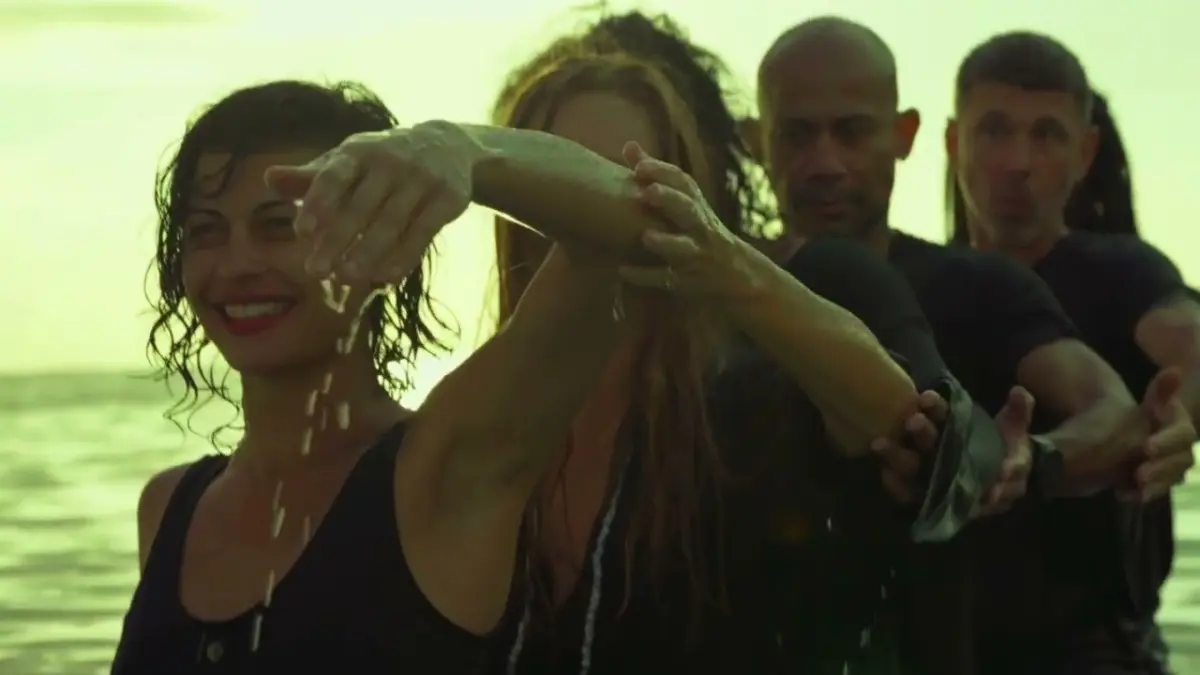
When the title track finally dropped in November 2025 via Buda Musique, it was accompanied by an official music video directed by Erika Souriguere. The visual companion piece mirrored the song’s thematic oscillation between gravity and levity, grounding the listener in stark, poetic imagery that paid subtle homage to Laxénaire’s spirit.
Supporting Context & Metrics
Anatomy of a Song: Lyrical Depth and Creole Poetry
"Lodèr la Vi" unfolds from a perspective situated at the "far end of a life." The lyrics, crafted collaboratively by Marie Lanfroy and Jonathan Itéma, operate on multiple emotional frequencies simultaneously:
- Gratitude to the Physical Vessel: The narrator offers a profound thank-you to the body that carried him as far as its physical limits allowed, acknowledging the biological fatigue of a life fully lived.
- Radical Acceptance: There is no desperate bargaining with death, but rather a quiet, brave acceptance that tomorrow stops here—coupled with a poignant regret over unfulfilled futures ("He had hoped to live long enough to go grey").
- The Imperative to Dance: In a stunning subversion of traditional dying tropes, the narrator commands his own fading body to dance regardless: "Dans aou mon kor / Sant aou mon lam" (Dance within me, my body / Feel within me, my soul).
- The Breath of Life: The chorus acts as an insistent, rhythmic anchor. Sung repeatedly by Lanfroy and Itéma, the phrase "Souf, souf, souf" (Breathe, breathe, breathe) serves as both a literal resuscitation attempt and a metaphorical inhalation of the titular "scent of life"—urging the spirit to hold on to the sensory world just a moment longer.
- The Final Farewell: The song closes with a devastatingly tender final line. Dropping formal distance, the remaining band members call him by his affectionate nickname, "Adri," and leave him suspended on a slackline—high in the air, caught eternally between earth and sky.
The Sonic Architecture: Maloya Meets Alternative Rock
Musically, Lodèr la Vi is a masterclass in cross-genre orchestration. The foundation of the track rests on traditional maloya structures, meticulously preserved and innovated by Jonathan Itéma, who studied Réunionese music at the prestigious Saint-Pierre conservatoire and wrote every percussion arrangement on the album.
The rhythmic framework is anchored by a hypnotic three-beat maloya groove driven by three core traditional instruments:
- The Kayamb: A flat, rattle-like instrument constructed from cane stems and packed densely with hard seeds, providing a crisp, high-end shimmer.
- The Roulèr: A large, deep-pitched barrel drum played with hands, supplying the foundational heartbeat and low-end resonance.
- The Sati-Pikèr: A metallic percussion instrument beaten with sticks to maintain the driving, syncopated pulse.
Over this deeply traditional rhythmic foundation, Saodaj layers contemporary instrumentation that pushes maloya into uncharted sonic territory. Mélanie Badal introduces sweeping, melancholic cello arrangements that lend a classical, cinematic gravity to the proceedings. Meanwhile, Blaise Cadenet weaves electric guitar textures throughout the track, injecting the distorted warmth and atmospheric feedback characteristic of alternative rock.
The rhythm section is further fortified by Frederick Cipriano and Zélito Deliron, whose collective percussion work ensures that despite the heavy emotional and stylistic layering, the pulse of the dance never falters.
Official Statements and Artistic Vision
While official press releases from Buda Musique and promotional notes from Saodaj frame Lodèr la Vi as an album born from resilience, interviews and liner notes reveal an intense internal process of collective healing.
Marie Lanfroy has repeatedly emphasized that Saodaj’s music cannot exist in a vacuum separated from the socio-cultural realities of Réunion. The island’s history—marked by the shadows of slavery, colonial displacement, and cultural suppression—inherently informs how its people process grief. For Lanfroy and Itéma, writing "Lodèr la Vi" was not merely an act of mourning an individual bandmate, but an extension of the therapeutic, communal function that maloya has served for centuries.
Jonathan Itéma’s approach to the percussion arrangements reflects an academic rigor fused with spiritual intuition. By honoring the exact rhythmic specifications taught at the Saint-Pierre conservatoire while opening the door to Badal’s cello and Cadenet’s distorted electric guitar, Itéma championed a philosophy of musical evolution. In the band’s view, tradition is not a glass museum case to be preserved behind sterile barriers; it is a living, breathing organism that must adapt, bleed, and grow in order to survive the realities of the modern world.
Director Erika Souriguere, speaking on the visual translation of the title track, noted that the challenge lay in capturing absence not as a void, but as a persistent presence. The music video’s recurring motifs of open air, movement, and suspended motion directly mirror the final lyric’s image of Adri on the slackline—a visual metaphor for a spirit that refuses to fully touch the ground, choosing instead to hover endlessly in the music it helped create.
Future Outlook
The release of Lodèr la Vi via Buda Musique marks a critical milestone for Saodaj, solidifying their status as international ambassadors of modern maloya. As the album circulates globally, reaching audiences far beyond the shores of Réunion and metropolitan France, the band faces a pivotal transitional phase.
Losing a co-founder and foundational instrumentalist like Adrien Laxénaire could easily have fractured a lesser ensemble. Instead, Saodaj has utilized the profound trauma of 2024 to forge a deeper artistic unity. The critical and commercial reception of Lodèr la Vi proves that listeners worldwide are deeply receptive to music that refuses to shy away from genuine human vulnerability.
Looking ahead, Saodaj’s touring itinerary is expected to bring their electrifying hybrid of acoustic maloya and alternative rock to international festival stages throughout 2026. Performing "Lodèr la Vi" live presents a monumental emotional hurdle for the band, yet it also promises a nightly ritual of communal exorcism and celebration. Every time Marie Lanfroy and Jonathan Itéma step up to the microphone and whisper "Souf, souf, souf," they are not just reviving a fallen brother’s memory—they are reminding global audiences of the fragile, defiant, and beautiful scent of life itself.