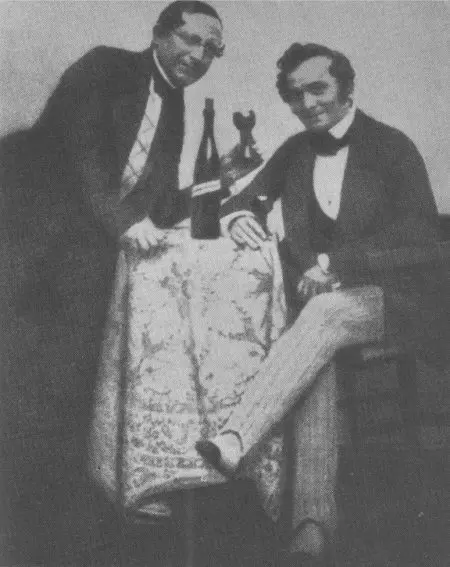
The classical music world stands on the precipice of a significant, albeit understated, historical milestone. The year 2026 marks a compelling double anniversary for one of the most influential yet frequently overlooked architects of nineteenth-century German musical theater: Gustav Albert Lortzing. Born in Berlin on October 13, 1801, and passing away in the same city on January 21, 1851, Lortzing’s life spanned a turbulent half-century of European sociopolitical upheaval and artistic reinvention. As the principal creator of the Spieloper—the distinctively German brand of comic opera characterized by accessible melodies, rich ensemble writing, and spoken dialogue—Lortzing served as a vital bridge between the late classical traditions of Wolfgang Amadeus Mozart and Carl Maria von Weber, and the monumental, highly influential dramatic trajectories of Richard Wagner and Johann Strauss II.
Despite his historical importance and his status as a ubiquitous fixture of German-language opera houses well into the twentieth century, Lortzing’s presence on contemporary international stages has dwindled to near-invisibility. A glance at performance databases such as Operabase reveals a stark reality for the upcoming 2026 anniversary cycle: there are currently zero professional stagings of Lortzing’s masterworks planned anywhere in the United Kingdom. This British—and broader Anglo-American—blind spot persists despite the enduring popularity of his masterworks in German-speaking Europe, where works like Zar und Zimmermann and Der Wildschütz once enjoyed a frequency of performance rivaling the most secure staples of the standard repertoire.
However, the 2026 double anniversary is already catalyzing vital efforts to rescue Lortzing from international neglect. Most notably, Deutsche Grammophon has initiated a major archival digital release campaign, making historic, star-studded recordings of Lortzing’s masterworks—including Undine, Der Waffenschmied, and Der Wildschütz—available digitally for the first time in complete or curated highlight formats. Featuring mid-century luminaries such as Rita Streich, Irmgard Seefried, Wolfgang Windgassen, Gundula Janowitz, and Josef Greindl, these releases offer a timely reminder of a golden era of German operatic performance practice. This article provides a comprehensive retrospective on Lortzing’s life, career, and complex legacy, examining his theatrical lineage, his surprising political radicalism, and the ongoing struggle to reintegrate his innovative works into the global operatic canon.
Detailed Chronology: The Itinerant Life and Career of Albert Lortzing
To understand Albert Lortzing’s artistry, one must first understand the precarious, nomadic existence of the nineteenth-century theatrical journeyman. Born to actor parents, Johann Gottlieb Lortzing and Charlotte Sophie Seidel, young Albert was immersed in the world of the stage almost from birth. His parents abandoned commercial pursuits to form a touring theatrical troupe, dragging their son across the German states. This itinerant upbringing meant that Lortzing’s education was fundamentally practical rather than academic; the backstage of provincial theaters was his primary classroom, and the shifting tastes of regional audiences served as his ultimate aesthetic guide.
Early Stardom and the Leipzig Years
Lortzing made his formal debut as a child actor at the tender age of twelve. Possessing a natural charisma, a flexible tenor voice, and a keen comedic timing, he quickly evolved into an audience favorite across various regional houses. In 1824, he married the actress Rosina Regina Ahles, with whom he would share both a domestic partnership and a grueling professional life on the road. Together, they secured engagements with the prestigious Hoftheater in Detmold and, subsequently, the esteemed Leipziger Stadttheater in 1833.
It was in Leipzig that Lortzing’s latent genius for composition began to find a reliable theatrical outlet. Surrounded by a stable orchestra and an ambitious artistic administration, he composed Zar und Zimmermann (Tsar and Carpenter), setting his own libretto based on a popular vaudeville play concerning Tsar Peter the Great’s incognito sojourn in the Dutch shipyards of Saardam.
The path to success, however, was rarely smooth. The opera initially ran into friction with cautious Leipzig censors who viewed any representation of monarchs—even an enlightened, disguised tsar working alongside common laborers—with institutional suspicion. When the opera premiered in December 1837 with Lortzing himself singing the role of the honest carpenter Peter Ivanov, it received a lukewarm local response. It was not until the opera was mounted in Berlin in 1839 that its infectious melodies, clever ensemble writing, and populist charm won over the broader German public, instantly transforming it into an enduring national favorite.
The Kapellmeister and the Barricades
Buoyed by his rising reputation, Lortzing transitioned from actor-composer to institutional leader. He assumed the prestigious post of Kapellmeister at the Leipzig Stadttheater, later moving to Vienna to take the musical helm at the historic Theater an der Wien, and finally returning to Berlin in 1850 to lead the newly opened Friedrich-Wilhelmstädtisches Theater.
Yet, Lortzing’s career was perpetually marred by financial instability, artistic disputes with theater boards, and bouts of unemployment that forced him to return to the grueling life of a touring actor. Described by contemporaries as mercurial, intensely proud, and not easily managed, Lortzing frequently rubbed conservative managements the wrong way.
Despite these professional frictions, he remained deeply attuned to the pulse of his society. When the revolutionary tremors of 1848 shook the German states, Lortzing did not remain safely in the orchestra pit. Spurred by his sympathies with the burgeoning Freedom Movement, he penned Regina, an opera centered entirely on labor strife, worker solidarity, and the revolutionary cry for liberty. Set within a factory environment where workers strike and sing freedom anthems, Regina was an explosive work for its time. Predictably, the Prussian authorities blocked its performance, ensuring that Lortzing’s most overtly political statement would not see the light of day during his lifetime.
Lortzing’s health and spirit steadily deteriorated during his final years, exacerbated by financial stress and the grueling demands of theater administration. When he passed away in Berlin on January 21, 1851, at the age of forty-nine, he died in relative obscurity and straitened circumstances. Nevertheless, the musical establishment recognized his foundational contribution to German culture: luminaries of the era, including Giacomo Meyerbeer, attended his funeral, marking the end of a life dedicated entirely to the popularization and elevation of the German stage.
Supporting Context & Metrics: The Evolution of the Spieloper
To fully appreciate Lortzing’s historic weight, one must examine the genre he perfected: the Spieloper. Emerging directly from the indigenous German Singspiel tradition—exemplified by Mozart’s Die Entführung aus dem Serail and the lighter works of Johann Adam Hiller and C.D. von Dittersdorf—the Spieloper incorporated spoken dialogue (Dialogregie) interspersed with catchy strophic songs, complex concerted finales, and picturesque orchestral interludes. It stood as the direct German aesthetic equivalent to France’s opéra comique and Italy’s opera buffa.
The Operatic Landscape of the 19th Century
Lortzing occupied a fascinating inflection point in the evolution of German opera:

[Mozart / Dittersdorf (Singspiel Tradition)]
                     │
                     ▼
             [Carl Maria von Weber]
                     │
                     ▼
          [ALBERT LORTZING (Spieloper)]
            ├──► Richard Wagner (Comic/Ensemble Evolution)
            └──► Johann Strauss II (Viennese Operetta)
While Weber infused German opera with demonic romanticism and sweeping symphonic nationalism through Der Freischütz, Lortzing anchored his art in bourgeois realism, gentle satire, and heartwarming civic community. Looking forward, one can trace a direct line from Lortzing’s mastery of stage ensemble to Richard Wagner’s early experiments and his eventual comedy Die Meistersinger von Nürnberg—an opera that shares thematic DNA with Lortzing’s treatment of historical artisan guilds in Hans Sachs (1840). Furthermore, Lortzing’s structural blueprint paved the direct path for the effervescent Viennese operetta perfected by Johann Strauss II and Franz Lehár.
Key Works and Their Aesthetic Footprint
- Zar und Zimmermann (1837): Lortzing’s undisputed masterwork of civic comedy. The score relies heavily on accessible, march-like rhythms, memorable choral writing, and a warm-hearted humanitarianism that celebrates craftsmanship and individual merit over aristocratic birth.
- Der Wildschütz oder Die Stimme der Natur (1842): Based on a farce by August von Kotzebue, this opera represents Lortzing’s finest achievement in satirical character comedy. It targets rural provincialism, class pretension, and the absurdities of romantic obsession, driven by sparkling buffo duets and lush orchestral lyricism.
- Undine (1845): Premiered in Magdeburg, Undine displays Lortzing’s versatility by venturing into the realm of the romantische Zauberoper (romantic magic opera). Utilizing Friedrich de la Motte Fouqué’s famous novella—a source also explored by E.T.A. Hoffmann, Pyotr Ilyich Tchaikovsky, and Hans Werner Henze—Lortzing juxtaposed ethereal supernatural aquatic worlds with down-to-earth comic characters (Veit and Hans), concluding with an ambivalent, bittersweet resolution that transcends simple fairytale tropes.
The Political Anomaly: Regina
The rediscovery of Lortzing’s 1848 opera Regina has challenged the long-standing critical consensus that categorized the composer as a purely harmless purveyor of middle-class entertainment. Written during the March Revolution, Regina grapples with industrial capitalism, worker exploitation, and armed insurrection.
Because the original score was deemed too radical by nineteenth-century authorities, it was shelved. When it finally received a sanitized, heavily edited premiere in 1899, its political teeth had been drawn. It was not until 1998, in a landmark production directed by Peter Konwitschny in Gelsenkirchen, that the unexpurgated original version was heard by modern audiences. Subsequent scholarship by Ricordi—which published a critical edition of the score—and a 2011 studio recording on the CPO label conducted by Ulf Schirmer have allowed musicologists to re-evaluate this fascinating anomaly in Lortzing’s output. While critical reception of the CPO recording was mixed—characterized by reviewers as "pleasant enough" rather than an unearthly masterpiece—its historical and sociological value remains unquestioned.
Official Statements and Archival Initiatives
The approach of the 2026 double anniversary has prompted major cultural institutions and record labels to take concrete steps toward revitalizing Lortzing’s recorded legacy. Chief among these is Deutsche Grammophon’s strategic initiative to digitize and reissue classic mid-century studio recordings of Lortzing’s cornerstone operas.
In an official statement regarding the rollout of these archival treasures, Deutsche Grammophon representatives emphasized the historical significance of these documents:
"These historic highlights recordings capture a golden age of German-language operatic performance tradition—an era when ensemble houses across Germany, Austria, and Switzerland maintained Lortzing at the core of their active repertoires. By making these historic interpretations of Undine, Der Waffenschmied, and Der Wildschütz digitally accessible for the first time, we aim to provide modern listeners, scholars, and opera houses with a vital benchmark for performance practice, showcasing legendary vocal artists who understood the unique stylistic demands of the German comic stage."
These releases capture legendary mid-century vocalists operating at the height of their powers. The cast rosters read like a roll call of post-war German vocal royalty:
- Rita Streich: Renowned for her crystalline coloratura and silvery tone, bringing effortless charm to Lortzing’s heroines.
- Irmgard Seefried: Celebrated for her heartfelt sincerity and immaculate phrasing.
- Wolfgang Windgassen: Long before he became the definitive dramatic Heldentenor of the Bayreuth Festival, Windgassen honed his lyrical phrasing in the lighter German repertoire.
- Gundula Janowitz and Josef Greindl: Providing gravitas, vocal splendor, and theatrical theatricality to the supporting and buffo ensembles.
These recordings were originally conceived in the 1950s and 1960s specifically for the LP "Highlights" format—a publishing medium that revolutionized classical music consumption by condensing multi-act operas into curated sequences of crowd-pleasing arias, overtures, and ensemble finales. The release schedule includes Undine (conducted by Victor Reinshagen), Der Waffenschmied (conducted by Christoph Stepp), and the forthcoming digital reissue of Der Wildschütz (led by Ferdinand Leitner and Wolfgang Sawallisch).
Future Outlook: Reclaiming Lortzing for the 21st Century
As the international classical music community looks ahead to 2026, the absence of Lortzing productions on non-German-speaking stages presents both a challenge and an opportunity. Why has an artist who was once a fixture of European opera houses become an exotic rarity in London, New York, or Paris?
The Translation and Cultural Barrier
The primary obstacle facing Lortzing’s international revival is linguistic and structural. The Spieloper relies intrinsically on spoken dialogue rather than sung recitative. When performed in German, these spoken passages create an insurmountable barrier for non-German-speaking audiences unless executed by singing actors capable of brilliant comedic timing in translation. Furthermore, the humor of the Biedermeier era—often gentle, domestic, and rooted in specific German social strata—can feel quaint or parochial to modern audiences accustomed to hyper-kinetic, technologically augmented dramaturgy.
Strategies for Renewal
Cultural entrepreneurs and adventurous regional directors argue that Lortzing’s works are ripe for radical reinterpretation. Just as operetta has undergone successful critical reappraisal in houses like the Komische Oper Berlin and various boutique British festivals, Lortzing’s satires offer sharp critiques of class, bureaucracy, and human vanity that translate easily to modern corporate or political settings.
The 2026 double anniversary offers an ideal catalyst for forward-thinking artistic directors to test the waters. By pairing the newly digitized Deutsche Grammophon archival releases with innovative, surtitled concert performances or chamber adaptations, international opera companies could reintroduce audiences to the sparkling wit and melodic genius that once captivated the entire German-speaking world.
Albert Lortzing was never a revolutionary in the grand, storm-tossed manner of Wagner, nor did he possess the demonic psychological depth of Weber. Instead, he offered something equally precious: a mirror to the everyday human comedy, rendered in unforgettable melodies, pristine orchestral textures, and an abiding affection for the common working person. As the musical world marks 225 years since his birth and 175 since his death, the time is long overdue for the international stage to welcome back the master of the Spieloper.