Executive Overview
For centuries, Ukrainian literature has served as both a mirror to the nation’s tumultuous geopolitical reality and a fortress protecting its distinct cultural identity. Caught at the crossroads of ambitious empires, Ukraine’s narrative history is one of resilience, suppression, artistic brilliance, and an unyielding quest for self-determination. In recent years, as the international spotlight has focused intensely on the country’s struggle against Russian aggression, global interest in Ukrainian arts and letters has surged. Readers worldwide are increasingly seeking out works translated into English to understand not just the headlines of today, but the deep historical roots that define the nation.
To read Ukrainian literature is to witness a culture fighting for its voice across generations. From the avant-garde experimentation of the early 20th century to post-colonial feminist awakenings, gritty post-industrial realism, multicultural historical tapestries, and the poignant testimonies of indigenous populations, the country’s literary output is as diverse as it is profound.
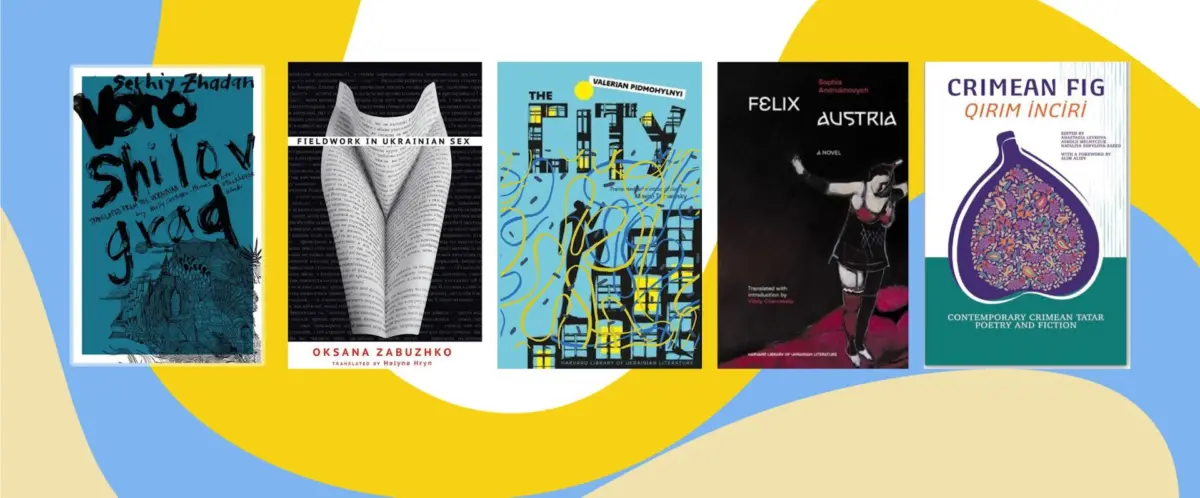
As a growing collection of works becomes accessible in English translation—facilitated by leading scholars, writers, and cultural practitioners—readers are presented with an expanding, vibrant array of perspectives. This curated selection of five essential books takes readers across centuries and geographic landscapes, offering an indispensable entry point into the rich tapestry of Ukrainian history, culture, and national identity.
Detailed Chronology
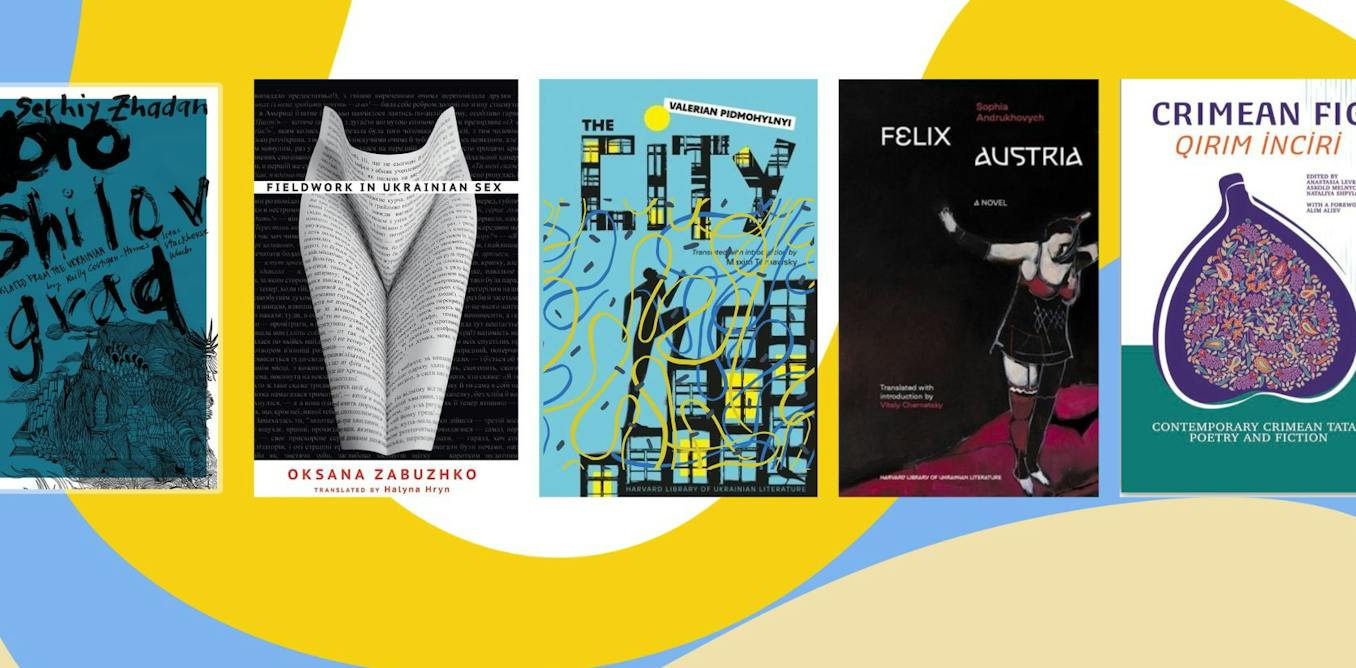
1. The City by Valerian Pidmohylnyi (1928)
- Translation & Introduction: Maxim Tarnawsky (2025)
- Setting: Early 1920s, Post-Revolutionary Kyiv
Originally written in 1927 and published in Kharkiv during the height of a brief period of Ukrainian cultural renaissance under Soviet rule, The City stands as a masterpiece of European modernism. It became available as a complete English translation for the first time in 2025, bringing a long-suppressed classic to the global stage.
The novel captures the kinetic energy of early 1920s post-revolutionary Kyiv amid rapid industrialization. The plot follows Stepan Radchenko, an ambitious provincial protagonist who moves to the capital to seek his fortune. However, a series of transformative urban experiences changes him irrevocably, subverting his expectations and exposing the psychological toll of modernity and ambition.
The history of the novel’s author is emblematic of the tragic fate of Ukrainian intellectuals under totalitarianism. Valerian Pidmohylnyi, an accomplished writer and translator, was arrested and incarcerated by Soviet authorities in 1934 during Joseph Stalin’s sweeping purges. In 1938, he was executed alongside nearly 300 other Ukrainian writers, artists, and cultural figures during mass killings designed to mark the 20th anniversary of the October Revolution—an atrocity now remembered as part of the "Executed Renaissance." The City was promptly banned, and its circulation remained suppressed until Ukraine finally achieved its independence in 1991.
2. Fieldwork in Ukrainian Sex by Oksana Zabuzhko (1996)
- Translation: Halyna Hryn (2011)
- Setting: Post-Soviet Kyiv and Diaspora Contexts
Published in Kyiv in 1996, just five years after the collapse of the Soviet Union, Oksana Zabuzhko’s landmark feminist novel sent shockwaves through Ukrainian society. It broke decades of ideological censorship and rigid social mores by delivering a bold, uncompromising exploration of female sexuality, erotic desire, and a piercing feminist critique of traditional gender relations—themes rarely, if ever, addressed so openly in Ukrainian print.
Despite initial controversy, the novel struck a profound chord, remaining a bestseller in Ukraine for a decade and eventually earning status as a cult classic. Through the framework of a volatile, emotionally abusive love affair between a prominent Ukrainian poet and a troubled artist, Zabuzhko interrogates the psychological landscape of post-colonial Ukraine and the arduous process of forging an independent national identity.
Zabuzhko, internationally renowned as a novelist, poet, essayist, and public intellectual, was awarded the prestigious Shevchenko National Prize in 2019—Ukraine’s highest cultural honor—solidifying her status as a titan of contemporary letters.
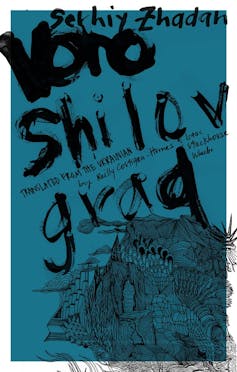
3. Voroshilovgrad by Serhiy Zhadan (2010)
- Translation: Reilly Costigan-Humes and Isaac Wheeler (2016)
- Setting: Post-Soviet Eastern Ukraine
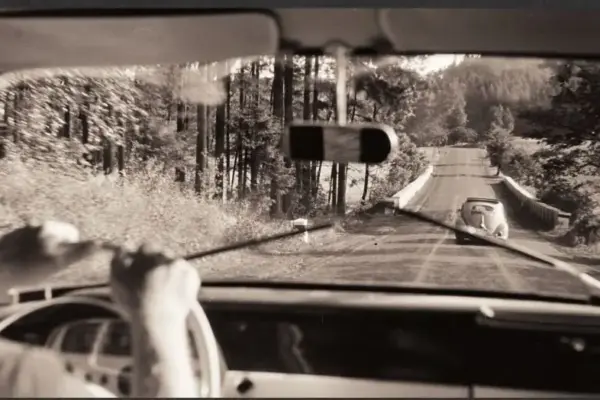
Taking its title from the former Soviet designation for Luhansk—the administrative center of Ukraine’s eastern Luhansk region—Voroshilovgrad is a darkly humorous, compelling road novel about memory, loss, and homecoming. First published in Kharkiv in 2010, the narrative captures the precarious social fabric of post-Soviet eastern Ukraine just years before the outbreak of Russia’s hybrid war in 2014.
The novel follows a protagonist forced to return to his hometown to protect his brother’s abandoned petrol station, plunging him into a surreal landscape of industrial decay, local mafia, and fading memories. Through its vivid prose, the book explores the complex layers of identity in the borderlands of Eastern Europe, long before those regions became global flashpoints.
Author Serhiy Zhadan is a towering cultural figure: a celebrated poet, novelist, essayist, and rock musician who has consistently used his platform to champion Ukrainian culture. In a testament to his civic commitment, Zhadan enlisted in the Ukrainian armed forces following the full-scale Russian invasion. His profound contributions to political thought and literature were recognized globally when he received the Hannah Arendt Prize in 2022.
4. Felix Austria by Sophia Andrukhovych (2014)
- Translation & Introduction: Vitaly Chernetsky (Forthcoming, January 2027)
- Setting: Turn of the 20th Century, Stanislaviv (Modern-day Ivano-Frankivsk)
Stepping back into the historical tapestry of Central Europe, Sophia Andrukhovych’s Felix Austria highlights Ukraine’s deep historical connections with Western Europe and the intricate challenges of inhabiting a territory caught between crumbling empires.
Set at the dawn of the 20th century in Stanislaviv (now Ivano-Frankivsk), the story unfolds within a multicultural urban center governed by the Austro-Hungarian Habsburg Empire. The plot centers on the intense, psychologically fraught relationship between two women: Adela, the daughter of a wealthy German physician, and Stefania, her devoted Ukrainian servant. Set against a rich, polyphonic backdrop of Ukrainian, Polish, German, and Jewish communities, the novel masterfully reconstructs a lost world of shared European heritage and domestic complexity.
5. Crimean Fig / Qırım İnciri: Contemporary Crimean Tatar Poetry and Fiction (2025)
- Editors: Nataliya Shpylova-Saeed, Anastasia Levkova, and Askold Melnyczuk
- Introduction: Alim Aliev
Representing a monumental milestone in translation publishing, Crimean Fig is the first anthology of contemporary fiction and poetry by Crimean Tatar writers to be made widely available in English. Co-edited by a team of leading scholars and writers, the collection bridges linguistic divides to amplify an indigenous voice that has faced systematic attempts at erasure.
The anthology delves deeply into the historical trauma and enduring resilience of the Crimean Tatar people, focusing heavily on their mass deportation from their historic homeland in 1944 under Stalin’s orders. It traces their decades-long struggle for the right to return, which began in significant numbers only after the fall of the Soviet Union, and confronts the grim realities of life under Russian occupation following the illegal annexation of Crimea in 2014.
Supporting Context & Metrics
The global appetite for Ukrainian literature is not merely a passing trend; it represents a structural shift in international publishing and academic translation. According to recent metrics from literary advocacy groups and university presses, the translation of Ukrainian titles into English has seen an unprecedented growth rate of over 300% since 2014, with an exponential surge following the full-scale invasion in 2022.
| Book Title | Author | Original Publication Year | English Translation Year | Primary Thematic Focus |
|---|---|---|---|---|
| The City | Valerian Pidmohylnyi | 1928 | 2025 | Urbanization, Modernism, Stalinist Repression |
| Fieldwork in Ukrainian Sex | Oksana Zabuzhko | 1996 | 2011 | Post-Colonial Identity, Feminism, Eroticism |
| Voroshilovgrad | Serhiy Zhadan | 2010 | 2016 | Post-Soviet Eastern Ukraine, Memory, Industrial Decay |
| Felix Austria | Sophia Andrukhovych | 2014 | 2027 (Scheduled) | Multiculturalism, Habsburg Empire, Interpersonal Dynamics |
| Crimean Fig | Various (Ed. Shpylova-Saeed et al.) | 2025 | 2025 | Indigenous Rights, Crimean Tatar Diaspora, Occupation |
This quantitative leap reflects a growing recognition among international readers that Ukrainian culture cannot be adequately understood through geopolitical reports alone. Literature provides the emotional and psychological nuance required to comprehend a society under existential threat.
Official Statements & Cultural Insights
Literary scholars and translators point out that every act of translating Ukrainian literature into English is an assertion of sovereignty and cultural continuity.
Dr. Maxim Tarnawsky, translator of Valerian Pidmohylnyi’s The City, emphasizes the urgency of recovering lost modernist voices:
"To read Pidmohylnyi today is to converse with a brilliant European generation that was violently cut short by totalitarian terror. By bringing these complete works into English, we restore a vital link in the chain of global modernist literature that was deliberately targeted for destruction."
Similarly, cultural practitioners highlight the critical role of indigenous narratives, such as those presented in Crimean Fig. Alim Aliev notes in his introduction to the volume:
"The Crimean Tatar story is an integral part of the larger Ukrainian mosaic. Through poetry and prose, our writers document not only the pain of exile and occupation, but an unbreakable will to preserve our language, culture, and connection to our ancestral land."
Future Outlook
The trajectory of Ukrainian literature in the global marketplace points toward sustained growth, deeper academic integration, and broader public engagement. As forthcoming translations—such as the 2027 edition of Sophia Andrukhovych’s Felix Austria—reach bookstores, and as contemporary authors continue to write from both the frontlines and international platforms, the boundaries of world literature are expanding to accommodate a more complete, unvarnished view of Eastern Europe.
Ultimately, these five books—spanning from the tumultuous 1920s to the contemporary realities of occupied Crimea—reveal a Ukraine that is deeply European, radically multicultural, and profoundly shaped by the crucible of history. They prove that while empires may rise, fracture, and attempt to rewrite history through force, the written word remains an indestructible monument to human dignity and freedom.