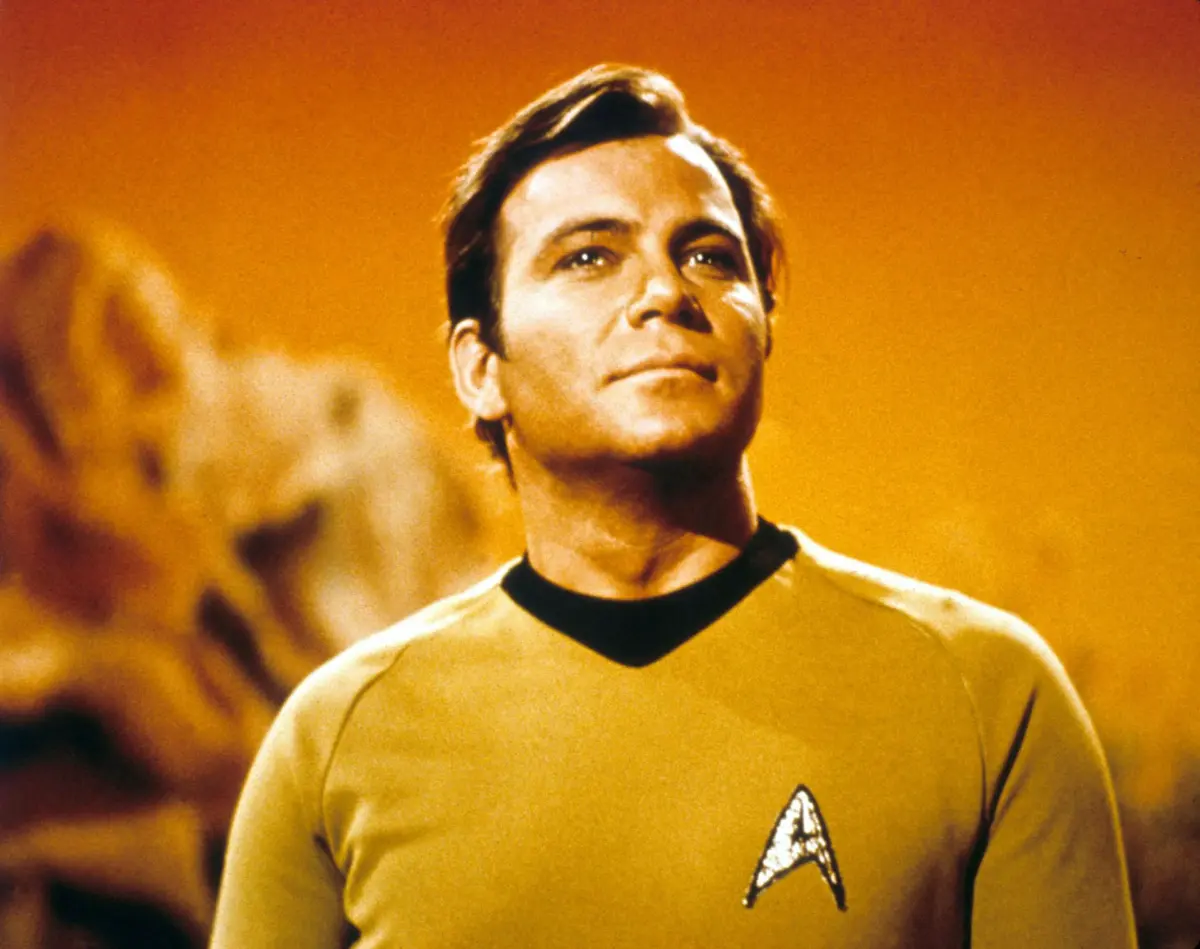
Executive Overview
When Star Trek first debuted on television screens six5 years ago, mainstream audiences tuned in expecting a standard pulp-magazine confection of bug-eyed monsters, gleaming ray guns, and fantastic futuristic technology. Instead, under the guidance of creator Gene Roddenberry, the seminal 1966 television series delivered something far more ambitious: an incisive, philosophical mirror held up to human nature.
While pop-culture histories frequently celebrate the franchise for its surprisingly accurate technological prophecies—anticipating everything from flip communicators and tablet computers to needle-less hyposprays and voice-activated computers—its true legacy is psychological and philosophical. From its very first broadcast episode, Star Trek established that its primary subject matter was not the exploration of strange new worlds, but the complex, flawed, and endlessly fascinating architecture of humanity itself.
Sixty years after the USS Enterprise first warped onto television screens, the foundational questions posed by the series have transitioned from speculative fiction into urgent contemporary realities. In an era dominated by algorithmic echo chambers, deepfake media, political polarization, and fragmented truth, Star Trek’s early explorations of perception, bias, and empathy read less like classic science fiction and more like prescient journalism. This retrospective examines the enduring philosophical architecture of the original series, analyzing how its creature features and ethical dilemmas anticipated modern neuroscience, the crisis of shared reality, and the perennial struggle to define what it truly means to be human.
Detailed Chronology: The Philosophical Evolution of The Original Series
To understand the intellectual heft of Star Trek, one must trace its evolution through the crucible of its seminal 1966–1969 run. Across 79 episodes, the writers—drawing on literary talents like Theodore Sturgeon, Harlan Ellison, and Gene L. Coon—utilized the safe distance of science fiction to interrogate the human condition.
September 1966: The Man Trap and the Fallibility of Perception
Airdates matter, and Star Trek’s official broadcast journey began on September 8, 1966, with "The Man Trap." Written by George Clayton Johnson, the episode introduced an alien creature that subsisted on human salt by shape-shifting into the exact person each observer most deeply desired or needed to see. Dr. Leonard “Bones” McCoy encountered a lost love from his academic past; other crew members saw figures shaped by memory, regret, and longing.
Fans quickly dubbed the creature the "salt vampire," reducing it to a monster-of-the-week trope. Yet, the narrative operated on a far deeper level. The creature did not rely on brute strength or superior physical weaponry; its power was entirely cognitive, exploiting the vulnerabilities of human perception. By asking whether the crew could trust their own senses, the episode bypassed physical horror to pose an epistemological crisis: Can we ever truly trust our experience of reality, or are we forever trapped inside the projections of our own desires?
October–March 1966–1967: The Inward Turn—Identity, Empathy, and the Other
Following its premiere, the series rapidly expanded its thematic scope, diving simultaneously into the human psyche and the mechanics of xenophobia:
- "The Enemy Within" (October 1966): Written by science-fiction master Richard Matheson, this episode split Captain James T. Kirk into two distinct physical entities: one gentle and indecisive, the other aggressive, impulsive, and raw. The narrative systematically dismantled the comforting illusion that human beings can cleanly sever their virtues from their vices. It argued instead that the very traits that made Kirk an effective, courageous leader—resolve, decisiveness, and passion—were inextricably bound to his darker, predatory impulses. Human identity, the episode asserted, requires the difficult integration of both light and dark.
- "The Devil in the Dark" (March 1967): Shifting the inquiry outward, this episode challenged miners and viewers alike to look past monstrous exteriors. The silicon-based Horta, initially perceived as a destructive beast menacing a mining colony, was revealed to be an intelligent, maternal life-form protecting its eggs. The narrative served as an early televised plea for radical empathy, forcing audiences to reconsider how cultural and biological differences warp our understanding of "the other."
- "The City on the Edge of Forever" (April 1967): Penned by Harlan Ellison and widely regarded as the crown jewel of the franchise, this time-travel tragedy forced an agonizing ethical dilemma upon Captain Kirk. Tasked with letting a beloved pacifist, Edith Keeler, die in a traffic accident to prevent a Nazi-dominated timeline, Kirk had to choose between personal happiness and absolute moral responsibility. It elevated science-fiction television from simple moralizing to genuine tragedy, proving that ethical choices often demand devastating personal sacrifice.
Supporting Context & Metrics: From Ancient Philosophy to Modern Neuroscience
The resonance of these mid-century television scripts lies in their deep alignment with ancient philosophical traditions and cutting-edge contemporary science.
The Philosophical Lineage: Plato’s Cave in Space
When the crew of the Enterprise fell prey to the illusions of the salt vampire, they were unknowingly acting out a 20th-century variation of Plato’s Allegory of the Cave. In The Republic, Plato described prisoners chained in a dark cave, mistaking flickering shadows on a wall for absolute reality.
Star Trek updated this Socratic inquiry for the space age. The crew actively participated in their own deception because the alien medium reflected their internal psychological needs. They wanted to believe the illusion, demonstrating that human beings are frequently active co-conspirators in their own cognitive biases.
The Neuroscientific Reality: The Brain as a "Prediction Machine"
Decades after The Man Trap aired, modern neuroscience caught up with its premise. Contemporary cognitive science has largely abandoned the "camera theory" of perception—the naive view that the human brain passively records the external world like a video recorder.
Instead, leading neuroscientists and philosophers champion theories of predictive processing. As prominent philosopher Andy Clark has observed, the human brain functions fundamentally as a "prediction machine." Similarly, neuroscientist Anil Seth famously argues that our conscious experience of reality is best understood as a form of "controlled hallucination"—an internal narrative generated continuously by the brain, merely constrained and updated by sensory inputs.
| Philosophical/Scientific Framework | Star Trek Episode Parallel | Core Insight |
|---|---|---|
| Plato’s Allegory of the Cave | The Man Trap (1966) | Humans willingly mistake comforting internal desires for objective external truth. |
| Predictive Processing (Clark / Seth) | The Man Trap (1966) | Perception is an active mental construction, not a passive recording of physical reality. |
| Integration of the Shadow (Jungian Psychology) | The Enemy Within (1966) | Leadership and virtue cannot exist without acknowledging and integrating aggressive impulses. |
| Utilitarian vs. Deontological Ethics | The City on the Edge of Forever (1967) | Ultimate moral responsibility sometimes supersedes individual emotional desires. |
Official Statements and Critical Perspectives
The cultural longevity of Star Trek has invited decades of analysis from cultural historians, scientists, and the creators themselves.
Reflecting on the philosophical ambitions of the series, series creator Gene Roddenberry frequently emphasized that science fiction was merely a Trojan horse designed to sneak social commentary past 1960s television networks. In archival interviews, Roddenberry noted:
"By golly, if you talked about religion or politics, you got into trouble. But if you talked about religion or politics on a Klingon planet, somehow the network censors didn’t notice it."
Academics have similarly underscored the unique linguistic and intellectual space carved out by the franchise. Dr. Joan Gordon, a prominent scholar of science fiction literature, observed in a retrospective analysis of 1960s television:
“Star Trek didn’t just invite audiences to look at the stars; it weaponized the unfamiliar against domestic complacency. The aliens were never just rubber masks—they were legal briefs on human prejudice, psychological case studies on trauma, and mirrors reflecting our collective shadow.”
Furthermore, modern cultural critics point out that the closing moments of The Man Trap offer a remarkably complex ecological and moral parable that resonates with contemporary conservation ethics. When discussing the death of the salt vampire with the archaeologist Robert Crater, Captain Kirk draws a poignant comparison to the fate of the American bison—driven to the brink of industrial extinction by human expansion.
The creature was undeniably dangerous, yet it was also the absolute last of its kind. Was it a malicious predator, or merely the tragic casualty of an encroaching civilization? By leaving this question deliberately unresolved, the episode refused easy moral binaries, forcing viewers to sit with the discomfort of ethical ambiguity.
Future Outlook: The Final Frontier Is Within
As Star Trek looks forward to its future across a sprawling multi-series empire of streaming platforms, animation, and cinematic spin-offs, its foundational DNA remains rooted in the philosophical parameters established six decades ago.
In the 21st century, humanity faces an unprecedented epistemological crisis. We live in a landscape shaped by algorithmically curated information feeds, hyper-targeted political propaganda, generative artificial intelligence, and deepfakes that routinely blur the line between verified fact and manufactured illusion. Disagreements in modern public discourse are rarely polite debates over shared facts; they are increasingly conflicts between entirely incompatible, hyper-personalized versions of reality.
In this environment, the lessons of The Original Series are more urgent than ever. Star Trek taught generations of viewers that the most dangerous monsters are not those that lurk in the dark voids of deep space, but those born of our own unexamined perceptions, prejudices, and psychological blind spots.
Technology will continue to evolve at an exponential pace, rendering today’s sleekest gadgets obsolete within a generation. Yet, Star Trek endures because its underlying inquiries are permanent fixtures of the human condition. It reminds us that while we may continually chart strange new worlds, invent faster-than-light propulsion, and build artificial minds, the most complex, vexing, and essential frontier left to explore remains precisely where it has always been: within ourselves.