Executive Overview
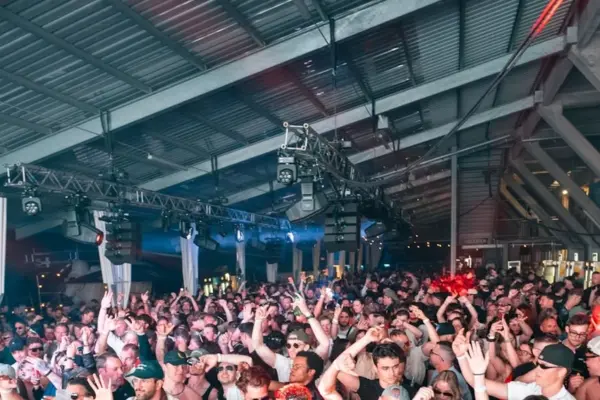
Few anthems define the sonic landscape of UK underground club culture quite like “Go.” Originally released in 2007 at the absolute zenith of the UK Funky movement, the track’s enduring magnetism has effortlessly crossed generations. Today, it is experiencing a massive second life driven by viral digital rediscovery on social media platforms like TikTok, alongside a brand-new live orchestral reimagining that marries classic club beats with sophisticated instrumentation.
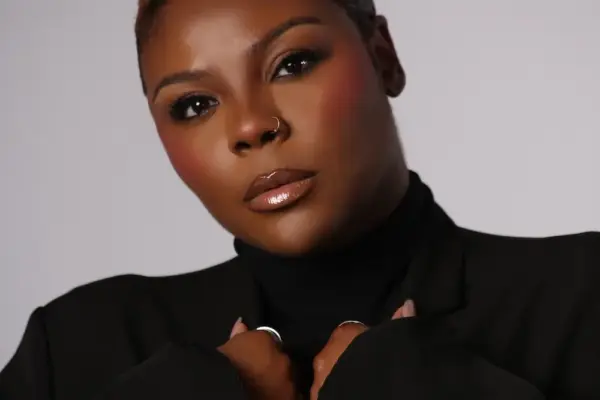
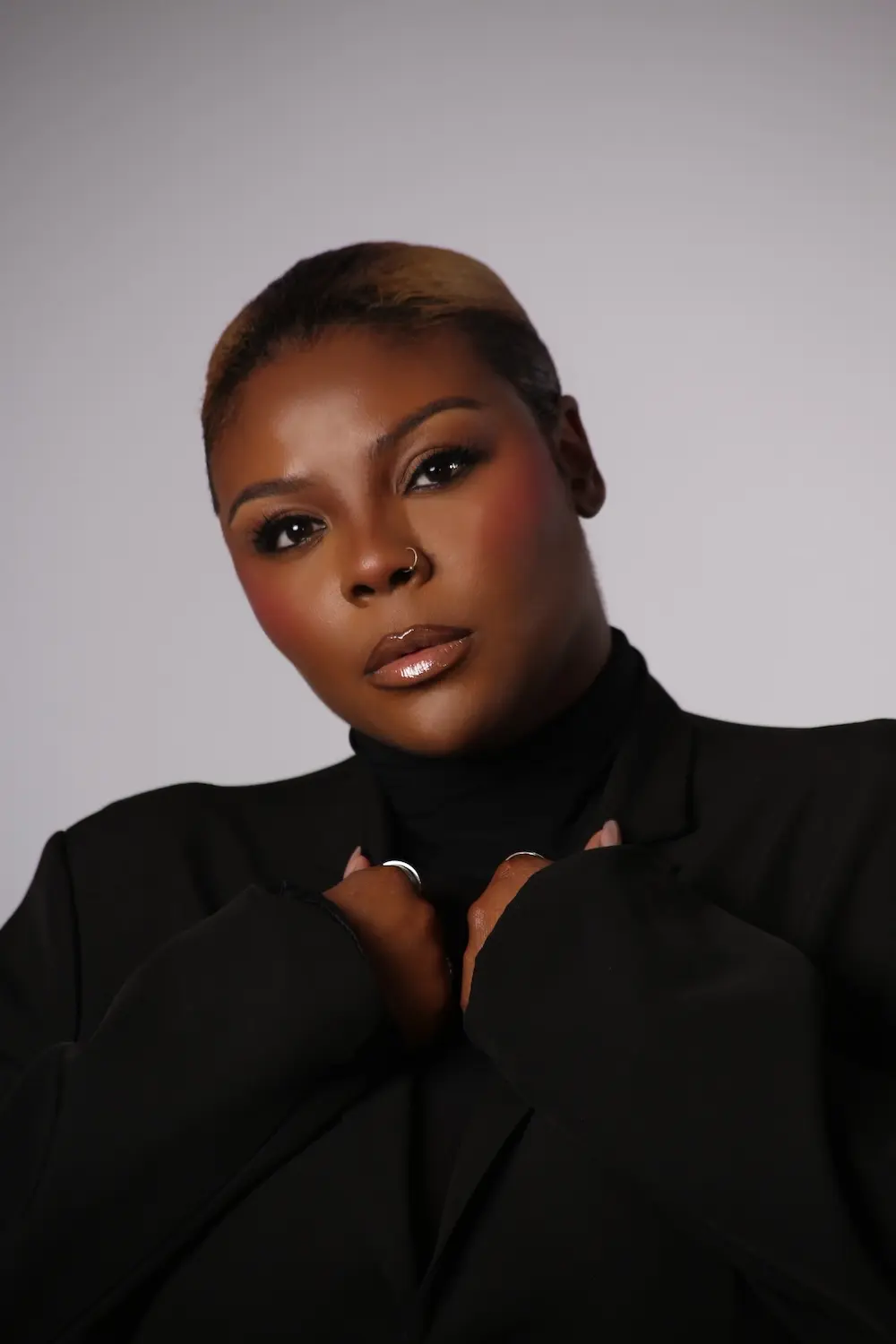
Yet, behind the iconic vocal lines that fueled a generation of ravers is Malika—formerly known professionally as Meleka. As a vocalist, songwriter, and fiercely independent businesswoman, her roots in the UK music scene run extraordinarily deep. Born into a musical dynasty spanning pirate radio operators and Lovers Rock royalty, Malika’s journey is a masterclass in creative patience, industry literacy, and artistic evolution.
From navigating complex contract law as a teenager to retaining 100% ownership of her master recording, she represents a rare and vital bridge between the physical, grassroots era of UK club culture and today’s algorithm-driven digital landscape. VIPER recently caught up with Malika to discuss inheriting a rich cultural language, the true definition of legacy, and why, after nearly two decades in the spotlight, she feels she is only just getting started.
Detailed Chronology: From Pirate Radio to Viral Renaissance
To understand the weight of Malika’s modern-day resurgence, one must look back at the ecosystem that birthed her. Long before streaming services and digital algorithms dictated musical trends, the UK underground was built on sweat, vinyl records, physical distribution, and radio waves broadcast from hidden rooftop towers.
Rooted in Sound
Malika’s relationship with music predates her own professional career. Born into a family deeply embedded in London’s sound-system and broadcast heritage, her father ran Time Radio in North West London, while her aunt, Sonia Ferguson, recorded seminal Lovers Rock music. Growing up in a household where art and broadcasting intersected meant that music was not merely an extracurricular hobby; it was an innate cultural language.
When asked whether she felt she chose music or simply inherited it, Malika is characteristically candid: "100%, I inherited it. There was no choice; I had no choice [laughs]."
This lineage provided her with an instinctive understanding of how music moves communities. Her upbringing in Harlesden, Wembley, and Kensal Green was further enriched by a diverse family background. Drawing inspiration not strictly from a single postcode, her sound and worldview were shaped by the blended nature of her family—specifically her grandmothers, one Black Jamaican and one white English from Yorkshire, whose equal love and guidance laid the emotional foundation for her art.
The Rise of UK Funky and the Birth of “Go”
In 2007, the UK Funky movement was beginning to bubble up through clubs, pirate radio stations, specialist DJ sets, and tight-knit urban communities long before the mainstream media fully understood its cultural gravity. Living inside that movement rather than discovering it retrospectively, Malika witnessed firsthand the birth of a genre that many music historians still mischaracterize.
Reflecting on the history of UK Funky today, Malika points out a critical misconception regarding its trajectory:
"I think the misconception is partly in the idea of it being ‘mainstream.’ Funky has always lived in a space of penetrating the masses without ever fully crossing the line into a mainstream ecosystem the way Grime or Garage did. There are maybe five core Funky songs that everybody knows, but even within this resurgence, there are so many tracks. The misconception is that Funky ‘made it,’ but it really hasn’t had its full moment yet."
The physical realities of promoting “Go” during its initial release required relentless legwork. Malika traveled across the country, building direct relationships with DJs, radio programmers, and live audiences, handing out physical compact discs and building momentum from the ground up.
Supporting Context & Metrics: The Physical vs. Digital Paradigm
Seventeen years after its initial underground coronation, “Go” has found a completely new lease on life. Its second life has seen the track soar to the top of TikTok charts and consistently pull in upwards of 120,000 daily streams—proving that great songwriting transcends shifting mediums.
The Algorithm and the Pavement
When comparing the grind of the 2000s physical music industry with today’s hyper-accelerated digital age, Malika offers a grounded perspective on how cultural movements are built:
"In my opinion, it’s all the same. The way people discover music now is the same way they discovered it back in the day. You might get hot on pirate radio or in your local area, and then that filters through to other areas. Now, you might get hot on TikTok or Instagram, and it filters through. One is digital and one is physical, but both require you to put boots on the ground and do the work repeatedly—whether handing out CDs back then or posting online now."
This pragmatic view separates artists who rely on fleeting viral moments from legacy creators who understand how to sustain momentum.
The Paradox of Ownership
Because Malika owns 100% of the master recording for “Go,” she occupies a unique position in the modern music economy. While the song belongs emotionally to the culture and the thousands of ravers who adopted it as their anthem, legally it remains firmly in her hands.
Discussing the lessons learned over nearly two decades, Malika notes:
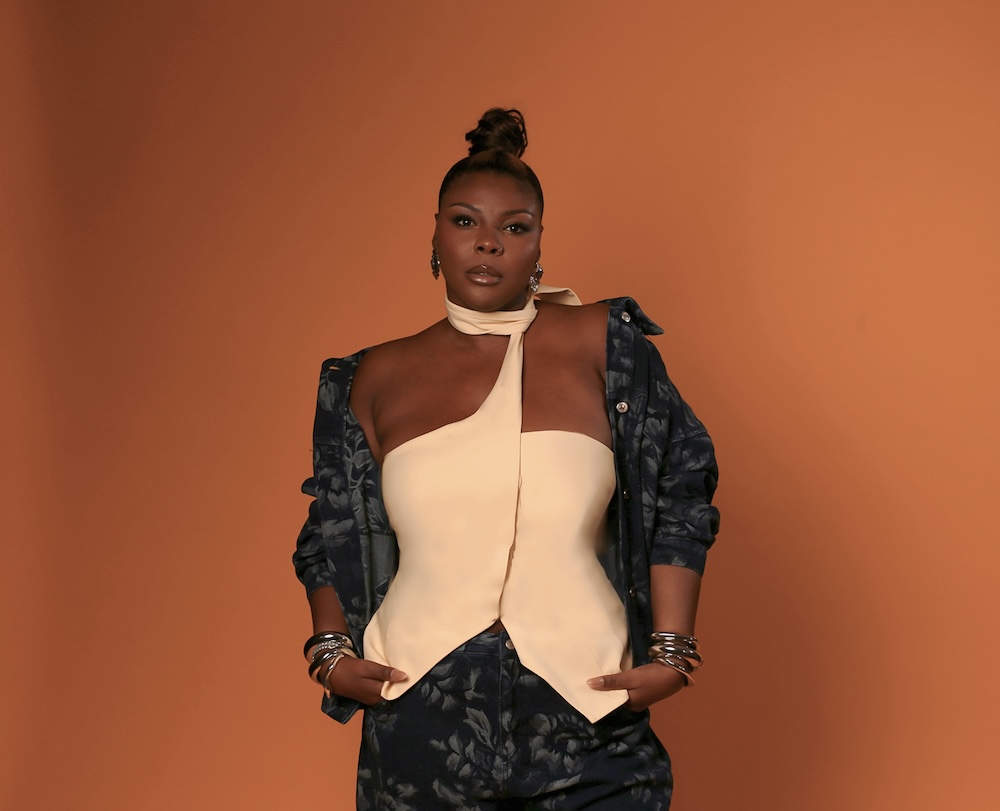
"What I’ve learned is that my personal experience of ‘Go’ and Funky House isn’t the important part. The only thing that really matters is that because I own it 100%, I have 100% of the responsibility to honour how important it is to everybody else. The journey of ‘Go’ hasn’t been simple, but it taught me that I’m just a conduit for the song for everybody else."
Industry Literacy and Business Acumen
Many talented vocalists fall victim to predatory recording contracts and publishing deals early in their careers due to a lack of industry literacy. Malika, however, armed herself with knowledge long before stepping into a professional recording booth.
Growing up with a father who had her register with the PRS (Performing Right Society) and PPL at just 13 years old planted the seeds of ownership early. She later formalized this education by studying Music and Media Management at university, where contract law was part of the core curriculum.
"I grew up in music, so my brain has always been focused on business; I just happened to have a really good voice. Everything worked in tandem. I went to university, studied Music and Media Management, and got my degree. While studying, we covered contract law, so before I had even released anything, I understood its importance."
Official Statements & Personal Evolution
From Meleka to Malika
For long-term followers of the UK underground, the artist was initially known under the moniker Meleka. The subsequent transition to her birth name, Malika, was more than just a cosmetic spelling change—it was a psychological evolution.
"When I first came out, I was doing more writing and behind-the-scenes work, so I used a pseudonym (spelling it with an ‘e’ and an ‘i’). When I became more of a solo artist, I wanted to return to the real spelling of my name, which confused people! But younger Meleka had to learn patience in a way I didn’t have back then. There are things I navigate now that I couldn’t have done at 20 when ‘Go’ first came out. Patience is understanding that everything happens in its own time."
Honoring the Past Without Nostalgia’s Trap
With the release of the new live orchestral reimagining—which brings together arrangers, a house gospel choir, and subtle nods to Afrobeats and live musicianship—Malika avoids falling into the trap of creative stagnation. When asked how she honors the woman who originally recorded the track 17 years ago, she firmly rejects the premise:
"I don’t feel I need to ‘honour’ her, because she was simply the foundation for the woman I am now in so many ways."
Future Outlook: Legacy, Wisdom, and the Road Ahead
As Malika looks back on a career defined by resilience, legal autonomy, and artistic integrity, her definition of success has evolved profoundly.
"Success means different things to different people and changes over time. For a long time, I felt like a failure, and only recently have I acknowledged that I’ve done successful things. Legacy is a currency you can always trade on; maintaining your reputation and legacy is deeply important."
"As for ownership, 100% of nothing is still nothing. It’s about knowing when to hold space and when to share space. In business, you have to understand that you sometimes give up a piece of your personal time, image, or creativity to reach the next level. An open hand receives more blessings than a closed one."
Forming the Mindset: The Essential Soundtracks
To understand Malika’s artistic blueprint, one need only look at the three pivotal albums that helped shape her worldview and creative ethos:
- ’No More Drama’ by Mary J. Blige – Representing pain, resilience, and the universal fight-or-flight human response.
- ’Voyage to India’ by India.Arie – Embodying peace, spiritual alignment, and trust.
- ’Stripped’ by Christina Aguilera – Serving as a masterclass in raw female empowerment and absolute self-ownership.
Transcendence and What Lies Ahead
Far from resting on the laurels of her underground classic or enjoying a quiet victory lap, Malika insists that her journey is only just beginning. Equipped with a deep understanding of music law, undeniable vocal talent, and an unbroken connection to the roots of UK club culture, she is setting her sights on the horizon.
When asked whether she feels she is still transcending boundaries, her answer is emphatic:
"For sure, I haven’t even fully started yet! I’m only just getting off the ground."
Keep up with Malika’s latest movements and upcoming projects via Instagram at @malikaofficially.