Executive Overview
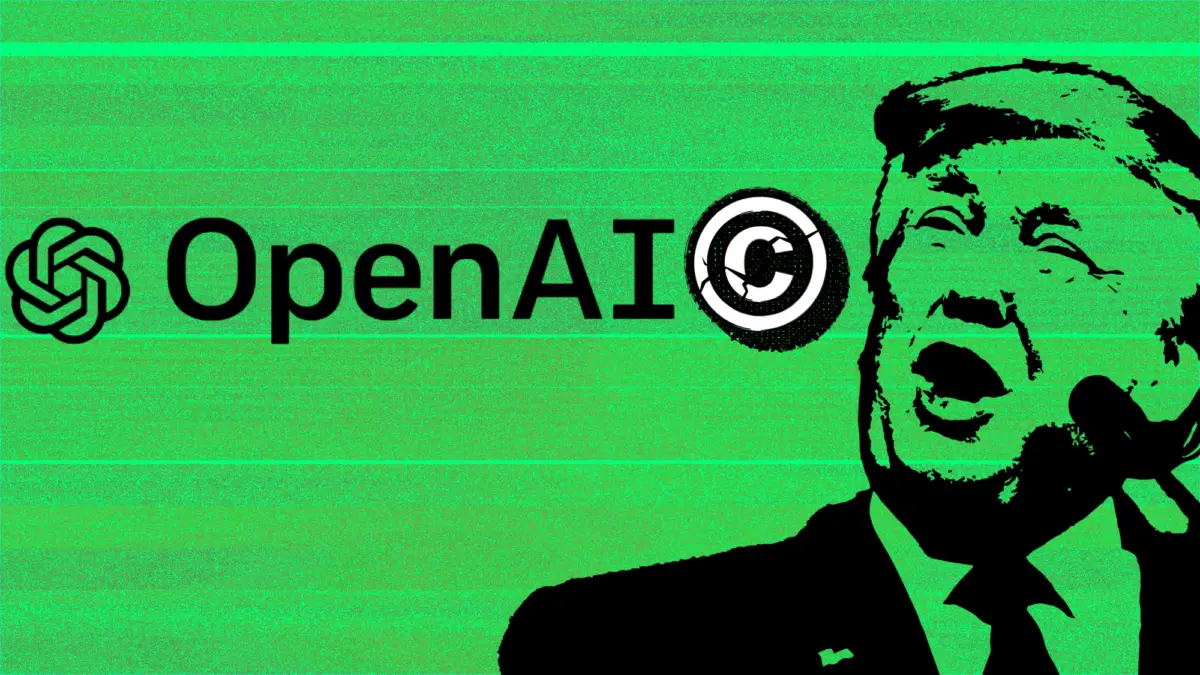
In a decisive and high-stakes legal intervention, the United States Department of Justice (DoJ) has formally weighed in on the ongoing high-profile copyright litigation involving OpenAI and The New York Times. In a filing submitted to a New York federal court, the federal government asserted that training artificial intelligence (AI) models on copyrighted works firmly constitutes "fair use" under United States copyright law.
This robust intervention marks a critical turning point in the broader legal war between Big Tech and the global creative industries. By aligning itself with OpenAI’s legal defense, the Trump administration’s DoJ has signaled a definitive policy preference: that constraining the rapid evolution of generative artificial intelligence through restrictive interpretations of intellectual property law would severely damage American economic competitiveness, technological hegemony, and scientific innovation.
The lawsuit, spearheaded by The New York Times alongside a coalition of authors, publishers, and creators, contends that OpenAI committed massive, systematic copyright infringement by ingesting millions of copyrighted articles, books, and creative works without permission or financial compensation to train its industry-leading large language models (LLMs). However, the DoJ’s legal brief argues that narrowing the doctrine of fair use to exclude AI training would be fundamentally incompatible with foundational constitutional principles designed to promote the "progress of science and useful arts."
If the courts ultimately adopt the perspective championed by the DoJ, it could effectively shut down dozens of active lawsuits filed by major record labels, music publishers, independent musicians, visual artists, and literary giants. Conversely, a rejection of the fair use defense could expose AI developers to astronomical financial liabilities—running into the billions or even trillions of dollars—forcing a complete restructuring of the generative AI economy through compulsory, multi-billion-dollar licensing regimes.
Detailed Chronology and Legal Context
The Genesis of the Contentious Litigation
The legal clash between generative AI developers and traditional media entities has been brewing since the commercial explosion of tools like OpenAI’s ChatGPT. As AI models demonstrated an uncanny ability to synthesize, analyze, and generate human-like prose, music, code, and imagery, creators quickly realized that these capabilities were built upon vast, uncompensated datasets containing decades of proprietary human labor.
In late 2023 and throughout 2024, a wave of class-action lawsuits hit federal courts. Prominent authors, including George R.R. Martin, John Grisham, and Jonathan Franzen, sued tech companies alleging unauthorized scraping and ingestion of their copyrighted books. Simultaneously, music publishers and major record labels began organizing legal strategies to combat the unpermitted use of copyrighted sound recordings, musical compositions, and lyrics in training audio-generation models.
The flashpoint arrived when The New York Times filed a landmark lawsuit against OpenAI and its primary financial backer, Microsoft. The newspaper alleged that the tech giants used millions of its articles to train models that now directly compete with the publication by providing readers with synthesized news summaries, thereby eroding subscription models, web traffic, and advertising revenue.
The Evolution of the Fair Use Defense in AI Cases
To counter these allegations, AI companies have heavily relied on the legal doctrine of "fair use," a flexible statutory provision in US copyright law (17 U.S.C. § 107) that permits the unlicensed use of copyright-protected works in certain circumstances, such as criticism, comment, news reporting, teaching, scholarship, or research.
The defense has yielded mixed yet generally favorable early results for tech platforms. Last year, legal teams representing Meta and Anthropic successfully deployed fair use defenses to defeat similar copyright infringement claims brought by book authors in federal courts.
However, these victories have come with judicial caveats. In the Meta case, U.S. District Judge Vincent Chhabri accepted the fair use defense but explicitly noted that the plaintiffs’ arguments could have succeeded had they presented stronger evidence regarding "market dilution"—specifically, how the mass generation of AI content could depress the overall market value of the original human-created works.
The DoJ Steps In: A Shift Under the Trump Administration
While previous officials within the executive branch maintained a relatively hands-off approach—insisting that complex intellectual property questions should be left strictly to the judiciary—the current DoJ intervention removes any ambiguity regarding the government’s stance.
The DoJ’s lawyers did not merely offer a neutral legal analysis; they actively championed OpenAI’s core economic and technological arguments. They cautioned that a legal ruling against OpenAI would establish a chilling precedent, threatening to cripple American leadership in artificial intelligence at a moment of intense geopolitical rivalry, particularly with nations like China.
Supporting Context, Economic Metrics, and Industry Implications
The Economic Divide: Monopolization vs. Democratization
One of the most compelling and politically resonant arguments advanced by the DoJ centers on market structure and economic accessibility. The federal government warned the New York court that forcing AI developers to negotiate and secure individual licenses for every piece of training data would erect insurmountable entry barriers, ultimately harming market competition and independent creators alike.
According to the DoJ’s filing:
- Consolidation of Power: Only the largest, best-capitalized technology monopolies possess the vast financial resources required to navigate and pay for comprehensive licensing agreements across billions of data points. Smaller startups and open-source developers would be choked out of the market.
- Distortion of Creative Compensation: Mandatory licensing regimes would disproportionately enrich legacy media conglomerates and massive publishing houses simply due to the sheer volume of their archived written publications, leaving independent journalists, niche authors, and smaller creative outfits with negligible financial returns.
The Staggering Financial Stakes
The financial implications of these lawsuits cannot be overstated. Under United States copyright law, statutory damages can accumulate rapidly based on the number of individual works infringed. If AI companies are ultimately stripped of their fair use protections, they could face collective liabilities totaling billions, or even trillions, of dollars.
Faced with this existential financial sword of Damocles, several forward-thinking AI companies have already begun proactively hedging their bets. OpenAI, Google, and other major players have quietly negotiated multi-million-dollar content-licensing partnerships with select media giants, including Axel Springer, News Corp, Reddit, and various archival agencies. These deals secure legal safe harbors for current training datasets while simultaneously locking smaller competitors out of premium, verified training pipelines.
Official Statements and Judicial Arguments
The Department of Justice’s Core Position
The DoJ’s legal brief systematically dismantled the arguments put forward by The New York Times, characterizing the newspaper’s legal strategy as a self-interested attempt to distort established copyright law.
"The New York Times seeks to narrow fair use doctrine to exclude the training of OpenAI’s models," wrote lawyers from the Department of Justice in their court submission. Doing so, they emphasized, "would be inconsistent with basic copyright law principles" and would "severely hamper" the constitutional objective of promoting the "progress of science and useful arts."
Furthermore, the government’s filing warned of broader macroeconomic fallout:
"Constraining the development of generative AI models via a misunderstanding of fair use doctrine would thwart creative and scientific progress while hindering American prosperity and economic mobility."
The Battle Over "Market Dilution"
A central pillar of the plaintiffs’ legal strategy—following the roadmap laid out in previous judicial rulings like the Meta litigation—focuses on the concept of market dilution. Under standard fair use analysis, courts evaluate whether an unauthorized secondary use acts as a market substitute that devalues or supersedes the original work. For instance, creating an unauthorized commercial remix of a hit song directly competes with and cannibalizes the market value of the original recording, disqualifying it from fair use protection.
In the context of generative AI, plaintiffs argue that models trained on vast archives of journalism or literature can generate outputs that satisfy user queries precisely where those users might otherwise have visited The New York Times or purchased a copyrighted book.
Judge Vincent Chhabri previously noted in the Meta proceedings that market dilution could theoretically occur if AI-generated outputs compete broadly with the entire category of works upon which the model was trained—such as AI-generated texts cannibalizing the book market, or AI-generated music diluting the finite royalty pools distributed by streaming services like Spotify.
However, the DoJ strongly rejected this expansive definition of market dilution in its letter to the court, setting a rigorous standard that plaintiffs must meet to defeat fair use:
- Direct Substitution Required: The DoJ insisted that to prove market harm, The New York Times must demonstrate that OpenAI’s actual outputs provide "a competing substitute" and "significant substitutive competition" for the newspaper’s specific journalistic articles.
- Genre is Uncopyrightable: The government argued that as long as OpenAI’s outputs do not directly copy protected elements of the newspaper’s text, they cannot be deemed legally harmful simply because they happen to operate "in the same genre or category of works" as the original. The brief noted that "a genre is an uncopyrightable idea or method of expression."
Future Outlook and Industry Horizons
What This Means for the Creative Industries
While the DoJ’s forceful intervention provides immense comfort to OpenAI and the broader tech sector, it strikes an alarming chord across the creative and cultural landscape. For authors, visual artists, journalists, and particularly the music industry, the prospect of the federal government siding with unlicensed data scraping signals an uphill legal battle.
Music industry stakeholders are watching these developments with acute anxiety. Although legal arguments regarding text-based AI models have leaned heavily on fair use doctrines surrounding transformative data analysis, audio and compositional copyright presents distinct legal challenges. Sound recordings involve complex statutory rights, master ownership, publishing splits, and strict synchronization rules that do not always align neatly with the legal frameworks governing literary works.
However, the psychological and political weight of a DoJ filing supporting fair use cannot be easily dismissed by presiding judges, regardless of the artistic medium in question.
The Road Ahead in the Courts
As the New York court digests the DoJ’s submission, all eyes remain fixed on the judicial branch to determine whether it will bow to executive branch policy arguments regarding national economic competitiveness or carve out robust protections for human creators.
If the courts ultimately rule that AI training is protected fair use, generative AI developers will secure unfettered access to global data repositories, cementing an era of rapid technological acceleration. If, conversely, the judiciary sides with The New York Times and creator syndicates, the artificial intelligence industry will face a radical reckoning—one requiring mandatory collective licensing, retrospective damage settlements, and a fundamental redesign of how machine learning models acquire knowledge.
Regardless of the final verdict, the DoJ’s intervention has irrevocably transformed the legal battlefield, ensuring that the future of artificial intelligence will be forged at the intersection of constitutional law, national economic policy, and the fundamental value of human creativity.