Executive Overview
For millennia, the morning after a night of heavy indulgence has arrived bearing a familiar, punishing cocktail of physical wretchedness and psychological torment. Whether it is a throbbing headache, acute nausea, the sting of self-loathing, or the heavy weight of regret, the hangover remains one of humanity’s most democratizing afflictions. In the modern era, this misery has evolved: foggy memories of uninhibited behavior are frequently immortalized by smartphones and uploaded to the digital ether, permanently preserving moments of intoxication for public judgment and compounding the psychological toll.
Yet, the best advice for a hangover remains as frustratingly simplistic as it was centuries ago: drink less alcohol in the first place.
Far from being a modern phenomenon, heavy drinking and its punishing aftermath are etched deeply into human history, literature, and religion. From the philosophical symposia of ancient Greece and the mythological excesses of Dionysian cults to the cautionary tales of Biblical patriarchs and the raucous, ale-soaked taverns of medieval Europe, societies have long wrestled with the duality of alcohol. It has simultaneously served as a bridge to transcendence, a status symbol, a social lubricant, and a fast track to moral and physical ruin.
This deep-dive investigation explores the long cultural pedigree of drinking to excess, how classical and medieval civilizations attempted to mitigate the fallout, what modern science says about finding a reliable cure, and why the metaphysical agony of the hangover may ultimately demand psychological expiation rather than a quick pharmaceutical fix.
Detailed Chronology: A History of Intoxication and Its Aftermath
To understand the modern hangover, one must trace the historical trajectory of how humanity has consumed—and suffered from—alcohol across different epochs.
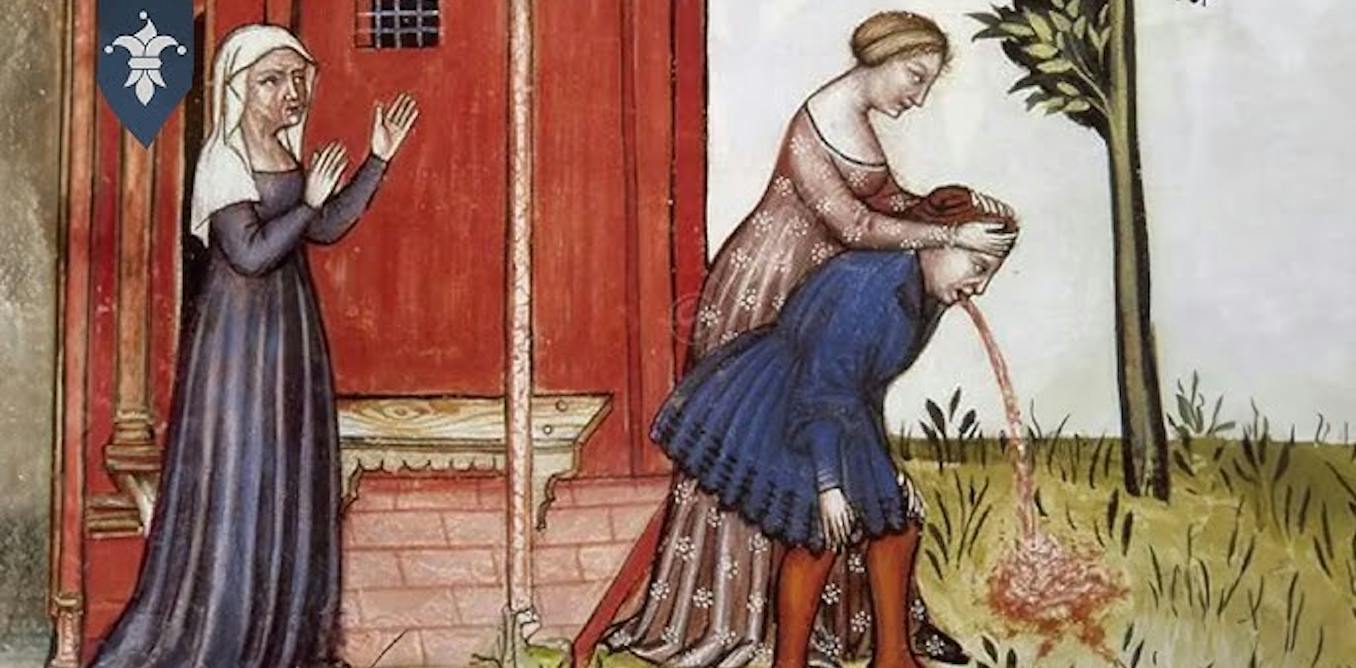
Antiquity: Philosophy, Cults, and Diluted Wine
Drinking to excess is hardly a recent invention. In Plato’s Symposium, written circa 385–370 BC, guests gather for a drinking party intended to explore the philosophical nature of love. The text contrasts the disruptive, sloppy drunkenness of the gatecrasher Alcibiades with the legendary capacity of Socrates, who could drink everyone under the table while remaining entirely sober and avoiding a hangover altogether.
For worshippers of the Greek god of wine, Dionysus, intoxication was viewed very differently: not as a social misstep, but as a mystical pathway to transcendence. In Orphic Hymn 29—part of an ancient collection of hymns attributed to the mythical poet Orpheus—followers called upon Dionysus to "give me in blameless plenty to rejoice."
However, ancient Greeks and Romans held strict cultural taboos regarding how wine was consumed. Drinking wine undiluted (akratos) was viewed as a dangerous, barbaric practice fit only for outsiders. The ancient historian Herodotus chronicled how Cleomenes I, the king of Sparta, allegedly went mad after drinking undiluted wine with the Scythians—fearful, nomadic warrior tribes originating from ancient Siberia.
Biblical Cautionary Tales
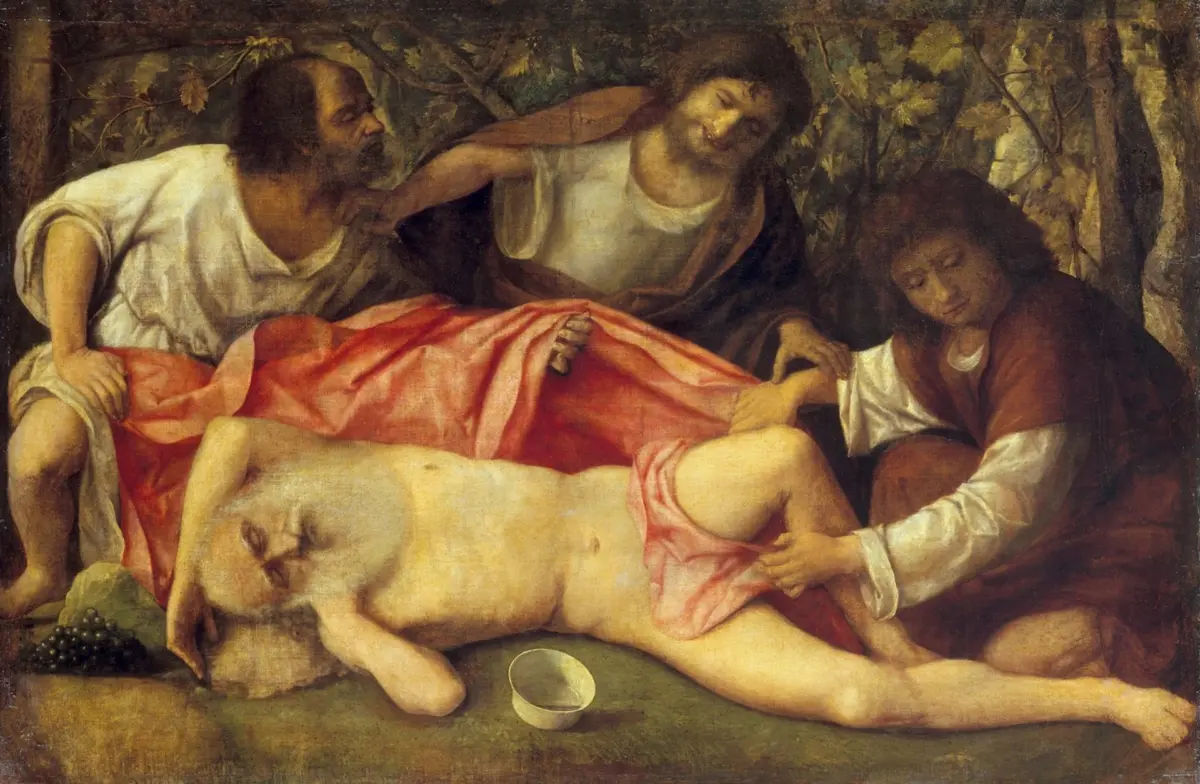
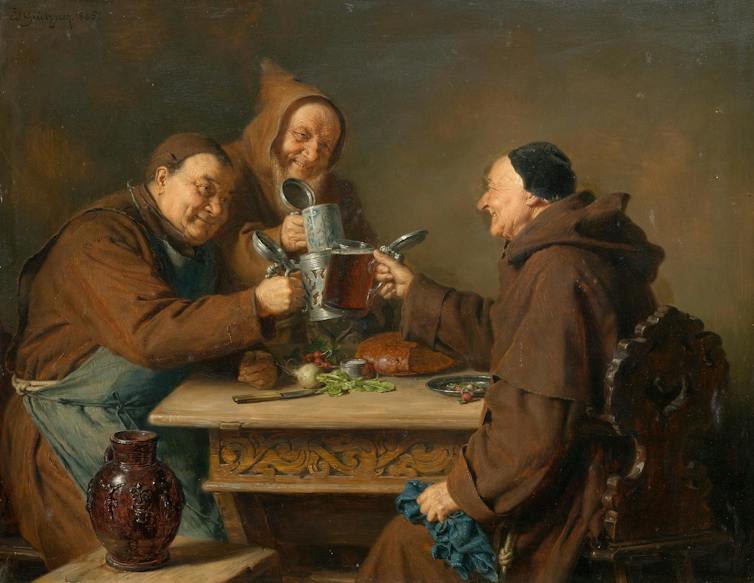
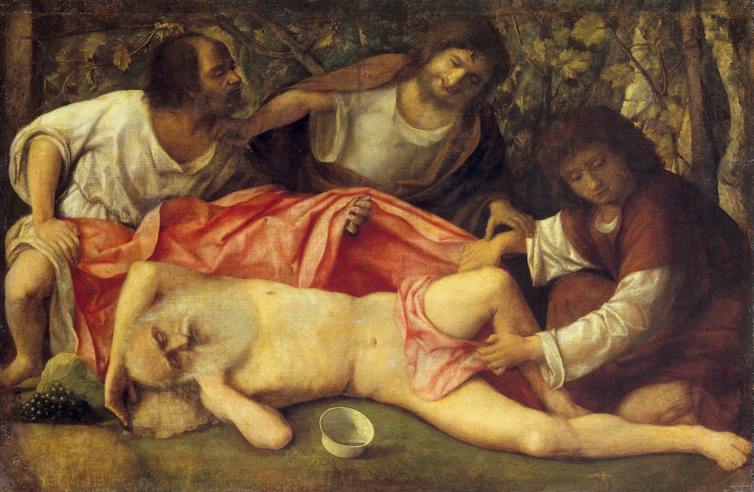
Religious texts from the ancient Near East also grappled with the perils of overindulgence. In the Book of Genesis, Noah plants a vineyard after surviving the great flood, drinks deeply of its wine, and falls into a helpless, naked stupor inside his tent. His son Ham discovers him and reports the sight to his brothers, Shem and Japhet, who respectfully cover their father without looking upon his nakedness.
When Noah awakens and realizes what transpired, his reaction is swift and severe: he curses Ham’s offspring. Biblical scholars have debated for centuries over the exact nature of Ham’s transgression, interpreting it variously as voyeurism, castration, or incestuous rape. Researchers John Sietze Bergsma and Scott Walker Hahn argue that the act constituted maternal incest, noting that biblical references to uncovering a father’s nakedness are synonymous with that of the mother.
Similarly, later in Genesis, Lot becomes so intoxicated by his daughters on consecutive nights that they conceive children without his conscious knowledge. While neither Genesis account explicitly mentions whether Noah or Lot suffered from physical hangovers, Noah’s sudden, irascible rage strongly hints at the irritable psychological aftermath familiar to any modern drinker.
Medieval Europe and the Ale-House of Iniquity
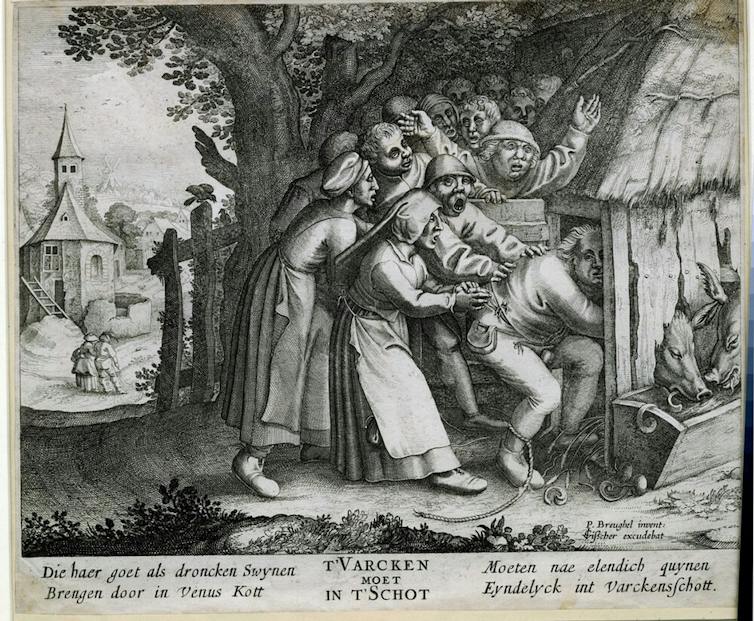
As Christianity took root, it maintained the classical endorsement of moderate drinking while categorizing the loss of control through drunkenness as the mortal sin of gluttony. Until the Reformation, wine held a sacred and elevated status in medieval Europe and Britain. Transformed into the blood of Christ during the Eucharist, wine was also a clear marker of secular rank and wealth. Only the elite could afford to drink wine to excess.
Conversely, the working classes turned to cheaper tipples: strong beer and ale. Authorities of the period quickly blamed these beverages for anti-social behavior and public disorder. In medieval and early modern England, the local ale-house was widely viewed as a den of sin and temptation.
This sentiment is vividly captured in William Langland’s 14th-century allegorical poem, Piers Plowman. In the text, a personification of the character Gluttony is notoriously waylaid on his way to church by Betty the Brewster, leading to a catastrophic session of overindulgence.
By the 16th century, early modern medical guides began documenting the precise somatic toll of such behavior. In his pioneering 1547 health manual, A Compendious Regiment, or A Dietary of Health, physician Andrew Boorde described the miserable mechanics of drunkenness:
"the wits or senses be dull… the appetite is withdrawn; the head is light, and doth ache."
Boorde was likely describing the aftermath of consuming too much beer or ale, referencing the "malt worm"—a term that simultaneously described the weevils infesting malt used in brewing and a colloquialism for a chronic, heavy drinker whose head felt as though "all the world runneth round about on wheels."
Supporting Context & Metrics: Ancient Remedies vs. Modern Science
Faced with pounding heads and churning stomachs, our ancestors spent centuries seeking ways to prevent or alleviate the morning-after misery.
Historical Prevention and Cures
Both classical writers and Renaissance medical authors focused heavily on prevention rather than cure. Boorde and his contemporaries recommended following ancient advice by consuming specific foods prior to a night of drinking. Ingesting almonds, cabbage, baked quinces, wormwood (an early relative of absinthe), and even the lungs of a goat were believed to protect the body from alcohol’s worst effects.
When prevention failed, early modern dietary guides suggested moderate exercise—specifically walking—and prolonged sleep. Purging through vomiting was reserved as an absolute last resort. Interestingly, medieval writers also praised cloves as a powerful restorative capable of soothing a troubled stomach.
What Does Modern Science Say?
Centuries later, humanity’s search for a silver bullet continues. A landmark systematic review published in the journal Addiction evaluated various purported hangover remedies and highlighted three substances that "merit further study":
- Tolfenamic acid (an anti-inflammatory drug)
- Pyritinol (a vitamin B6 derivative)
- Clove extract
However, the study’s authors emphasized that these findings were based on "very low quality evidence," underscoring that science has yet to validate a foolproof, universally effective medical cure.
This reality supports a sobering philosophical premise: attempting to "cure" a hangover implies that one can cleanly undo the biological and neurological trauma self-inflicted upon the body and mind during a bout of heavy drinking.
Official Perspectives and Literary Insights
To truly grasp the duality of the hangover, one must look beyond biochemistry and examine its psychological weight. In his celebrated 1972 book On Drink, British author Kingsley Amis devoted an entire chapter to the hangover, brilliantly parsing its dual nature into physical symptoms and "metaphysical" (emotional and psychological) distress.
Amis offered unconventional advice for treating the metaphysical hangover, advocating for specific forms of "hangover reading" and "hangover listening"—books and music calculated to induce a precise, somber state of mind. He argued that:
"you must feel worse emotionally before you start to feel better."
In Amis’s view, actively experiencing rather than masking the emotional wreckage of a hangover is vital to expiating the "sin" of excessive indulgence. Remarkably, this modern literary perspective echoes the medieval Christian ideal of mortification—the idea that suffering must be endured rather than bypassed to achieve spiritual and moral realignment.
Future Outlook: The Endless Search for Relief
As alcohol consumption remains a deeply entrenched pillar of global social culture, the cultural and scientific fascination with the hangover shows no signs of abating.
From a public health perspective, researchers continue to investigate the neuroinflammatory pathways, dehydration markers, and acetaldehyde toxicity driving hangover symptoms, hoping to develop targeted therapeutics. Yet, as clinical trials repeatedly demonstrate, the complexity of the human central nervous system resists simplistic pharmacological shortcuts.
Ultimately, whether viewed through the lens of Plato’s symposia, Biblical warnings, or Kingsley Amis’s metaphysical musings, the hangover remains an unyielding anchor. It serves as a stark, visceral reminder of human limits—forcing us to pay a physical and psychological tax for the temporary suspension of our inhibitions. Until science breakthroughs with an infallible remedy, humanity will likely continue to rely on the oldest strategy in the book: prevention, moderation, and a quiet, penitent morning of enduring the storm.