Executive Overview
Georgia Oakley’s cinematic adaptation of Jane Austen’s classic 1811 novel, Sense and Sensibility, immediately entrances the viewer with its breathtaking visual palette. Spanning expansive pastoral landscapes, windswept rocky seascapes, and meticulously dressed architectural gems like the overgrown stone steps of Norland House Park, the film’s atmospheric world-building is undeniably rich. Starring Daisy Edgar-Jones as Elinor Dashwood and Esmé Creed-Miles as Marianne Dashwood, alongside a stellar supporting cast including George MacKay and Frank Dillane, the production effortlessly conjures the verdant visual texture of late 18th-century England.
However, beneath the picturesque cinematography, tactile costuming, and evocative soundscapes lies a persistent tension between cinematic creative license and the unyielding social realities of the Georgian era. Oakley’s adaptation leans heavily into contemporary aesthetic sensibilities, particularly in its character styling and choreography. By subverting historical standards of physical deportment—manifested most notably in the unpinned hair of the Dashwood sisters and avant-garde dance sequences that borrow more from modern musical theatre than Regency-era assembly rooms—the film occasionally shatters its own carefully constructed illusion.
This analytical review explores how the film’s departure from historical social codes, particularly regarding dance and bodily comportment, undermines the rigid hierarchy that dictated courtship and survival in Austen’s world. While the production succeeds brilliantly as a visual and emotional feast, its anachronistic choreography highlights a recurring dilemma in period drama adaptations: the friction between authentic historical utility and modern narrative expression.
Detailed Chronology
To understand the weight of these historical transgressions, one must trace the structural progression of how social codes governed the lives of Austen’s characters, both in literature and in Oakley’s cinematic timeline.
1. The Visual Economy of the Georgian Gentry
In late-18th-century Britain, social hierarchy was not merely a matter of lineage or bank accounts; it was a physical performance. Ideals of politeness, civility, and decorum dictated every facet of behavior, grooming, and dress among the gentry and nobility. Taste, status, and wealth were perpetually assessed through material culture—the cut of a waistcoat, the quality of silk, and the precise control of the body.
Hair, as an immediate marker of personal discipline, was subject to stringent social expectations. In Oakley’s adaptation, Marianne Dashwood’s unkempt, stringy locks and Elinor’s soft, loose waves serve as convenient visual metaphors for their contrasting internal states—Marianne’s unbridled passion versus Elinor’s emotional restraint. Historically, however, such loose hairstyles would have violated basic standards of grooming. Regardless of character disposition, women of their social standing were expected to have their hair pinned up daily. The cinematic choice to let hair run wild serves emotional storytelling at the expense of period accuracy.
2. The Rise and Fall of the "Hop"
The film’s historical departures crystallize in its dance sequences, which pivot away from Georgian accuracy to chase modern emotional resonance. In Austen’s original text, the concept of a "hop" occupies a very specific, transgressive space.
- Literary Context: In the novel, Sir John Middleton—the Dashwoods’ affable distant relative, played by Turlough Convery in the film—mentions to an excited Marianne that her love interest, Mr. Willoughby (Frank Dillane), is a passionate dancer who once attended "a little hop in the park" where he danced continuously from eight o’clock until four in the morning.
- Social Stigma: In Georgian England, country dances and formal balls were the acceptable playgrounds of the middling and upper ranks. Conversely, informal "hops" were traditionally relegated to the "meaner sorts." The physical act of hopping directly contradicted the controlled, graceful tenets of civility. For a gentleman of property like Willoughby to engage in a hop from dusk till dawn would have raised significant red flags regarding his adherence to polite society.
3. The Ballroom Disconnect
The film features two primary dance sequences: an exuberant rural gathering and a grand London ballroom scene.
In the London sequence, Elinor finds herself dancing with Edward Ferrars (George MacKay). In Georgian society, the formal ball was the ultimate arena for embodied politeness. Serpentine lines, precise footwork, and measured eye contact served as physical proxies for moral character and compatibility.
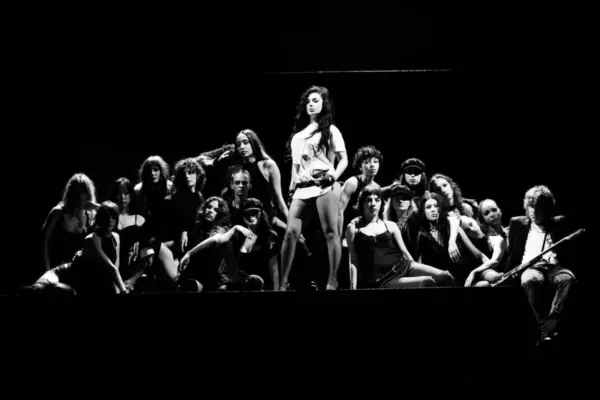
Instead of employing traditional Regency steps, Oakley’s choreography—overseen by movement director Holly Blakey—introduces exaggerated sweeping arms, acrobatic lifts, and over-arched backbends. While visually striking, these modern interpretive movements pull the audience directly out of the candlelit 1790s and drop them squarely into the 21st century.
Supporting Context & Metrics
To contextualize the cultural weight of dance and physical comportment in the Georgian era, historians and dance ethnographers rely on contemporary manuals, etiquette guides, and literary records.
| Element of Georgian Society | Historical Reality & Social Function | Cinematic Depiction in Sense and Sensibility (2025) |
|---|---|---|
| Childhood Training | Girls and boys took lessons from an early age to master posture, formations, and footwork. | Assumed as background, but characters demonstrate modern kinetic fluidity without traditional foundational rigidity. |
| Social Stratification | Formal country dances and balls for the gentry; informal "hops" relegated to the working classes. | Blurs the line; features an energetic "hop" that mimics country dance while adopting contemporary avant-garde movement. |
| Physical Deportment | Grace, ease, and bodily control signaled elite status. Awkwardness signaled inferiority or moral failing. | Prioritizes emotional release and expression through sweeping lifts and dramatic arches over strict kinetic control. |
| Grooming & Hair | Daily pinning and structuring of hair were mandatory for women of the gentry to maintain outward decorum. | Marianne’s hair is left unkempt and stringy to mirror her emotional turbulence; Elinor sports soft, loose waves. |
Dance was not merely recreational; it was a high-stakes filtering mechanism on the marriage market. A lack of bodily comportment signaled ineptitude, meekness, and social failure. By substituting these rigid, highly codified steps with expressive modern choreography, the film alters the functional stakes of the scenes.
Official Statements & Creative Rationales
The deliberate inclusion of contemporary movement styles in period adaptations has sparked significant debate among cultural critics, historians, and the creative teams behind these projects.
Choreographer Holly Blakey, whose avant-garde approach defined the movement language within Oakley’s adaptation, defended her artistic choices in promotional interviews. Explaining her philosophy, Blakey stated that "it was vital that whatever we were doing inside the choreography […] did feel like an expression of how the girls were feeling."
This perspective highlights a fundamental ideological divide in modern filmmaking:
- The Auteurist/Emotional School: Argues that period details must bend to serve contemporary psychological accessibility. If a 21st-century audience is to connect with Marianne’s grief or euphoria, the physical language must speak a modern emotional dialect.
- The Historicist School: Contends that historical fiction loses its distinct flavor when flattened by modern sensibilities. When characters in silk gowns and embroidered waistcoats execute contemporary modern-dance floor-work, the cognitive dissonance threatens to turn historical drama into historical fantasy.
Similar debates have surrounded recent Austen and Regency adaptations across the media landscape:
- Emma. (2020): Noted for its intense, lingering close-ups where Emma Woodhouse and Mr. Knightley lock eyes and fingers during a tense country dance, prioritizing psychological tension while remaining relatively faithful to period dance steps.
- The Other Bennet Sister (TV Continuation): Explored Mary Bennet’s social anxieties by visualizing her mechanical counting of dance steps, underscoring the severe mental arithmetic required to navigate Georgian social spaces.
- Bridgerton (Recent Seasons): Frequently incorporates modern pop string covers and hybridized dance choreography, openly signaling its embrace of anachronism for pop-cultural spectacle.
While Bridgerton wears its historical unorthodoxy proudly as an alt-history fantasy, Sense and Sensibility attempts to occupy a more grounded, naturalistic space—making its modern choreographic interruptions all the more jarring to purists.
Future Outlook
As period dramas continue to evolve in the streaming and cinematic landscape, creators face an ongoing reckoning regarding the balance between historical authenticity and audience engagement.
The success of Georgia Oakley’s Sense and Sensibility proves that audiences still crave the lush, tactile aesthetics of the Georgian era. The film’s gorgeous handling of natural light, costume textures, and emotional pacing establishes a high benchmark for literary adaptations. However, the critical friction generated by its hair styling and avant-garde choreography serves as an instructive lesson for future filmmakers.
Looking ahead, production teams tackling historical source material must weigh the short-term emotional payoff of anachronistic spectacle against the long-term immersion provided by rigid historical fidelity. When physical codes—such as the strict geometry of a Regency ball or the meticulous pinning of a gentry woman’s hair—are treated as narrative obstacles rather than window dressing, they often reveal deep truths about the societies that birthed them. Future adaptations would do well to remember that in Jane Austen’s universe, the tightest corsets and the most regulated steps often generated the most powerful passions precisely because they were contained, not liberated, by convention.