By The Global Industry Desk
Executive Overview
Step onto the exhibition floor of any major contemporary fashion showcase, and you will be met with an intoxicating vision of the future. Mannequins draped in sleek, buttery alternatives to traditional leather—grown not from the hides of cattle, but cultivated meticulously from microscopic fungi, glistening sheets of bacterial cellulose, and repurposed agricultural waste—hint at a sweeping industrial metamorphosis. Trade fairs like Première Vision Paris routinely position these "biofabricated" materials at the absolute vanguard of sustainable design, framing them as the ultimate antidote to the environmentally devastating practices of modern fast fashion.
Yet, walk out of the exhibition hall, bypass the high-concept runways, and open a standard domestic wardrobe. The reality confronting you is starkly, stubbornly familiar. The clothes hanging before you are composed of the very same fibres that have dictated global textile production for decades, if not centuries: conventional cotton, petroleum-derived polyester, sheared wool, and animal leather.
Despite a decade of breathless headlines, multi-million-dollar venture capital injections, and glowing academic accolades, a profound chasm persists between the glittering promises of the laboratory and the commercial reality of the high street.
The standard narrative attributes this disconnect primarily to cost—the assumption that biofabricated textiles are prohibitively expensive novelty items restricted to haute couture collections and avant-garde concept capsules. While affordability remains a hurdle, cost is merely a symptom of a much deeper, systemic malaise. The scientific engine driving material innovation has raced far ahead of the industrial machinery required to process, scale, and integrate these living creations.
To bridge the gap between petri dish and wardrobe, the fashion industry must confront uncomfortable truths regarding supply chain inertia, the unpredictable nature of living systems, and the nuanced reality of environmental life-cycle footprints. The biofabrication revolution is coming, but unlocking its potential requires far more than brilliant science; it demands an entirely redesigned industrial ecosystem.
Detailed Chronology: The Rise, Reality, and Roadmap of Biofabrication
To understand why biofabricated textiles have yet to populate our closets, it is essential to trace the historical and technological trajectory that brought the sector to its current crossroads.
Phase I: The Scientific Awakening (2010–2016)
The modern biofabrication movement emerged from a synthesis of biotechnology, environmental activism, and material science. Early pioneers—such as designer Suzanne Lee, who famously cultured garments from fermented green tea, bacteria, and yeast (known as kombucha leather)—demonstrated that living organisms could be co-opted as miniature manufacturing units.
During this foundational era, academic laboratories and early-stage startups focused heavily on proof-of-concept. Researchers mapped out pathways to bind mycelium (the root structure of fungi) into structural foams and leather-like sheets, and optimized strains of bacteria to secrete pure cellulose. The primary milestone of this period was simple feasibility: proving that textiles could be grown rather than merely woven or spun.
Phase II: The Venture Capital Boom and High-Fashion Validation (2017–2021)
Buoyed by growing consumer anxiety over the fashion industry’s staggering carbon footprint, venture capital flooded the biomaterial sector. Startups partnering with biotechnology firms secured unprecedented funding rounds.
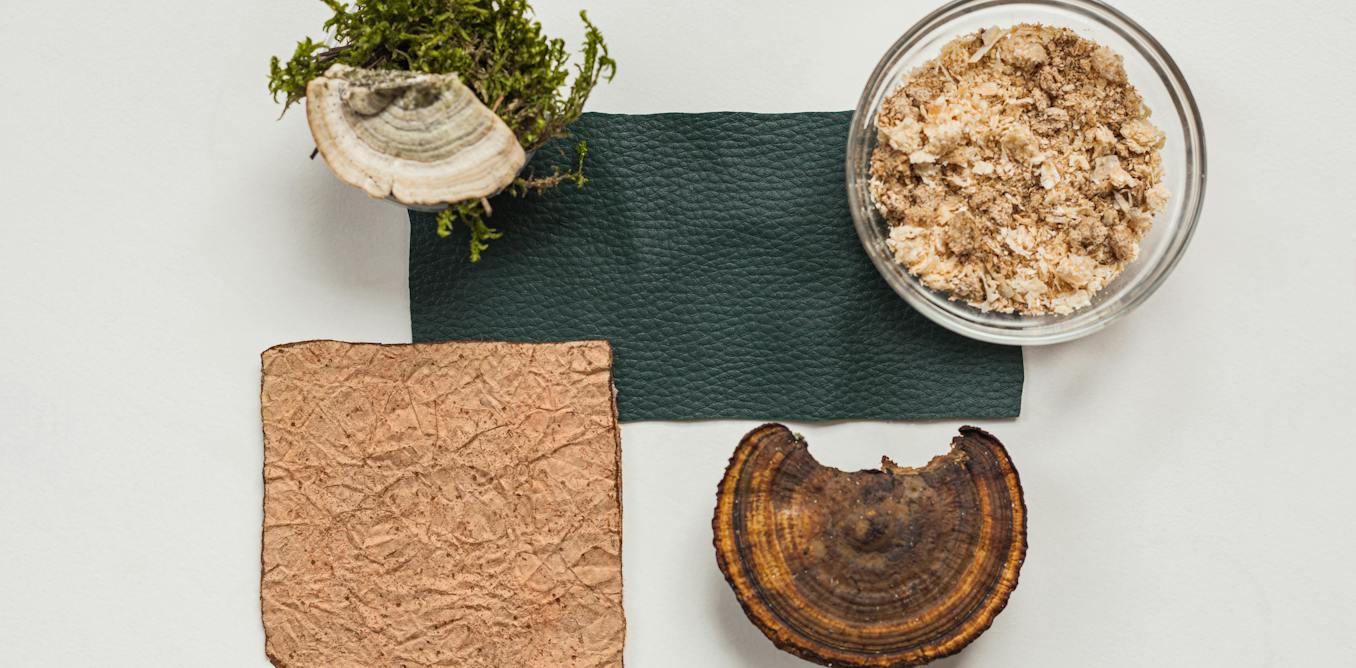
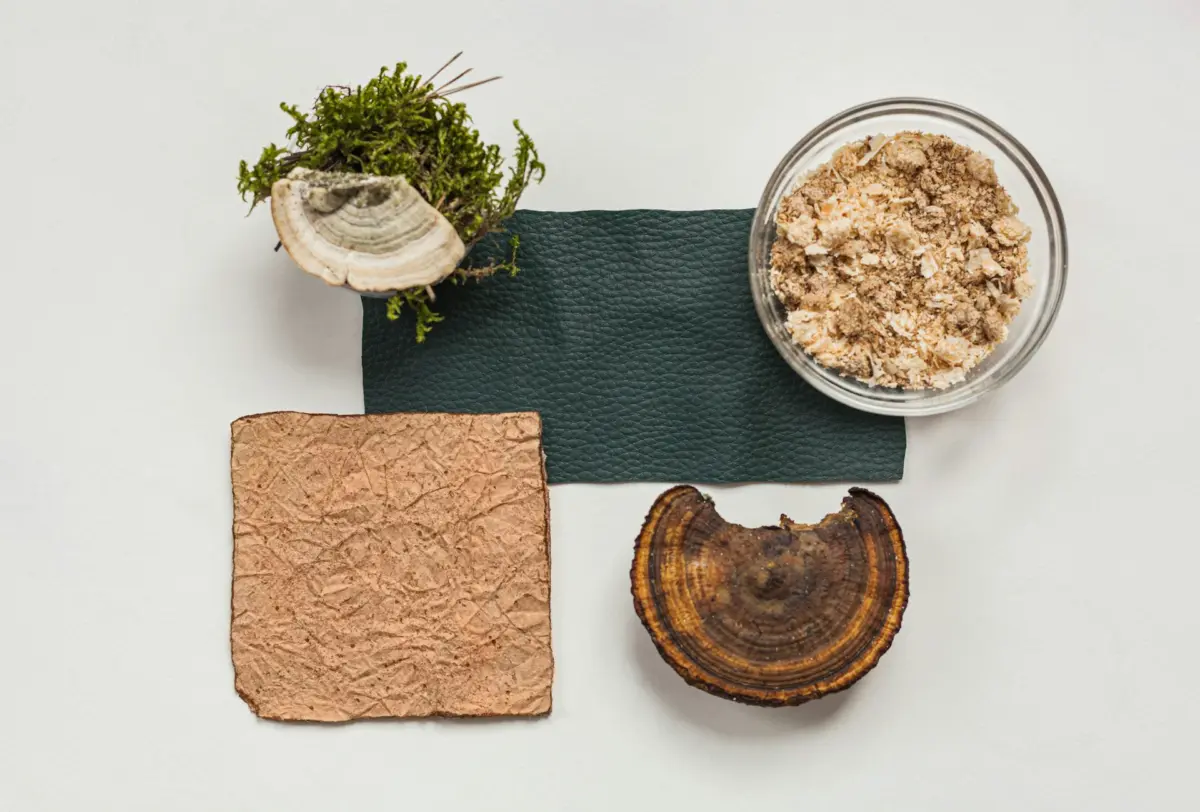
High-profile collaborations followed swiftly. Luxury houses recognized the public relations and environmental value of aligning with next-generation materials. Stella McCartney debuted garments crafted from spider silk proteins and mycelium alternatives; Hermès partnered with MycoWorks to reimagine its iconic Victoria bag using fine-tuned mushroom leather; and brands like Ganni began integrating agricultural waste-derived polymers into commercial accessory lines.
However, these triumphs were largely confined to bespoke capsule collections, red-carpet events, and limited-edition drops. The technology was celebrated as "market-ready," even as manufacturing volumes remained infinitesimal.
Phase III: The Scaling Wall and Market Reckoning (2022–Present)
As these pioneering biotech companies attempted to scale from pilot facilities to industrial production, they hit a metaphorical brick wall. The economic realities of mass manufacturing exposed deep structural incompatibilities between biological growth cycles and linear industrial supply chains.
Concurrently, macroeconomic pressures, rising energy costs, and a tightening venture capital market forced a period of intense consolidation and reality checks. Several high-profile biomaterial startups faced restructuring or financial distress as brands hesitated to sign multi-year offtake agreements for materials that could not yet be guaranteed in consistent, high-volume quantities. Today, the sector stands at a critical juncture: transitioning from speculative hype to pragmatic, long-term industrial integration.
Supporting Context & Metrics: The Anatomy of the Industrial Divide
To grasp the magnitude of the challenge facing biofabricated textiles, one must examine the staggering efficiency of the incumbent systems they seek to challenge.
The Tyranny of Incumbent Optimization
Modern textiles are the beneficiaries of centuries of relentless industrial refinement:
- Cotton: Backed by global supply chains, continuous agricultural research into pest resistance and yield optimization, and highly standardized ginning, spinning, and dyeing processes.
- Polyester: Engineered over the 20th century to be extraordinarily durable, chemically uniform, hyper-affordable, and capable of being produced in continuous multi-ton streams with near-zero batch variance.
- Leather: Perfected through centuries of animal husbandry, tanning chemistry, and finishing techniques that guarantee predictable tactile qualities and structural integrity.
By contrast, biofabricated materials are absolute newcomers. Growing a sheet of bacterial cellulose or a mat of mycelium requires precise control over temperature, humidity, nutrient feedstocks, and time. Unlike petrochemical polymerization, which yields identical molecular chains hour after hour, living systems are inherently variable. Minor fluctuations in ambient conditions can alter a batch’s tensile strength, thickness, and color absorption capacity.
The Myth of Instant Scalability
Mainstream fashion manufacturers rely on absolute repeatability. A global brand ordering ten thousand meters of fabric expects the ten-thousandth meter to be chemically, physically, and visually identical to the first.
Living organisms do not naturally operate with factory-line uniformity. Translating biological growth into consistent industrial output requires sophisticated bioreactors, advanced quality-control automation, and rigorous standardization protocols—investments that require billions of capital dollars before a single yard of fabric is even dyed.
Unpacking the "Bio" Sustainability Paradox
A common misconception is that any material derived from a biological source is automatically benign. However, sustainability must be evaluated through comprehensive Life Cycle Assessments (LCAs) rather than semantic labeling.

Many biofabricated materials require extensive chemical cross-linking agents, petroleum-derived polyurethane coatings, or heavy metal tanning equivalents to achieve the water-resistance, flexibility, and durability that consumers expect from garments. Furthermore, the energy required to sterilize equipment, maintain climate-controlled bioreactors, and dry wet biomass can sometimes rival or exceed the energy inputs of traditional synthetic manufacturing. Without clean energy grids and closed-loop chemical recovery systems, "bio" does not automatically equal "green."
Official Statements and Industry Insights
Key stakeholders across the biotech and fashion ecosystems have increasingly spoken out about the realities of scaling next-generation materials.
"The science has undeniably outpaced the fashion system it feeds into," notes a senior strategist at Fashion for Good, a global platform dedicated to sustainable innovation. "We do not have a deficit of brilliance in our laboratories. What we lack are the mid-stage testing facilities, shared infrastructure, and financial bridges necessary to carry an innovative material from a successful benchtop trial to a commercially viable, high-volume supply chain."
Material scientists emphasize that the industry’s approach to substitution is fundamentally flawed.
"For too long, the benchmark for a biomaterial has been whether it can act as a 1:1 carbon copy replacement for cow leather or synthetic polyester," explains Dr. Elena Vance, a leading biomaterials researcher based in London. "That is a trap. Living materials have unique structural properties, breathability profiles, and aesthetic qualities. Instead of forcing them to mimic 19th-century textiles, we should be designing garments that leverage what these materials do best, while fundamentally rethinking our manufacturing paradigms."
Designers themselves often feel alienated from the innovation pipeline. In a recent executive survey conducted by industry analysts, over 70% of mainstream fashion designers reported that they had never physically handled a biofabricated textile outside of trade show photographs. Without physical samples, tactile data, and standardized technical specifications, designers cannot integrate these materials into commercial tech packs.
Future Outlook: How the Industry is Bridging the Gap
Despite formidable hurdles, the trajectory of biofabrication points toward a pragmatic and transformative future. The path forward relies on several key developments:
- Redefining the Design Process: Forward-thinking educational institutions and material libraries are actively putting biofabricated samples directly into the hands of student and professional designers. By treating materials as creative collaborators rather than static substitutes, the industry can unlock novel silhouettes and garment constructions tailored specifically to biomaterial traits.
- Hybrid Material Innovation: Rather than pursuing 100% pure biological structures that struggle with durability, many startups are engineering hybrid composites—blending agricultural waste fibres or bacterial proteins with recycled synthetic backings or bio-resins. This middle-ground approach significantly enhances durability and simplifies processing within existing textile mills.
- Circular Infrastructure Investments: Venture capital is shifting away from early-stage scientific discovery toward industrial scaling grants and joint ventures with legacy textile manufacturers. By integrating bio-growth facilities directly into existing agricultural and industrial hubs, companies can slash transportation emissions and utilize localized organic waste streams as nutrient inputs.
- Regulatory Pressures and Policy Shifts: Governments worldwide are introducing stringent reporting requirements regarding corporate sustainability, microplastic pollution, and supply chain transparency. As regulatory penalties on traditional synthetic and polluting textiles mount, the economic calculus for fashion houses will increasingly favor certified next-generation alternatives.
Conclusion
The biofabricated fashion revolution is not an illusion, but it is a marathon rather than a sprint. The headlines celebrating lab-grown luxury garments are not false; they are merely early dispatches from the frontier of human ingenuity.
To transition from the trade show floor to the domestic wardrobe, the fashion industry must evolve past the naive hope that science alone will solve systemic supply chain bottlenecks. By investing in industrial repeatability, expanding designer access, optimizing full-lifecycle environmental impacts, and aligning biological innovation with commercial reality, biofabrication will eventually cease to be a futuristic novelty—and become the foundational fabric of tomorrow.