Executive Overview
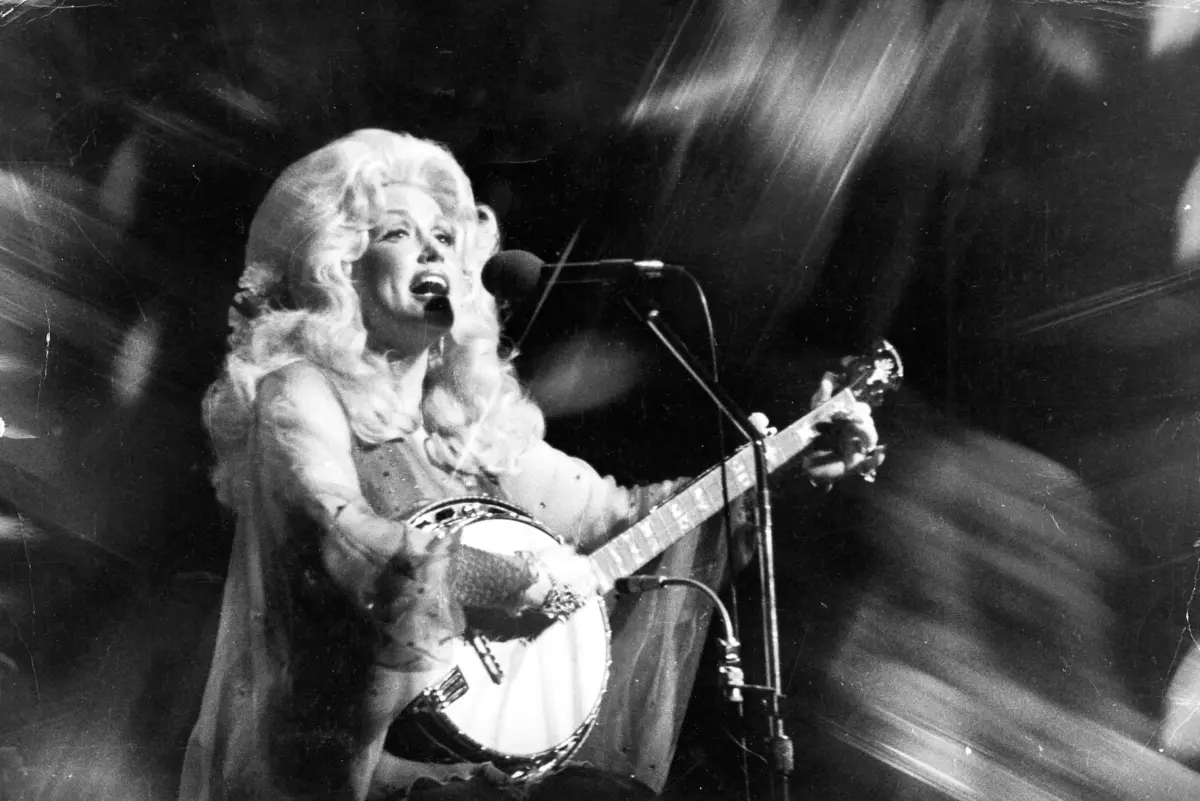
Dolly Parton is an American institution, a living legend whose career spans over half a century of relentless creativity, cultural defiance, and unmatched musical versatility. While she has joyfully traversed the sonic landscapes of disco, pop, bluegrass, and heavy metal—collaborating with artists as diverse as Judas Priest frontman Rob Halford—her musical compass has always pointed firmly back toward country music. From the pulsating disco-bop of “Baby I’m Burnin’” to the metal-tinged grit of “Bygones,” Parton has routinely pushed the structural and conceptual boundaries of the genre without ever severing her roots in it.
Yet, Parton’s relationship with country music is complex. She has earned her place in the pantheon of the genre’s royalty, boasting 25 number-one singles on the Billboard Country Music charts, ten Academy of Country Music Awards, and a 1999 induction into the Country Music Hall of Fame. Despite these accolades, her journey was far from a smooth ascent. Early in her career, Nashville’s gatekeepers doubted her distinctive, high-pitched Appalachian soprano and sidelined female singer-songwriters in a deeply patriarchal industry.
When Parton challenged conservative gender norms, tackled heavy social issues, or pivoted toward pop stardom in the late 1970s and 1980s, she occasionally alienated her core conservative fan base—even leading to the controversial dissolution of her official fan club in 1997. Nevertheless, Parton’s legacy is defined by her ability to subvert traditional country tropes from within. By injecting radical feminism into honky-tonk themes, remapping the American working-class experience from coal mines to white-collar offices, and fiercely protecting her creative autonomy, Dolly Parton didn’t just succeed in country music—she fundamentally reshaped it in her own sparkling, subversive image.
Detailed Chronology: From Sevierville to Global Icon
The Appalachian Roots and Early Nashville Struggles (1946–1967)
Born into a family of twelve children in Locust Ridge, Tennessee, Parton’s early life was steeped in the musical traditions of the Appalachian Mountains. Singing at church and on local radio stations, she developed a unique vocal styling defined by a high, piercing vibrato and an authentic Tennessee twang.
However, when a 19-year-old Parton arrived in Nashville in 1965 after signing with Monument Records, her vocal delivery was met with skepticism. Industry executives deemed her voice too high and unsuited for traditional country arrangements. In an era when Nashville was attempting to smooth out its rough edges through the commercialized "Nashville Sound"—incorporating lush pop conventions to attract broader audiences—Parton was initially pushed toward bubblegum pop and girl-group stylings, as heard on tracks like “Busy Signal.”
Concurrently, Parton was proving her mettle as a master songwriter, though she faced an uphill battle in a male-dominated industry where female artists were pigeonholed. Paving the way alongside trailblazers like Loretta Lynn—whose fierce 1966 anthem “You Ain’t Woman Enough (To Take My Man)” set a high bar for lyrical confrontation—Parton broke through the noise. In 1967, she released her debut studio album, Hello, I’m Dolly, finally establishing her undisputed authority as a country singer and songwriter.
The Crossover Era and Fan Base Friction (1970s–1990s)
By the 1970s, Parton was a bonafide country superstar, delivering timeless masterpieces like “Coat of Many Colors” (1971) and “Jolene” (1973). These tracks balanced classic Appalachian storytelling with sophisticated psychological depth, cementing her status as a generational lyricist.
However, Parton harbored global ambitions that extended beyond the traditional Nashville ecosystem. By the late 1970s, she made a conscious pivot toward pop music, trading her acoustic guitars for slick production, high-fashion wigs, and rhinestone-encrusted stage personas. While mainstream hits like “Here You Come Again” and the disco-inflected “Baby I’m Burnin’” expanded her audience exponentially, they also fractured her relationship with purist country fans.
This tension peaked with cinematic and cultural touchstones like “9 to 5” (1980). Writing the theme song for the hit film in which she co-starred, Parton reimagined the traditional country work song. Instead of coal mines, factories, or long-haul trucks, she focused on the feminized, white-collar grind of typewriters, corporate bureaucracy, and toxic office politics. The song resonated globally, spending two weeks at number one on the Billboard Hot 100 in 1981. Yet, for some traditionalists, Parton was moving too far away from her roots. The rift widened to the point that, in 1997, Parton formally dissolved her official fan club—one of the most steadfast organizations in country music history—due to declining engagement from her core country demographic.
The Bluegrass Renaissance and Genre-Defying Legacy (Late 1990s–Present)
Rather than fading into nostalgia, Parton used the turn of the millennium to orchestrate a triumphant return to her acoustic origins. She launched a critically acclaimed bluegrass trilogy that earned universal praise and re-established her credibility among acoustic purists:
- The Grass is Blue (1999): A stripped-down, Grammy-winning masterclass in bluegrass tradition.
- Little Sparrow (2001): An ethereal blend of folk, bluegrass, and gospel.
- Halo & Horns (2002): Featuring a daring bluegrass cover of Led Zeppelin’s “Stairway to Heaven.”
Continuing into the 21st century with releases like Backwoods Barbie (2008) and Blue Smoke (2014), Parton proved she could navigate modern industry demands while remaining staunchly true to herself. Her induction into the Rock and Roll Hall of Fame in 2022—an honor she initially resisted before wholeheartedly embracing—further underscored the reality that Dolly Parton transcends genre boundaries entirely.
Supporting Context & Metrics
The Mechanics of Country Music’s Cultural Evolution
To understand Parton’s impact, one must examine the historical architecture of country music itself. Originating in the 1940s out of a racially segregated entertainment industry, early country music—then marketed as "old-time," "cowboy," or "mountain" music—was deliberately funneled toward white, rural consumers. Record labels capitalized on romantic, nostalgic notions of a simple, idealized American South, framing the music as an expression of authentic, traditional values.
Despite decades of modernization, the genre has frequently remained aesthetically and politically conservative. It is deeply associated with specific tropes, rural aesthetics, and a localized worldview. This insularity has often made country music a hard sell to broader audiences, epitomized by the reflexive survey response: "I like anything except rap or country."
Yet, country music is currently experiencing a massive global revival, championed by contemporary cross-pollination and a cultural re-evaluation largely driven by legacies like Parton’s.
Quantitative Breakdown of Parton’s Commercial Dominance
| Metric Category | Statistical Milestone / Achievement |
|---|---|
| Chart Dominance | 25 Number-One singles on the Billboard Country Music charts |
| Industry Recognition | 10 Academy of Country Music (ACM) Awards |
| Hall of Fame Inductions | Country Music Hall of Fame (1999); Rock and Roll Hall of Fame (2022) |
| Discography Depth | Over 49 studio albums recorded across a 50+ year career |
| Cross-Genre Crossover | “9 to 5” spent 2 weeks at #1 on the Billboard Top 100 (1981) |
Official Statements and Critical Perspectives
Parton’s artistry has long been the subject of profound critical analysis, particularly regarding how she weaponized her public persona to subvert patriarchal expectations.
Journalist and music critic Natalie Weiner has frequently noted the sheer resilience required for Parton to break through Nashville’s boys’ club in the 1960s. Weiner highlights how Parton’s unique soprano was initially rejected by executives who could not see past prevailing industry norms, forcing the young artist to carve out an entirely unprecedented lane for herself.
Parton herself has often maintained a self-effacing humor about her immense musical output, famously referring to her legendary compositions—including “I Will Always Love You”—as merely “little simple songs.” Yet, beneath this veneer of Appalachian humility lies a fiercely calculated artist who understood the power of narrative. In an interview discussing her subversion of gender roles, Parton famously remarked:
"I look like a woman, but I think like a man. In this business, if you’re a woman, you have to be twice as smart and half as pretty to get half as far—unless you work it right."
Scholars of American music point to songs like “Just Because I’m a Woman” (1968) as watershed moments in country music history. By boldly asserting a woman’s equal right to personal and sexual autonomy without enduring perpetual social damnation, Parton directly confronted the industry’s reductive Madonna-whore tropes.
When her gothic ballads—such as “The Bridge,” which details the desperation of an abandoned pregnant woman, and “Down from Dover,” which explores out-of-wedlock pregnancy loss—were actively banned by conservative radio stations, Parton did not retreat. Instead, she leaned further into the complex, unvarnished realities of working-class female life.
Future Outlook: The Enduring Blueprint of Dolly
As country music navigates its current global resurgence—capturing new generations of listeners in the UK, Europe, and urban American centers—the blueprint laid down by Dolly Parton remains more relevant than ever.
The historical tension between country music’s insular, conservative roots and its potential for progressive, inclusive storytelling continues to play out on modern charts. Artists across genres increasingly look to Parton as the ultimate template for artistic freedom: someone who can comfortably record a heavy metal track with Rob Halford one day, write a multi-platinum pop crossover the next, and return to traditional Appalachian bluegrass without ever losing her authentic identity.
Parton’s legacy proves that country music does not need to remain locked in amber to be authentic. By expanding its lyrical scope, championing women’s autonomy, and treating genre boundaries as flexible suggestions rather than hard rules, Dolly Parton ensured that the heart of country music remains vibrant, resilient, and unmistakably universal.