Executive Overview
In the sprawling, often homogenised landscape of modern contemporary music, true outsider art—work that feels genuinely dangerous, historically grounded, and fiercely independent—is increasingly rare. Yet, far from the polished production suites of metropolitan hubs, the North East of England continues to churn out a distinct breed of sonic iconoclasts. Shaped by geographic isolation, post-industrial neglect, and a rich, idiosyncratic lineage of genre-defying folk, the region has long fostered artists who treat tradition not as a museum artifact, but as a living, breathing, and frequently volatile force.
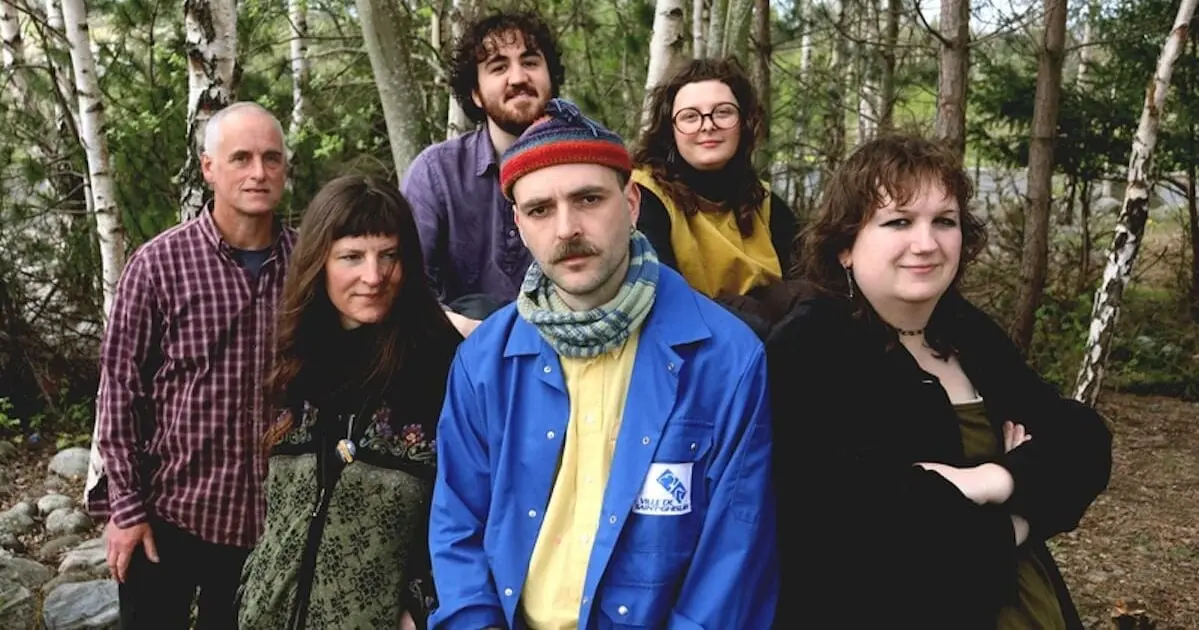
Enter Powtes, a formidable six-piece ensemble helmed by songwriter and instrumentalist Gus Beamish. Set for release on August 7, 2026, their upcoming full-length album, Destroying A Living, is a towering achievement in modern folk anthropology. Taking its name from the archaic Fenland word for "eel," the record serves as both a sonic monument to the dispossessed common folk of Britain’s history and a searing indictment of the land barons, enclosure acts, and profiteering industrialists who corseted, drained, and plundered the nation’s liminal topographies.
Spanning haunting narratives of midnight rebellion (Destroying A Living), the crushing cycles of agricultural poverty (Hirings), and a ten-minute epic dedicated to the lost, primordial wetlands of East Anglia (The Use), the album operates at the intersection of raw group improvisation and austere, hypnotic drone. Bolstered by performances from North East stalwarts such as Phil Tyler (a luminary of sacred harp singing), alongside Peter Bourne, Katy Sillem, Emily Toth, and others, Powtes have crafted an organic, half-mineral, half-animal hybrid of a record. It bridges the gap between the archival ambition of Richard Dawson’s masterworks and the ragged, transcendent glory of contemporary psych-folk.
Detailed Chronology & Album Breakdown
To understand the gravitational pull of Destroying A Living, one must trace the winding, collaborative paths of its creators. Powtes formed out of the fertile, cross-pollinated underground of the North East, drawing together musicians steeped in traditional idioms yet entirely unwilling to play by polite rules. At the center of this storm is Gus Beamish, whose songwriting functions less like traditional verse-chorus composition and more like historical reenactment channeled through the ecstasy of avant-garde soundscapes.
The Title Track: Destroying A Living
The album opens and anchors itself with its title track, a narrative tour de force that sets the thematic stakes for the entire record. Destroying A Living recounts the gripping, tragic story of two brothers working under cover of night on land that has been illegally parcelled up and privatised from beneath their feet. When they are inevitably caught and confronted by a heavy-handed landowner, the confrontation turns fatal—executed with the very shovels that form the tools of their daily labor.
Musically, the band employs pathetic fallacy on a grand scale, generating arrangements that directly mirror the emotional and physical dynamics of the narrative. As the tension mounts, stabbing strings ladder upward into symphonic, chaotic swirls, mirroring the sudden escalation from desperation to murder. It is a masterclass in narrative arrangement, blending acoustic instrumentation with cinematic terror.
Hirings: The Cycle of Hardship
Moving from direct confrontation to systemic despair, Hirings tackles the crushing weight of agricultural labor and rural poverty. Beamish’s keening alto delivers a tale of a worker locked in an inescapable cycle of alcoholic hardship. Rather than playing the sorrow straight, the arrangement features Peter Bourne’s lugubrious trombone, which adds a bruised, heavy coloration to the protagonist’s doldrums.
Counterpointing the low brass is Beamish’s stark, single-note guitar solo, which weaves delicately against Katy Sillem’s arcing penny whistle. The result is an exhilaratingly stormy sonic landscape, capturing the bitter, gale-force realities of rural working-class survival.
The Wage: Organic Interplay
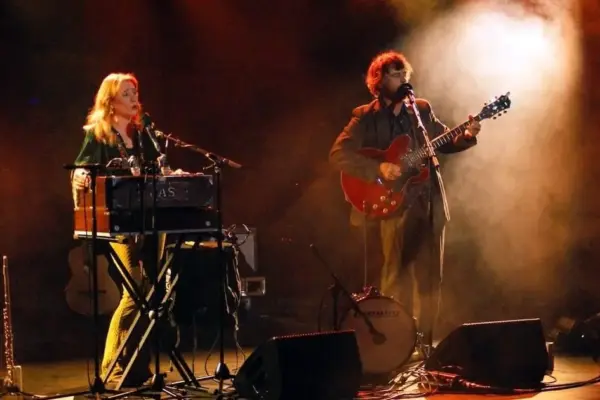
One of the album’s most striking features is its pervasive organic warmth—the distinct sensation that the six musicians are performing live in the same dimly lit room, instinctively reacting to the warp and weft of their collective humanity.
This is never more apparent than on The Wage. Here, Emily Toth’s diaphanous, shimmering harp tangles gracefully with Beamish’s rhythmic banjo, all while rich vocal harmonies and fragile violin harmonics drift across the stereo field. It is a moment of fragile beauty amidst the album’s darker historical inquiries.
The Use: A Ten-Minute Monument to Doggerland
The album culminates in its magnificent ten-minute closer, The Use. The track serves as a sprawling, elegiac ode to the "brackish and sullen and obstinate" East Anglian wetlands that ruthless profiteering land barons drained during the 17th century.
In flushing the land, these industrialists systematically flushed an entire culture, decimating an ancient ecosystem whose roots stretch all the way back to Doggerland—the prehistoric ice-age land bridge that once connected what is now England to mainland Europe. By anchoring the album’s conclusion in such deep, geological and cultural time, Powtes elevate Destroying A Living from a mere collection of folk songs into a vital act of sonic archaeology.
Supporting Context & Metrics: The North East Underground and Academic Roots
The emergence of Powtes is no cultural accident. The North East of England has long fostered a disproportionate number of idiosyncratic, boundary-pushing folk artists. Geographic isolation and historical cultural neglect by southern-centric media hubs have arguably allowed these musicians to grow in a more defiant, exploratory manner.
Consider the region’s broader musical DNA:
- The Unthanks: Known for their orchestral, winding sheets of traditional songcraft.
- Richard Dawson: Whose fantastical, historically dense albums (The Glass Trunk, Peasant) merge Captain Beefheart-esque angularity with British storytelling.
- An Eclectic Vanguard: Artists like Kathryn Tickell, Paul Smith, Steve Malley, Beth Jeans Houghton, Jazzfinger, and Nev Clay.
These artists strain traditional folk through hardcore punk, psychedelia, experimental jazz, and outsider pop. Furthermore, this creative ecosystem was heavily galvanized by the pioneering (though recently discontinued) traditional music honours degree programme at Newcastle University. Helmed by legendary tutors such as the late Louisa Killen—whose 1975 masterwork Bright Shining Morning remains an undiscovered crown jewel of the genre—the university injected rigorous academic inquiry into raw, unvarnished field traditions.
Phil Tyler, a core member of Powtes alongside his partner Cath (with whom he has long championed sacred harp singing), embodies this lineage. In Powtes, Tyler’s deep-rooted understanding of communal vocal resonance meets Gus Beamish’s vision of open-throated trad themes, where the ecstatic release of group improvisation collides with the hypnotising austerity of the drone.
Official Statements & Critical Reception
While official press releases from the self-released camp remain lean, the critical apparatus surrounding the underground folk scene has already begun positioning Destroying A Living as a watershed release for 2026.
Early underground dispatches highlight the album’s rare fusion of historical scholarship and visceral, avant-garde execution. Industry analysts and folk chroniclers have drawn immediate comparisons to the anthropological ambition of Richard Dawson’s landmark 2017 record Peasant, while noting that the sheer depth and sensuality of the ensemble’s interplay shares the ragged, elemental glory of contemporary psych-folk voyagers like Daisy Rickman.
In a cultural climate saturated by algorithmically generated comfort listening, Powtes’ refusal to smooth down the rough edges of their music stands as an artistic statement in its own right. The band’s approach—combining archaic instrumentation, stark drone mechanics, and deeply political narratives of land enclosure—positions them not as historical reenactors, but as active cultural combatants.
Future Outlook & Discovery
As the release date of August 7, 2026, approaches, Destroying A Living is poised to make significant waves across the independent music landscape. Available via Bandcamp on both limited CD and digital download formats, the album challenges listeners to look beyond the sanitised narratives of British history and confront the blood, sweat, and stolen earth upon which modern society was built.
For listeners weary of the endless, algorithmic churn of major streaming platforms—where discovery playlists increasingly sound identical—projects like Powtes offer a necessary antidote. True discovery requires human curation, historical curiosity, and a willingness to embrace music that is unapologetically complex, challenging, and raw.
Destroying A Living is not merely an album to be passively consumed; it is an artifact to be studied, a lament to be felt, and a monument to the common folk who refused to go quietly into the dark. Stick that in your Powtes and smoke it.
Destroying A Living releases on August 7th, 2026 via self-release. Physical CDs and digital downloads can be secured directly through the official Powtes Bandcamp page.