Human beliefs are rarely static monuments; rather, they are permeable structures continuously shaped, stretched, and occasionally demolished by the intellectual encounters we experience across a lifetime. For many, this seismic shift in consciousness occurs within the pages of a memoir. Unlike dry academic texts or abstract philosophical treatises, powerful autobiographical writing presents an unyielding mirror to the human condition, forcing readers to confront unfamiliar paradigms, unseat deeply embedded prejudices, and reconsider their place within society.
To understand the profound mechanisms by which literature alters human cognition, we invited 11 academic experts from diverse disciplines—ranging from art history and political theory to postcolonial literature, philosophy, and education—to identify a single memoir that fundamentally challenged their assumptions and instigated a lasting transformation in their thinking.
The resulting collection of reflections underscores a vital truth: memoirs are not merely nostalgic exercises in self-documentation. They are dynamic tools of intellectual disruption. Whether examining the stifling expectations of mid-century French womanhood, navigating the isolating landscape of agoraphobia, or redefining the clinical boundaries of late-diagnosed neurodivergence, these eleven books demonstrate that the personal narrative is often the most potent vehicle for systemic critique and personal liberation.
Detailed Chronology of Paradigm-Shifting Memoirs
The selected works span nearly a century of autobiographical output, tracking an evolutionary arc from classical intellectual introspection to contemporary graphic memoirs that push the boundaries of the medium.
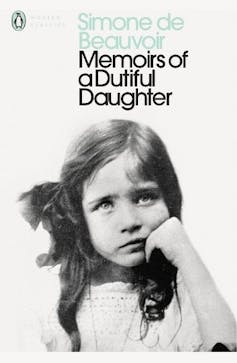
1. The Deconstruction of Identity: Memoirs of a Dutiful Daughter by Simone de Beauvoir (1958)
For Katayoun Shahandeh, lecturer in the History of Art and Museology, Simone de Beauvoir’s seminal 1958 work offered a bracing antidote to the comforting myth of an innate, pre-existing self. Reading the text at a young age, Shahandeh initially conceptualized identity as an essential core waiting to be uncovered beneath the layers of family, society, and cultural conditioning. Beauvoir shattered this illusion, presenting identity instead as a continuous, often agonizing process of construction and unlearning.
"Identity is not something found intact, but something made over time—often through the difficult unlearning of what once seemed unquestionable," Shahandeh notes. The memoir posits that true self-actualization demands a deliberate departure from the pre-imagined scripts handed down by family and society.
2. Contextualizing Thought: An Autobiography by Robin George Collingwood (1939)
Written while its author was suffering from a series of debilitating strokes, archaeologist and metaphysical philosopher Robin George Collingwood’s 1939 An Autobiography stands as a masterclass in accessible yet profound intellectual history. Colin Tyler, professor of applied ethics and political theory, highlights how Collingwood’s reflections illuminated the inextricable link between abstract thought and historical context. Anticipating George Orwell’s critiques of language, Collingwood demonstrated that no philosophy exists in a vacuum. For Tyler, the text cemented the realization that there is no "view from nowhere"—every ideological framework is fundamentally tethered to its temporal and cultural soil.
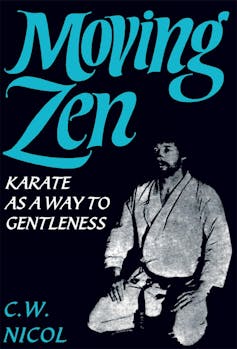
3. Geographies of Hope: Moving Zen: Karate as a Way to Gentleness by C.W. Nicol (1975)
Growing up on a working-class council estate in Wales, Lyn Jehu—now a lecturer in community football development—faced severely constrained horizons. C.W. Nicol’s 1975 memoir, detailing his grueling karate training in 1960s Tokyo, provided an unexpected catalyst. The book transcended martial arts instruction, offering a profound meditation on discipline, cultural translation, and personal reinvention. By witnessing a fellow countryman forge a life of expansive possibility across the globe, Jehu’s internal calculus shifted from rigid limitations to boundless potential, ultimately steering the course of his life decades later.
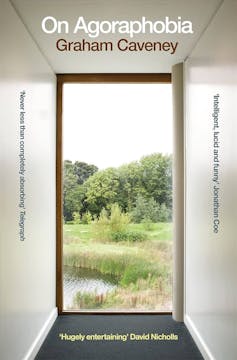
4. Navigating the "Intimate Stranger": On Agoraphobia by Graham Caveney (2022)
Sarah Richmond, honorary associate professor of philosophy, found her preconceptions regarding mental illness upended by Graham Caveney’s On Agoraphobia. Rejecting the reductive societal tropes of moral laxity or mere character weakness, Caveney chronicles his decades-long entanglement with the condition with dark humor and fierce intellectual rigor. Detailing ten false medical diagnoses and the ultimate failure of institutional psychiatry—alongside the unconventional coping mechanisms he discovered—Caveney transforms a debilitating pathology into a rich tapestry of literary, historical, and philosophical inquiry.
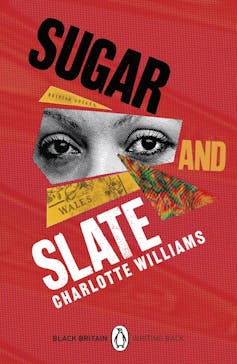
5. Cartographies of Diaspora: Sugar and Slate by Charlotte Williams (2002)
Re-released in 2023 under Bernadine Evaristo’s Black Britain: Writing Back series, Charlotte Williams’s Sugar and Slate explores the intricate fault lines of a Welsh-Guyanese identity. Senior lecturer in English literature Sarah Olive notes how Williams masterfully juxtaposes lighthearted childhood anecdotes from 1960s North Wales with the harrowing, systemic pressures facing interracial and international families. The memoir serves as an invaluable anchor for readers attempting to articulate hyphenated, multifaceted identities that defy simple nationalist categorization.
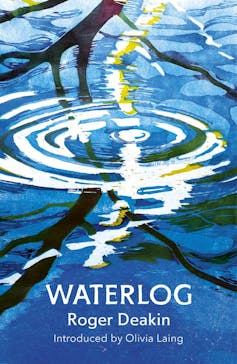
6. Elemental Immersion: Waterlog by Roger Deakins (1999)
Naturalist Roger Deakins changed the cultural landscape of the British Isles when he set out to swim across its rivers, lakes, estuaries, and moats, sparking the modern wild swimming movement. Emily Zobel Marshall, professor of postcolonial literature, describes being intoxicated by Deakins’s childlike awe and sensory prose. The memoir serves as a lingering reminder of the radical, elemental transformation available when one steps outside domestic comfort zones and immerses oneself directly in the natural world.
7. The Moral Hazards of Reportage: The Journalist and the Murderer by Janet Malcolm (1989)
In the high-octane newsrooms of the 1990s, ethical introspection was frequently cast aside in the pursuit of a headline. For Simon Hinde, programme director for journalism and publishing, Janet Malcolm’s surgical dissection of the bond between a reporter and a murder suspect proved transformative. Malcolm’s famous opening declaration—that every functioning journalist knows their trade is morally indefensible—challenged the self-righteousness of the profession. Reading the work catalyzed Hinde’s eventual departure from newspapers, long before high-profile ethical scandals like the Leveson inquiry validated Malcolm’s grim assessment.
8. Paving the Constitutional Path: Equal Justice Under Law by Constance Baker Motley (1998)
Fareda Banda, professor of law, found her perspective radically expanded by the life of Constance Baker Motley. As a pioneering Black lawyer at the NAACP Legal Defense and Educational Fund, Baker Motley was the architectural mind behind the litigation that dismantled public school segregation, leading to the landmark Brown v. Board of Education rulings. From orchestrating the desegregation of southern universities to representing Martin Luther King Jr., Baker Motley’s unwavering dignity in the face of systemic hostility offers an enduring beacon of inspiration for marginalized professionals worldwide.
9. The Cartography of Grief: The Year of Magical Thinking by Joan Didion (2005)
Following the sudden death of her husband, John Gregory Dunne, while their daughter lay comatose, Joan Didion penned an unsparing autopsy of mourning. Jade King, teaching fellow in creative writing, notes how The Year of Magical Thinking fundamentally redefined the genre of memoir as an act of survival. Didion’s surgical precision and lucidity altered King’s understanding of love’s persistence, the role of the writer as companion through darkness, and the warping effect of profound loss upon human temporality.
10. Resistance Through Memory: Vietnamerica by GB Tran (2010)
For Yi Wang, a PhD candidate in education navigating the complexities of diasporic identity as a Chinese international student, GB Tran’s graphic memoir Vietnamerica offered a masterclass in historical polyphony. By interweaving fractured family histories spanning the Vietnam War and subsequent migration to the United States, Tran demonstrated how private, intimate memories can resist the homogenizing narratives imposed by dominant political powers. The memoir highlighted how personal storytelling restores humanity where academic abstractions seek to erase it.
11. Redefining Neurodivergence: Invisible Differences by Julie Dachez and Mademoiselle Caroline (2016)
Cassia Hayward-Fitch, a visiting researcher in comics cultures, operated under the traditional, highly gendered stereotype of autism as a condition exclusive to young boys with an affinity for mathematics. Julie Dachez and Mademoiselle Caroline’s graphic memoir, Invisible Differences, shattered this preconception. Portraying a late-diagnosed adult woman who loved literature, cats, and quiet contemplation, the book provided a mirror that ultimately sparked Hayward-Fitch’s own journey toward a formal autism diagnosis.
Supporting Context & Metrics: The Cognitive Impact of Memoir Reading
To better understand the measurable impact of autobiographical literature on professional scholarship, literary analysts categorize these works into three distinct functional pillars:
Functional Category
Defining Characteristics
Primary Academic Beneficiaries
Epistemic Disruption
Challenges deeply ingrained societal assumptions and systemic norms.
Philosophy, Law, History of Art
Methodological Contextualization
Exposes the historical and cultural bias inherent in objective inquiry.
Political Theory, Journalism, Education
Affective Resonance
Validates marginal experiences, offering psychological survival and diagnostic clarity.
Psychological and educational research consistently indicates that reading first-person narratives activates neural pathways associated with empathy and Theory of Mind far more effectively than expositional texts. When academics engage with memoirs, the cognitive friction caused by conflicting worldviews prompts what educational theorists term "transformative learning"—a structural shift in frames of reference that permanently alters how individuals interpret future data.
Official Statements and Academic Reflections
The scholars interviewed for this project emphasize that the value of a transformative memoir lies not in passive consumption, but in active intellectual engagement.
"We inherit ways of seeing so quietly that they can feel like instinct, even truth," notes Katayoun Shahandeh, summarizing the consensus across disciplines. "Becoming oneself is not only a journey inward. Sometimes it begins when we recognize the imprint of all that has shaped us and shed what, in the end, is no longer ours to keep."
This sentiment echoes through the legal, philosophical, and creative writing corridors represented in the collection. Whether confronting the ethical bankruptcy of institutional journalism, tracing the colonial echoes embedded in national identities, or redefining the clinical parameters of neurodiversity, these memoirs serve as essential reminders of the elasticity of the human intellect.
Future Outlook: The Evolution of Autobiographical Literature
As the literary landscape continues to evolve in the 21st century, the format of the memoir is undergoing a rapid metamorphosis. The integration of graphic formats—exemplified by works like Vietnamerica and Invisible Differences—demonstrates that visual storytelling is increasingly claiming space alongside traditional prose to convey complex histories and marginalized experiences.
Furthermore, as digital media accelerates the velocity of public discourse, the deliberate, contemplative pace of the memoir offers a vital counterweight. Academic institutions and cultural critics anticipate that autobiographical literature will continue to serve as the primary vanguard for social empathy, challenging institutional orthodoxies and mapping new frontiers of human understanding for generations of scholars yet to come.