Executive Overview
After an illustrious, ground-breaking 24-year run that cemented its place in the cultural bedrock of Scottish broadcasting, the BBC’s beloved drama River City is drawing its final curtain. The impending finale, scheduled to air on Monday, marks the end of an era for the fictional Glasgow community of Shieldinch. For nearly a quarter of a century, the soap opera has been a mirror for Scottish life—reflecting its grit, its warmth, its indomitable humor, and its complex socio-economic realities.
As the sun sets on the iconic, though now demolished, set in Dumbarton, the television industry is left to reflect on the immense legacy left by a production that was much more than a weekly serial. It was a vital cultural touchstone, a fiercely loyal community of viewers, and a premier industrial training ground that nurtured generations of creative talent—from actors and writers to directors, camera operators, and technicians.
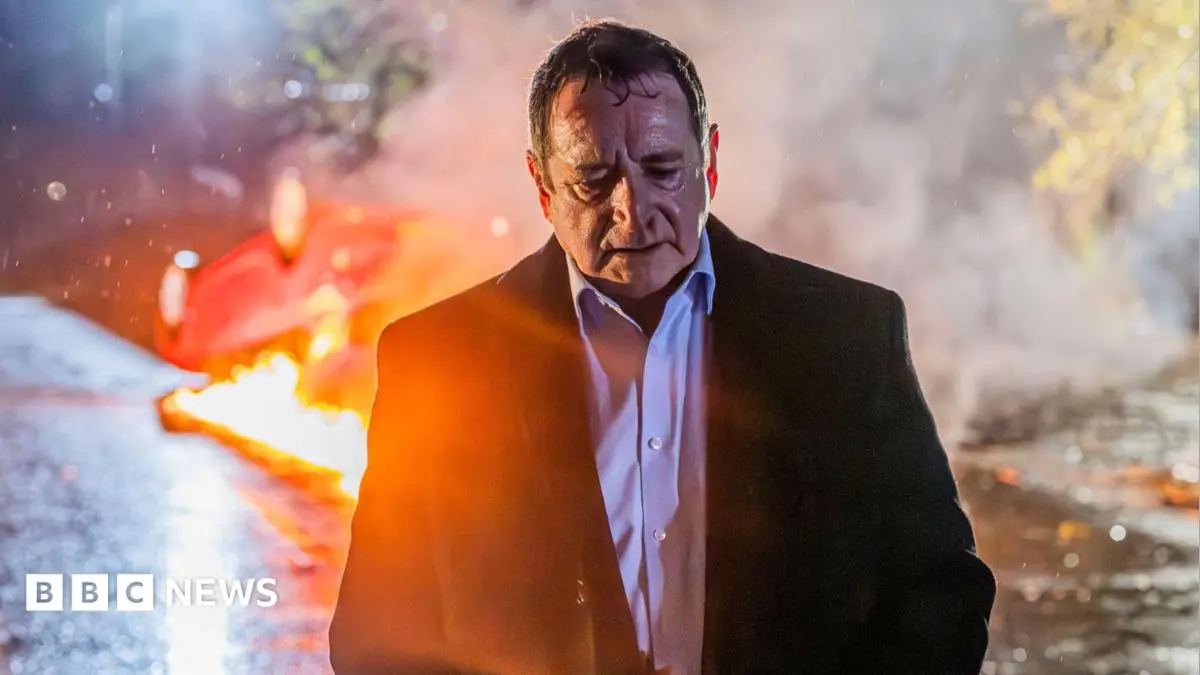
At the heart of the dramatic, highly anticipated final episode is veteran writer Johnny McKnight, who has lent his pen to the series for nearly a decade. Seizing a rare opportunity in television history, McKnight petitioned to script the show’s farewell episode, viewing it as both a personal catharsis and a professional duty to the show’s devoted fanbase. Early promotional images hint at high-stakes drama, featuring the series’ arch-villain, Lenny Murdoch—played with chilling charisma by Frank Gallagher—bloodied and battered amidst a devastating fire.
Yet, as the cast and crew grapple with the physical and emotional void left by the show’s conclusion, the prevailing sentiment is not merely one of grief, but of profound pride. This comprehensive retrospective delves into the mechanics of the finale, the intense production culture that defined River City, its vital role as a creative incubator for the Scottish media sector, and the bittersweet farewell of an enterprise that truly captured what it means to be Scottish.
Detailed Chronology: Crafting the Final Chapter of Shieldinch
The journey toward the final episode of River City was fraught with creative challenges, emotional hurdles, and the immense pressure of living up to a 24-year legacy. When BBC executives announced that the long-running drama would close its doors for good, Johnny McKnight knew immediately that he wanted to be at the helm of its send-off.
"Those moments don’t come up very often with long-running shows, so I thought it might be cathartic and a nice way to say goodbye as a writer," McKnight reflects. Having contributed scripts to the series for close to ten years, McKnight possessed an intimate understanding of the characters’ voices, the nuances of Shieldinch’s social fabric, and the delicate tonal balancing act that River City required.
However, writing the final chapter of a cultural institution is a perilous endeavor. McKnight was acutely aware of the pitfalls that have befuddled other legendary television shows attempting to stick the landing. He points to cult television programs whose controversial or polarizing finales bitterly divided their fanbases—such as The Sopranos, Dexter, Buffy the Vampire Slayer, and Angel.
"I felt a huge responsibility to the show’s fans to give them a satisfying ending," McKnight admits. "I’m just part of a massive collective team effort, and I hope we’ve done the fans proud to the end."
While exact plot details for Monday’s hour-long broadcast have been kept under a shroud of secrecy, official promotional materials released by the BBC have sent shockwaves through the fan community. The images feature a bloodied Lenny Murdoch caught in the terrifying epicenter of a dramatic, raging fire. For 24 years, Lenny Murdoch—portrayed masterfully by Frank Gallagher—has served as Shieldinch’s ultimate anti-hero, orchestrating nefarious schemes, ruling the local underworld with an iron fist, and dodging justice at every turn. That his fate appears inextricably tied to the fiery destruction of the final episode suggests a climax of Shakespearean proportions.
Supporting characters will also step into the crucible. Jenny Hulse, who has brought Lenny’s resilient daughter Amber Murdoch to life over the past decade, occupies a central role in the narrative arc of the finale. The emotional weight carried by the actors during filming in April was palpable. For Hulse, the psychological transition away from the character is an ongoing process.
"I still think in my muscle memory I’m gearing up for filming again and just waiting for the scripts," Hulse confesses, highlighting the relentless rhythm that defined her life for ten years.
As fans prepare to bid farewell, the convergence of high drama, explosive set-pieces, and deep emotional payoffs promises an unforgettable conclusion to the saga of Shieldinch.
Supporting Context & Metrics: The Engine Room of Scottish Television
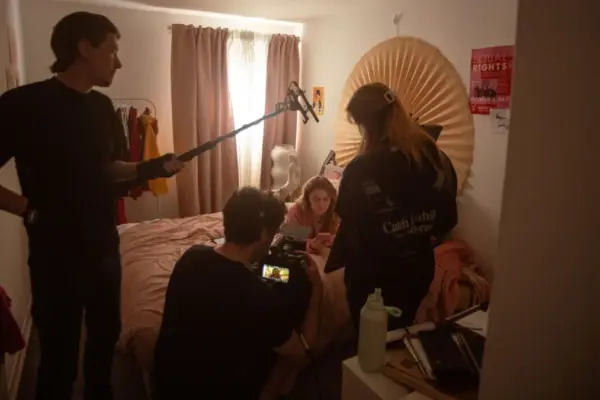
To fully understand the magnitude of River City’s departure, one must examine the staggering industrial scale of its production. Filmed on a sprawling, purpose-built set in Dumbarton—a set that has now been dismantled—the soap opera operated on a grueling, high-octane production schedule that tested the endurance of everyone involved.
Unlike high-end primetime dramas that enjoy leisurely shooting schedules, weekly serials demand an industrial-level output. Hulse draws a striking comparison between River City and other television drama sets:
"We were sometimes doing 17 pages a day of quite fast-paced dialogue, whereas if you were on another TV drama set it would be four pages. It’s like a moving train, and when you join, you just have to kind of jump on and cling on."
This breakneck pace was not merely a logistical hurdle; it was a crucible that forged some of the finest technical and creative talent in the United Kingdom. Over its 24-year lifespan, River City evolved far beyond a regional soap opera. It became an indispensable training ground, functioning as a vital national academy for the Scottish television industry.
The production line in Dumbarton cultivated skills across every conceivable discipline:
- Directing and Writing: Nurturing fresh narrative voices and directorial visions.
- Camera Operation and Lighting: Mastering fast-paced, multi-camera setups under tight turnarounds.
- Technical Craft: Honing the skills of sound recordists, gaffers, and electricians.
- Artistic Departments: Refining the expertise of make-up artists, costume designers, and set decorators.
This internal ecosystem meant that talent was consistently promoted from within. Hulse points to this remarkable conveyor belt of career progression with immense pride: "Ryan Graham, who directed the finale, started off as a camera trainee way back. Holly Jack, who plays Nicole, now directs episodes, as does Sally Reid. Cast members become writers, camera operators, and directors, and it’s incredible to watch that whole conveyor belt of talent. It’s been a factory. A factory of creativity."
For actors like Hulse, finding steady, long-term employment in the arts is a rare privilege. Remaining in a single role for a decade provided both artistic stability and a rare vantage point from which to witness the evolution of Scottish media production. "That legacy and pride in what we did is really special," Hulse reflects. "I feel so lucky to have had the opportunity to play the same character and have regular work for 10 years, which is unusual."
Official Statements & Cultural Philosophy: The Voice of Shieldinch
At its core, the enduring appeal of River City lay in its unique cultural identity. Johnny McKnight articulates this ethos by examining how the show managed to encapsulate the paradoxical nature of Scottish society—seamlessly weaving together biting humor and profound tragedy.
"River City is what I think it is to be Scottish," McKnight asserts. "Our punches have punchlines. We take our trauma and we find a way to tell it in a pub that makes it palatable, and the humour co-exists alongside the drama."
This tonal signature—where a funeral wake can quickly devolve into a raucous pub sing-along, and domestic abuse is handled with unflinching social realism—resonated deeply with audiences who saw their own communities reflected on screen. It was this authenticity that cultivated a ferociously loyal fanbase, one that has struggled to accept the reality of the show’s cancellation.
The depth of this fandom was on full display just weeks before the finale’s broadcast. Johnny McKnight hosted a special retrospective event at the historic Tron Theatre in Glasgow, bringing together cast members and adoring fans to celebrate the show’s legacy.
"We had some of the cast of River City, and I was hosting it, and it was just beautiful to see so many fans there," McKnight recalls. However, the atmosphere was tinged with an understandable melancholy. "They kept asking: ‘Will it come back? Do you think it’ll have another life?’ And you feel terrible saying, ‘Well, the set has been demolished, so it’s looking less likely’."
Future Outlook: The Legacy and the Last Take
As the final hour-long episode of River City prepares to broadcast on Monday, the cast, crew, and millions of viewers are transitioning from active participants in the Shieldinch universe to passionate custodians of its memory.
To honor this monumental transition, the BBC is supplementing the final broadcast with a special, one-off documentary entitled River City: The Last Take. The documentary offers an intimate, behind-the-scenes look at the dismantling of the Dumbarton set, emotional farewells from the cast, and a retrospective glance at the cultural milestones achieved over a quarter of a century.
While the physical set has been reduced to rubble, and the frantic daily call sheets have ceased, the institutional knowledge and creative capital generated by River City will continue to reverberate throughout the British television landscape for decades to come. The directors who cut their teeth on its multi-camera floors, the writers who mastered the rhythm of Scottish dialogue in its writers’ rooms, and the actors who defined a generation of television drama will carry the spirit of Shieldinch into their future endeavors.
River City proved that regional storytelling, when executed with unyielding passion, professional rigor, and deep cultural authenticity, can achieve universal resonance. As the lights go out on the fictional streets of Shieldinch for the very last time, the Scottish television landscape stands fundamentally transformed—forever indebted to the ultimate factory of creativity.