Executive Overview
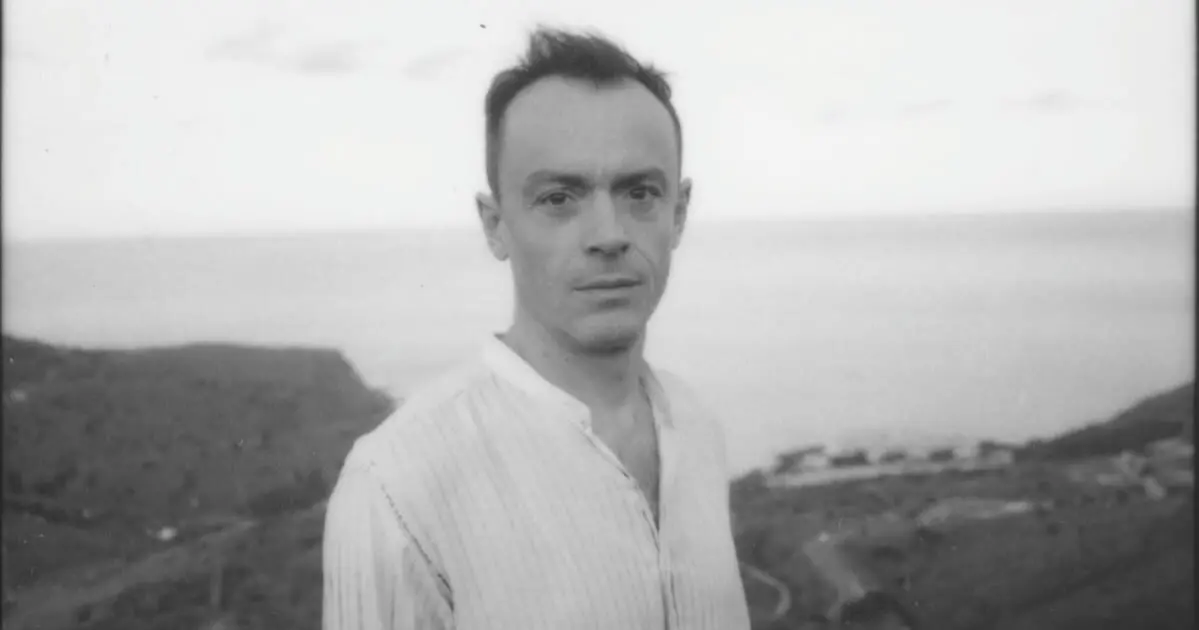
In the contemporary landscape of avant-garde and neoclassical music, few artists possess the fearless boundary-pushing ethos of Paris-based cellist, composer, and producer Gaspar Claus. This Friday, September 25th, Claus marks a significant milestone in his expansive career with the release of his highly anticipated full-length solo album, Cells, via the esteemed Parisian independent label InFiné. The release is preceded by the provocative and hypnotic single "Ecstasy," a piece that challenges conventional perceptions of acoustic instrumentation and electronic production.
At first glance, "Ecstasy" appears to be Claus’s most overt foray into electronic music, trading the organic warmth of his classical instrument for synthesized pulses and rhythmic drive. However, a deeper examination reveals a more complex narrative. Rather than abandoning his classical roots for a digital landscape, Claus embarks on a journey of profound sonic metamorphosis. Every frequency, texture, and percussive hit pulsing through "Ecstasy" originates exclusively from the wooden body and steel strings of a cello. Through a meticulous process of digital manipulation, signal processing, and collaboration with producer Basile3, Claus stretches the acoustic boundaries of his instrument, transforming classical performance into an immersive, synthetic-sounding electronic voyage.
Complementing this sonic triumph is the official music video directed by Mathilde Cartoux. Shot against the dramatic, rugged backdrop of the French Mediterranean coastline between Paulilles and Banyuls, Cartoux’s visual narrative mirrors the emotional arc of the track. Moving seamlessly from intimacy to collective euphoria, and from stillness to kinetic motion, the video serves as a visceral extension of the album’s thematic core. As Cells prepares to enter the global listening sphere, Claus cements his reputation not merely as a master interpreter of the cello, but as an alchemist of modern sound design, redefining the parameters of what an acoustic instrument can achieve in the twenty-first century.
Detailed Chronology
The Genesis of Cells
The developmental timeline of Cells spans years of multidisciplinary exploration, during which Gaspar Claus established himself as one of Europe’s most sought-after sonic collaborators. Known historically for his work across diverse genres—spanning traditional folk, avant-garde improvisation, cinematic scores, and pop collaborations—Claus began conceptualizing a project that would isolate the foundational building blocks of his primary artistic voice: the cello.
The title Cells operates on a dual meaning. It refers both to the biological units of life that combine to form complex organisms and to the individual sonic components—the frequencies, bow strokes, and resonances—that Claus isolates, manipulates, and weaves together to construct his compositions. The creative process involved recording hours of raw acoustic material, treating the instrument not just as a tool for melody and harmony, but as a comprehensive sound library.
The Emergence of "Ecstasy"
As the release date approached, Claus selected "Ecstasy" as the primary calling card for the album campaign. Released in the weeks leading up to Cells, the track immediately caught the attention of critics and electronic music aficionados alike due to its deceptive sonic palette. While listeners might initially assume the track features a standard electronic rhythm section and modular synthesizer leads, reality proves far more intricate.
Working closely with contemporary electronic producer Basile3, Claus deconstructed his cello recordings. The duo fed acoustic inputs through digital processors, stretching audio files, shifting pitches, and layering transients until the organic wood and horsehair became unrecognizable, transmuted into synthetic textures, sub-bass rumbles, and crisp, driving percussion.
The Visual Translation: Filming in the Mediterranean
Following the audio production, director Mathilde Cartoux was brought on board to conceptualize and execute the official music video for "Ecstasy." Filming took place over several days along the dramatic southern coastline of France, specifically positioned between the historical gunpowder factory site of Paulilles and the sun-drenched commune of Banyuls-sur-Mer.
Cartoux’s production schedule was carefully timed to capture the shifting diurnal light—transitioning from the harsh brilliance of the Mediterranean midday sun to the cool, ethereal glow of twilight and moonlight. The shoot focused heavily on human physicality, capturing dancers and performers interacting with the rugged stone topography and the crashing sea. By framing the human body in close contact with both the natural elements and the central figure of Gaspar Claus, the production mirrored the track’s underlying structural journey: an arc moving from isolation to collective release, and finally back to a state of meditative calm.
Supporting Context & Metrics
Gaspar Claus: A Portrait of an Avant-Garde Iconoclast
To fully appreciate the weight of Cells, one must understand Gaspar Claus’s unique trajectory within the modern music ecosystem. Born into a musical family (the son of legendary Catalan flamenco guitarist Pablo Claus), Gaspar received rigorous classical training on the cello. However, rather than pursuing a traditional seat in a symphony orchestra, Claus gravitated toward the fringes of the contemporary underground scene.
Over the past two decades, Claus has cultivated an enviable resume characterized by uncompromising artistic curiosity. He has collaborated with a diverse roster of icons across genres, including minimalist composer Bryce Dessner, legendary singer-songwriter Bonnie "Prince" Billy, avant-garde rocker Jim O’Rourke, and electronic music innovator Rone. His performance style often incorporates extended techniques—utilizing the body of the cello as a percussion instrument, bowing behind the bridge, and employing amplification to unearth subterranean frequencies.
InFiné: A Home for Sonic Innovation
The release of Cells via InFiné represents an ideal alignment of artist and label. Founded in 2006 by Agoria, Yannick Matray, and Alexandre Cazac, InFiné has carved out a distinct niche in the European independent music market by bridging the gap between classical composition and cutting-edge electronic production. Home to artists such as Aufgang, Bachar Mar-Khalifé, and Cubenx, the label champions projects that defy strict genre categorization. Cells fits seamlessly into this catalog, serving as a masterclass in how acoustic traditions can be successfully cross-pollinated with electronic experimentation.
Production Metrics and Technical Scope
The technical realization of "Ecstasy" and the broader Cells album reflects a sophisticated fusion of traditional lutherie and digital signal processing (DSP).
- Acoustic Source Material: 100% of the audio stems originate from acoustic cello performances captured using high-end condenser and contact microphones to isolate both internal body resonances and external bow friction.
- Digital Transformation: Signal processing tools utilized during production included granular synthesis, frequency shifting, time-stretching algorithms, and custom modular processing patches designed by Basile3.
- Visual Production: The music video for "Ecstasy" was captured on location in the Pyrénées-Orientales department, utilizing natural lighting and minimal artificial staging to preserve the raw, tactile atmosphere of the Mediterranean landscape.
Official Statements
The conceptual and artistic philosophy underpinning the release is best articulated through the words of the creator himself and the accompanying promotional materials provided by InFiné.
Gaspar Claus on the Philosophy of Transformation
In discussing the sonic identity of his new single and album, Gaspar Claus explicitly rejects the notion that Cells represents a simple crossover or compromise between acoustic performance and electronic music. Instead, he frames the project as an internal evolution of the instrument itself:
"These sounds were transformed, put through machines, digitized, stretched, sometimes metamorphosed into synthetic textures or even percussion. So it’s not a meeting between cello and electronics, but rather a story of transformation," Claus explains.
He further acknowledges the collaborative catalyst provided by contemporary producer Basile3, whose technical acumen helped unlock new dimensions within Claus’s raw acoustic recordings:
"The particular involvement of producer Basile3 on the track was essential in pushing these sonic boundaries further, allowing us to see just how far the acoustic DNA of the cello could be stretched without losing its inherent emotional gravity."
Mathilde Cartoux and the Visual Interpretation
The press release issued by InFiné contextualizes Mathilde Cartoux’s directorial vision, emphasizing how the visual language of the video mirrors the auditory experience of "Ecstasy":
"Filmed between Paulilles and Banyuls, Cartoux’s images extend the track’s physical and sensory contours, staying close to bodies and gestures, and to the shifting light between sun and moon, across a landscape of stone and Mediterranean sea."
The narrative progression of the visual work is designed to mirror the psychological arc of the musical composition:
"The film moves from the intimate to the collective, from stillness to movement, from warmth to coolness, before returning to calm. Opening and closing with Gaspar Claus, it traces a loop in which the cello becomes the thread running through a feeling of almost mystical rapture, of sensory abandon… of ecstasy."
Future Outlook
The Horizon for Cells and Live Performance
As Cells becomes globally available this Friday, September 25th, the release marks the beginning of an extensive promotional and touring cycle for Gaspar Claus. The unique nature of the album—balancing intricate acoustic performance with heavy digital processing—presents fascinating possibilities for live interpretation. Industry insiders anticipate a series of specialized live dates throughout Europe and beyond, where Claus will likely recreate the immersive sonic environments of Cells using a combination of live cello looping, real-time DSP, and spatialized sound design.
Redefining the Classical Instrument in the Digital Age
Beyond the immediate commercial and critical reception of the album, Cells carries broader implications for the future of contemporary classical and electronic music. By demonstrating that an acoustic instrument can serve as its own self-contained electronic orchestra, Claus provides a compelling blueprint for other traditional instrumentalists looking to navigate the digital age.
Rather than viewing technology as a threat to acoustic authenticity—or conversely, treating acoustic instruments as mere novelty samples within a digital workstation—Claus treats the intersection of wood, steel, and code as a seamless continuum. As listeners press play on "Ecstasy" and dive into the full-length journey of Cells, they are invited to witness the ongoing evolution of a master musician who refuses to be confined by the historical definitions of his craft.
For those wishing to secure physical or digital copies of the album, pre-orders remain open via the official release link: https://idol-io.ffm.to/cells.