Executive Overview
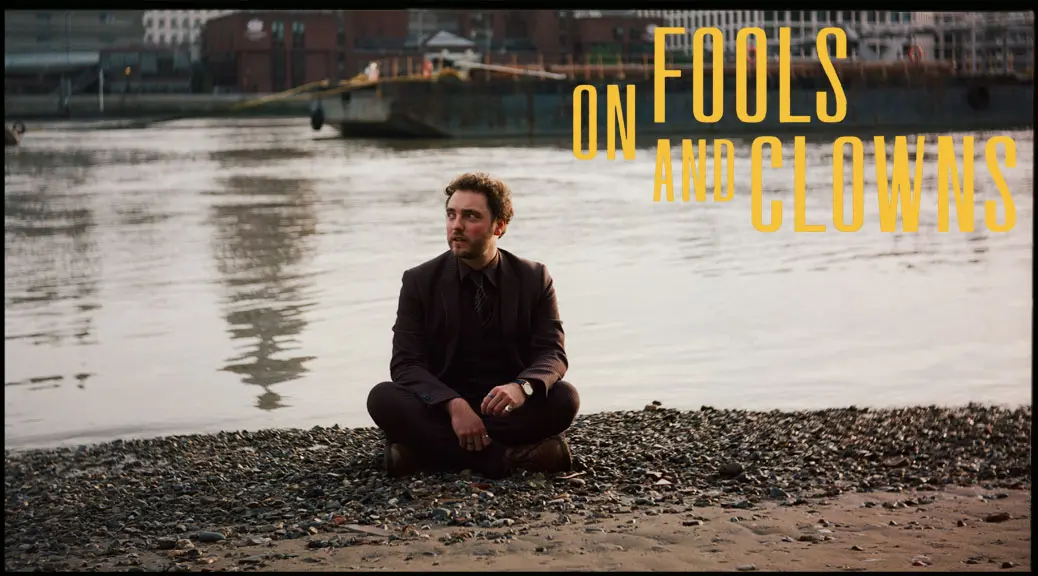
In the words of French philosopher and writer Albert Camus, "It’s not the struggle that makes us artists, but Art that makes us struggle." This poignant observation serves as the emotional and philosophical anchor for On Fools and Clowns, the striking debut full-length album by Leeds-born, London-based pianist and composer Nico Widdowson. Released via Trash City Records, the project cuts through the noise of the contemporary music industry to offer a raw, unvarnished look at the realities of pursuing a creative life in one of the world’s most economically punishing cultural capitals.
London’s contemporary jazz scene is currently experiencing a global renaissance, celebrated for its genre-fluidity, technical brilliance, and integration with club culture. Yet beneath the glossy surface of packed festival stages and critical acclaim lies a harsher economic reality for the musicians driving the movement. High rents, dwindling post-pandemic gig attendance, suppressed performance fees, and the meager payouts of the modern streaming economy have turned creative survival into a high-stakes endurance test. Against this backdrop, Widdowson has crafted a record that is as much a sociological commentary on modern artistry as it is a masterclass in jazz piano trio dynamics.
Aided by bassist Joe MacLaren and a dynamic rotating cast of drummers—Charlie Hutchinson and Jordan Hadfield—Widdowson’s debut steers clear of cynical lamentation. Instead, On Fools and Clowns balances the existential anxieties of the modern creator with an infectious celebration of the sheer joy of improvisation, acoustic resonance, and human connection. In an era increasingly dominated by algorithmic optimization and instantaneous AI-generated soundscapes, Widdowson’s debut stands as a vital reminder of the irreplaceable value of lived human experience, artistic vulnerability, and the courageous embrace of imperfection.
Detailed Chronology: The Evolution of Nico Widdowson
To understand the depth and texture of On Fools and Clowns, one must trace the artistic trajectory of Nico Widdowson through the crucible of the Northern English jazz scene and into the bustling, competitive ecosystem of London.
Roots in the North: The Formative Years
Widdowson’s musical identity was forged in Leeds, a city renowned for its rich musical heritage and vibrant, tight-knit creative communities. Growing up immersed in the mechanics of jazz, Widdowson developed an early, profound reverence for the foundational architects of the genre. Rather than treating jazz history as a static museum piece, he absorbed the stylistic languages of stride and early jazz titans—most notably Duke Ellington, Willie "The Lion" Smith, and the cosmic, boundary-pushing avant-gardism of Sun Ra.
These influences are not merely referenced on On Fools and Clowns; they are thoroughly metabolized. Widdowson understands that authentic homage requires a synthesis of tradition and personal identity. While many young pianists rush to mimic the latest transatlantic trends, Widdowson spent his formative years building a rock-solid technical foundation deeply rooted in harmonic exploration and rhythmic dexterity.
Relocation and the London Crucible
The transition from Leeds to London represents a critical turning point in Widdowson’s career. Relocating to the capital exposes artists to an unprecedented concentration of talent, but it also thrusts them into a hyper-competitive market characterized by extreme economic pressure.
As Widdowson integrated himself into the sprawling London contemporary landscape, he quickly established a reputation as a versatile, dependable, and fiercely creative collaborator. His footprint across the scene expanded rapidly through high-profile sideman work and collaborative projects:
- Alex Fisher’s You Heard it Here First: Widdowson’s work with saxophonist Alex Fisher showcased his ability to anchor complex contemporary arrangements while leaving ample space for spontaneous, high-wire interplay.
- Ferg’s Imaginary Big Band: Serving as a core keyboardist for Fergus Quill’s visionary ensemble, Widdowson contributed to the critically acclaimed 2026 release The New Atomic. This project further cemented his versatility, proving his capability to navigate the dense, thunderous arrangements of a modern big band without losing his distinct harmonic voice.
The Genesis of On Fools and Clowns
Having paid his dues across various collaborative projects, Widdowson stepped up to the leader’s chair for On Fools and Clowns. Recorded with a streamlined acoustic trio setup featuring bassist Joe MacLaren alongside drummers Charlie Hutchinson and Jordan Hadfield, the album represents a crystallization of years spent navigating the trials of London’s music scene. Every track on the record functions as a sonic vignette, translating the psychological highs and lows of the modern artist into rhythm, melody, and swing.
Supporting Context & Metrics: The Economic Realities of London’s Jazz Scene
To fully appreciate the significance of Widdowson’s artistic statement, one must examine the socio-economic framework in which On Fools and Clowns was created. London remains a global beacon for jazz music, producing generations of world-class innovators. However, the operational environment for working musicians has deteriorated significantly over the past decade.
The Cost-of-Living Crisis and Housing Pressures
London’s escalating cost of living disproportionately affects creative workers. With skyrocketing rental prices across traditionally arts-heavy boroughs such as Hackney, Lewisham, and Haringey, musicians are forced to dedicate an unsustainable percentage of their income simply to securing housing. This financial precarity leaves precious little bandwidth—financially or psychologically—for the deep, unhurried focus required to compose and record ambitious acoustic jazz projects.
Venue Closures and Attendance Shifts
The live music ecosystem has faced compounding crises, beginning with the sweeping venue closures during the COVID-19 pandemic and exacerbated by post-lockdown inflation. According to recent cultural sector reports across the United Kingdom:
- Independent music venues have seen average live event attendance figures drop by 15% to 25% compared to pre-2020 baselines.
- Operating costs for grassroots venues—driven by rising energy bills, business rates, and insurance—have surged by upwards of 30%.
- Consequently, many venues have been forced to reduce booking budgets, resulting in lower guarantees for performing artists.
The Streaming Paradox
Compounding the live performance squeeze is the streaming revolution. While digital platforms offer global reach, their micro-payout models mean that independent jazz artists—whose tracks rarely achieve the algorithmic traction of mainstream pop or commercial hip-hop—earn fractions of a cent per stream. For a genre built on physical CD and vinyl sales at live shows (sales channels that have also contracted as audiences shift to digital-first habits), generating a sustainable income from recorded music is nearly impossible without supplemental teaching, session work, or external employment.

In this context, On Fools and Clowns is an act of sheer defiance. Widdowson’s decision to invest time, emotional energy, and financial resources into a complex, acoustic jazz trio record highlights a profound commitment to the art form that transcends mere economic rationality.
Musical Analysis: Inside On Fools and Clowns
Musically, On Fools and Clowns is a masterclass in dynamic contrast. The record avoids the trap of becoming a sterile showcase of technical prowess, prioritizing instead narrative depth, emotional resonance, and collective intuition.
The Trio Dynamics
The rhythm section comprising bassist Joe MacLaren and drummers Charlie Hutchinson and Jordan Hadfield acts as an extension of Widdowson’s own musical consciousness. MacLaren’s basslines provide a warm, anchoring counterpoint, moving fluidly between walking bass traditions and modern, elastic phrasing.
The rotation of drummers adds a subtle yet compelling textural shift across the album:
- Charlie Hutchinson brings a conversational, highly reactive swing vocabulary that nods to post-bop luminaries while remaining radically present.
- Jordan Hadfield infuses the proceedings with an organic groove that accommodates complex metric modulations without ever sounding academic.
Bridging Tradition and Modernity
Widdowson’s stylistic breadth is evident in how he navigates the history of jazz piano. Tracks that evoke the stride-piano elegance of Willie "The Lion" Smith are instantly upended by jagged, angular modern harmonies reminiscent of the avant-garde tradition. Furthermore, while many contemporary London jazz artists integrate heavy electronic elements, hip-hop breakbeats, and club culture aesthetics into their sound, Widdowson deliberately roots his debut in the acoustic power of the piano trio.
This acoustic purism is not born of a rejection of modernity, but rather a deliberate choice to explore the infinite expressive possibilities found within the interaction of piano, bass, and drums. It is an exploration of voice—figuring out how to sound entirely like oneself within a historical lineage that spans over a century.
Future Outlook: The Human Element in an AI-Driven World
As we navigate deeper into the digital age, the broader cultural implications of records like On Fools and Clowns become increasingly urgent.
The Threat of Algorithmic Homogenization
The rapid proliferation of generative artificial intelligence and automated prompt-based music tools poses a fundamental existential question for the creative industries. When software can synthesize a competent, genre-compliant backing track or ambient jazz playlist in a matter of seconds, what is the value of human labor in music?
The answer lies precisely in what AI cannot replicate: the struggle, the vulnerability, and the lived-in experience of the artist.
The Beauty of Imperfection
Widdowson’s debut is an implicit defense of human error, artistic risk-taking, and emotional sincerity. The magic of jazz has always resided in its impermanence—the split-second decisions made on stage, the cracked notes that convey raw emotion, and the unspoken communication between musicians navigating an uncertain musical landscape together.
By leaning into the very struggles that define the contemporary artistic condition, Widdowson and his peers reject the sterile perfection of automated sound production. On Fools and Clowns suggests that striving for perfection in art is a fool’s errand; true artistic resonance is found in our shared human follies, our vulnerabilities, and our relentless, beautiful persistence.
As Nico Widdowson steps out from behind the sideman credits and claims his rightful place as a visionary bandleader, On Fools and Clowns marks the arrival of a major new voice in British jazz. It is a record that looks squarely at the hardships of the modern creative life and responds not with despair, but with a triumphant, swinging affirmation of the human spirit.