Executive Overview
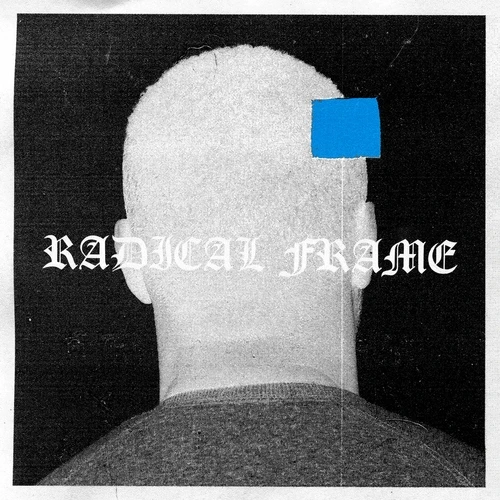
Electronic music has long wrestled with the dichotomy between raw, tactile imperfection and pristine sonic architecture. For well over a decade, Darren Cunningham—operating under the moniker Actress—has navigated this tension with the precision of a master painter and the subversive instinct of a sound designer. With the release of his eleventh studio album, Radical Frame, Cunningham does not merely add to his sprawling discography; he recontextualizes it.
Long celebrated for his dust-laden, bit-crushed tape hiss and ghostly, half-remembered textures, Cunningham steps out of the fog on Radical Frame to deliver what is arguably his most crystal-clear, high-definition statement to date. Yet, this newfound sonic clarity does not dilute the enigmatic, genre-defying atmosphere that has defined his career. Instead, it acts as a magnifying glass, revealing the intricate inner workings of a mind that treats techno, grime, contemporary classical, and avant-garde noise not as isolated genres, but as a fluid, interconnected continuum.
From the evocative, rain-slicked urban wandering that recalls the lineage of Burial and Space Afrika, to the soulful, cross-continental synthesis found on tracks like "Overchord," Radical Frame represents a watershed moment in contemporary electronic music. Culminating in the 16-minute ambient-techno odyssey "Sheets"—featuring the heavily processed vocal manipulations of Rainy Miller—the album stands as a towering achievement. It is both a masterclass in modern fidelity and a profound meditation on the evolution of club music as high art. This report provides a comprehensive examination of Radical Frame, tracing Cunningham’s artistic chronology, contextualizing his place within the broader electronic landscape, and analyzing the structural components that make this release an instant landmark in modern sound design.
Detailed Chronology: The Evolution of an Aesthetic
To understand the magnitude of Radical Frame, one must trace the evolutionary trajectory of Darren Cunningham’s sonic identity. Emerging from the vibrant, shifting landscape of British underground electronic music, Cunningham initially established Actress as an elusive, shadowy project.
The Lo-Fi Genesis and Urban Realism
In the early phases of his career, particularly with foundational releases such as his breakthrough 2010 album Splazsh, Cunningham mapped a nocturnal psychic topography. Splazsh captured a Britain caught between the fading echoes of garage, the burgeoning aggression of grime, and the hypnotic pulse of minimal techno. However, what set Cunningham apart was his application of texture. His tracks felt decayed, weathered by time and elements, evoking rainswept city streets at 3:00 AM.
This placed him in a loose, conceptual triad alongside contemporaries like Burial and, later, Space Afrika. Yet, where Burial channeled the spectral remnants of UK rave culture through fractured vocal samples and vinyl crackle, Cunningham approached his compositions as audio-visual collages. His music felt cinematic, though stripped of conventional narrative structures, relying instead on mood, space, and rhythmic disorientation.
Mid-Career Deconstructions: Hazyville to AZD
As the 2010s progressed, Cunningham systematically dismantled conventional song structures. Albums like Hazyville, R.I.P., and AZD pushed further into the avant-garde. R.I.P., in particular, was lauded for its classical pretensions filtered through electronic distortion, earning critical acclaim for its ambitious scope. Cunningham was deliberately obscuring his sound sources, using heavy bit-crushing, tape degradation, and spatial reverb to create a hazy veil over his compositions.
During this era, an Actress track was immediately recognizable by its distinct lack of high-frequency polish. The low-end was muddy yet warm, the mids were cluttered with atmospheric debris, and the rhythms often felt as though they were dragging themselves through wet concrete. It was an aesthetic of concealment—a deliberate artistic choice that forced the listener to peer through the static to find the emotional core of the music.
The Clear-Eyed Paradigm Shift: Radical Frame
With Radical Frame, Cunningham has executed a radical pivot—not by changing his stylistic vocabulary, but by changing his lens. The most striking element of the album is its fidelity. The signature bit-crushed hiss that characterized his early output has been largely expunged, replaced by an astonishingly crisp, high-definition mixing paradigm.
Every transient cuts through the mix with surgical precision; every pad breathes with open, uncompressed air. This sonic clarity does not strip away the mystery of Actress’s world; rather, it highlights the sophistication of his arrangements. By stripping away the sonic fog, Cunningham reveals that the underlying skeletal structure of his music has always been exceptionally complex, delicate, and deeply rooted in both traditional musicianship and avant-garde sound manipulation.
Supporting Context & Metrics: Sound Design and Collaborative Synergy
The brilliance of Radical Frame is best understood by examining its component parts—specifically, its approach to rhythm, vocal integration, and its crowning epic, "Sheets."
The Transatlantic Fusion of "Overchord"
One of the album’s most arresting focal points is the track "Overchord," which features the yearning, emotive vocal styling of Naomi Kimpenu. Sonically, "Overchord" bridges disparate geographical and stylistic lineages. The rhythmic foundation pulses with a broken, swung house beat that bears an uncanny spiritual resemblance to the organic, crate-digging warmth of Detroit legend Theo Parrish—specifically, if Parrish’s rhythmic sensibilities had been forged in the industrial crucible of Wolverhampton, UK.
Kimpenu’s vocal performance floats above this groove with a aching vulnerability. In past Actress records, vocals were frequently treated as abstract textures—chopped, pitched, and buried deep within the mix to serve as mere atmospheric color. On Radical Frame, however, voices are brought forward into the architectural light. Kimpenu’s delivery is direct, yet it is processed just enough to integrate seamlessly into Cunningham’s synthetic environment. The result is a hybrid form of soulful house music that sounds simultaneously ancient and futuristic, indebted to the past while entirely unbound by it.
The Magnum Opus: Deconstructing "Sheets"
If Radical Frame has a definitive masterpiece, it is undoubtedly the closing track, "Sheets." Clocking in at a mesmerizing 16 minutes, "Sheets" is an absolute tour-de-force that redefines the parameters of modern electronic composition.
The track functions as a macro-structure, slowly evolving over a quarter of an hour without ever losing the listener’s rapt attention. It opens with vast, shimmering ambient pads that recall the pioneering ambient works of Brian Eno or the deep-space explorations of early Basic Channel. Gradually, subtle, shifting rhythms begin to bleed into the stereo field. In a masterclass of structural pacing, these rhythms fluidly mutate, transitioning organically from the breakbeat syncopation of drum & bass to the four-on-the-floor hypnotic drive of minimalist techno.
Weaving throughout this shifting rhythmic tide are the treated, ghostly vocals of Rainy Miller. Miller’s voice is manipulated, stretched, and echoed, functioning both as a human anchor and an otherworldly instrument. The interplay between Miller’s vocal fragments and Cunningham’s morphing rhythmic backdrops creates a state of suspended animation. "Sheets" is not merely a song; it is a sprawling, immersive environment. Critics and contemporary producers alike have already begun hailing it as one of the finest pieces of electronic music produced in the 2020s—a towering achievement that proves Cunningham’s creative powers are operating at an all-time peak.
Industry Reception and Aesthetic Implications
The release of Radical Frame has sent ripples through the international electronic music community, prompting a widespread reassessment of how producers handle fidelity and genre-blending in the digital age.
The Death of Lo-Fi Nostalgia?
For much of the late 2010s and early 2020s, electronic music was dominated by a wave of lo-fi house and cassette-obsessed nostalgia. Producers eagerly applied artificial dust, crackle, and bit-reduction to mediocre compositions in an attempt to manufacture authenticity.
Cunningham’s pivot on Radical Frame offers a vital corrective to this trend. By embracing pristine, high-definition fidelity while retaining his uncompromising avant-garde sensibilities, Cunningham demonstrates that true subversion does not require cheap sonic tricks. He proves that high-fidelity production, when executed with an avant-garde mindset, can be far more disorienting and immersive than simulated tape decay. The clarity of Radical Frame strips away the safety net of lo-fi obscurity, forcing listeners to confront the raw, unadorned brilliance—or dissonance—of his harmonic and rhythmic choices.
The Institutionalization of the Underground
Furthermore, Radical Frame cements Darren Cunningham’s status as a rare breed of artist: an underground stalwart who has successfully transitioned into an elder statesman of contemporary composition without compromising his artistic integrity. While many producers struggle to maintain relevance past their initial wave of blog-era hype, Cunningham continues to innovate, absorb new influences, and refine his vernacular. His work is increasingly studied not just by club-goers and dance music historians, but by contemporary classical composers, sound artists, and multimedia creators who view him as a vital bridge between club culture and high-art experimentation.
Future Outlook: Where Does Actress Go From Here?
As the dust settles on the release of Radical Frame, the electronic music community is left to ponder the inevitable question: Where does Darren Cunningham go next?
Having thoroughly explored the murky depths of tape-saturated lo-fi realism on his earlier works, and having now achieved the breathtaking clarity of Radical Frame, Cunningham has essentially closed a massive conceptual loop. He has mapped both the shadows and the light of his internal soundworld.
Expanding Audiovisual Horizons
Given that Cunningham’s soundworld has always been profoundly visual and visionary, the natural evolution of the Actress project points toward deeper integration with immersive audiovisual installations, spatial audio (Dolby Atmos) environments, and large-scale live performances. The pristine separation of elements achieved on Radical Frame makes his music exceptionally well-suited for multi-channel spatial sound systems, opening up thrilling possibilities for live concert experiences where tracks like "Sheets" can be physically sculpted around an audience in real time.
Mentorship and the Next Generation
Moreover, Cunningham’s collaborative choices on Radical Frame—partnering with distinctive, forward-thinking contemporary voices like Naomi Kimpenu and Rainy Miller—suggest a burgeoning role as an incubator for new talent. By pulling these younger artists into his orbit and filtering their contributions through his singular aesthetic lens, Cunningham is not only enriching his own discography but helping to shape the stylistic vocabulary of the next generation of UK underground music.
Final Verdict
Radical Frame is a triumph of vision, patience, and technical mastery. By stepping out of the haze without losing his soul, Darren Cunningham has delivered an album that demands close listening, rewards analytical deconstruction, and lingers in the psyche long after the final notes of "Sheets" have faded into silence. It stands not only as the pinnacle of the Actress catalog thus far, but as a defining artistic statement for contemporary electronic music at large.