Executive Overview
Nearly three decades after the sudden, violent end of one of hip-hop’s most visionary artists, the murder trial surrounding Tupac Shakur continues to captivate the global public imagination. For thirty years, the September 7, 1996, drive-by shooting in Las Vegas remained a haunting cold case—shrouded in street legends, conspiracy theories, and a persistent wall of silence. Today, that silence is being systematically dismantled inside a courtroom, anchored by the prosecution of Duane "Keefe D" Davis, the last living adult allegedly involved in the orchestration of the rapper’s assassination.
Prosecutors in the landmark trial have mounted a case centering on Davis’s own words: recorded police interviews and self-incriminating passages from his 2019 memoir, Compton Street Legend. According to the state, the fatal shooting was an act of brutal retaliation sparked hours earlier inside a Las Vegas casino, where Davis’s nephew, Orlando Anderson, was involved in a violent altercation with Shakur and his entourage. Driven by a belief that the perceived slight against his family could not "go unanswered," Davis allegedly procured the weapon, orchestrated the ambush, and positioned himself inside the passenger seat of the white Cadillac from which the fatal bullets were fired.
Yet, the defense has countered with a fierce narrative of reasonable doubt, structural investigative failures, and systemic unreliability. Defense attorney Michael Sanft has argued that Davis’s past admissions are nothing more than elaborate fabrications—tall tales amplified and commercialized to sell books and manufacture street notoriety. With key eyewitnesses unable to definitively identify the shooter, conflicting testimony regarding a historic police immunity agreement, and explosive, unverified allegations involving high-profile music industry moguls like Sean "Diddy" Combs, the trial has transformed into a complex legal battleground. It is a clash not only over the guilt of one aging gang member, but over the credibility of confessions born from the murky intersections of street politics, law enforcement deals, and modern media sensationalism.
Detailed Chronology
To fully understand the gravity of the current proceedings, one must trace the timeline of events backward from the courtroom to that fateful September night in 1996, and onward through decades of clandestine investigations and sudden legal breakthroughs.
September 7, 1996: The Vegas Incident and Fatal Ambush
The sequence of events that sealed Tupac Shakur’s fate began hours before the shooting, inside the opulent lobby of the MGM Grand in Las Vegas. Shakur and members of Death Row Records—including co-founder Marion "Suge" Knight—crossed paths with Orlando Anderson, an alleged member of a rival South Side Crips faction. An altercation ensued, during which Anderson was beaten by Shakur’s entourage.
According to prosecutors, this public humiliation served as the catalyst for the tragedy that followed later that evening. Driven by vengeance and gang protocol, Duane "Keefe D" Davis allegedly armed himself and mobilized associates. At approximately 11:15 p.m., as Shakur and Knight traveled in a black BMW along Flamingo Road, a white Cadillac pulled up alongside them. A barrage of bullets tore into the passenger side of the vehicle, striking Shakur multiple times. The iconic artist succumbed to his internal injuries six days later on September 18, 1996, at the University Medical Center of Southern Nevada.
2008: The Secret Police Interview
Years rolled by with the investigation languishing in the cold-case files of the Las Vegas Metropolitan Police Department. However, a critical development occurred in 2008. Detectives Daryn Dupree and Greg Kading—who were simultaneously investigating the parallel, high-profile murder of Christopher Wallace, universally known as The Notorious B.I.G.—sat down for a recorded interview with Keefe D.
During this session, Davis provided a detailed account of the events of September 7, 1996. Prosecutors played audio of this interview in court, revealing Davis’s chilling descriptions: "Yeah, if we would’ve been on my side, I would’ve blasted," he remarked to detectives, according to court transcripts. Davis detailed how he passed a firearm to Deandre "Big Dre" Smith, who refused it, leading Orlando Anderson—seated in the back seat—to take the weapon and open fire. At the time, detectives allegedly assured Davis that the information provided would be protected under informal cooperative parameters—a linchpin that the defense would later weaponize, though prosecutors argue was entirely voided years later.
2019: Compton Street Legend and Public Confessions
Any pretense of legal confidentiality evaporated in 2019 with the publication of Davis’s memoir, Compton Street Legend, co-authored with Yusuf Jah. In the book, Davis openly discussed his direct participation in the murder conspiracy, writing that the casino altercation gave his crew the "ultimate green light to do something to their ass."
By putting these admissions into print and marketing them to the public, Davis effectively torpedoed any argument that his prior confessions were legally privileged or strictly confidential informants’ tales. The memoir became the cornerstone of the state’s modern indictment, providing prosecutors with a printed roadmap of premeditation and motive.
Present Day: The Courtroom Confrontation
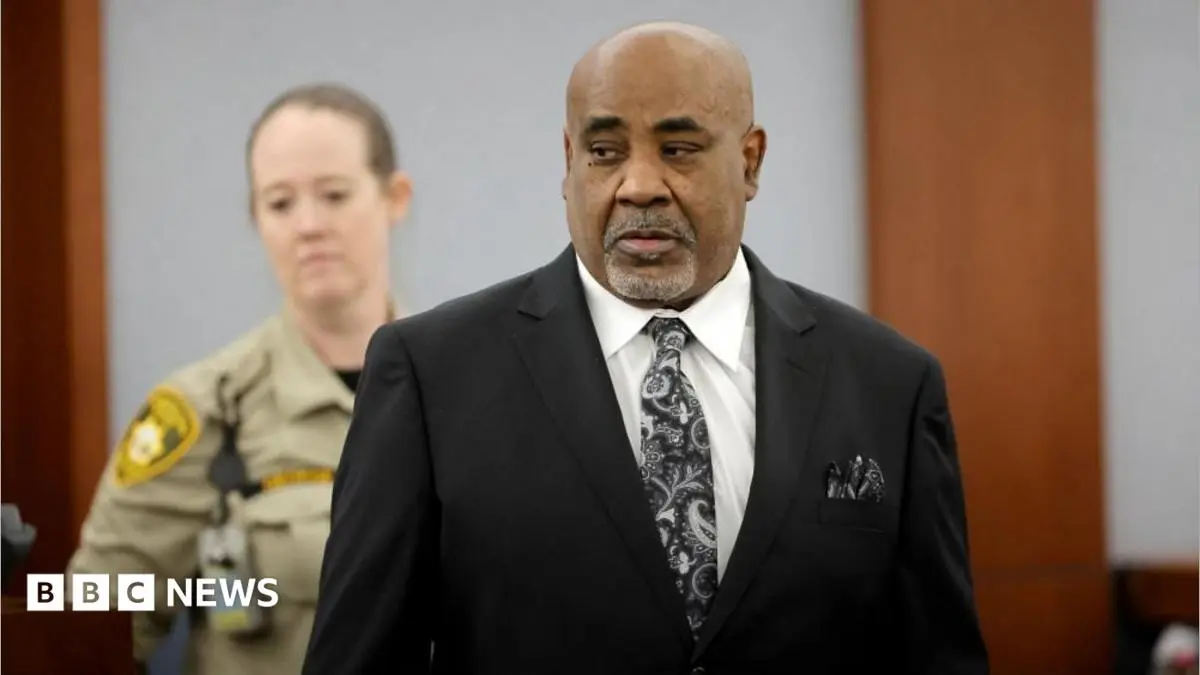
Fast forward to the ongoing trial, where prosecutors have methodically laid out their evidence, juxtaposing the 2008 police interviews with excerpts from the memoir. The state’s presentation has drawn gasps from the gallery, particularly when delving into explosive claims regarding meetings with prominent music executives, while the defense has countered by aggressively cross-examining former law enforcement officials and dismantling the reliability of jailhouse informants and aging gang members.
Supporting Context & Metrics
The prosecution of Duane "Keefe D" Davis does not exist in a vacuum; it is situated within a web of cultural, historical, and investigative metrics that define the enduring legacy of 1990s West Coast hip-hop.
- 30-Year Cold Case Duration: For three decades, the murder of Tupac Shakur has held the unfortunate distinction of being one of the most visible unresolved homicide cases in modern American history, generating thousands of tips, documentary films, and independent investigations.
- The Death Row vs. Bad Boy Rivalry: The events of September 1996 occurred against the backdrop of a fierce, highly publicized East Coast-West Coast record label rivalry that pitted Suge Knight’s Death Row Records against Sean "Diddy" Combs’s Bad Boy Records.
- The Passage of Time and Witness Attrition: A central challenge in the trial is the sheer span of years elapsed. Key figures like Orlando Anderson (who died in a 1998 gang shooting) and Deandre Smith are long deceased, forcing the prosecution to rely heavily on archival audio recordings, transcripts, and documentary evidence rather than living eyewitness testimony from the primary participants.
- Corroboration Metrics: As emphasized by the defense, courts require rigorous independent corroboration for confessions and memoirs, particularly when authored years after the fact by individuals incentivized by financial gain or self-aggrandizement.
Official Statements
The legal maneuvering in the courtroom has been matched by pointed, strategic statements from both the prosecution and the defense teams, alongside testimonies from key historical figures in the hip-hop community.
The Prosecution’s Stance
Prosecutors have maintained an aggressive, evidence-driven posture, arguing that Davis’s own admissions leave no room for alternative interpretations.
"Them jumping on my nephew gave us the ultimate green light to do something to their ass,"
prosecutors quoted from Davis’s memoir, framing the shooting not as a random act of street violence, but as a calculated, retaliatory execution driven by familial pride and gang loyalty. The state maintains that Davis’s attempts to distance himself from his own book are transparently self-serving legal gymnastics designed to escape accountability for a crime he openly bragged about for years.
The Defense’s Counter-Narrative
Defense attorney Michael Sanft has hammered away at the credibility of the state’s foundational evidence, urging jurors to separate urban myth from verifiable facts.
"What facts do you have to support any of what Keffe D said in any of his interviews or the book?"
Sanft challenged the jury during early arguments. He cautioned them against convicting a man based purely on recycled literary fiction:
"You have to ask yourself the question: If I just say things, is that going to end up being one of those things where I’m going to be handed up for a murder by just repeating that fiction? I keep repeating that? The answer is no. You have to corroborate everything I say in order for it to be true. Otherwise, it’s just that."
Sanft has also pointed out deep structural flaws in the police investigation, highlighting testimony from a former Las Vegas homicide detective confirming that no independent eyewitnesses have ever positively identified the shooter at the scene.
Industry Entourage and Insider Testimony
Adding further complexity to the trial, former members of Shakur’s inner circle have taken the stand to provide context on the high-tension environment of 1996. James "Mob James" McDonald, a former member of Shakur’s entourage who was not present at the shooting itself, testified regarding the immediate aftermath within the hip-hop community.
"It was a gang war. People were getting hurt. People were being sought," McDonald told the court, describing how rapidly word traveled through underground channels regarding who was responsible. "Orlando (Anderson), him and certain other people were being sought because people wanted to kill them."
Meanwhile, the trial has reignited scrutiny over alleged high-level industry connections. During the playback of the 2008 police interview, detectives extensively questioned Davis regarding alleged meetings with Sean "Diddy" Combs during Bad Boy Records tour stops across San Diego, Anaheim, Irvine, and Las Vegas. When detective Kading asked which of those stops involved discussions regarding murdering Tupac, Davis responded: "It was really about both of them, yeah, either one of them," seemingly referring to Shakur and Suge Knight. Representatives for Combs have consistently declined to comment on these allegations, and no charges have been filed against Combs in connection with the case.
Future Outlook
As the trial presses forward, its outcome carries profound implications not only for the legal system of Clark County, Nevada, but for cultural history writ large. If the prosecution successfully navigates the complex waters of hearsay, immunity claims, and defense skepticism to secure a conviction, it will bring a definitive—if belated—legal conclusion to one of the most painful chapters in modern music history.
Conversely, an acquittal or a mistrial would underscore the insurmountable difficulties of prosecuting a decades-old gang-related murder built primarily on sensationalized memoirs and retrospective police interviews. Whatever the final verdict, the proceedings have permanently altered the public discourse surrounding Tupac Shakur’s death, dragging the dark, unpolished realities of 1990s street politics out from the shadows of urban legend and exposing them to the harsh, unforgiving light of a court of law.